
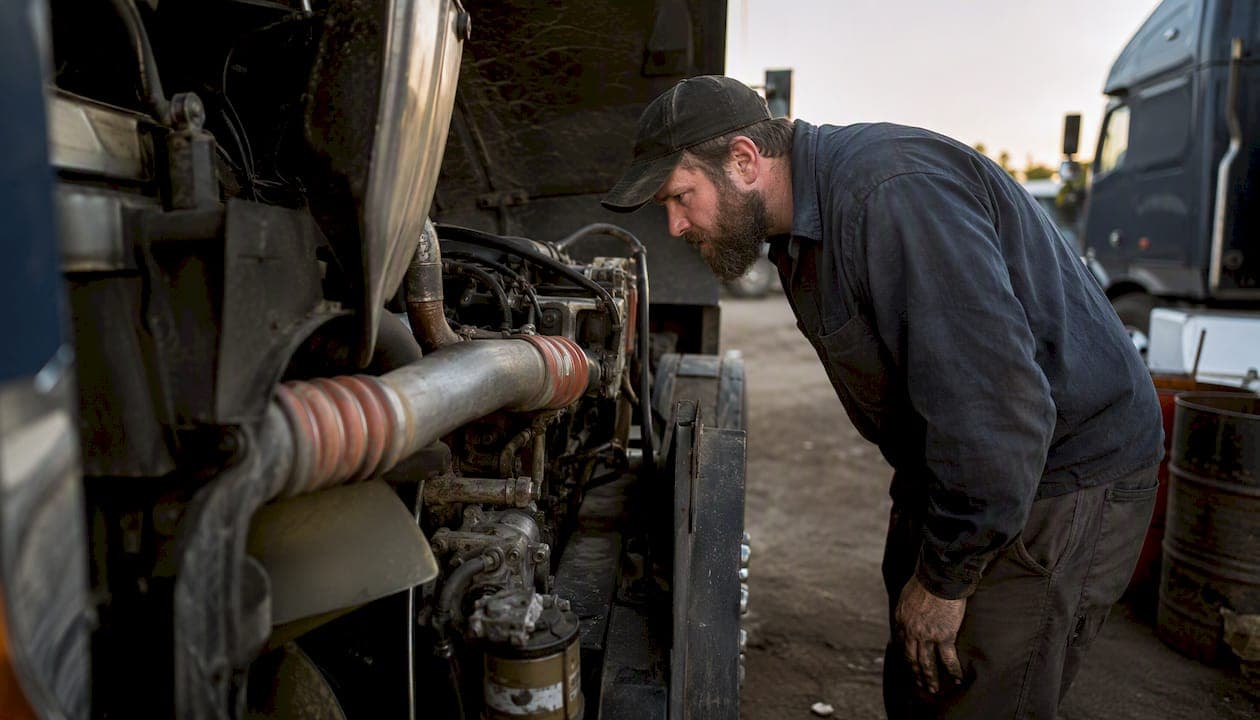
Yes, buying a used semi truck is the right move when you can match the truck to your lanes, absorb short-term repair risk, and underwrite the total cost of ownership rather than just the sticker price. Late-model used trucks can be a strong business choice when you require ECM downloads and maintenance records and evaluate cost per mile, not purchase price alone. If those conditions apply to your situation, follow this six-step plan before you sign anything:
- Define your lanes and spec requirements — OTR, regional, or vocational; daycab or sleeper; horsepower and axle config.
- Build a total cost of ownership (TCO) budget — purchase price, fuel, maintenance reserve, tires, insurance, and registration.
- Pre-qualify financing and insurance — know your credit score, down payment, and insurance minimums before you shop.
- Request maintenance invoices, DOT inspection stickers, and an ECM screenshot from every seller before you travel.
- Pay for an independent pre-purchase inspection (PPI) by an ASE-certified diesel mechanic, including an ECM download and fault-code review.
- Close with a lien search, clear title, bill of sale, and confirmed insurance binder before the truck leaves the seller's lot.
Trust signals to require on every deal: a VIN history report (Carfax or AutoCheck), a full maintenance invoice file, and written confirmation of any open or released liens.
Key Takeaways
Buying a used semi truck is a sound business decision when you match the spec to your lanes, require ECM-backed documentation, and model total cost of ownership before you make an offer.
| Point | Details |
|---|---|
| Define spec before you shop | Lock in daycab vs. sleeper, HP, axle config, and emissions era before browsing listings. |
| TCO beats sticker price | Model fuel, maintenance, downtime, and financing cost per mile; a cheap truck with high CPM is not a deal. |
| ECM download is non-negotiable | Idle hours, fault codes, and regen history reveal what a visual inspection cannot; budget $75–$150 for the download. |
| Pre-qualify financing and insurance | Know your credit score tier and APR range before negotiating; monthly payment sensitivity can change your affordable price range materially. |
| Sostruckforsale shortlists faster | Use the marketplace to filter by spec and location, then request documentation from sellers before you travel. |
Table of Contents
- Why buy used instead of new — the real tradeoffs
- How to determine the truck specs you actually need
- Where should you look for a used semi truck?
- What does a used semi truck actually cost?
- Pre-purchase inspection checklist: what to check before you buy
- What red flags should make you walk away?
- Financing, insurance, and registration: what you need to line up
- How to negotiate price and close the deal safely
- Warranties, extended service contracts, and fleet units
- How to use a pre-purchase inspection checklist effectively
- What owner-operators consistently tell first-time buyers
- Sostruckforsale makes it easier to find and vet used semi trucks
- An editor's perspective on what first-time buyers consistently get wrong
- Sources
Why buy used instead of new — the real tradeoffs
The primary case for buying a pre-owned semi truck is entry cost. A used unit typically costs a fraction of a comparable new truck, which lowers your monthly payment and reduces the immediate depreciation hit that new trucks absorb in the first 12–24 months of ownership.
Advantages of buying used:
- Lower purchase price and reduced initial depreciation exposure
- Faster break-even on cost per mile when the truck is matched to the right lane
- Wider selection of proven engine and transmission combinations
- Opportunity to buy from large carriers with documented maintenance histories
Tradeoffs to plan for:
- Higher repair and downtime risk, especially on trucks with unknown or incomplete maintenance records
- Aftertreatment systems (DPF, SCR, DEF) on 2010+ trucks add inspection complexity and potential repair cost
- Financing rates on used trucks are typically higher than on new units, and some lenders cap loan terms on older trucks
- Insurance premiums can be higher on older units with higher liability exposure
The rule of thumb: buy used when you can absorb repair risk, have a verifiable maintenance history in hand, and have a 30–60 day repair reserve funded before your first dispatch. Buy new when uptime is mission-critical and your cash reserves are thin.
How to determine the truck specs you actually need
Buying for ego instead of for the lane is one of the most common and expensive mistakes first-time buyers make. Before you search a single listing, map your operation.
Map your lanes first:
- Weekly miles and typical load weights
- Whether you run over-the-road (OTR), regional (under 500 miles), or vocational (construction, flatbed, tanker)
- Number of nights out per week (drives the daycab vs. sleeper decision)
- States you operate in (affects emissions compliance requirements)
Spec decisions to lock in before you shop:
- Daycab vs. sleeper: Daycabs are lighter, cheaper, and simpler for regional and local work. Sleepers add weight and cost but are necessary for OTR runs.
- Horsepower and torque: Most Class 8 linehaul applications run well with 400–500 HP engines. Vocational and heavy-haul work may require 500+ HP and higher torque ratings.
- Axle configuration: A 6x4 tandem-rear-axle is standard for most linehaul and heavy freight. A 4x2 single-rear-axle works for lighter regional freight and reduces fuel consumption.
- GVWR and GCW: Match the truck's Gross Combined Weight Rating to your heaviest legal load plus trailer weight.
- PTO and vocational equipment: If you run a dump, flatbed, or specialized body, confirm PTO provisions and frame ratings.
Emissions era and why it matters:
| Emissions Era | Key Systems | Inspection Priority | Financing/State Notes |
|---|---|---|---|
| Pre-2010 | Mechanical injection, no aftertreatment | Engine wear, smoke, blow-by | Easier to finance; some urban zones restrict |
| 2010–2013 | DPF added | DPF condition, regen history | Check state idle/emissions rules |
| 2010+ | DPF + SCR + DEF | Full aftertreatment service history, ECM faults | Required in CA; higher repair cost risk |
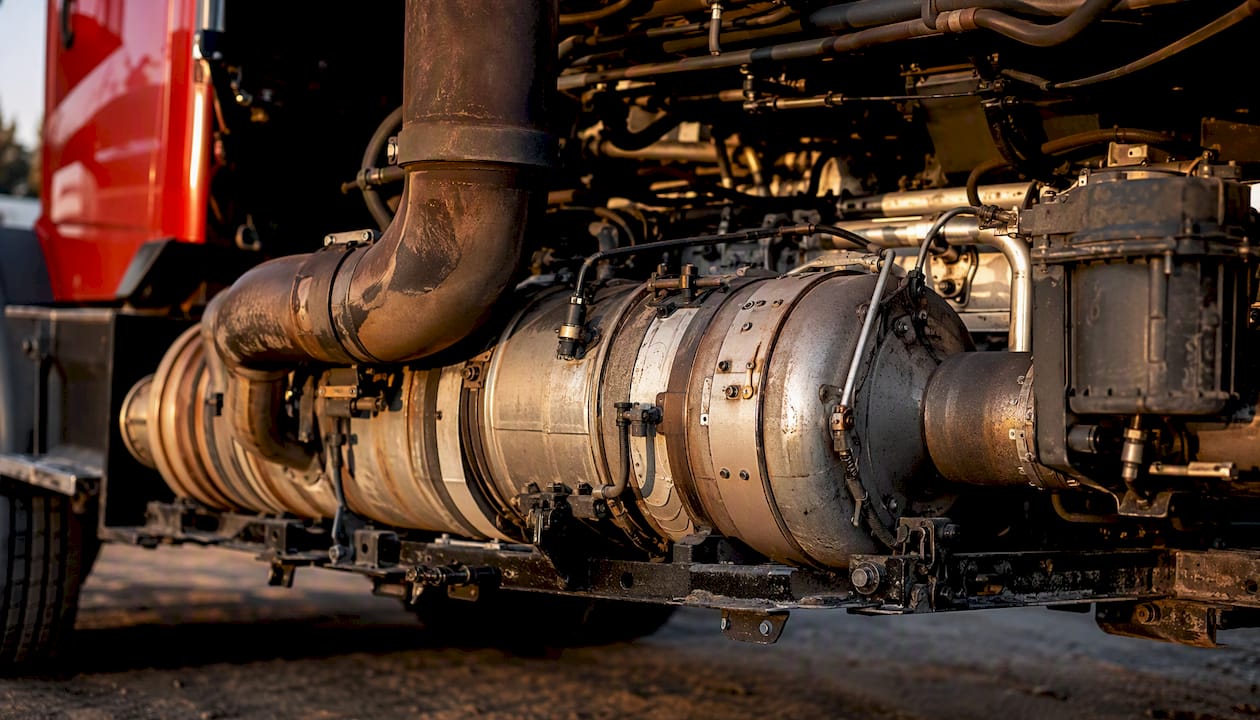
Pre-2010 trucks are simpler to inspect and often cheaper to repair, but some states and port zones restrict older emissions tiers. Confirm your operating states' rules before you commit to a specific engine family.
Where should you look for a used semi truck?
Inventory source determines price, paperwork risk, and how much reconditioning work has already been done. Each channel has a distinct risk-reward profile.
Channel comparison:
| Channel | Best For | Price Level | Paperwork Risk |
|---|---|---|---|
| Franchise/large dealer | First-time buyers wanting reconditioning and financing in one place | Highest | Lowest |
| Independent dealer | Buyers with inspection skills who want mid-range pricing | Moderate | Low to moderate |
| Private seller | Experienced buyers who can vet history independently | Lowest | Moderate to high |
| Auction | Buyers who know exactly what they're bidding on | Variable | High (as-is) |
| Online marketplace | All buyers for initial screening and comparison | Variable | Varies by seller |
Treating the purchase like a business acquisition means selecting the channel based on your risk tolerance, not just price. Auctions offer the lowest prices but almost no recourse if the truck has hidden problems. Large dealers charge more but typically provide a short warranty and completed title work.
Seller-vetting checklist before you travel:
- Request the last 12 months of maintenance invoices and repair receipts
- Ask for a current DOT inspection sticker and the most recent inspection report
- Request an ECM screenshot showing engine hours, idle hours, and active/stored fault codes
- Confirm tire date codes (four-digit DOT code on sidewall) and ask for photos of all eight drive tires
- Ask for front and rear photos of the frame rails and fifth wheel
- Verify title status: ask whether the title is in the seller's name and whether any liens are recorded
Practical travel rule: only go inspect a truck in person when the seller has provided documentation that meets your minimums. Assume any seller who refuses to share records before your visit is hiding something that will cost you money.
Pro Tip: Check the seller's business profile on the BBB and verify any financing intermediary's accreditation and complaint history before you wire money or sign a contract.
What does a used semi truck actually cost?
There is no single price for a used semi truck. The cost of a used semi truck depends on a combination of variables that can shift the price by tens of thousands of dollars on otherwise similar units.
Primary price drivers:
- Mileage and engine hours: High-mileage trucks (above 700,000–800,000 miles) carry more repair risk and command lower prices. Engine hours matter as much as odometer miles, especially on trucks with high idle time.
- Model year: Newer model years carry higher prices and often better aftertreatment compliance, but the gap narrows quickly after three to four years.
- Engine and transmission: Proven, widely-serviced combinations (Cummins ISX, Detroit DD15, Paccar MX-13 paired with Eaton Fuller automatics or manuals) hold value and are easier to source parts for.
- Axle configuration and spec: Tandem-axle sleepers in linehaul spec command the highest prices in the used market.
- Condition and documentation: A truck with a complete maintenance file and recent DOT inspection sells for more, and that premium is usually worth paying.
- Market cycles: Used truck prices fluctuate with freight demand, new-truck production, and fleet liquidation cycles.
Typical price bands (general market ranges):
- Older budget units (pre-2013, 700,000+ miles): $15,000–$40,000. Higher repair risk; best for buyers with mechanical skills and a funded repair reserve.
- Mid-range used (2013–2018, 400,000–700,000 miles): $40,000–$80,000. The most active segment of the used market; condition and documentation vary widely.
- Late-model used (2019–2022, under 400,000 miles): $80,000–$130,000+. Lower repair risk, but financing terms and insurance costs approach new-truck levels.
TCO inputs to model before you commit:
Operational-cost research shows that maintenance, downtime, and fuel are the largest variable contributors to total cost of ownership and must be included in any CPM model. Before making an offer, build a simple cost-per-mile estimate using:
- Fuel cost per mile (based on your MPG estimate and current diesel price)
- Estimated maintenance cost per mile (tires, oil, filters, scheduled service)
- Repair reserve per mile (higher for older, higher-mileage units)
- Financing payment per mile (monthly payment divided by projected monthly miles)
- Insurance cost per mile
- Registration, IFTA, and permit costs per mile
If the total CPM leaves you profitable at your expected rate per mile, the truck is worth pursuing. If it doesn't, no purchase price makes it work.
Pre-purchase inspection checklist: what to check before you buy
This is the section that saves you from a $50,000 mistake. Ignoring inspection priorities like ECM faults and aftertreatment history can cost $50,000 or more on a single used truck purchase. Work through every category below.
Walkaround and exterior
- Inspect frame rails for cracks, welds, or repairs near crossmembers and suspension mounts
- Check the fifth wheel for wear, locking mechanism function, and mounting integrity
- Look at all four corners for collision damage, misaligned body panels, or fresh paint that hides repairs
- Inspect airbags and suspension components for cracks, leaks, or uneven wear
- Check all eight drive tires for matching brand/size, tread depth, and sidewall condition; read the four-digit DOT date code (last four digits = week and year of manufacture)
- Tires older than six years carry blowout risk regardless of tread depth
Engine and drivetrain
- Observe the cold start: excessive white or blue smoke on startup signals coolant or oil burning
- Check for blow-by at the crankcase breather tube with the engine at operating temperature
- Inspect oil and coolant condition: milky oil or orange coolant indicates contamination
- Check turbo for shaft play and listen for whine or surge under load
- Look for active oil, coolant, or fuel leaks at hoses, fittings, and gaskets
- Confirm belt and hose condition and ask for injector and aftertreatment service records
ECM download and fault-code review
ECM downloads and idle-hour checks expose high-idle abuse and aftertreatment faults that a visual inspection will miss entirely. Request or pay for a full ECM download that shows:
- Total engine hours and idle hours (idle percentage above 40% signals abuse)
- Active and stored fault codes, including aftertreatment-specific codes
- Regen history and frequency (excessive forced regens signal DPF problems)
- Derate events (engine power reduction events indicate serious fault history)
- Odometer vs. engine-hour consistency check
Pro Tip: An ECM download from a diesel shop typically costs $75–$150. A DPF replacement on a 2010+ truck can run $3,000–$8,000, and an SCR catalyst replacement can exceed $5,000. The math is straightforward.
Transmission and clutch
- Shift through all gears on the test drive; note any grinding, hesitation, or missed shifts
- Check for clutch slip under load on a grade (manual transmissions)
- Inspect transmission fluid condition and check for leaks at the output shaft and PTO cover
Brake system
- Time the air build from 0 to 120 PSI; slow build indicates compressor or leak issues
- Check brake lining depth at all axles; ask for the most recent brake inspection report
- Verify slack adjuster condition and automatic slack adjuster function
- Pull ABS fault codes from the ECM and check for active ABS warning lights
Test drive
- Run the truck at highway speed under load if possible; listen for driveline vibration or noise
- Test low-speed maneuvers for steering play and pull
- Find a grade and test climb performance and transmission downshift behavior
- Listen for exhaust leaks, air leaks, and suspension noise over rough pavement
Paperwork verification
- Confirm VIN matches on the door jamb, dashboard, frame rail, and title document
- Run a VIN history report through Carfax or AutoCheck
- Conduct a lien search through the state DMV or a title search service
- Verify the most recent DOT inspection sticker and ask for the inspection report
- Request HVUT (Form 2290) evidence showing the truck has been properly registered for highway use
- Ask about any remaining factory warranty or dealer reconditioning warranty in writing
What red flags should make you walk away?
Some problems are negotiating points. These are not.
- Frame damage or welded repairs near suspension mounts, crossmembers, or the fifth wheel mounting area; structural repairs on a Class 8 frame are a safety and liability issue
- Mismatched VINs anywhere on the truck: door jamb, dash, frame rail, and title must all agree
- Evidence of flood damage: corrosion under the cab, water staining on wiring harnesses, or rust patterns inconsistent with the truck's stated history
- Odometer/engine-hour inconsistency: engine hours that don't align with mileage (e.g., 1.2 million miles with 8,000 engine hours) indicate tampering or a replaced engine with undisclosed history
- Seller refuses independent PPI or ECM download: this is the single clearest signal that the seller knows something you don't
- Missing or clearly fabricated maintenance records: a truck with no paper trail has an unknown history; price it accordingly or walk
- Recently cleared fault codes with no repair documentation: codes don't clear themselves; ask what was repaired and get the invoice
- Major coolant or oil contamination: milky oil or coolant with oil sheen indicates a head gasket or liner failure; repair costs are substantial
- Audible knock or rod noise on cold start: a knocking engine is not a negotiating point; it is a rebuild or replacement
- Transmission slip or grinding on the test drive: automatic or manual, these symptoms indicate imminent failure
- Salvage-branded title: financing is nearly impossible, insurance is complicated, and resale value is permanently impaired
- Unreleased liens on the title: buying a truck with an open lien means the lienholder has a legal claim on your asset
Financing, insurance, and registration: what you need to line up
Financing options and what lenders look for
Most lenders will finance used trucks, but terms and rates depend on truck age, down payment, business history, and credit score. Common channels include:
- Banks and credit unions: typically offer the most competitive rates for buyers with strong credit and established business history; documentation requirements are thorough
- Dealer financing: convenient but often carries higher rates; useful when speed matters more than rate optimization
- Specialty commercial lenders: focus on trucking and equipment; more flexible on business age and credit but charge for that flexibility
- Lease-to-own programs: lower upfront cost but higher total cost over the term; useful for buyers who cannot qualify for conventional financing
Lenders generally require a down payment on used trucks, and older trucks may require larger down payments or shorter loan terms. Most used truck loans run for several years.
Credit score and APR sensitivity:
Semi-truck loan APRs vary widely by credit-score tier, and the monthly-payment difference between a strong and a weak credit profile can be material enough to change which trucks you can afford. Model your payment at multiple APR scenarios before you make an offer.
Practical financing checklist:
- Pull your credit report and resolve any errors before applying
- Pre-qualify with at least two lenders before you shop so you know your real budget
- Confirm the lender's maximum truck age and mileage limits
- Ask whether the lender requires a commercial appraisal or inspection report
- Get a pre-approval letter in writing before you negotiate price
Insurance basics
Commercial truck insurance for interstate operation is governed by FMCSA requirements under 49 CFR, which set minimum liability coverage levels for for-hire carriers. Your insurer will need the truck's VIN, stated value, and your operating authority information to bind coverage. Physical damage coverage (comprehensive and collision) is typically required by lenders as a condition of financing.
Premiums vary based on the truck's age and value, your driving record, your operating radius, and your cargo type. Get a binder commitment from your insurer before you sign the bill of sale.
Registration, taxes, and required filings
- IRP (International Registration Plan): apportioned plates are required for trucks operating across state lines; apply through your base state's DMV
- IFTA (International Fuel Tax Agreement): required for trucks operating in multiple states; register with your base state before your first interstate trip
- HVUT Form 2290: the Heavy Vehicle Use Tax is due annually for trucks over 55,000 lbs GVWR; IRS Publication 535 explains how to treat vehicle acquisition and operating costs for tax reporting purposes
- Title transfer: complete the title transfer in your state within the required window (typically 30 days of purchase) to avoid penalties
- Sales tax: due at the time of registration in most states; amount varies by state
Pre-closing compliance checklist:
- Insurance binder confirmed and in hand
- IRP application submitted or plates transferred
- IFTA account active
- Form 2290 filed and Stamped Schedule 1 in hand (required for registration)
- Title transfer appointment scheduled
How to negotiate price and close the deal safely
Negotiation approach
Start with the PPI report. Every documented defect is a negotiating lever with a dollar value attached. Get repair-cost quotes from a diesel shop for every item the inspector flagged, then present those quotes to the seller with a revised offer that reflects the repair reserve.
Negotiation levers to use:
- Documented repair costs from a licensed diesel shop (not estimates; actual quotes)
- Comparable listings at lower prices for similar spec, mileage, and year
- Tire replacement cost if tires are aged or mismatched
- Aftertreatment service costs if regen history or DPF condition is poor
When to ask for repairs vs. a price reduction:
- Ask for seller repairs only when the seller is a dealer with a service department and you can verify the work before pickup
- Prefer a price reduction over seller repairs when dealing with private sellers; you control the repair quality
- Use an escrow holdback for agreed work that cannot be completed before closing; document the scope and dollar amount in writing
Closing checklist
- Confirm the title is clear, in the seller's name, and free of liens (get a lien release letter if a lien existed)
- Execute a bill of sale that includes the VIN, odometer reading, engine hours, purchase price, and both parties' signatures
- Document the odometer and engine hours in writing at the time of transfer
- Confirm your insurance binder is active before the truck moves
- Use a cashier's check, bank wire, or escrow service; never pay cash for a commercial vehicle purchase
- Confirm a pickup date that gives you time to complete IRP, IFTA, and Form 2290 before your first dispatch
Timeline to budget:
- PPI scheduling and completion: 2–5 business days
- Financing approval (after pre-qualification): 1–3 business days
- Negotiation and contract execution: 1–3 days
- Title transfer and registration: 5–30 days depending on state
- Insurance binding: same day to 48 hours
Total realistic timeline from first contact to dispatch-ready: 2–4 weeks for a straightforward deal; longer if title issues or out-of-state registration are involved.
Warranties, extended service contracts, and fleet units
What transfers and what doesn't
Factory warranties on used trucks rarely transfer to a second owner without a formal transfer process and fee. Ask the seller in writing whether any remaining factory warranty is transferable, what the transfer fee is, and whether the warranty has been voided by any modifications or missed service intervals.
Dealer reconditioning warranties are common on certified pre-owned units from large dealers. Read the coverage terms carefully: most cover powertrain components only, carry a deductible, and exclude aftertreatment systems.
Questions to ask about any warranty:
- What components are covered and which are explicitly excluded?
- What is the deductible per claim?
- Is the warranty transferable if you sell the truck?
- Has any warranty claim been filed on this unit, and what was repaired?
Extended service contracts
An extended service contract (ESC) or powertrain warranty makes financial sense when the truck's repair reserve estimate exceeds the ESC cost over the same period. For high-mileage units where a major powertrain event is a realistic near-term risk, an ESC can provide cash-flow protection. For low-mileage late-model units with strong maintenance records, a funded repair reserve is usually more cost-effective than paying ESC premiums.
Buying from large carriers or national fleets
Fleet-liquidation units often come with the most complete maintenance records available in the used market. Large carriers typically run scheduled PM intervals on fixed mileage cycles and document every service event. The tradeoff is price: fleet units command a premium because buyers recognize the documentation value.
Ask for the fleet's PM schedule, the last three oil analysis reports if available, and confirmation of any major component replacements (injectors, turbos, DPF, clutch). A fleet unit with a clean ECM and a full paper trail is worth paying more for than a private-seller truck with no records.
How to use a pre-purchase inspection checklist effectively
A structured checklist does two things: it keeps you from skipping items under seller pressure, and it creates a written record you can use in negotiation. The checklist should cover every category from the inspection section above: walkaround items, engine and drivetrain tests, ECM data fields, brake and electrical checks, and paperwork verification.
For buyers attending the PPI in person:
- Bring a printed or digital checklist and mark each item pass, marginal, or fail
- Take dated photos of every flagged item with a ruler or reference object for scale
- Record the ECM screenshot showing engine hours, idle hours, and active fault codes
- Note the DOT inspection sticker date and ask for the inspection report on the spot
For buyers screening remotely:
- Request a minimum of 40 photos covering all walkaround categories, engine bay, frame rails, fifth wheel, tires, and interior
- Ask for a video of the cold start, a highway test drive, and the ECM display
- Require a time-stamped dash photo showing engine hours and odometer at the time of filming
- Ask for a photo of the current DOT inspection sticker and the most recent inspection report
Pro Tip: Request time-stamped dash photos showing engine hours and miles, plus a photo of the DOT inspection sticker, before you book travel. If the seller won't provide these within 24 hours, move to the next listing.
What owner-operators consistently tell first-time buyers
The most consistent advice from experienced owner-operators is simple: don't buy based on looks. A clean cab and a fresh wash hide nothing about what's happening inside the engine or aftertreatment system. The trucks that look the best at the lot are often the ones that have been detailed specifically to sell, not maintained specifically to run.
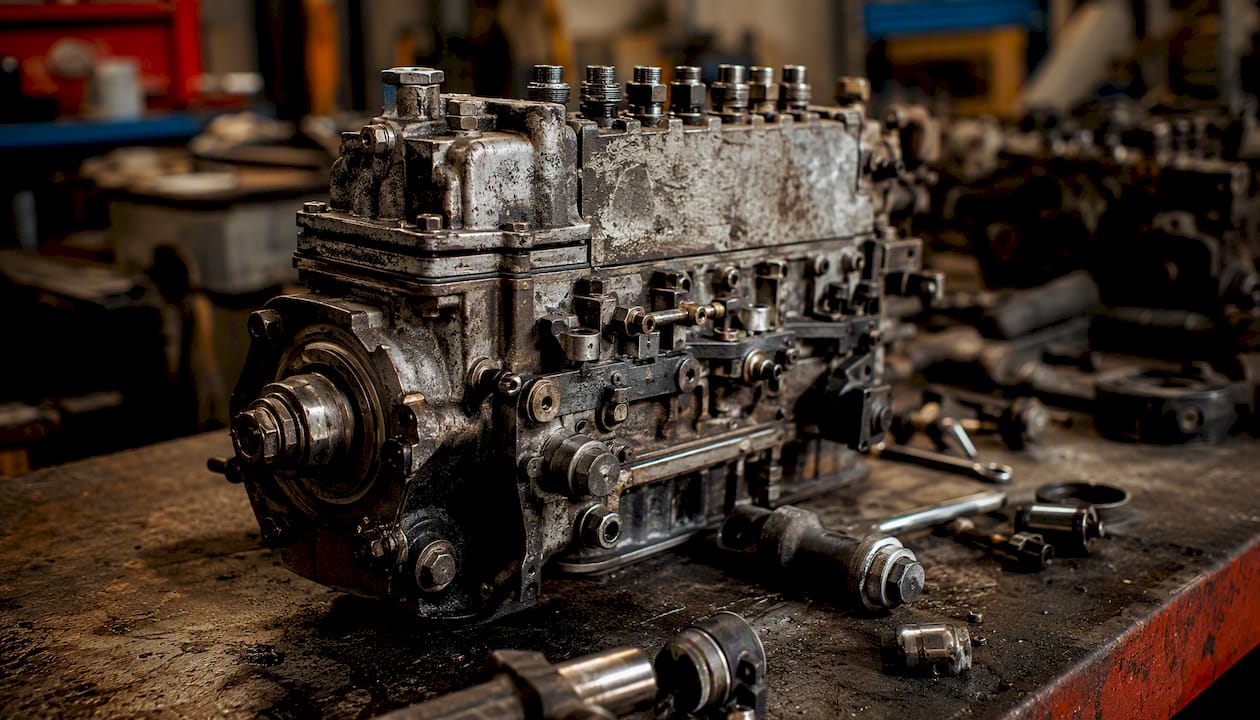
Budget your repair reserve before you run revenue, not after. A 30–60 day window where the truck earns nothing while you address deferred maintenance is a normal part of buying used. Buyers who skip this buffer end up financing repairs on credit cards at rates that destroy their CPM model.
Parts availability matters more than brand loyalty. Before you commit to a specific engine or transmission combination, confirm that your local dealer network can source parts and that independent shops in your operating area are familiar with the platform. An engine that's well-supported in the Southeast may be hard to service in the Mountain West.
Watch for seller pressure tactics:
- "I have three other buyers coming this weekend" is the most common urgency play; a truck worth buying will still be worth buying after a proper inspection
- "The ECM reader is broken right now" is a red flag, not an excuse; any diesel shop can pull codes in 20 minutes
- "It just needs a little work" without specifics means the seller knows what's wrong and won't tell you
Sellers who rush you are sellers who don't want you to look closely. The right truck will still be available after you complete your due diligence.
Sostruckforsale makes it easier to find and vet used semi trucks
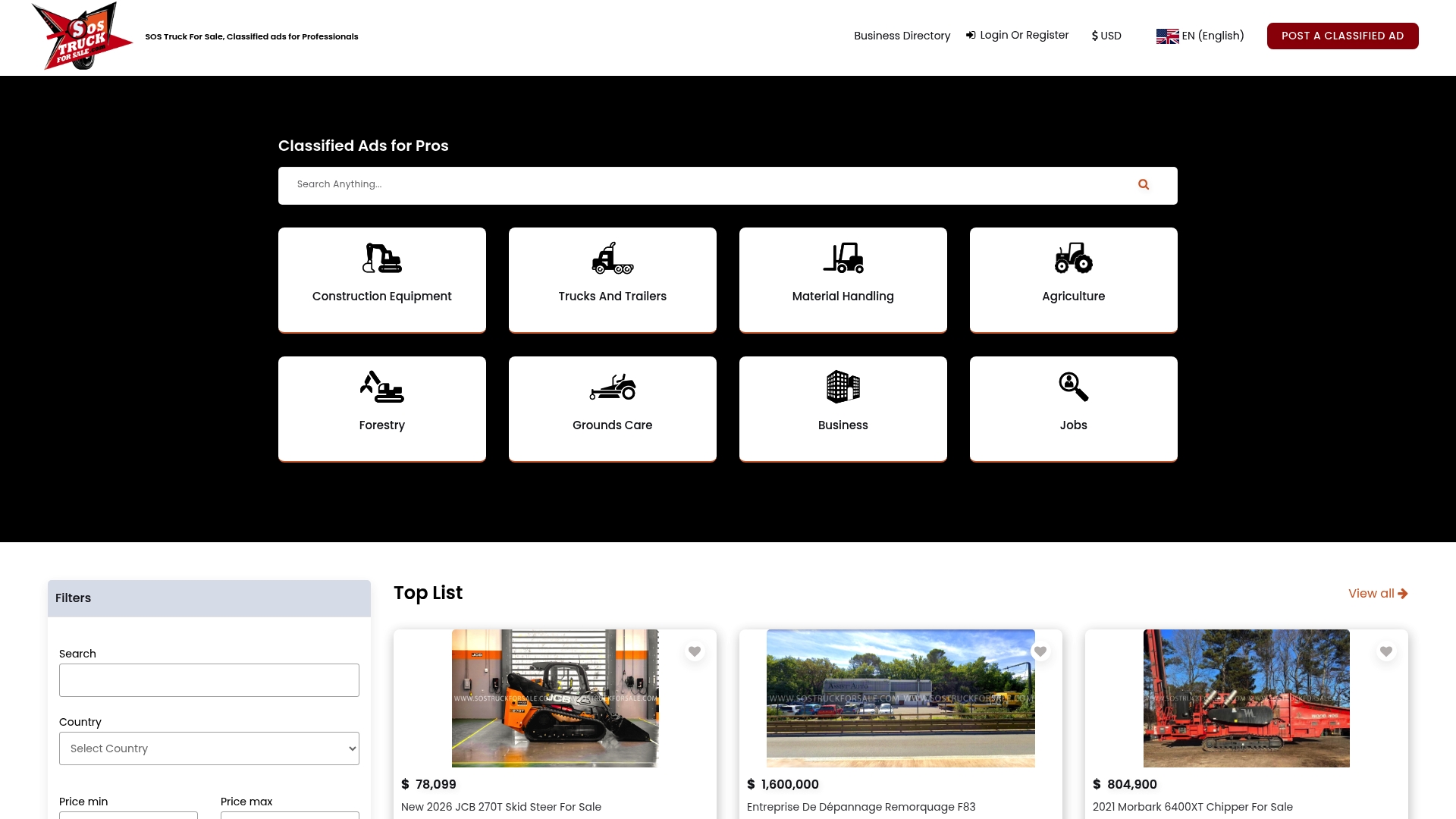
Sostruckforsale is a direct path to a wide inventory of used semi trucks and commercial equipment without the guesswork of cold-calling dealers or chasing private listings across multiple platforms. The marketplace lets you filter by category, spec, price, and location so you can shortlist trucks that match your lane requirements before you spend a day traveling.
Use the listings to apply the documentation minimums from this guide: contact sellers directly through the platform to request maintenance invoices, ECM screenshots, and DOT inspection reports before you commit to a visit. Sellers who respond with complete documentation are the ones worth your time. Those who can't or won't provide records are easy to filter out without leaving your desk.
Browse current used semi trucks for sale on Sostruckforsale to start building your shortlist today.
An editor's perspective on what first-time buyers consistently get wrong
The conventional wisdom in the used truck market is that mileage is the primary risk indicator. It isn't. Idle hours and aftertreatment history are more predictive of near-term repair cost than odometer miles, and most first-time buyers never ask for either.
The second truck has spent a disproportionate share of its life running at low load, which is hard on aftertreatment systems and doesn't tell you anything useful about engine wear. The odometer looks better. The ECM tells the real story.
The second thing buyers underestimate is the cost of being wrong. A missed DPF failure, a cracked frame, or a transmission that fails 30 days after purchase doesn't just cost the repair bill. It costs the revenue you didn't earn while the truck sat, the financing payments you still made, and the insurance premiums that kept running. The total loss on a bad used truck purchase can easily exceed the purchase price itself over a 90-day period.
Paying $300–$500 for a thorough third-party PPI with an ECM download is the highest-return investment in the entire buying process. Buyers who skip it to save money are making a decision that costs them far more than they saved.
This article is general information, not a substitute for advice from a qualified financial advisor. Consult a qualified financial professional about your own circumstances before acting on anything here.
Sources
- Best Used Semi‑Truck to Buy - 2026 Buyer’s Guide | Logrock
- Truckingresearch
- Commercial Truck Financing Guide 2026 | TruckFinancingGuide
- Average Semi Truck Loan Rates by Credit Score (2026 Data) | Brobas Capital
- Publication 535 (Business Expenses) | Internal Revenue Service