
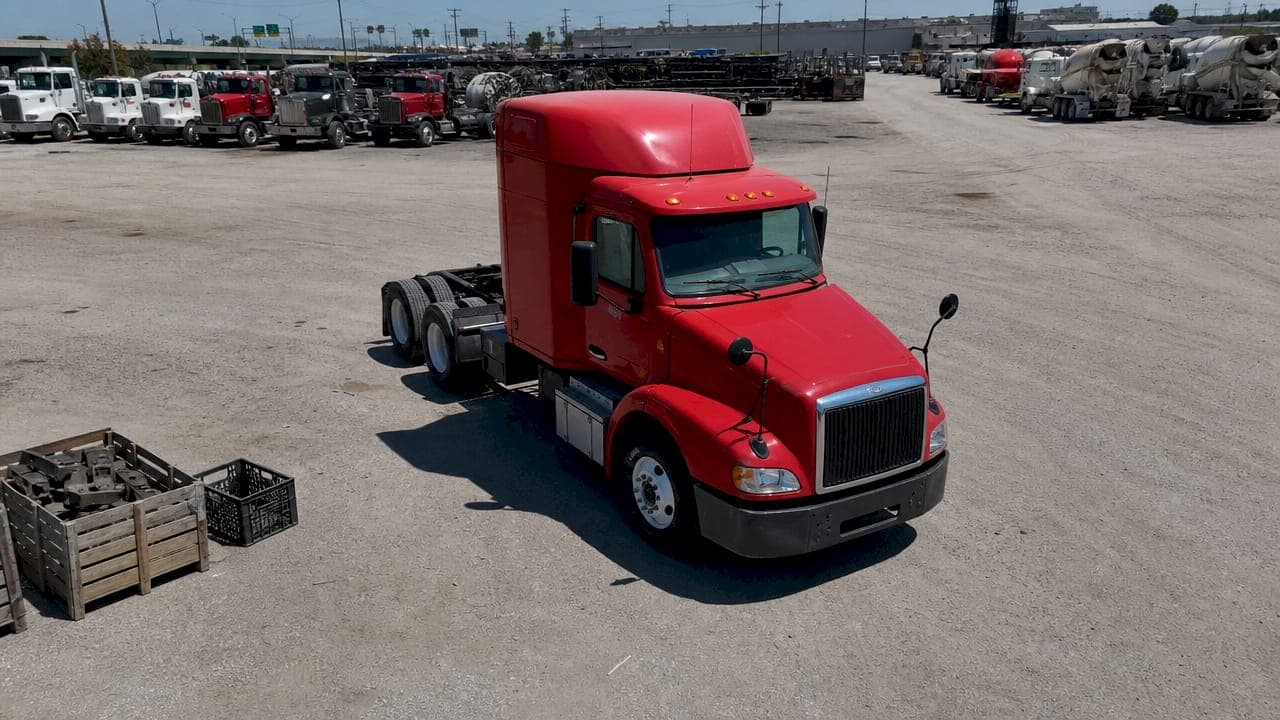
A Class 8 truck is defined as any commercial vehicle with a gross vehicle weight rating exceeding 33,000 pounds, making it the heaviest standard truck classification in the United States. These vehicles form the backbone of North American freight, construction, and heavy-duty logistics. The Federal Highway Administration oversees the federal truck classification system that places these vehicles at the top of the weight scale. Understanding what separates a Class 8 from lighter commercial trucks helps businesses make smarter fleet decisions and avoid costly compliance mistakes.
What is a Class 8 truck? Core specs and classification
A Class 8 truck carries a GVWR above 33,000 pounds with no upper regulatory limit for standard highway operations. That distinction matters because it means the classification covers everything from a heavy dump truck to a fully loaded 18-wheeler.
GVWR is not just the weight of the truck itself. It includes the truck, cargo, fuel, driver, passengers, and any attached trailer. This combined figure determines which federal regulations apply and what permits may be required.
On U.S. Interstates, most Class 8 trucks operate near 80,000 pounds gross combined weight without special permits. Loads exceeding that threshold require oversize or overweight permits issued by individual states, which add cost and route restrictions.
Key Class 8 specifications at a glance:
- GVWR threshold: Above 33,000 pounds
- Standard highway gross combined weight: Up to 80,000 pounds
- Upper GVWR limit: None for standard classification
- Axle configurations: Typically 6x4 or 6x2 for tractors; varies for vocational trucks
- Regulatory body: Federal Highway Administration and FMCSA
For context, Class 7 trucks top out at 33,000 pounds GVWR. Class 8 begins where Class 7 ends and has no ceiling, which is why it covers such a wide range of vehicle types and applications.
What types of Class 8 trucks are used in industry?
Class 8 trucks power most long-haul, regional, port, and vocational operations across North America. The category is broad by design, covering vehicles built for very different jobs.
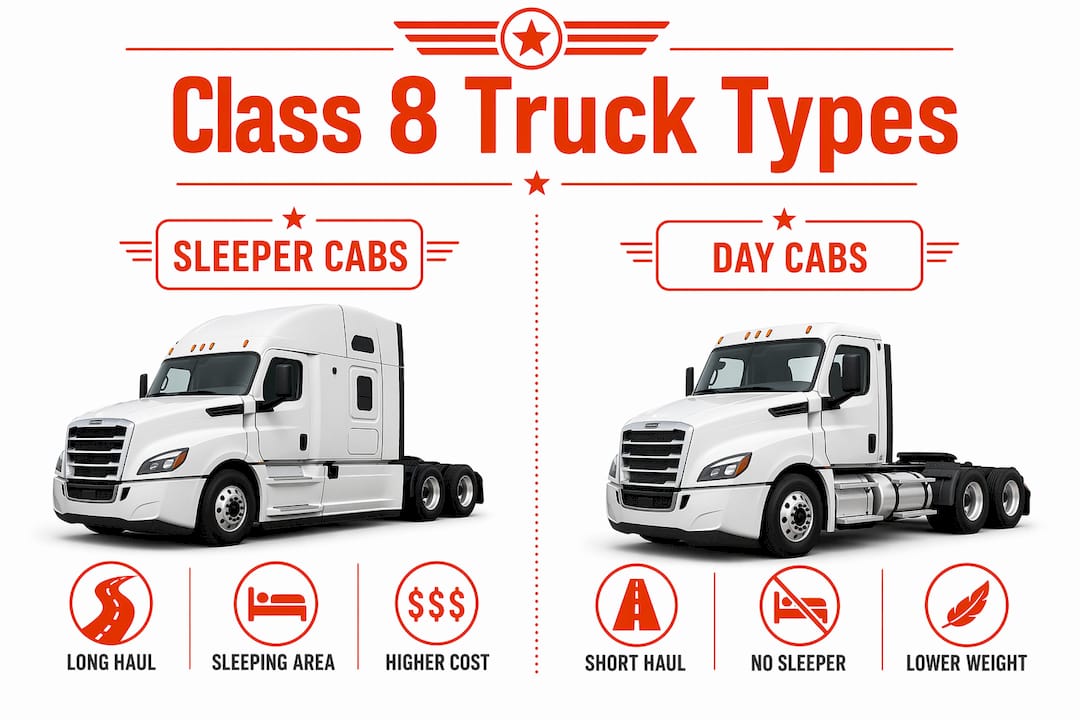
Sleeper cab tractors
Sleeper cab tractors are built for long-haul freight. The cab includes a sleeping compartment behind the driver's seat, allowing drivers to rest during multi-day runs without leaving the truck. These configurations prioritize fuel efficiency, driver comfort, and aerodynamics over raw payload capacity.
Day cab tractors
Day cab tractors eliminate the sleeping compartment entirely. Removing the sleeper box reduces vehicle weight by 800–1,200 pounds, which directly increases available payload capacity. That weight advantage makes day cabs the preferred choice for regional haul, port drayage, and short-distance freight where drivers return home each night.
Vocational trucks
Vocational Class 8 trucks are purpose-built for specific jobs rather than pulling trailers. Common configurations include:
- Dump trucks: Used in construction and mining for moving loose material
- Cement mixers: Carry rotating drums to keep concrete workable during transit
- Fuel tankers: Transport petroleum products with specialized tank bodies
- Refuse trucks: Designed for municipal waste collection with compaction systems
- Flatbed and specialized haulers: Move oversized equipment, steel, or machinery
Vocational trucks prioritize durability and torque delivery over highway fuel economy. Their frames, axles, and suspension systems are engineered for repeated heavy loading rather than sustained highway speeds.
How do Class 8 truck engines and performance features work?
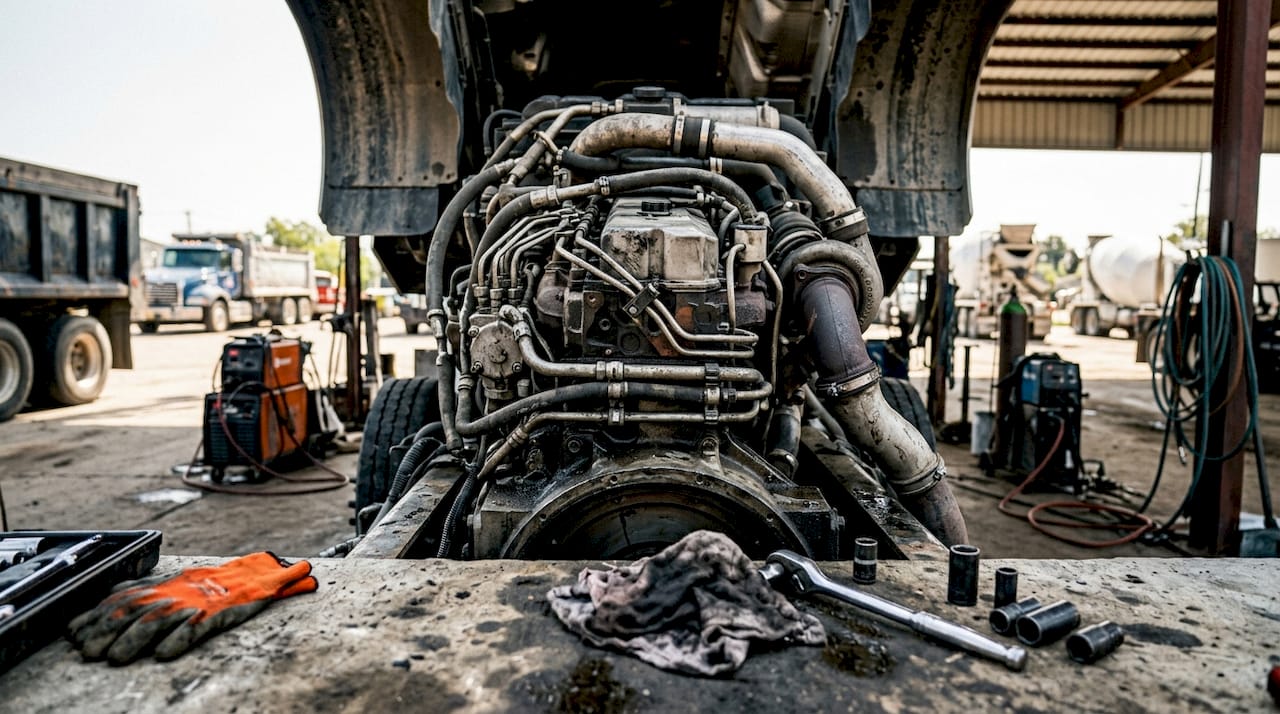
Modern Class 8 diesel engines are inline-6 configurations producing 400–605 horsepower and 1,450–2,050 lb-ft of torque. That torque range is what allows these trucks to pull 40-ton loads up steep grades at highway speeds.
EPA 2010 emission standards and aftertreatment systems
Every Class 8 truck sold in the U.S. since 2010 must meet EPA 2010 emission standards. These standards limit nitrogen oxide (NOx) output to 0.2 g/bhp-hr and particulate matter to 0.01 g/bhp-hr. Two primary systems make that possible.
Selective Catalytic Reduction (SCR) uses diesel exhaust fluid (DEF) injected into the exhaust stream to convert NOx into harmless nitrogen and water. Diesel Particulate Filters (DPF) trap soot and burn it off during regeneration cycles. Both systems require regular maintenance and add operational cost, but they are non-negotiable for legal operation.
Powertrain configuration and fuel efficiency
Powertrain setup affects fuel economy and durability more than engine brand alone. Automated manual transmissions (AMTs) have largely replaced traditional manual gearboxes in long-haul applications because they reduce driver fatigue and improve fuel efficiency. Axle ratio selection also matters: a numerically lower rear axle ratio favors fuel economy on flat highway routes, while a higher ratio delivers better pulling power for grades and heavy loads.
Pro Tip: Match your axle ratio to your primary route profile before purchasing. A truck spec'd for flat interstate runs will underperform on mountain routes, and vice versa.
The fifth-wheel coupling on tractor-trailer combinations must absorb vertical loads up to 40,000 pounds while handling articulation and shock loads. Neglecting fifth-wheel maintenance is one of the most common and dangerous oversights in fleet operations.
What licenses and compliance rules apply to Class 8 trucks?
Operating a Class 8 truck requires a Commercial Driver's License. The specific CDL class depends on the vehicle configuration.
- Class-A CDL: Required for combination vehicles where the towed unit exceeds 10,000 pounds GVWR. This covers most tractor-trailer operations.
- Class-B CDL: Required for single-unit heavy trucks over 26,000 pounds GVWR, such as large dump trucks or cement mixers without a towed trailer.
- DOT compliance: All Class 8 operators must comply with Federal Motor Carrier Safety Administration (FMCSA) regulations covering hours of service, vehicle inspections, and driver qualification files.
- Medical certification: CDL holders must carry a valid DOT medical certificate confirming physical fitness to operate commercial vehicles.
- Drug and alcohol testing: Federal regulations require pre-employment, random, and post-accident drug and alcohol testing for all CDL drivers.
The 26,000-pound GVWR threshold triggers mandatory CDL and DOT compliance obligations. Businesses that operate vehicles above this weight without proper licensing face significant fines and potential loss of operating authority.
Pro Tip: Build a driver qualification file for every CDL holder before they operate a vehicle. FMCSA auditors check these files first during compliance reviews, and missing documents create immediate violations.
How should businesses select and operate Class 8 trucks?
Businesses must evaluate payload requirements, route profiles, driver qualifications, and DOT regulations together before selecting a truck configuration. Treating these as separate decisions leads to mismatched equipment and higher operating costs.
The choice between a sleeper cab and a day cab has direct financial consequences. Sleeper cabs cost more upfront and weigh more, reducing payload capacity on weight-sensitive loads. Day cabs cost less and carry more payload, but they require drivers to return to a terminal or hotel each night. The right choice depends entirely on your route structure.
Total new Class 8 truck costs now commonly exceed $230,000, driven by federal excise taxes, tariffs, and emissions compliance requirements. That price point makes the buy-versus-lease decision critical for smaller fleets. Leasing reduces upfront capital requirements but limits customization and may include mileage caps that penalize high-utilization operations.
Trailer selection carries its own compliance risk. Using incorrect trailer types can cause cargo damage, insurance liability, and FMCSA violations that directly affect a carrier's safety rating. A dry van trailer is not interchangeable with a flatbed or a reefer unit. Match the trailer to the freight, not to what happens to be available.
Fleet managers who focus on configuration over brand consistently report better performance outcomes. The powertrain setup, axle configuration, and cab type matter more than the nameplate on the hood.
Key Takeaways
Class 8 trucks are defined by a GVWR above 33,000 pounds, and selecting the right configuration for your payload, route, and compliance obligations determines operational success more than any other factor.
| Point | Details |
|---|---|
| GVWR defines the class | Any truck with a GVWR above 33,000 pounds qualifies as Class 8, with no upper limit. |
| Configuration drives performance | Axle ratio, cab type, and powertrain setup matter more than brand for matching a truck to its job. |
| CDL is mandatory | Class-A CDL covers tractor-trailers; Class-B CDL covers single-unit heavy trucks above 26,000 pounds. |
| New truck costs exceed $230,000 | Federal taxes and emissions compliance have pushed new Class 8 prices to levels that make leasing a serious option for smaller fleets. |
| Trailer matching is a compliance issue | Using the wrong trailer type risks cargo damage, insurance claims, and FMCSA safety rating violations. |
What I've learned from watching fleets get Class 8 selection wrong
Most fleet purchasing mistakes I've seen come down to one error: buying the truck that sounds impressive on paper rather than the one that fits the actual job. A high-horsepower sleeper cab looks great in a spec sheet. It performs poorly on a 150-mile regional route where a lighter day cab would have carried more payload and cost less per mile.
The $230,000-plus price tag on new Class 8 trucks has also changed the calculus on used equipment. Fleets that dismissed used trucks five years ago are now running pre-owned units with modern emissions systems and strong remaining service life. The key is knowing what to inspect: fifth-wheel condition, DPF regeneration history, and transmission service records tell you more than mileage alone.
Emissions technology is not going backward. SCR and DPF systems are here to stay, and operators who treat DEF as an inconvenience rather than a maintenance priority pay for it in downtime and repair bills. Build DEF refill and DPF inspection into your standard pre-trip routine.
The trend I watch most closely is the shift toward AMTs in vocational applications. Automated transmissions were once considered unsuitable for dump trucks and mixers. That perception has changed as AMT reliability has improved. Fleets making the switch report measurable reductions in driver fatigue and clutch replacement costs.
— Dave
Finding the right Class 8 truck for your operation
Knowing the specs is one thing. Finding the right truck at the right price is another.
Sostruckforsale lists a wide range of heavy-duty trucks for sale, including sleeper cabs, day cabs, and vocational units across multiple configurations and price points. Whether you need a long-haul tractor or a purpose-built vocational truck, the listings cover both new and pre-owned inventory. You can filter by configuration, weight class, and application to match equipment to your operational requirements. Visit Sostruckforsale to browse current Class 8 listings and connect directly with sellers.
FAQ
What is the minimum GVWR for a Class 8 truck?
A Class 8 truck has a GVWR above 33,000 pounds. There is no upper GVWR limit for the standard Class 8 classification.
Do I need a CDL to drive a Class 8 truck?
A Class-A CDL is required for tractor-trailer combinations, and a Class-B CDL is required for single-unit Class 8 trucks. Both licenses require passing written and skills tests plus a DOT medical certification.
What is the standard weight limit for Class 8 trucks on U.S. highways?
Most Class 8 trucks operate at up to 80,000 pounds gross combined weight on U.S. Interstates without special permits. Loads above that threshold require state-issued oversize or overweight permits.
What types of engines do Class 8 trucks use?
Class 8 trucks use inline-6 diesel engines producing 400–605 horsepower and 1,450–2,050 lb-ft of torque. All engines sold since 2010 must meet EPA emission standards using SCR and DPF aftertreatment systems.
How much does a new Class 8 truck cost?
New Class 8 truck prices commonly exceed $230,000, reflecting federal excise taxes, tariffs, and emissions compliance costs. This price level makes leasing a practical alternative for fleets with limited capital.