

Commercial truck dealer best practices are proven operational methods that maximize absorption rates, strengthen customer relationships, and stabilize dealership revenue across market cycles. The most profitable dealerships treat fixed operations, not unit sales, as their primary financial foundation. According to the AED 2024 Cost of Doing Business study, best-in-class dealers achieve product support absorption rates of 100% or higher, compared to an industry average of 71%. That gap represents the difference between a dealership that survives a sales downturn and one that doesn't. The shift from transactional selling to a full customer ecosystem model is the defining strategic move for dealers heading into 2026.
1. Commercial truck dealer best practices start with fixed operations
Fixed operations, meaning parts and service revenue, are the financial backbone of every healthy dealership. Product support absorption above 100% means your parts and service departments cover all fixed overhead without relying on a single truck sale. That insulates you from the volatility that kills dealerships during slow sales cycles.
The industry average absorption rate sits at 71%. Top performers exceed 100%. That 29-point gap is not a minor operational difference. It represents thousands of dollars in monthly overhead that underperforming dealers must recover through unit sales alone.

Technician billable utilization is the most direct lever for improving absorption. Top-performing dealers maintain technician billable utilization rates between 75% and 82% of available hours. Dealers below that range are leaving significant labor revenue on the table every week.
Key operational levers to improve absorption:
- Hire and retain certified technicians to increase billable capacity
- Track utilization weekly, not monthly, to catch shortfalls early
- Attach Comprehensive Service Agreements (CSAs) at the point of sale
- Build dedicated service scheduling systems to reduce idle technician time
- Audit parts pricing annually against market rates
Pro Tip: Set a weekly utilization dashboard visible to your service manager. Dealers who track utilization in real time consistently outperform those who review it monthly.
2. Build a digital presence that captures high-intent buyers
A dealer website is not a brochure. It is a lead generation tool, and most dealer websites fail at that job. Dealership websites gain up to 30% more inbound inquiries when dealers fix core issues like pricing transparency, navigation clarity, and dedicated service content. That improvement requires no additional ad spend.
The most common failure is hiding pricing. Failing to include pricing or lease estimates on inventory listings causes high-intent buyers to leave dealer websites immediately. Commercial buyers research before they call. If your listing does not show a starting price or lease range, they move on.
Local SEO and optimized Google Business Profiles deliver the highest-impact, lowest-cost marketing results for dealers. An active, complete Google Business Profile consistently outranks competitors in local searches without requiring a paid campaign.
Five digital marketing priorities for commercial truck dealers:
- Add starting prices or lease estimate ranges to every inventory listing
- Create dedicated service and parts pages optimized for local search terms
- Complete and actively manage your Google Business Profile with photos and reviews
- Integrate your inventory feed directly with paid ad platforms for real-time accuracy
- Install conversion tracking on all lead forms and phone call buttons
Syncing inventory feeds directly to ad platforms yields far better lead-to-sale conversions than general brand awareness campaigns. Buyers searching for a specific truck model respond to ads showing that exact unit, not a generic dealership banner.
Pro Tip: Audit your website's mobile experience quarterly. Buyers expect fast-loading sites with clear navigation paths to request quotes in three clicks or fewer. If your quote request takes more than three steps, you are losing deals.
3. Embed financing early in the sales process
Financing is not a closing tool. It is a relationship tool, and dealers who treat it as an afterthought pay for that mistake in lost deals and weaker retention. Embedding financing early via branded direct lender programs can increase customer retention by 40%. That number reflects how much influence the financing experience has on whether a buyer returns.
The problem with generic finance referrals is that they hand control of the customer experience to a third party. Branded direct lender programs keep the relationship inside your dealership. The buyer associates the financing experience with your brand, not a bank.
Financing structures relevant to commercial truck buyers:
- Full-payout finance leases for buyers who want ownership at term end
- Operating leases for fleets managing balance sheet exposure
- Deferred payment programs for seasonal operators with irregular cash flow
- Step-up payment structures for buyers adding trucks to growing fleets
Financial professionals recommend embedding financing discussions early to maintain control of the customer experience and reduce internal overhead. The practical application is simple: introduce financing options during the needs assessment, not after the buyer has chosen a unit.
4. Keep inventory accurate, priced, and visually credible
Inventory management is where many dealers lose deals they should win. The most common dealer inventory mistakes are stale listings, missing prices, and stock photography. Commercial truck buyers expect real photos, pricing transparency, and easy quote requests within two to three clicks. Stock imagery signals that the actual unit may not match what is shown.
Real photos and short walkaround videos build credibility that no written description can match. A 60-second video showing a truck's cab, engine bay, and bed condition answers the questions buyers would otherwise call to ask. Fewer calls to answer basic questions means your sales team spends time on qualified conversations.
Pro Tip: Update every listing within 24 hours of a unit selling. Stale sold listings frustrate buyers and damage your site's credibility with search engines. Treat inventory accuracy as a daily operational task, not a weekly one.
Transparent pricing also affects your paid advertising performance. Ads that show a price generate higher click-through rates than ads that say "call for pricing." The buyer who clicks a priced ad is already pre-qualified on budget. That is a higher-quality lead at the same cost per click.
5. Align sales, parts, and service under one strategy
Dealers who run sales, parts, and service as separate silos consistently underperform dealers who align them under a single full-funnel strategy. Coordinated ecosystem approaches produce measurable absorption improvements and stabilize overhead costs. The mechanism is straightforward: a truck sold with a CSA attached generates predictable parts and labor revenue for the life of that agreement.
The traditional transactional sales model is giving way to a customer-first ecosystem that emphasizes uptime solutions and collaborative partnerships. Dealers who make this shift stop measuring success by units sold per month and start measuring it by customer uptime, retention rates, and absorption percentages.
The practical starting point is a shared CRM that connects your sales, service, and parts teams. When a service advisor can see a customer's purchase history and a salesperson can see their service record, every conversation becomes more informed and more valuable to the customer.
6. Build structured service retention programs
Service retention is the most underused revenue source in most dealerships. Dealers who neglect structured CSA attach efforts lose multi-year parts and labor income that is otherwise predictable and recurring. A customer without a service agreement is a customer at risk of going to an independent shop.
CSA attach rates between 35% and 45% on new sales secure significant recurring parts and labor revenue. Dealers below 35% should treat CSA attachment as a sales training priority, not a service department afterthought.
Retention tactics that improve lifetime customer value:
- Send seasonal maintenance reminders tied to the customer's specific equipment
- Run win-back campaigns targeting customers who have not visited service in 12 months
- Offer loyalty pricing on parts for customers with active CSAs
- Use service visit data to time new truck sales conversations
Pro Tip: Train your sales team to present CSA options before the buyer signs the purchase agreement. Attach rates drop significantly when the CSA conversation happens after the sale closes. Position it as part of the total ownership cost, not an add-on.
Every service visit is also a sales opportunity. A customer whose truck is in your bay for a 50,000-mile service is a buyer who will need a replacement unit in 12 to 24 months. Your service advisor is your best prospecting tool.
Key Takeaways
The most profitable commercial truck dealerships build their financial stability on fixed operations absorption, not unit sales volume, and reinforce that foundation with digital visibility, embedded financing, and structured service retention.
| Point | Details |
|---|---|
| Absorption is the priority metric | Target 100% absorption so parts and service cover all fixed overhead independently. |
| Technician utilization drives revenue | Keep billable utilization between 75% and 82% to maximize labor income. |
| Pricing transparency wins online buyers | List starting prices and lease estimates on every inventory page to reduce bounce rates. |
| CSA attach rates secure recurring income | Target 35%–45% CSA attachment on new sales to lock in multi-year parts and labor revenue. |
| Financing belongs early in the conversation | Introduce branded financing during needs assessment to improve retention and deal control. |
What I have learned from watching dealers win and lose
The dealers I have seen thrive over the past decade share one trait: they stopped treating their service department as a cost center and started treating it as a profit engine. The absorption rate is not an accounting metric. It is a survival metric. When a sales downturn hits, the dealer at 100% absorption keeps the lights on. The dealer at 60% starts cutting staff.
Digital marketing is where I see the most wasted money. Dealers spend heavily on brand awareness campaigns while their own websites drive buyers away with missing prices and broken quote forms. Fix the website first. A 30% increase in inbound inquiries from structural website fixes costs nothing compared to a paid campaign producing the same result.
The financing conversation is the one I see delayed most often, and it costs dealers real money. Buyers who arrange their own financing before walking in are harder to retain. When you control the financing relationship through a branded program, you control the next purchase conversation too.
The mindset shift that matters most is moving from "how many units did we sell this month" to "what is our absorption rate and CSA attach rate." Those two numbers tell you whether your dealership is healthy. Unit volume tells you whether you had a good month. Absorption tells you whether you have a good business.
— Dave
List your inventory on Sostruckforsale
Sostruckforsale connects commercial truck dealers with buyers actively searching for semi trucks for sale, heavy duty trucks, and industrial equipment. The platform is built for dealers who want accurate, visible inventory in front of high-intent buyers without the complexity of managing multiple listing channels.
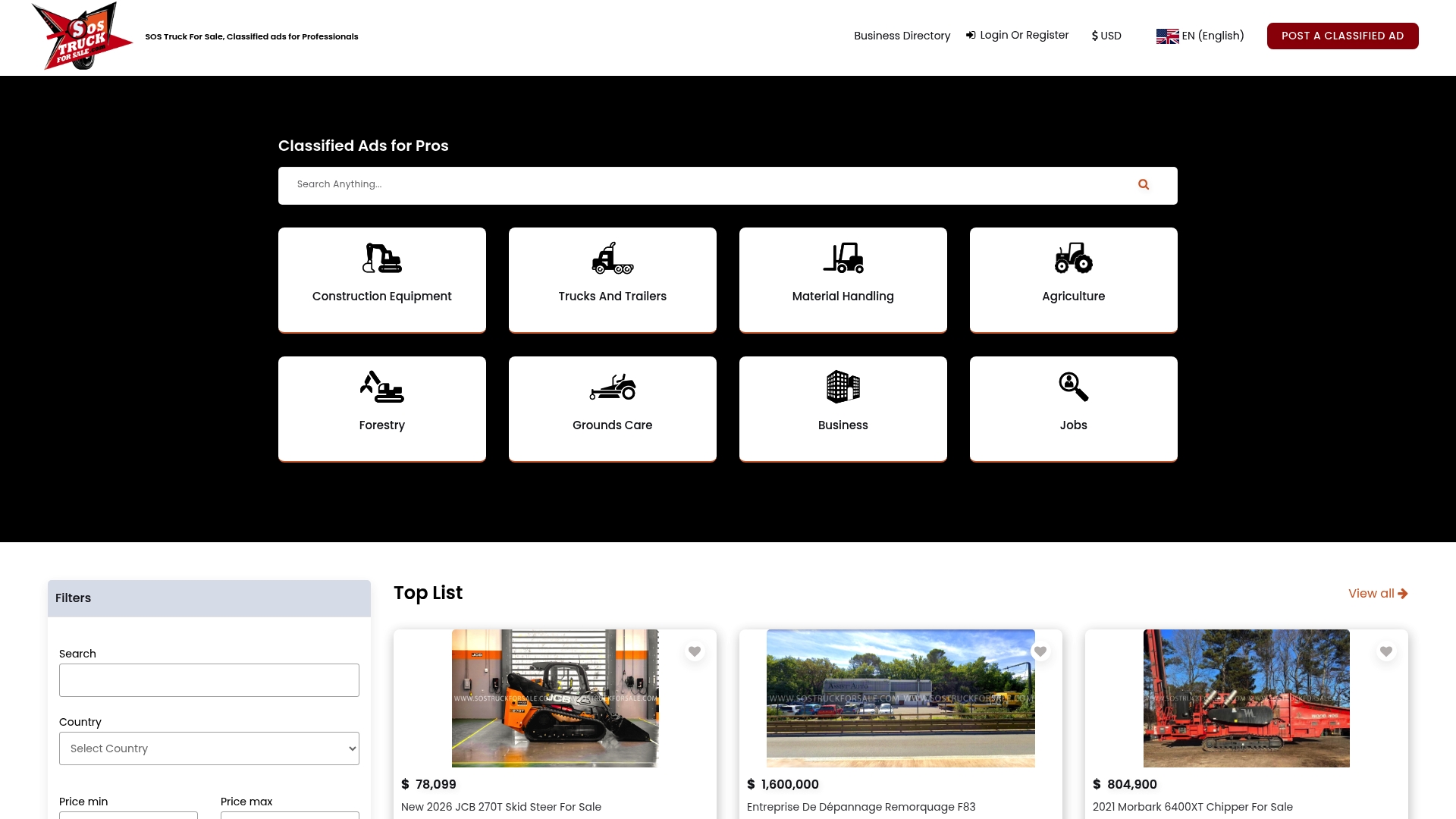
Listings on Sostruckforsale support the inventory best practices covered here: real photos, transparent pricing, and direct buyer contact. If your dealership is working to improve lead quality and reduce time on lot, Sostruckforsale gives you the visibility to do it. Visit Sostruckforsale to list your current inventory and connect with commercial buyers ready to purchase.
FAQ
What is product support absorption in truck dealerships?
Product support absorption measures how much of a dealership's fixed overhead is covered by parts and service revenue alone. Best-in-class dealers achieve 100% or higher, meaning they do not need truck sales to cover operating costs.
What CSA attach rate should dealers target?
Dealers should target CSA attach rates between 35% and 45% on new truck sales. That range secures multi-year recurring parts and labor revenue that stabilizes fixed operations income.
How does pricing transparency affect online lead volume?
Listings without pricing or lease estimates cause high-intent buyers to leave dealer websites immediately. Dealers who add transparent pricing to inventory pages see measurable reductions in bounce rates and increases in inbound inquiries.
When should financing be introduced in the sales process?
Financing should be introduced during the needs assessment, before the buyer selects a specific unit. Branded direct lender programs introduced early improve customer retention and keep the relationship inside the dealership.
What technician utilization rate signals a healthy service department?
Top-performing dealers maintain technician billable utilization between 75% and 82% of available hours. Rates below that range indicate idle capacity and lost labor revenue that directly reduces absorption.