

Most semi truck resale losses trace back to two root causes: undisclosed mechanical history and paperwork gaps. The quickest way to protect yourself is a diagnostic scan combined with a verified title and lien search before any money changes hands.
Three highest-impact actions right now:
- Buyers: Request an ECM/diagnostic pull (Cummins INSITE or JPRO) and hire an independent heavy-truck technician for a pre-purchase inspection.
- Sellers: Clear any outstanding liens, organize your full maintenance records, and clean and photograph the truck before listing.
- Both parties: Verify the VIN across all physical points, pull a vehicle history report through Carfax or AutoCheck, and confirm the title is free of encumbrances at your county DMV.
Use the buyer and seller checklists in Section 4 as your printable reference during any inspection or listing prep.
Table of Contents
- 1. Common semi truck resale mistakes buyers make most often
- 2. Seller mistakes that cost you money before the listing goes live
- 3. Buyer and seller checklists you can print and use today
- 4. How to verify history and protect yourself from VIN and title fraud
- 5. Pricing errors, negotiation missteps, and realistic repair cost ranges
- Key Takeaways
- The mistake most buyers and sellers overlook entirely
- Sostruckforsale helps you buy and sell semi trucks with less risk
- Authoritative resources for diagnostics, VIN checks, and pricing
1. Common semi truck resale mistakes buyers make most often
Buying a used semi truck without the right due diligence can cost you far more than the purchase price suggests. These are the errors that generate the largest post-purchase repair bills.

1. Skipping the ECM/diagnostic scan. The engine control module records fault counts, idle history, duty-cycle maps, and audit-trail changes that never appear on a service receipt. A JPRO or Cummins INSITE pull costs roughly $150–$300 and can reveal years of deferred maintenance in minutes. Skipping it is the single most expensive shortcut in used-truck buying.
2. Reading the odometer but ignoring engine hours. A truck with 450,000 miles on the odometer but 60% idle time has a very different engine life expectancy than one with the same miles and 15% idle. Professional buyers read ECM metrics beyond the odometer because high idle percentage and cumulative fault durations reveal real workload stress that the mileage number alone never shows.
3. Accepting incomplete maintenance records. Gaps in service history are not just inconvenient. They are a financial liability. If a seller cannot produce oil change intervals, DPF service records, and coolant flush history, budget for the worst-case reconditioning scenario before you make an offer.
4. Overlooking DPF and emissions compliance. Diesel particulate filter issues are among the most expensive repairs on modern Class 8 trucks. A truck with a history of repeated regeneration cycles or deleted emissions equipment may be non-compliant in your operating state, which creates both legal exposure and resale problems when you eventually sell.
5. Choosing the wrong spec for the intended use. Axle configuration, transmission type (manual vs. automated manual), sleeper vs. day cab, and PTO capability all affect operating cost and resale value. A truck spec'd for long-haul that you plan to run regionally will burn more fuel and wear faster than one matched to the route. Mileage, emissions compliance, configuration, and transmission type are among the seven primary drivers of resale value, and a mismatched spec hurts you on both ends of ownership.
6. Failing to verify title and check for liens. Buying a truck with an undisclosed lien means you may inherit the debt or lose the truck to repossession. Always run a lien search through your county DMV before closing, and confirm the title is in the seller's name with no encumbrances.
7. Ignoring total cost of ownership. Purchase price is only the entry point. Fuel economy, insurance rates, expected tire replacement cycles, and likely reconditioning costs all determine whether a truck is actually a good deal at the asking price.
Pro Tip: Hire an independent heavy-truck technician, not a dealer tech with a financial interest in the sale. Ask specifically for a Cummins INSITE or JPRO diagnostic pull, and request the printed report. A seller who refuses that request is telling you something important.
2. Seller mistakes that cost you money before the listing goes live
Sellers leave significant money on the table through avoidable errors in pricing, presentation, and paperwork. Each mistake below has a direct fix you can execute before you post the ad.
-
Mispricing without a reference point. Listing above or below market without checking NADA or KBB Truck ranges signals either desperation or ignorance to experienced buyers. Use KBB/NADA guidance to anchor your price, then adjust for mileage, engine hours, spec, and condition. Fix: Pull NADA and KBB values the day you decide to sell, not after you've already listed.
-
Poor photos and vague ad copy. Blurry images, missing interior shots, and a one-line description push serious buyers toward better-documented listings. Buyers cannot physically inspect a truck from a screen, so your photos are the inspection. Fix: Shoot in daylight, cover all four exterior angles, the engine bay, the cab interior, the sleeper if equipped, and any known cosmetic damage.
-
Missing or disorganized maintenance records. A complete service history is a price-support document. Sellers who hand over a folder of organized oil change receipts, DPF service records, and inspection reports command higher prices than those who say "it was always maintained." Fix: Organize records chronologically before you list.
-
Unresolved liens or title issues. A buyer who discovers a lien mid-transaction will either walk away or demand a price reduction that covers their risk. Clear liens before listing and have the lender issue a payoff letter if needed. Fix: Contact your lender, get the payoff amount in writing, and plan the closing so the lien releases at or before transfer.
-
Failing to disclose accidents or major repairs. Non-disclosure creates legal liability after the sale. Buyers who discover undisclosed frame repairs or accident history post-purchase have legal recourse in most states. Fix: Disclose in writing, attach repair invoices, and price accordingly.
-
Skipping basic reconditioning. Small cosmetic fixes and a strong photo set disproportionately increase buyer confidence relative to their cost. A pressure wash, interior clean, and working lights cost very little but signal that the truck was cared for. Fix: Budget $200–$500 for a professional detail and minor cosmetic repairs before shooting photos.
Pro Tip: For payment safety, accept certified funds or a wire transfer only. Prepare a Bill of Sale that includes VIN, odometer reading, sale price, and an "as-is" clause if applicable. Never release the title until funds clear.
3. Buyer and seller checklists you can print and use today
Buyer inspection checklist
| Item | What to check | Priority |
|---|---|---|
| ECM/diagnostic scan | Fault counts, idle %, duty-cycle map, audit trail | Must-check |
| Engine hours vs. odometer | Cross-reference ECM hours with odometer miles | Must-check |
| Transmission fluid sample | Color, smell, metal particles | High |
| Frame and suspension | Cracks, welds, alignment, spring condition | High |
| Brake condition | Lining thickness, drum/rotor wear, air system | High |
| Tires | Tread depth, even wear, sidewall condition | High |
| DPF/regen history | Regen frequency, DPF replacement records | High |
| Test-drive notes | Shifting, vibration, smoke, warning lights | High |
| VIN verification | Match plate, door jamb, frame stamp, title | Must-check |
| Lien search | County DMV or title company lien search | Must-check |
| Maintenance records | Oil changes, coolant, DPF, major repairs | Must-check |
| Smell and visible leaks | Oil, coolant, fuel under the truck and in cab | Medium |
| Budget for wear items | Tires, brakes, DPF service, minor bodywork | Medium |
Seller prep checklist
| Item | Action | Priority |
|---|---|---|
| Clear title and lien payoff | Confirm title is in your name; get lien payoff letter | Must-do |
| Organize maintenance records | Sort chronologically; include DPF and major service | Must-do |
| Run a diagnostic pull | Pull ECM data; address active fault codes | High |
| Basic reconditioning | Pressure wash, interior clean, working lights | High |
| Photography | Daylight, all angles, engine bay, cab, any damage | High |
| Disclose accidents/repairs | Written disclosure with supporting invoices | Must-do |
| Price with NADA/KBB | Adjust for mileage, hours, spec, and condition | High |
| Bill of Sale ready | VIN, odometer, price, as-is clause | High |
Must-check flags for both parties: ECM/diagnostic scan, clear title with lien verification, and complete service records. These three items resolve the majority of post-sale disputes and failed transactions.
4. How to verify history and protect yourself from VIN and title fraud
Vehicle history reports from Carfax or AutoCheck are a useful first layer. They surface accident events, title transfers, and odometer readings reported to the DMV. What they do not capture is chronic maintenance abuse, ECM-level fault accumulation, or manipulation of the production year versus the registration year.
Sellers who refuse a diagnostic pull often do so because the ECM audit trail would expose deferred maintenance that costs more to fix than the scan itself. That refusal is a clear signal to walk away or renegotiate from a position of full skepticism.
VIN cloning, production-year manipulation, and specification inflation are documented fraud vectors in commercial fleet transactions. A seller may advertise the model year that fetches the highest price while the production year and registration year tell a different story. Verify the VIN across at least three physical points: the dashboard plate, the door jamb sticker, and the frame stamp. Any mismatch is a hard stop.
Red flags that require immediate action:
- Seller refuses ECM diagnostic or independent inspection
- VIN plate shows signs of tampering (fresh paint, misaligned rivets, inconsistent font)
- Model year on the ad does not match the production year on the door jamb
- Maintenance records are inconsistent, photocopied, or begin suspiciously late in the truck's life
- Repeated active fault codes with no repair documentation
- Title is in a third party's name or shows multiple rapid transfers
If you find a red flag:
- Request lien payoff confirmation in writing from the lender before proceeding.
- Use an escrow service for high-value transactions.
- Require the seller to fund an independent inspection by a technician you select.
- Verify lien status directly with the county DMV, not through documents the seller provides.
5. Pricing errors, negotiation missteps, and realistic repair cost ranges
Getting the price wrong is one of the most common commercial vehicle pricing errors on both sides of the transaction. Two otherwise similar trucks can differ by $20,000–$50,000 based on mileage band, engine hours, spec fit, emissions compliance, and documented maintenance history.
Pricing checklist
- Pull NADA and KBB Truck values for the specific year, make, model, and configuration.
- Adjust downward for high engine hours, missing records, or emissions non-compliance.
- Adjust upward for low idle percentage, complete service history, and spec alignment with regional demand.
- Factor in regional emission regulations. A truck that is compliant in Texas may not meet California Air Resources Board standards, which directly affects the buyer pool and price.
Three negotiation scripts
Buyer opening: "I'd like to proceed subject to a clean ECM pull and an independent inspection. If both come back consistent with the listing, I'm prepared to move at the asking price."
Seller rebuttal: "The truck has been maintained to schedule. I'm happy to provide records and allow a diagnostic. I'm not in a position to reduce the price before inspection results are in."
Shared inspection contingency: "We agree on a price of $X contingent on the ECM diagnostic showing no active fault codes and the independent inspector finding no undisclosed structural or mechanical issues."
Typical wear-item cost ranges
- Steer tires: $500–$700 each; drive tires $350–$550 each
- Brake pads/shoes and drums: $800–$1,500 per axle for a full service
- DPF cleaning or replacement: $400–$2,500 depending on condition
- Minor bodywork (cab corner, fairing repair): $500–$1,500 per panel
These are ranges, not guarantees. Get written quotes from a shop before finalizing any deal that assumes reconditioning costs.
Key Takeaways
Avoiding the most costly semi truck resale errors comes down to three non-negotiable steps: an ECM diagnostic pull, a verified clear title with lien search, and complete documented maintenance records.
| Point | Details |
|---|---|
| ECM scan is non-optional | A $150–$300 diagnostic pull reveals fault history and idle abuse that no service receipt shows. |
| Title and lien verification | Run a county DMV lien search before any money moves; unresolved liens transfer with the truck. |
| Maintenance records support price | Organized service history is a price-support document for sellers and a risk filter for buyers. |
| Presentation drives buyer confidence | Basic reconditioning and quality photos increase perceived value at low cost for sellers. |
| Sostruckforsale for listings | Sostruckforsale's marketplace connects buyers and sellers of semi trucks with spec-filtered listings and documentation fields that reduce transaction friction. |
The mistake most buyers and sellers overlook entirely
The conventional wisdom in used-truck transactions focuses heavily on mechanical condition, and that focus is correct. What gets underestimated is how much paperwork gaps and presentation failures cost relative to their actual fix cost.
A seller who spends $300 on a professional detail, $150 on an ECM pull to show a clean report, and two hours organizing maintenance records into a binder will consistently outperform a seller who lists a mechanically identical truck with blurry photos and a vague description. The buyer pool for a well-documented truck is larger, the negotiation is shorter, and the final price is higher.
On the buyer side, the overlooked mistake is treating the odometer as the primary value signal. Engine hours, idle percentage, and fault duration from the ECM tell a more complete story than miles alone. A long-haul truck with 600,000 miles and 12% idle time may be in better mechanical shape than a regional truck with 300,000 miles and 45% idle. The ECM does not lie; the odometer, on its own, often misleads.
The other underappreciated risk is the year-mismatch problem. Model year, production year, and registration year can differ, and some sellers advertise whichever date yields the highest price. Catching that discrepancy costs nothing but a few minutes with the door jamb sticker and the title. Missing it can create insurance disputes and resale problems years later.
Sostruckforsale helps you buy and sell semi trucks with less risk
Buyers and sellers who want to avoid the friction described throughout this article have a practical starting point at Sostruckforsale. The marketplace lists semi trucks, heavy-duty trucks, and commercial equipment with spec-level filters so buyers can search by configuration, axle type, and category rather than scrolling through mismatched results.
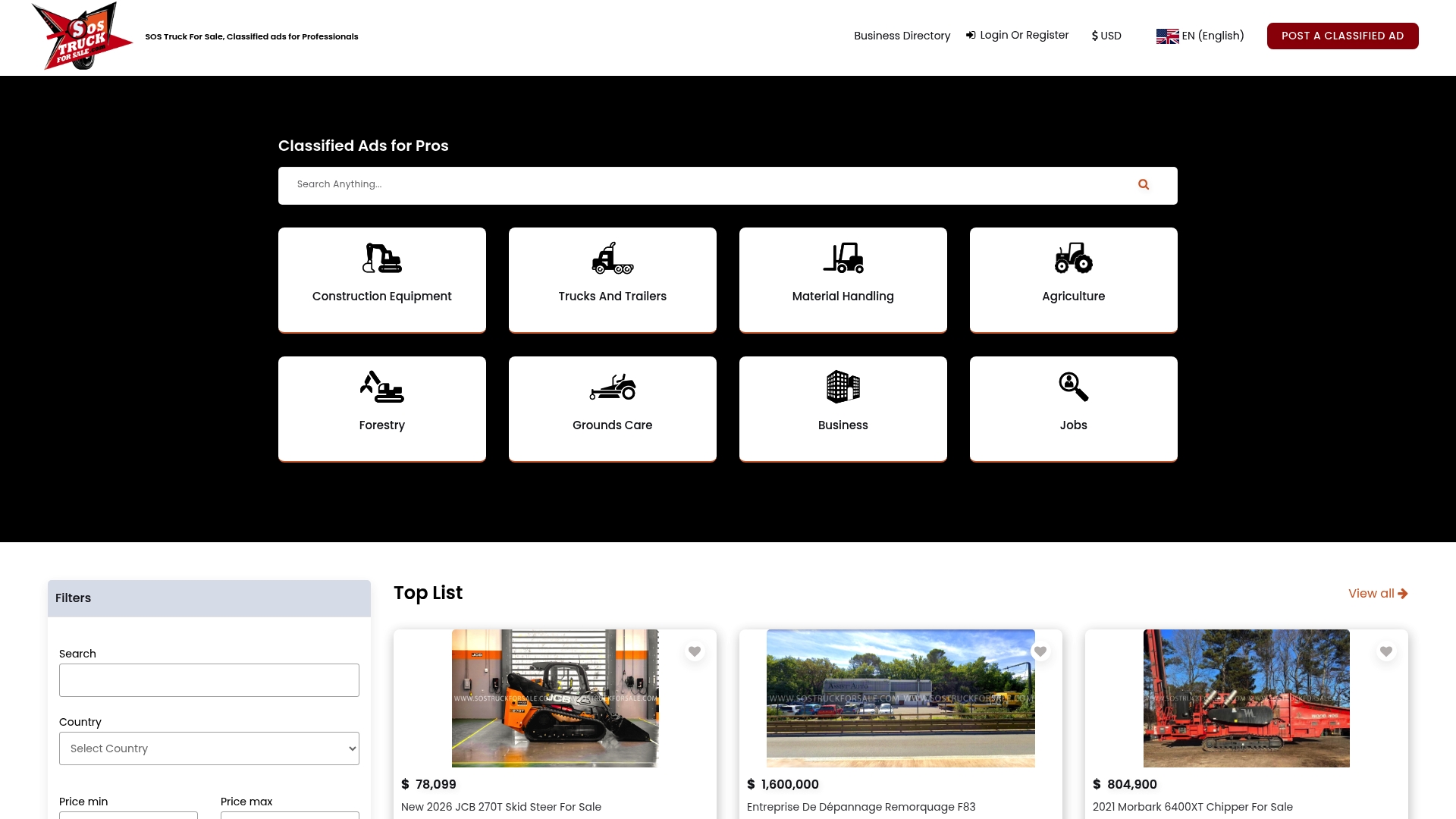
Sellers benefit from structured listing fields that prompt documentation uploads, including maintenance records and title status, which reduces the back-and-forth that kills deals. For buyers who want to move quickly on a verified listing, the dealer directory connects you directly with commercial equipment dealers who list with full specifications. Whether you're listing a day cab or searching for a sleeper truck for sale, the platform is built for the commercial buyer and seller, not the general public.
Search current listings or post your truck at Sostruckforsale and reach buyers who are already looking for what you have.
Authoritative resources for diagnostics, VIN checks, and pricing
Use these resources at the specific stages of your transaction where they add the most value.
- Cummins INSITE / JPRO diagnostic tools: Use through a certified Cummins dealer or an independent heavy-truck technician. Request the printed report, not just a verbal summary. Best used before making any offer.
- Carfax / AutoCheck vehicle history reports: Pull these early to surface title events, accident reports, and odometer readings. Treat them as a starting point, not a final clearance. They do not replace an ECM pull.
- County DMV lien search: Contact the DMV in the state where the truck is titled. Confirm the title holder's name and any recorded liens. This step costs very little and prevents the most expensive post-sale disputes.
- NADA Guides / KBB Truck: Use these for baseline pricing before you list or make an offer. Adjust the base value for engine hours, spec, emissions compliance, and documented service history.
- Independent inspection services: For high-value transactions, hire a certified heavy-truck inspector who has no financial relationship with the seller. Ask for a written report covering frame, drivetrain, brakes, and emissions systems.
- FreightWaves: Useful for market trend analysis and understanding current used-truck supply conditions that affect pricing and negotiation leverage.
- EasyScrap blog: For owner-operators and small haulers, the EasyScrap industry blog covers practical used-truck operation and seller prep guidance relevant to local and regional hauling buyers.
Keep printed copies of your title, maintenance records, and any inspection reports. Every document you retain today reduces friction the next time you sell.