
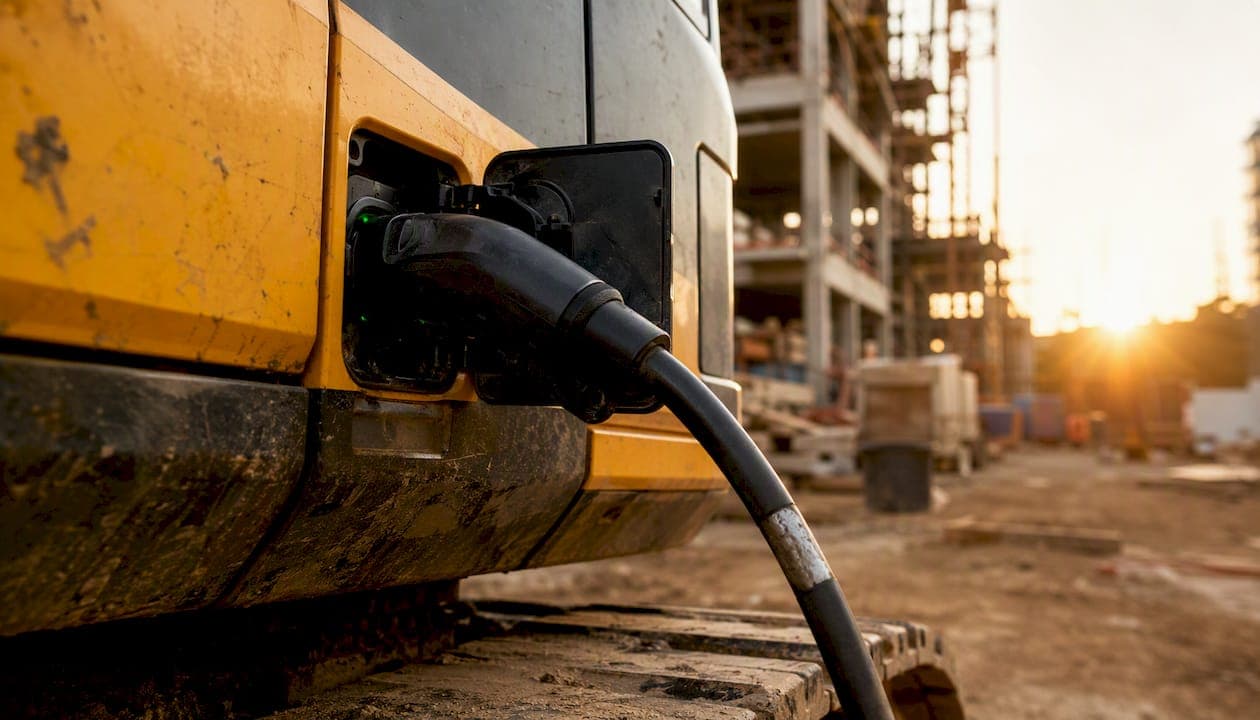
Electric heavy equipment is ready for many urban, indoor, and short-cycle jobs today, and for any fleet that plans charging infrastructure before purchase. It is not yet a universal diesel replacement for continuous, high-hour remote earthmoving, but the viable categories are expanding fast.
For most U.S. fleets, the current picture looks like this:
- Runtime: Battery-electric machines in production today typically deliver 4–8 hours per charge depending on machine class and duty cycle, with some compact units running longer on lighter tasks.
- Viable categories now: Mini and midsize electric excavators, wheel loaders, forklifts, telehandlers, scissor lifts, boom lifts, and tandem rollers are all in commercial production.
- Primary trade-offs: Higher upfront cost, battery weight reducing net payload, charge-time constraints, and the need for on-site power infrastructure.
Two actions to take before you read further: run a load-cycle audit on the machines you want to replace, and check your site's grid capacity and local utility permitting requirements. Those two data points will tell you more than any spec sheet.
Pro Tip: A load-cycle audit does not need to be complex. Log machine operating hours, idle time, and peak-load tasks for two weeks. That data is the single most useful input for matching a battery spec to your actual duty cycle.
Key Takeaways
Electric heavy equipment is ready for urban, indoor, and short-cycle applications now, but successful deployment depends on load-cycle matching, charging infrastructure planning, and structured procurement.
| Point | Details |
|---|---|
| Viable categories today | Compact excavators, forklifts, loaders, lifts, and rollers are in commercial production with 4–8 hour runtimes. |
| Load-cycle matching is decisive | Match battery spec to actual duty-cycle data, not manufacturer best-case figures, before purchasing. |
| Infrastructure planning first | Start utility coordination at least 6 months before deployment; transformer upgrades take longer than equipment lead times. |
| TCO requires full modeling | Factor in battery replacement cost, maintenance savings, and local electricity rates alongside purchase price. |
| Sostruckforsale for sourcing | Search electric equipment listings by category and powertrain on Sostruckforsale to connect with dealers offering demos and rental options. |
Table of Contents
- What types of electric heavy equipment are available today?
- Benefits and trade-offs of switching to electric machines
- How do you keep electric machines running on site?
- Where does electric heavy equipment deliver the biggest upside?
- What does total cost of ownership actually look like?
- How do you evaluate machines and vendors before buying?
- Why matching load cycles to machine capability is decisive
- Battery management and safety protocols for heavy electric equipment
- Workforce training and operator adaptation for electric heavy equipment
- Infrastructure needs and upgrades for site electrification
- Government incentives, regulations, and compliance for electric equipment in the US
- What we see customers actually doing
- Find electric heavy equipment listings on Sostruckforsale
- Sources
What types of electric heavy equipment are available today?
The range of electric construction machinery spans from compact site equipment to mid-tonnage machines, with larger classes emerging. Here is where production availability stands:
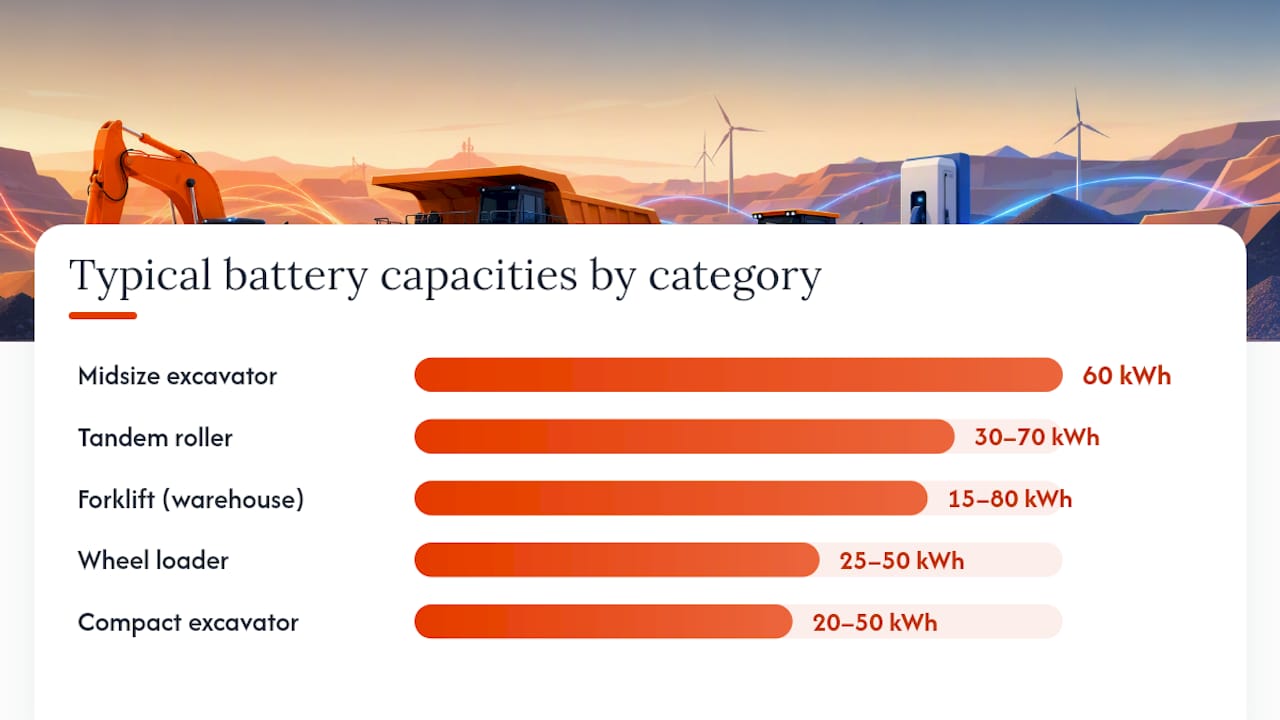
- Mini and compact excavators (up to 6 tons): The most mature electric category. Multiple manufacturers offer production models with 20–50 kWh battery packs.
- Midsize excavators (6–20 tons): Growing availability; several production models exist, though selection is narrower than compact.
- Wheel loaders (compact to mid-range): Electric models are in production across the 1–8 ton range; larger loaders remain mostly prototype or limited-run.
- Forklifts and telehandlers: Electric forklifts are the most established category in the entire market, with decades of proven indoor use. Electric telehandlers are newer but increasingly available.
- Scissor lifts and boom lifts: Widely available in electric form; standard equipment for indoor and noise-sensitive sites.
- Tandem rollers and compactors: Electric models are in production for road-building applications.
- Crawler cranes and large mining machines: Electrification is emerging but still nascent at large tonnages, with tethered and hybrid configurations more common than pure battery-electric.
- Compact site dumpers and skid-steer alternatives: Several electric compact track loaders and site dumpers are available or in late-stage development.
Manufacturer resource centers, including Volvo CE's electric lineup, publish current battery capacities, connector types, and operating weights useful for procurement checks. Trade press roundups also track the widening set of available models across tonnage bands.
| Machine category | Typical battery range (kWh) | Approx. runtime per charge | Charging power class |
|---|---|---|---|
| Compact excavator (up to 6t) | 20–50 kWh | 4–8 hours | Level 2 AC / DC fast charge |
| Midsize excavator (6–20t) | 60 kWh | 4–8 hours | DC fast charge (CCS2) |
| Electric forklift (warehouse) | 15–80 kWh | 6–8 hours | Level 2 AC |
| Wheel loader (compact) | 25–50 kWh | 4–8 hours | Level 2 AC / DC fast charge |
| Scissor/boom lift | 20–50 kWh | 6–8 hours | Level 2 AC |
| Tandem roller | 30–70 kWh | 4–8 hours | Level 2 AC / DC fast charge |
Rental is a practical discovery channel. Many equipment rental companies now carry electric compact excavators and lifts, letting you test machine performance on a live site before committing to purchase.
Benefits and trade-offs of switching to electric machines
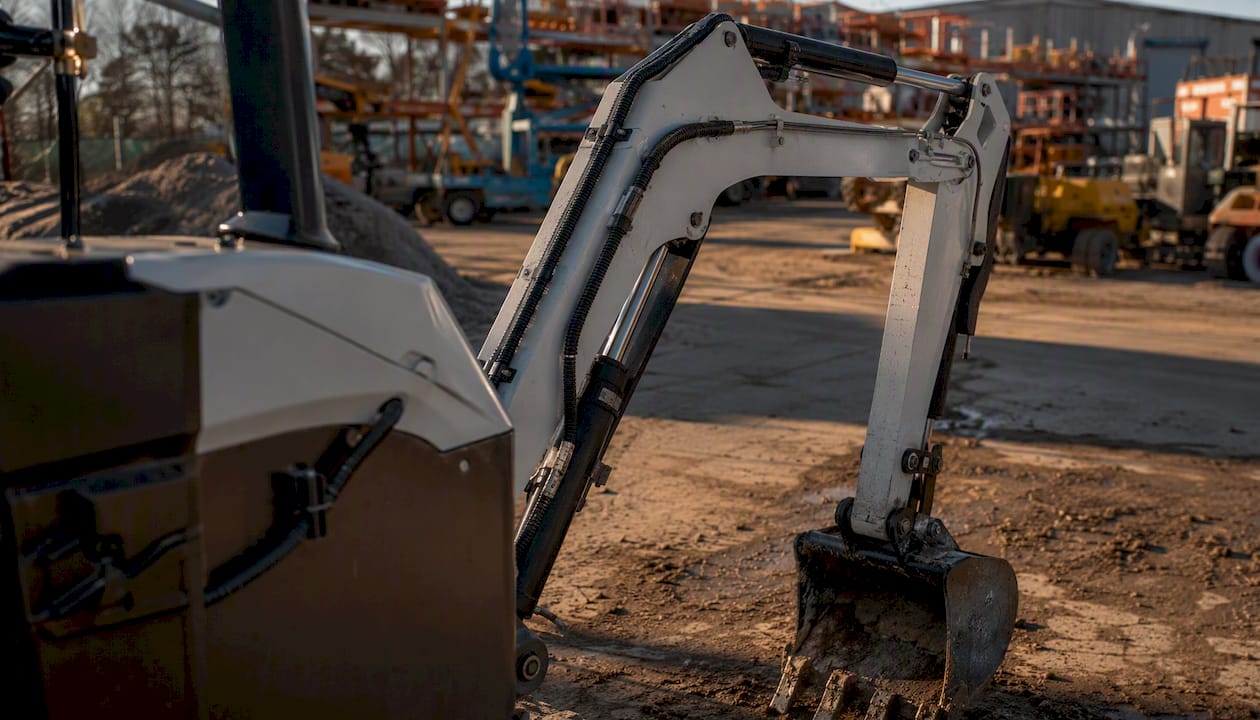
Battery-powered heavy equipment delivers lower daily energy costs and reduced maintenance across categories from compact machines to mid-size excavators and loaders. The operational advantages are real, but so are the constraints.
Key benefits:
- Zero tailpipe emissions: Eliminates diesel exhaust on site, critical for indoor demolition, tunneling, and urban projects with air-quality restrictions.
- Lower noise output: Electric machines operate at significantly lower decibel levels than diesel equivalents, enabling work in urban, hospital, and school zones and extending operating windows in noise-sensitive locations.
- Reduced routine maintenance: No diesel engine means no oil changes, fewer fluid services, and simpler drivetrain maintenance. Brake wear is also reduced on machines with regenerative braking.
- Instant torque: Electric motors deliver full torque from zero RPM, which translates to precise, responsive control on grading and lift operations.
- Extended operating windows: Lower noise and zero emissions can allow work during hours that diesel machines cannot legally operate on restricted sites.
Key trade-offs:
- Higher upfront cost: Electric machines carry a price premium over diesel equivalents, though the gap is narrowing.
- Battery weight: Battery packs add mass, which can reduce net payload capacity on loaders and dumpers.
- Runtime limits: Most battery-electric machines deliver 4–8 hours per charge, which may not cover a full double-shift operation without a charging break or spare battery.
- Charge-time constraints: DC fast charging can replenish a battery in 1–2 hours, but Level 2 AC charging may take 6–8 hours, requiring careful shift planning.
- Battery lifecycle and replacement cost: Battery packs degrade over time and will eventually require replacement, a cost that must be factored into TCO modeling.
Industry trials report large reductions in on-site emissions and lower operating costs where charging infrastructure and planning are in place.
On the environmental side, battery lifecycle and disposal carry their own footprint. Lithium-ion battery production is energy-intensive, and end-of-life recycling infrastructure in the U.S. is still developing. A full lifecycle analysis should account for both upstream battery manufacturing and the carbon intensity of your local grid when calculating net emissions benefit. IEA energy and emissions data provides a reliable baseline for those calculations.
How do you keep electric machines running on site?
The right charging architecture depends on your site's duty cycle, not on a single universal standard. Stationary or tethered setups suit long-runtime continuous operations; battery-electric with fast charging fits flexible multi-machine sites; mobile chargers and battery-swap units address limited grid access.
Charging options available today:
- Level 2 AC (J1772): Standard for compact machines and forklifts. Low infrastructure cost, but slow: typically 6–8 hours for a full charge. Best for overnight charging between shifts.
- DC fast charge (CCS2): Suitable for mid-size excavators and loaders. Charges in 1–2 hours. Requires a dedicated charging station and adequate grid capacity.
- Tethered/cabled supply: Connects the machine directly to grid power for continuous operation. Eliminates runtime limits but restricts machine mobility. Practical for stationary or semi-stationary tasks like material processing or compaction on a fixed alignment.
- Battery-swap systems: Some manufacturers offer swappable battery packs, allowing a depleted pack to be exchanged for a charged one in minutes. Requires spare battery inventory and a safe swap area.
- Mobile charging units: Diesel or grid-connected mobile chargers can bring power to remote sites without permanent infrastructure. Useful for pilot projects and sites awaiting utility upgrades.
| Charging option | Runtime continuity | Infrastructure cost | Grid capacity needed | Best-fit application |
|---|---|---|---|---|
| Level 2 AC | Overnight recharge | Low | Standard service | Compact machines, forklifts, lifts |
| DC fast charge (CCS2) | 1–2 hr recharge | Moderate | 50 kW service | Mid-size excavators, loaders |
| Tethered/cabled | Continuous | Low to moderate | Varies by machine | Stationary/semi-stationary tasks |
| Battery swap | Near-continuous | High (spare packs) | Standard service | High-utilization compact machines |
| Mobile charger | Flexible | Moderate | Self-contained | Remote sites, pilots |
Pro Tip: Start utility coordination at least 6 months before your target deployment date. Transformer upgrades and new service connections frequently take longer than equipment lead times. Get a load study from your utility before finalizing your charging architecture.
Port authorities and large infrastructure operators, such as those governed by the Port Authority of New York and New Jersey, publish electrification guidance and permitting requirements that can affect site planning at major project locations.
Where does electric heavy equipment deliver the biggest upside?
Electric adoption is often driven by bid-winning advantages in restricted zones and the ability to extend operating windows in noise-sensitive urban areas. The strongest use cases today:
- Urban construction and night work: Zero emissions and low noise allow work during restricted hours, a direct competitive advantage on city contracts.
- Indoor demolition and warehouse operations: No exhaust and lower noise make electric excavators and forklifts the standard choice for enclosed environments.
- Ports and marine terminals: Port electrification initiatives are accelerating across U.S. ports, driven by air-quality regulations and federal incentive programs.
- Tunneling: Zero tailpipe emissions eliminate ventilation requirements that diesel machines impose, reducing project cost and complexity.
- Noise- and emissions-restricted city projects: Hospital, school, and residential-adjacent sites where diesel is legally or contractually restricted.
- Short-cycle materials handling and quarry operations: Repetitive, predictable load cycles with consistent return-to-base patterns suit battery-electric machines well.
- Precision grading and lift operations: Instant torque and smooth power delivery give electric machines an operational edge on tasks requiring fine control.
Where electrics currently struggle: continuous, high-hour remote earthmoving without local grid access, and very large tonnage applications where battery energy density cannot yet match diesel runtime. For those cases, tethered machines or hybrid arrangements are the more practical pathway today.
Rental and pilot projects remain the lowest-risk way to test viability on a live site before committing capital.
What does total cost of ownership actually look like?
TCO for battery-powered heavy equipment depends heavily on duty cycle, daily operating hours, and local electricity rates. The components to model:
- Purchase or lease cost: Electric machines carry a price premium, though lease structures and bundled charging packages can reduce upfront exposure.
- Energy cost per hour: Electricity costs per operating hour are consistently lower than diesel at current U.S. fuel prices. Your local rate per kWh and the machine's energy consumption per hour determine the exact savings.
- Maintenance savings: Eliminating the diesel engine removes oil changes, fuel filter service, injector maintenance, and related drivetrain costs. These savings compound over a multi-year ownership period.
- Battery replacement cost: Battery packs degrade over time. Replacement cost varies by machine class and pack size; negotiate battery capacity retention warranties at purchase.
- Downtime risk from charging: Unplanned charging downtime is the most common operational failure. A spare battery strategy or mobile charger fallback mitigates this risk.
- Residual value uncertainty: The resale market for electric heavy equipment is still developing, making residual value harder to predict than for diesel equivalents.
Industry case studies show meaningful operating cost reductions on sites where charging infrastructure and shift planning are in place. Use IEA energy data to build your electricity price and carbon-intensity assumptions when modeling lifecycle emissions.
Cold-weather performance is a real variable. Lithium-ion battery capacity drops in low temperatures, which can reduce effective runtime by 15–30% in winter conditions depending on the battery chemistry and thermal management system. Plan for this in northern U.S. deployments.
How do you evaluate machines and vendors before buying?
A structured procurement process reduces the risk of mismatched equipment and costly surprises after delivery. Work through this checklist before committing to any electric machine purchase or long-term lease:
- Match the machine's battery spec and rated runtime to your actual duty-cycle data, not manufacturer best-case figures.
- Request duty-cycle test data or arrange a live demo on a representative task at your site.
- Confirm charging infrastructure requirements and ask whether the vendor offers bundled charging solutions or site assessment support.
- Review warranty terms carefully: battery capacity retention guarantees (typically 70–80% at a defined cycle count) are the most important warranty clause for electric machines.
- Verify the dealer's local service network. A machine with no nearby service support is a downtime liability.
- Ask about rental or demo program availability before committing to purchase.
- Confirm telematics and data access: battery state-of-health, energy consumption per hour, and charge cycle counts should all be accessible through the machine's data system.
Procurement red flags: no local service dealer, opaque battery warranty terms, no runtime or charge-time data available for your specific duty cycle, and vendors who cannot provide reference customers in comparable applications.
Pro Tip: Include uptime SLAs, mobile charger fallback provisions, and battery health KPIs as contract terms in any purchase or lease agreement. These are negotiable, and most vendors will accept them if asked before signing.
Why matching load cycles to machine capability is decisive
Industry experts consistently identify load-cycle matching as the primary determinant of whether an electric machine succeeds or fails in a given application. The logic is straightforward: a machine whose battery is sized for its actual energy demand per shift will perform reliably; one that is undersized for the task will run short and create unplanned downtime.
Academic research confirms the pattern. A review of purely electric construction machinery finds electrification is accelerating but still nascent for larger machines, with research focused on energy storage design, powertrain configuration, and machine energy management strategies. For higher-power applications where battery energy density is insufficient, tethered grid connections and battery-swap systems are the practical technical responses.
Practical implications for your procurement process:
- Collect high-resolution duty-cycle data from the machines you plan to replace: operating hours per shift, peak-load events, idle time, and travel distance.
- Prioritize trials on representative tasks rather than manufacturer demos on ideal conditions.
- Plan infrastructure to match the energy architecture you choose: a tethered machine needs a cable management plan; a battery-swap machine needs a safe swap area and spare pack inventory.
Pro Tip: Ask manufacturers for energy consumption data expressed in kWh per operating hour at your expected load level, not just total battery capacity. That single figure, combined with your shift length, tells you whether the machine will complete a full shift without a charge break.
Battery management and safety protocols for heavy electric equipment
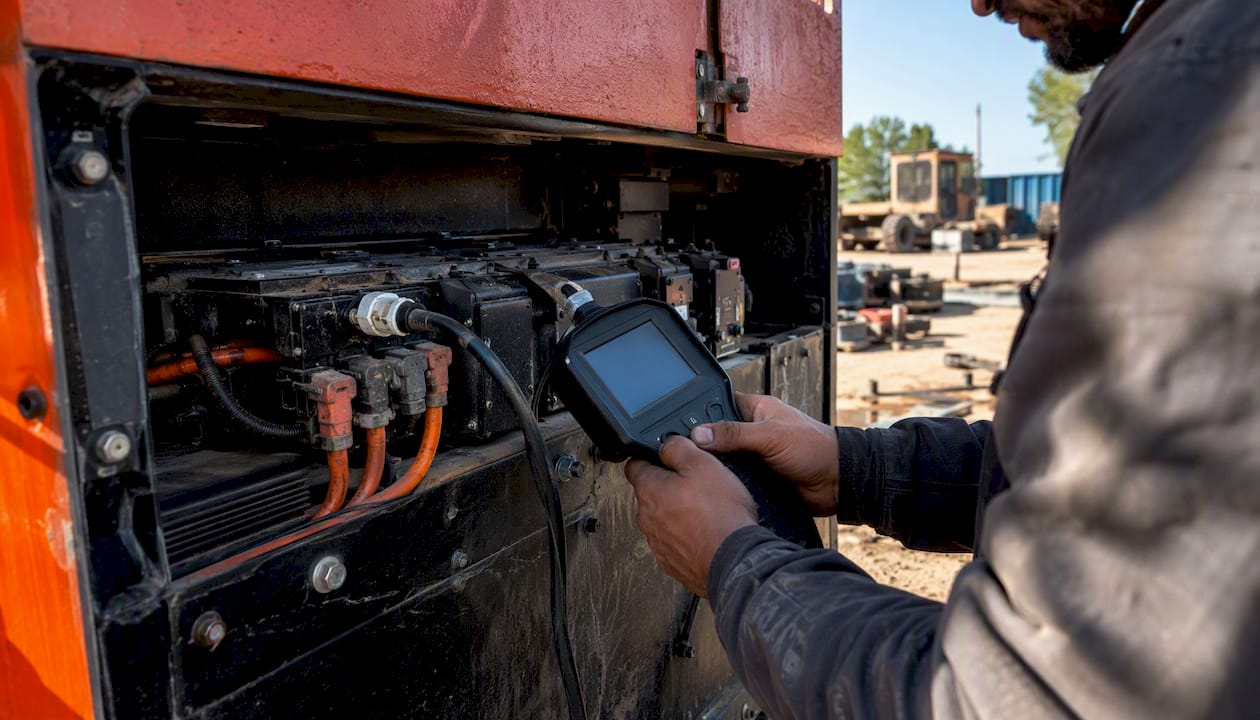
Battery management systems (BMS) in heavy electric equipment monitor cell voltage, temperature, and state of charge in real time, protecting the pack from overcharge, deep discharge, and thermal events. Understanding how the BMS works on any machine you operate is not optional.
Key safety and management protocols:
- Thermal management: Large battery packs generate heat during high-load operation and charging. Machines with active liquid cooling maintain pack temperature within safe operating ranges; air-cooled systems require more conservative charge rates in hot weather.
- State-of-charge operating range: Operating consistently between 20% and 80% state of charge extends battery cycle life significantly compared to regular full-discharge cycles. Most commercial BMS systems enforce this automatically, but operators should understand the constraint.
- Charging safety: Never charge a damaged or recently impacted battery pack. Inspect the pack housing for physical damage after any collision or tip-over event before reconnecting to a charger.
- Fire response: Lithium-ion battery fires require large volumes of water for suppression and can reignite hours after initial extinguishment. Site emergency plans must account for this, including notifying local fire departments of electric machine presence on site.
- End-of-life handling: Spent battery packs from heavy equipment are classified as hazardous waste under U.S. EPA regulations. Work with a certified battery recycler; do not dispose of packs through standard waste channels.
Workforce training and operator adaptation for electric heavy equipment
Operators transitioning from diesel to electric machines report a short learning curve, but the differences are meaningful enough to warrant structured training rather than assuming diesel experience transfers directly.
The most significant operational differences operators encounter:
- No engine warm-up: Electric machines are ready to work immediately. Operators accustomed to diesel warm-up routines need to adjust their pre-shift procedures.
- Regenerative braking: Machines with regenerative braking behave differently during deceleration. Operators need to understand how to use this feature to extend range on grades.
- State-of-charge awareness: Unlike a diesel fuel gauge, a battery state-of-charge indicator requires operators to plan their work around charging windows. This is a behavioral shift that takes deliberate practice.
- Quieter operation: Lower noise changes the sensory environment for both the operator and ground workers. Site safety protocols may need updating to account for reduced audible warning from the machine.
- Emergency shutdown procedures: Electric machine emergency shutdowns differ from diesel. All operators and site supervisors should be trained on the specific procedure for each machine model on site.
Structured operator training programs, typically offered by equipment dealers or manufacturers, cover these differences in a half-day to full-day format. Budget for this training as part of your deployment plan.
Infrastructure needs and upgrades for site electrification
Site planning is the most frequently overlooked element of electric fleet deployment. Securing reliable high-voltage grid access or mobile charging solutions, and planning for cold-weather battery management, avoids the most common operational failures.
A site electrification assessment should cover:
- Existing service capacity: Determine the available amperage and voltage at the site's main service entrance. Multiple DC fast chargers running simultaneously can easily exceed a standard commercial service.
- Transformer and switchgear upgrades: Many construction sites will require a new transformer or switchgear upgrade to support fast-charging loads. This work requires utility coordination and permitting.
- Temporary vs. permanent infrastructure: For short-duration projects, mobile charging units or generator-backed chargers may be more cost-effective than permanent utility upgrades.
- Cable management and safety: High-voltage charging cables on active construction sites require physical protection, clear routing, and lockout/tagout procedures.
- Permitting: Electrical work above certain amperage thresholds requires permits and licensed electricians in all U.S. jurisdictions. Factor permit lead times into your project schedule.
Port authority and public agency pages often publish electrification guidance specific to their facilities, which can accelerate permitting at major project sites.
Government incentives, regulations, and compliance for electric equipment in the US
Federal and state programs provide meaningful financial support for electric heavy equipment adoption, and several regulatory frameworks are pushing fleets toward electrification whether or not they are actively pursuing it.
Federal programs:
- The Inflation Reduction Act (IRA) includes tax credits and incentives for clean energy equipment and infrastructure, including commercial electric vehicle charging infrastructure under Section 30C.
- The EPA Diesel Emissions Reduction Act (DERA) program funds replacement of older diesel equipment with cleaner alternatives, including electric machines, through competitive grants.
- The Federal Highway Administration (FHWA) and Federal Transit Administration (FTA) fund electrification at ports and transit-adjacent construction projects through infrastructure bill programs.
State and local programs:
- California's CARB (California Air Resources Board) regulations are the most aggressive in the U.S., with mandates for zero-emission off-road equipment at certain project types already in effect or scheduled. Other states are adopting similar frameworks.
- Many states offer additional tax credits, voucher programs, or grant funding for electric off-road equipment. The CALSTART HVIP (Hybrid and Zero-Emission Truck and Bus Voucher Incentive Project) is one of the most active voucher programs, primarily in California.
- Utility companies in several states offer rebates for commercial charging infrastructure installation.
Compliance considerations: Check whether your project contracts, port operating agreements, or local air-quality management district rules impose equipment emissions requirements. These contractual and regulatory obligations are increasingly common on public infrastructure projects and can make electric equipment a compliance requirement, not just a preference.
What we see customers actually doing
The most common path we observe among fleet decision-makers is not a wholesale switch. It is a deliberate, staged approach: start with a rental or short-term pilot on a specific application, collect telematics data, then integrate electric units into a mixed fleet for targeted sites where the operational case is clearest.
Leasing structures and bundled charging packages are reducing early financial risk for fleets that are not ready to commit full capital. Battery warranty negotiation, specifically capacity retention guarantees, is the contract term that separates informed buyers from those who discover the issue after the fact.
The fleets that expand most confidently are those that ran a real pilot, collected actual energy and uptime data, and used that data to negotiate the next purchase. The ones that struggle are those that bought based on manufacturer demos without validating performance against their own duty cycles.
The pragmatic path: pilot one or two machines on your highest-value restricted-zone or indoor application, collect 60–90 days of telematics data, negotiate battery warranty terms before the next purchase, and expand where the uptime and cost signals are clear.
Find electric heavy equipment listings on Sostruckforsale
Sourcing electric machines means cutting through a rapidly expanding market where availability, specs, and pricing vary widely by region and dealer. Sostruckforsale gives fleet managers and procurement teams a direct line to verified dealers and private sellers listing electric excavators, loaders, forklifts, telehandlers, and other battery-powered commercial equipment across the U.S.
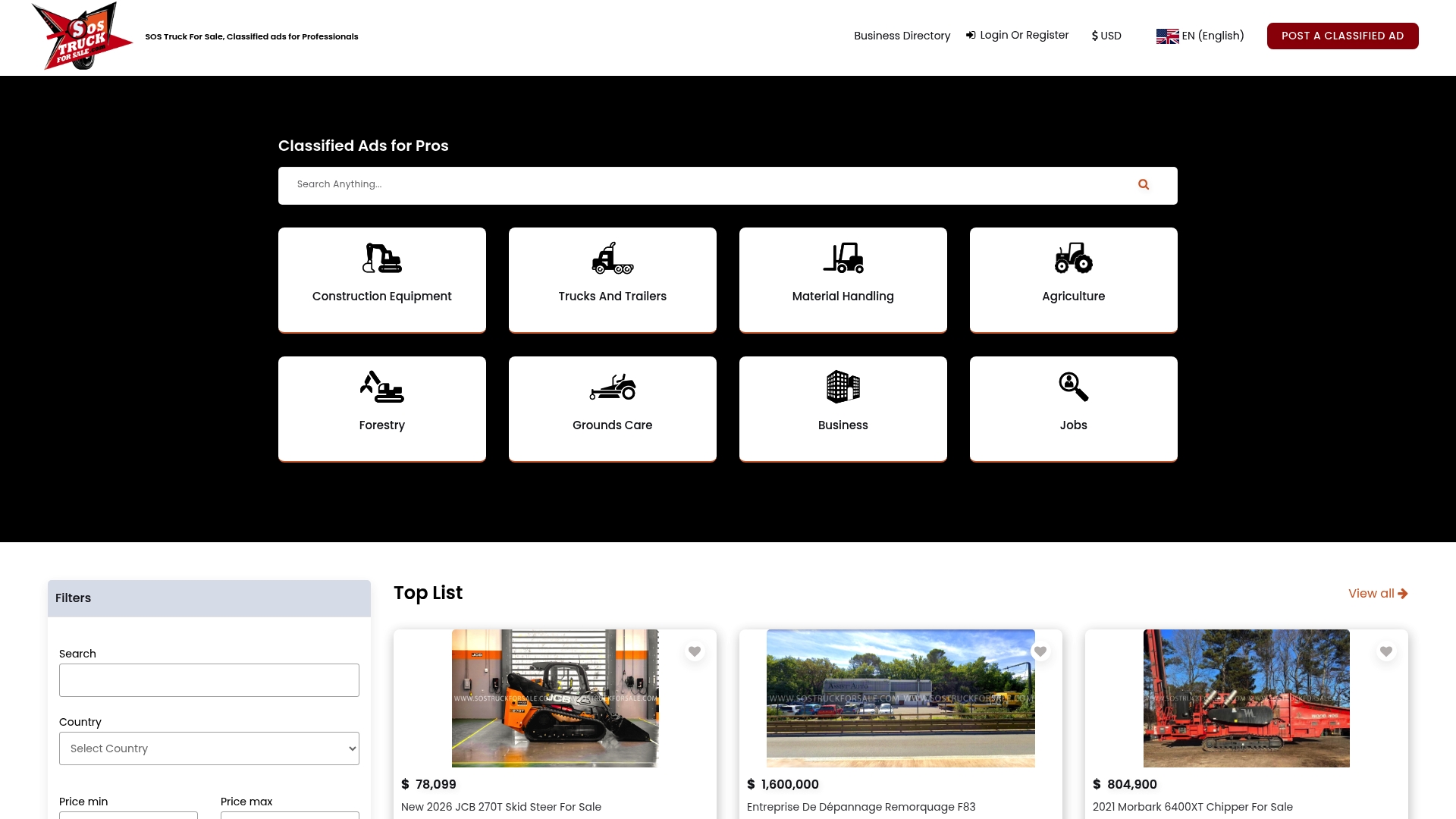
Search by equipment category, powertrain type, and condition to surface relevant listings fast. The dealer directory connects you with local dealers who can provide demo programs, rental options, and service network details before you commit. Whether you are sourcing a single electric compact excavator for a pilot or building out a mixed fleet, browse current electric equipment listings on Sostruckforsale to see what is available in your market today.