
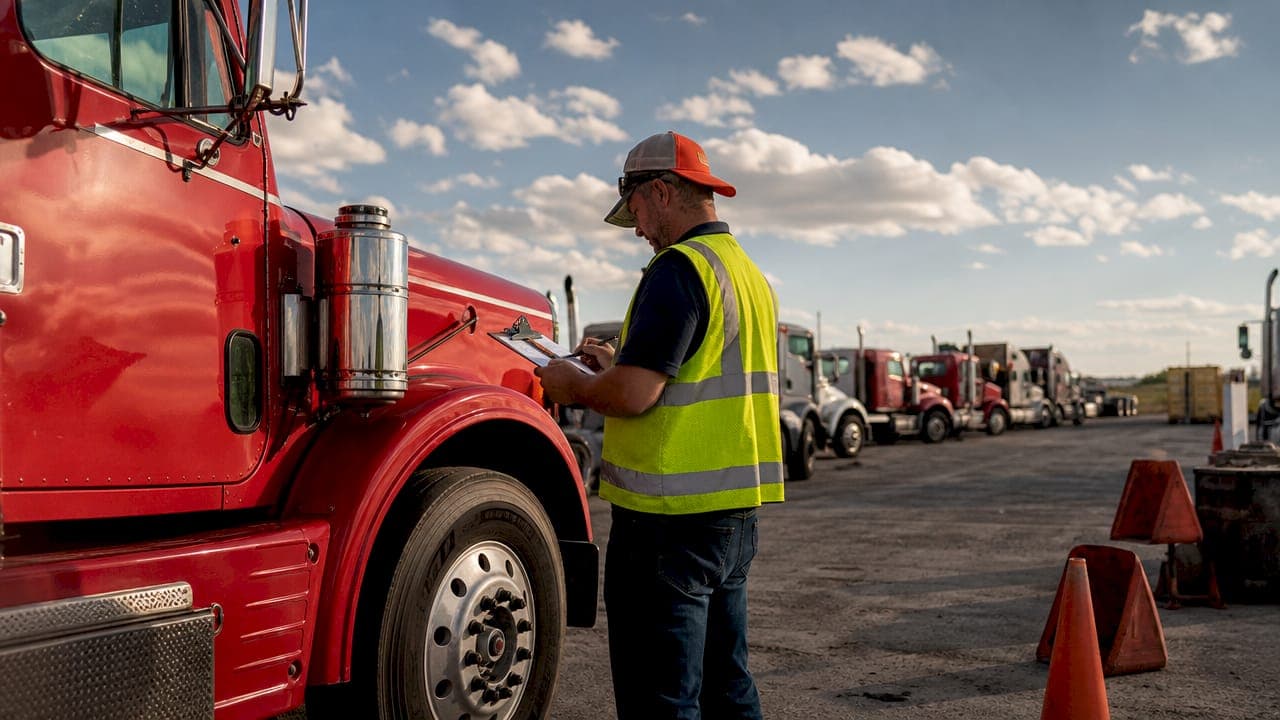
Heavy haul trucks are specialized vehicles engineered to transport oversized and overweight loads far beyond standard commercial limits. Unlike conventional Class 8 trucks, which carry a Gross Vehicle Weight Rating exceeding 33,001 lbs, heavy haul trucks operate in a different category entirely. The most capable models handle payloads measured in hundreds of tons, making them indispensable in mining, energy infrastructure, and large-scale construction. This guide covers the top examples of heavy haul trucks, their technical configurations, and the operational factors that determine which vehicle fits which job.
1. What are the best examples of heavy haul trucks in use today?
Heavy haul trucks span a wide range of configurations, from on-road specialized tractors to massive off-road mining vehicles. Each type serves a distinct freight profile. The examples below represent the most significant categories in active use across North American and global operations.
Kenworth C580 extreme-duty tractor
The Kenworth C580 is the most capable on-road heavy haul tractor currently in production. It supports a Gross Combination Weight of 1,000,000 lbs, making it the benchmark for extreme-duty land transport. That figure is not a theoretical ceiling. It reflects real operational use in Arctic oilfields and remote mining corridors where no standard commercial vehicle can function. The C580 is purpose-built for environments where payload demands are absolute and equipment failure is not an option.
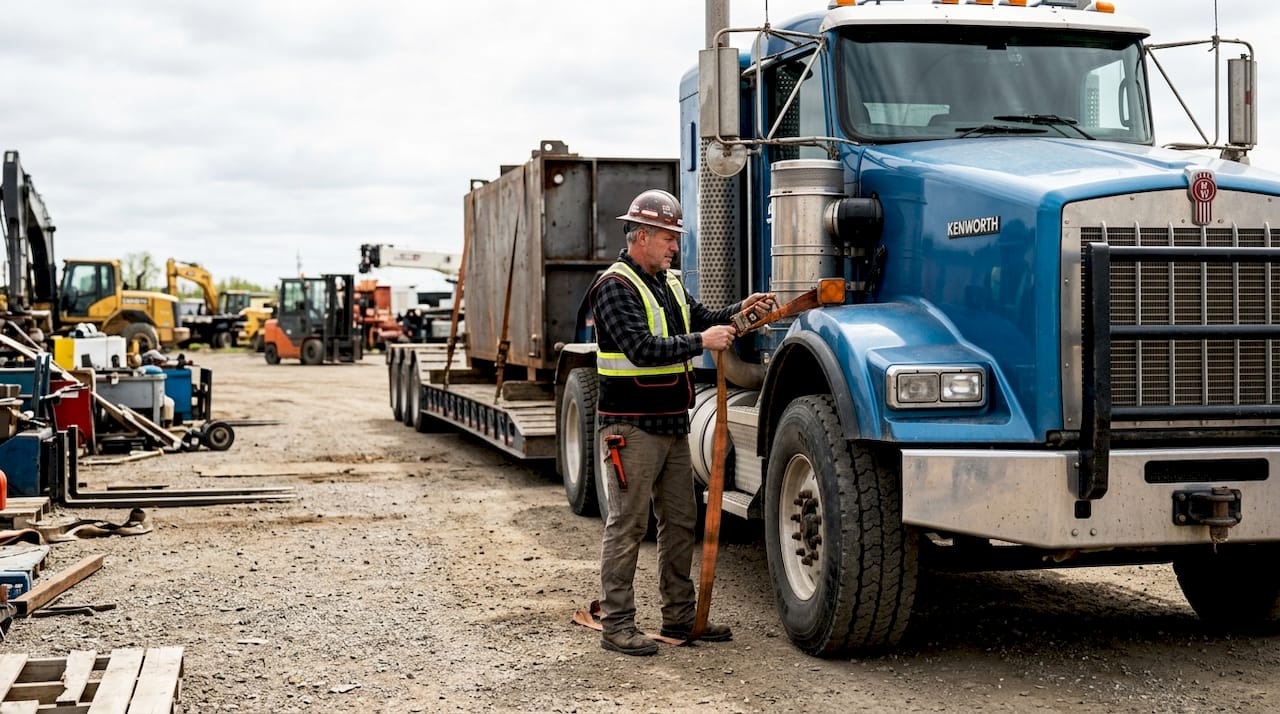
MAN TGX 41.640 heavy haul tractor
The MAN TGX 41.640 is a factory-engineered tractor designed specifically for 250-ton GCWR operations. It runs a 640 hp engine paired with a torque converter clutch system that delivers up to 1.59 times more torque at startup than a standard drivetrain. That startup torque is critical when moving industrial turbines, transformer units, or prefabricated bridge sections from a standing stop. The MAN TGX represents the shift toward complete, factory-integrated vehicle solutions rather than aftermarket-modified platforms.
BelAZ 75710 rigid-frame mining truck
The BelAZ 75710 is the largest rigid-frame mining haul truck in the world by payload capacity. It carries 450 metric tons per load, operating on engineered haul roads inside open-pit mines. Rigid-frame trucks like the BelAZ are not road-legal and require dedicated infrastructure. Their value is in raw throughput: fewer trips per shift means lower cost per ton moved.
Articulated haulers for rough terrain
Articulated haulers handle payloads of up to 60 metric tons and excel in soft, uneven, or marshy ground where rigid-frame trucks would sink or lose traction. The articulated joint between cab and body allows each axle to track independently over terrain. These vehicles are common in quarrying, road construction, and land reclamation projects.
Pro Tip: When evaluating heavy haul trucking examples for a new project, start with the haul road condition. Rigid-frame trucks demand engineered surfaces. Articulated haulers tolerate rough ground but sacrifice payload volume.
2. What are the main heavy haul truck types and their technical configurations?
Heavy haul truck types are defined by axle configuration, frame design, and trailer compatibility. Understanding these variables is the foundation of any transport planning decision.
Axle configurations
- Tri-axle setups distribute weight across three rear axles, increasing legal payload on standard roads.
- Quad-axle configurations add a fourth axle for even greater weight distribution, often required for bridge crossings.
- Dual-steer front axles improve directional control under extreme front-end loads and are standard on many extreme-duty tractors.
- Tandem drive axles provide the traction needed to move heavy loads on grades and loose surfaces.
Axle configuration matching to road and bridge weight limits is often the deciding factor in whether a transport permit gets approved. A truck that is technically capable of carrying a load may still be legally prohibited from moving it if the axle spacing does not distribute weight within infrastructure limits.
Trailer compatibility
Heavy haul trucks pair with specialized trailers including lowboy trailers, removable gooseneck (RGN) trailers, and extendable flatbeds. Each trailer type serves a specific freight profile:
- Lowboy trailers carry tall equipment like excavators and cranes by keeping the deck close to the ground.
- RGN trailers allow the front section to detach, enabling drive-on loading for wheeled or tracked equipment.
- Extendable flatbeds accommodate long cargo like wind turbine blades or structural steel beams.
Specialized mechanical systems
The MAN TGX 41.640 uses a torque converter clutch (WSK) and reinforced cooling system as factory-integrated components. These systems manage the thermal load generated during slow-speed, high-torque operations. Without reinforced cooling, extended low-speed hauls overheat standard transmissions and reduce service life significantly.
Pro Tip: Factory-integrated torque management systems outperform aftermarket modifications in long-term reliability. If you are sourcing a heavy haul tractor for sustained operations, prioritize vehicles where these systems are built in from the factory floor.
3. How do heavy haul trucks differ between on-road and off-road mining applications?
The gap between on-road heavy haul tractors and off-road mining trucks is significant. Both move enormous loads, but they operate in entirely different environments with different engineering priorities.
On-road heavy haul tractors
On-road tractors like the Kenworth C580 and MAN TGX 41.640 must comply with road regulations, permit requirements, and bridge weight limits. They use multi-axle configurations to spread load legally. Speed, fuel efficiency, and driver comfort matter because these vehicles travel long distances on public infrastructure.
Off-road rigid-frame mining trucks
Rigid-frame mining trucks operate exclusively on private haul roads inside mine sites. They carry payloads that no on-road vehicle could legally or physically match. The BelAZ 75710 at 450 metric tons is the extreme end of this category. These trucks prioritize payload volume and cycle time over everything else.
Altitude is a critical variable in mining operations. Trucks with engines specifically rated for high-altitude environments improve productivity and reduce operational costs by up to 14% compared to standard models operating at elevation. That cost difference compounds across thousands of cycles per year.
Articulated haulers vs. rigid-frame trucks
| Feature | Rigid-frame trucks | Articulated haulers |
|---|---|---|
| Payload capacity | Up to 450+ metric tons | Up to 60 metric tons |
| Terrain suitability | Engineered haul roads | Soft, uneven, or wet ground |
| Maneuverability | Limited | High |
| Infrastructure need | Dedicated mine roads | Minimal preparation needed |
| Best application | Open-pit mining | Quarrying, construction, reclamation |
Logistics planners should assess site conditions carefully before committing to either category. Rigid-frame trucks deliver the lowest cost per ton on flat, engineered surfaces. Articulated haulers deliver operational flexibility where terrain preparation is impractical.
4. What are best practices for selecting heavy haul trucks?
Selecting the right heavy haul vehicle requires matching the truck's capabilities to the specific demands of the haul environment. Generic specifications are a starting point, not a decision.
Match axle configuration to infrastructure
Road and bridge weight limits vary by jurisdiction and route. The axle spacing and configuration of your truck must distribute load within those limits. A quad-axle setup that works on one corridor may require a permit variance on another. Work with a transport engineer before finalizing vehicle selection.
Prioritize factory-built solutions
"The future of heavy haul trucking is moving toward factory-integrated, complete vehicle solutions that incorporate advanced components for operational efficiency, rather than relying on aftermarket modifications."
Factory-engineered trucks like the MAN TGX 41.640 arrive with thermal management, torque control, and braking systems calibrated to work together. Aftermarket modifications introduce compatibility risks that show up under sustained load.
Account for altitude and environment
Engine power decreases at high altitude. A truck rated for sea-level performance will underperform in mountain mining operations. Specify altitude-rated powertrains when the haul environment exceeds 5,000 feet elevation. The cost difference in procurement is smaller than the productivity loss from an underpowered drivetrain.
Evaluate braking and hydraulic systems
Heavy haul trucks carry loads that standard braking systems cannot safely manage on grades. Hydraulic retarders, engine brakes, and multi-circuit air brake systems are non-negotiable on vehicles operating above 100 tons GCW. Verify these systems are factory-rated for the intended payload, not added as aftermarket components.
Key takeaways
The most effective heavy haul truck selection combines payload matching, axle configuration compliance, and factory-integrated mechanical systems to meet both freight and infrastructure requirements.
| Point | Details |
|---|---|
| Payload defines the category | On-road tractors reach 1,000,000 lbs GCW; mining trucks exceed 450 metric tons per load. |
| Axle configuration drives permit approval | Tri-axle, quad-axle, and dual-steer setups must match road and bridge weight limits. |
| Factory integration beats aftermarket | Trucks with built-in torque converter clutches and reinforced cooling last longer under sustained load. |
| Terrain determines truck type | Rigid-frame trucks need engineered roads; articulated haulers handle soft and uneven ground. |
| Altitude affects engine output | Altitude-rated powertrains reduce operational costs by up to 14% in high-elevation mining. |
What I have learned from watching heavy haul trucking evolve
The industry conversation used to center on raw horsepower. Bigger engine, bigger payload, done. That thinking is changing, and I think the shift is overdue.
The MAN TGX 41.640 is a good example of where serious operators are heading. The torque converter clutch and reinforced cooling are not afterthoughts bolted on by a fleet manager. They are engineered into the vehicle from the start. That matters more than most buyers realize when they are comparing spec sheets. A truck that handles thermal load correctly at 200 tons will still be reliable at 80,000 miles. A modified platform with the same rated capacity may not.
What I find underappreciated is the site assessment step. Logistics managers often select a truck based on payload ratings, then discover the haul road or bridge network cannot support the axle configuration. That sequence wastes time and money. The right order is: assess the route first, then select the vehicle. Terrain, altitude, and infrastructure limits should drive the decision, not the other way around.
The Kenworth C580 operating at 1,000,000 lbs GCW in an Arctic oilfield is not a marketing story. It is a reminder that purpose-built vehicles for extreme environments exist because standard equipment fails there. Knowing which category your operation falls into is the most valuable thing a transportation manager can carry into a procurement conversation.
— Dave
Heavy haul truck listings on Sostruckforsale
Transportation managers sourcing heavy haul vehicles need access to verified listings across multiple configurations and payload classes. Sostruckforsale maintains an active marketplace of heavy duty trucks for sale, covering specialized tractors, vocational trucks, and heavy equipment across a range of axle configurations and weight ratings.
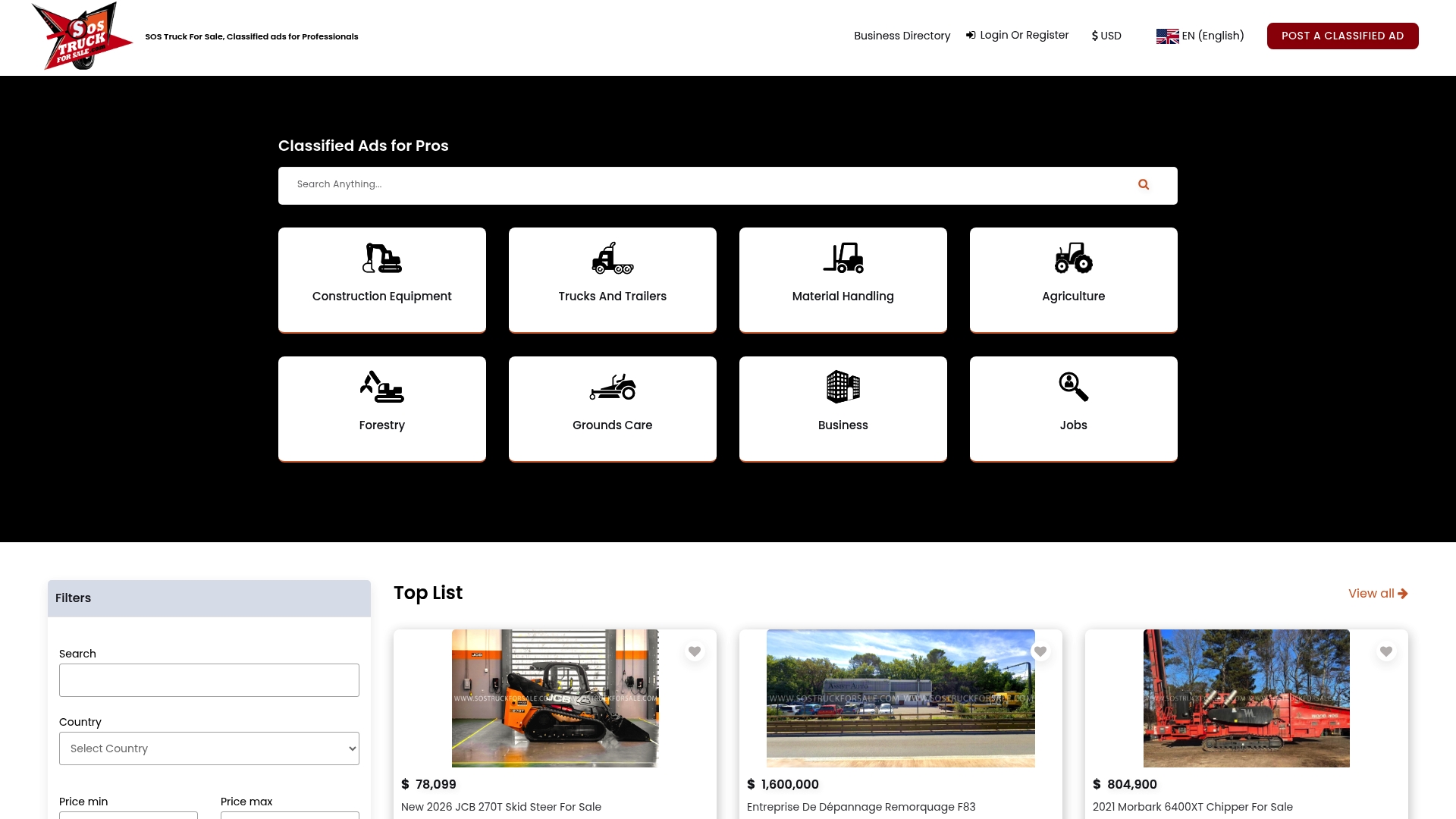
Whether you are expanding a fleet for an infrastructure project or replacing aging equipment, Sostruckforsale gives you direct access to sellers listing commercial and industrial vehicles built for demanding freight work. The listings include semi trucks, heavy-duty tractors, and specialized equipment suited to the payload and terrain requirements covered in this guide. Browse current inventory at Sostruckforsale to find vehicles that match your operational specifications.
FAQ
What are heavy haul trucks?
Heavy haul trucks are specialized vehicles engineered to transport oversized or overweight freight beyond standard commercial weight limits. They include on-road tractors, off-road mining trucks, and articulated haulers, each rated for specific payload and terrain conditions.
What is the maximum payload a heavy haul truck can carry?
On-road heavy haul tractors like the Kenworth C580 support up to 1,000,000 lbs GCW. Off-road rigid-frame mining trucks like the BelAZ 75710 carry up to 450 metric tons per load.
What trailer types do heavy haul trucks use?
Heavy haul trucks pair with lowboy trailers, removable gooseneck (RGN) trailers, and extendable flatbeds. Each trailer type is matched to a specific freight category, from tracked equipment to wind turbine components.
How does axle configuration affect heavy haul transport?
Axle configuration determines how weight is distributed across the road surface. Tri-axle, quad-axle, and dual-steer setups must align with road and bridge weight limits to receive transport permits and operate legally.
What is the difference between rigid-frame and articulated haul trucks?
Rigid-frame trucks carry payloads up to 450 metric tons on engineered mine roads. Articulated haulers handle up to 60 metric tons and perform well on soft or uneven terrain where rigid-frame vehicles cannot safely operate.