

Arranging sold truck delivery logistics is the process of coordinating every step required to move a sold truck from the seller's location to the buyer's hands, reliably and on schedule. The industry term for this process is "vehicle transport coordination," and it covers documentation, carrier selection, site preparation, and final acceptance. Businesses and individuals who treat these steps as one integrated program, rather than separate tasks, consistently compress their time to cash and avoid costly delays. Sostruckforsale connects buyers and sellers of heavy commercial equipment, and the logistics that follow a sale are just as critical as the transaction itself.
What documentation is required before arranging truck delivery?
Complete documentation is the foundation of any sold truck transportation plan. Missing a single item can halt a carrier dispatch, trigger storage fees, or create legal liability. Essential delivery documentation includes a clean, signed-over vehicle title, current registration, and a walk-around inspection report with timestamped photos.
Core documents to gather
Before you contact a carrier, collect the following:
- Signed vehicle title. The title must be fully executed and legally transferred. Dispatching a carrier before title clearance is complete risks delivery holds, storage fees, and disrupted carrier schedules.
- Current vehicle registration. Carriers and receiving sites need proof the truck is legally registered.
- Walk-around inspection report with photos. Document every panel, tire, and component before transport. This protects both parties if a damage dispute arises.
- Accurate truck dimensions and weight. Providing accurate dimensions, including any modifications, is required for carrier pricing. Failure to disclose lift kits, extended beds, or other modifications causes surcharges or outright refusal at loading.
- Named contacts at pickup and delivery sites. Every transport booking needs a specific person at each end, not just a company name.
| Document | Why It Matters |
|---|---|
| Signed vehicle title | Legally transfers ownership; required before dispatch |
| Current registration | Confirms legal status of the vehicle |
| Inspection report with photos | Baseline condition record for dispute resolution |
| Accurate dimensions and weight | Determines carrier pricing and equipment requirements |
| Named site contacts | Ensures someone with authority is present at both ends |
Pro Tip: Get the inspection report signed by the seller before the carrier arrives. An unsigned report carries no weight in a damage claim.
How do you prepare pickup and delivery sites for truck transport?
Site preparation is where most logistics plans fail. Buyers and sellers focus on paperwork and ignore the physical realities of the locations involved. Confirming site access constraints, vehicle readiness, and named contacts at both pickup and delivery sites are critical steps before booking any transport.
Follow this sequence to prepare both sites correctly:
- Confirm access restrictions. Check for low bridges, weight-limited roads, or narrow entry points on the route to each site. A heavy transport carrier cannot improvise around a 13-foot clearance bridge.
- Book appointment windows. Many commercial sites, depots, and dealerships require scheduled time slots for vehicle arrivals. Call the gatehouse directly, not just the sales contact.
- Complete induction and PPE requirements. Delivery sites often require inductions, personal protective equipment, and formal sign-off authority confirmation. Skipping this step causes failed deliveries and extra charges.
- Identify the sign-off authority. Know exactly who at the delivery site has the authority to accept the truck and sign the delivery receipt. If that person is unavailable, the carrier may not be able to legally release the vehicle.
- Confirm key control and document readiness. The seller must have all keys, spare keys, and any access codes ready at the pickup location before the carrier arrives.
- Verify clear entry and exit routes. Walk both sites physically or use satellite mapping to confirm a transport vehicle can enter, position, and exit without obstruction.
Pro Tip: Ask the receiving site for their specific induction form at least 48 hours before the scheduled pickup. Carriers cannot wait on-site while paperwork is processed.
What is the step-by-step process for coordinating sold truck transport?
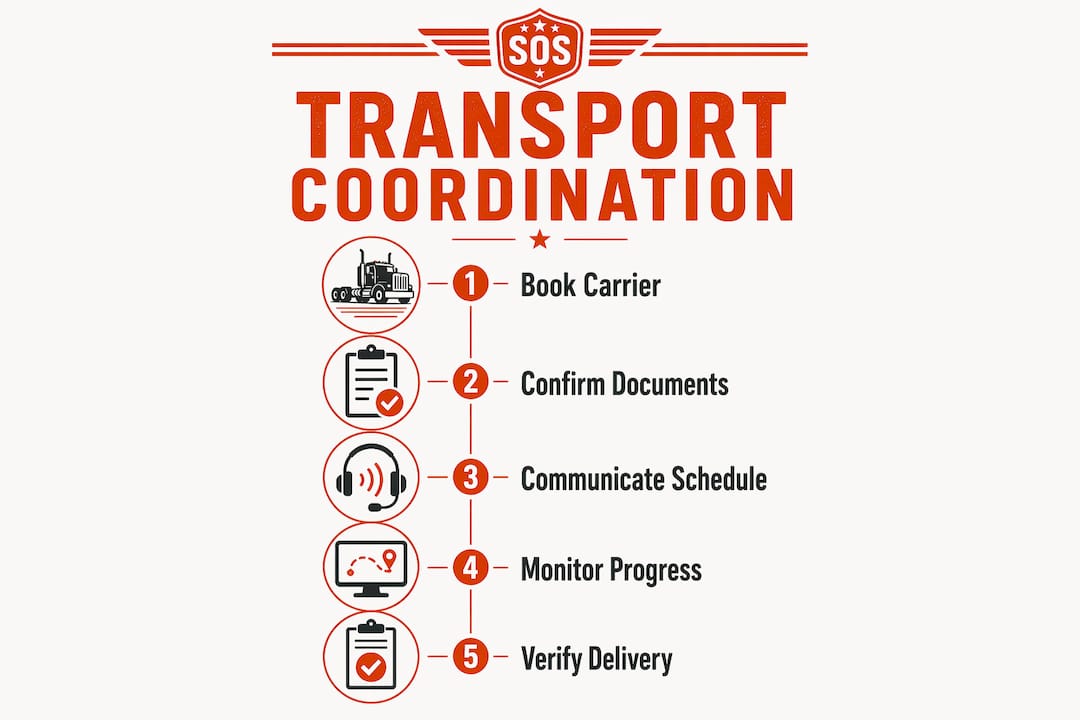
Coordinating the transport of a sold truck follows a defined sequence. Skipping steps or running them out of order creates the delays that cost money. Vehicles sold through dealer direct channels typically reach the buyer within 5–14 days, while wholesale auction sales take 14–28 days due to transport and reconditioning complexities. Tight coordination at every step is what keeps you at the shorter end of that range.
Step 1: Select and book a qualified carrier
Choose a carrier with verifiable experience transporting heavy commercial vehicles. Confirm their insurance coverage, Department of Transportation compliance, and whether they use a Transportation Management System (TMS) for tracking. A reliable carrier dispatch protocol includes TMS usage with timestamped photos and damage reports at both pickup and delivery. This reduces disputes and errors significantly.

Step 2: Confirm vehicle readiness and documentation clearance
Do not book a carrier until the title is cleared and all documents are in hand. Verify the truck starts, drives onto the transport vehicle under its own power if required, and has no fluid leaks that would violate transport regulations. Confirm fuel level meets carrier requirements, typically a quarter tank or less for safety.
Step 3: Communicate schedules with all stakeholders
Send a written schedule confirmation to the seller, the buyer, the carrier, and both site contacts. Include the pickup window, estimated transit time, and the delivery window. Written confirmation prevents the "I didn't know" problems that cause missed appointments.
Step 4: Monitor transport progress and handle exceptions
Track the shipment actively. A TMS-equipped carrier provides real-time location updates. If the carrier reports a delay, notify the receiving site immediately and adjust the delivery appointment. Do not wait for the carrier to communicate downstream. You own that communication.
Step 5: Verify delivery and final acceptance
At delivery, the receiving contact must inspect the truck against the original walk-around report before signing the delivery receipt. Any damage noted during transport should be documented on the delivery receipt before the carrier departs. Once the receipt is signed without notation, damage claims become very difficult to pursue.
What are the most common mistakes in sold truck delivery logistics?
Most failures in logistics for sold trucks trace back to a small set of repeatable errors. Knowing them in advance is the most direct way to avoid them.
- Dispatching a carrier before title clearance. Every day a vehicle sits idle costs between $14 and $42 in depreciation and holding fees. Premature dispatch is the single most common cause of those idle days.
- Failing to verify site access requirements. Assuming a commercial site accepts walk-in deliveries is a costly mistake. Many sites require 24 to 48 hours advance notice and a formal booking.
- Insufficient contact and communication. A single point of contact at each site is not enough. Always have a backup contact confirmed before the carrier departs.
- Ignoring vehicle modifications. Truck size and weight modifications must be fully disclosed to the carrier. Surprises at the loading dock result in surcharges or refusal to load, both of which delay delivery and increase cost.
- Skipping the pre-delivery inspection. Without a signed, timestamped inspection report, you have no baseline for any damage claim that arises during transport.
Transport logistics often determine the profit margin on a wholesale vehicle move, more so than the auction transaction itself. Sellers who treat delivery as an afterthought regularly lose money they earned at the point of sale.
Why integrated logistics planning changes the financial outcome
The financial result of a truck sale depends as much on how the transport is managed as on the sale price itself. Financial outcomes in vehicle sales depend as much on integrated logistics decisions involving transport and storage as on the sales channel used. That is not a minor observation. It means that a seller who gets a strong price but mismanages the delivery can net less than a seller who accepted a lower offer and executed a clean, fast handover.
The practical implication is that logistics planning should start at the moment of sale, not after the paperwork is signed. Title clearance, carrier selection, and site preparation should run in parallel, not in sequence. Treating them as a single program compresses the total time from sale to cash in hand.
Key Takeaways
Successful sold truck delivery logistics requires integrating documentation, site preparation, and carrier coordination into one unified process from the moment of sale.
| Point | Details |
|---|---|
| Title clearance first | Never dispatch a carrier before the vehicle title is fully signed over and cleared. |
| Document truck modifications | Disclose all size and weight changes to the carrier before booking to avoid surcharges. |
| Prepare both sites in advance | Confirm access restrictions, appointments, and sign-off authority at pickup and delivery locations. |
| Use a TMS-equipped carrier | Timestamped photos and real-time tracking reduce damage disputes and delivery errors. |
| Integrate logistics with the sale | Start transport planning at the point of sale to compress time to cash and protect profit margin. |
What I've learned from watching logistics sink good truck deals
I've watched sellers walk away from solid truck transactions with less money than they should have, and the reason is almost never the sale price. It's the week of idle storage fees, the failed delivery because no one confirmed the site appointment, or the carrier surcharge that appeared because no one disclosed the lift kit. These are not bad luck. They are predictable, preventable failures.
The sellers who consistently do well treat the logistics plan as part of the sales process, not a follow-up task. They have the title ready before the truck is listed. They know the buyer's site requirements before the ink is dry. They have a carrier relationship already in place, not one they are scrambling to find after the sale closes.
The other thing I'd push back on is the assumption that faster is always better. Speed matters, but only when the prerequisites are met. Rushing a carrier dispatch before title clearance is the most expensive shortcut in this business. A clean, well-documented, two-week delivery beats a chaotic, disputed, ten-day delivery every time.
— Dave
Sostruckforsale and your next truck delivery
Sostruckforsale is a commercial and heavy equipment listing platform where buyers and sellers connect on semi trucks for sale, heavy duty trucks, excavators, and more. When a sale closes, the delivery logistics that follow determine whether that transaction ends profitably.
Sostruckforsale gives you access to a wide inventory of commercial vehicles so you can make purchase decisions with full equipment details in hand, including specifications that matter for transport planning. Browse current listings at Sostruckforsale and start your next transaction with the information you need to coordinate delivery from day one.
FAQ
What documents are needed to arrange truck delivery?
A signed vehicle title, current registration, and a walk-around inspection report with photos are required before dispatching a carrier. Accurate truck dimensions and named contacts at both sites are also needed for carrier booking.
How long does sold truck transportation typically take?
Dealer direct sales typically deliver within 5–14 days, while wholesale auction transactions take 14–28 days due to transport and reconditioning steps. Tight documentation and site preparation keep delivery times at the shorter end of that range.
What happens if you dispatch a carrier before title clearance?
Dispatching before title clearance risks delivery holds, storage fees of $14–$42 per day, and disrupted carrier schedules. Always confirm full title transfer before booking transport.
Why do truck modifications matter for carrier pricing?
Carriers base pricing on vehicle weight and dimensions. Undisclosed modifications such as lift kits or extended beds result in surcharges or refusal to load at the pickup site.
What should you confirm about the delivery site before transport?
Confirm access restrictions, required inductions, PPE requirements, appointment booking procedures, and the identity of the person with sign-off authority. Missing any of these details causes failed deliveries and additional charges.