
A well-structured flatbed truck sale listing is the single most important factor in attracting serious buyers and closing fast. Sellers who skip preparation steps, upload blurry photos, or write vague titles watch their listings sit for weeks without a single qualified inquiry. To create a flatbed truck sale listing that performs, you need a precise title, complete technical specs, a strong photo sequence, and a price backed by market research. Platforms like Facebook Marketplace and Sostruckforsale reward complete, accurate listings with better search visibility and more buyer contacts.
What do you need before creating your flatbed truck listing?
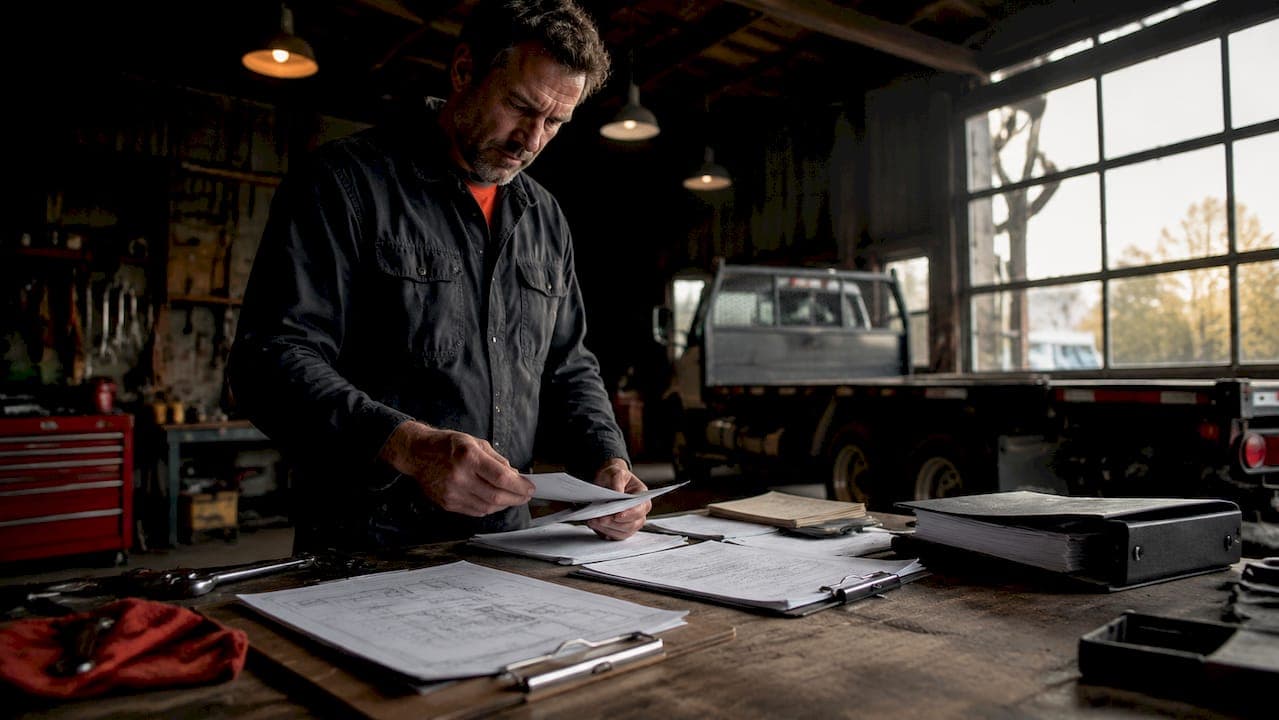
Preparation separates a listing that sells in days from one that stalls for months. Before you write a single word, gather every piece of documentation and data your buyer will eventually ask for anyway.
Start with the truck's core details:
- Year, make, model, and trim (exact, not approximate)
- Exact mileage at the time of listing
- VIN (17-character vehicle identification number)
- Title status (clean, salvage, lien)
- Transmission type and fuel type
- Flatbed specs: deck length, deck width, material (steel or aluminum), liftgate presence, rack type, and tie-down configuration
VIN lookup tools auto-populate make, model, year, engine size, fuel type, and transmission directly into listing fields. That reduces data entry errors and prevents mismatches between what you claim and what the vehicle actually is. Buyers notice inconsistencies immediately, and they walk away.
Prepare a physical document folder before you go live. Include the title, current registration, any service records, and a blank bill of sale template. Having these ready prevents delays when a buyer moves quickly.
Pro Tip: Photograph your data plate and VIN tag as part of your photo set. Buyers of heavy equipment and commercial trucks treat these images as trust signals, and they reduce the number of verification questions you receive.
| Document | Why it matters |
|---|---|
| Clean title | Confirms ownership and enables legal transfer |
| Service records | Demonstrates maintenance history and justifies price |
| Bill of sale template | Speeds up closing and protects both parties |
| VIN verification | Prevents listing errors and builds buyer confidence |
How to write an effective title and description for your listing
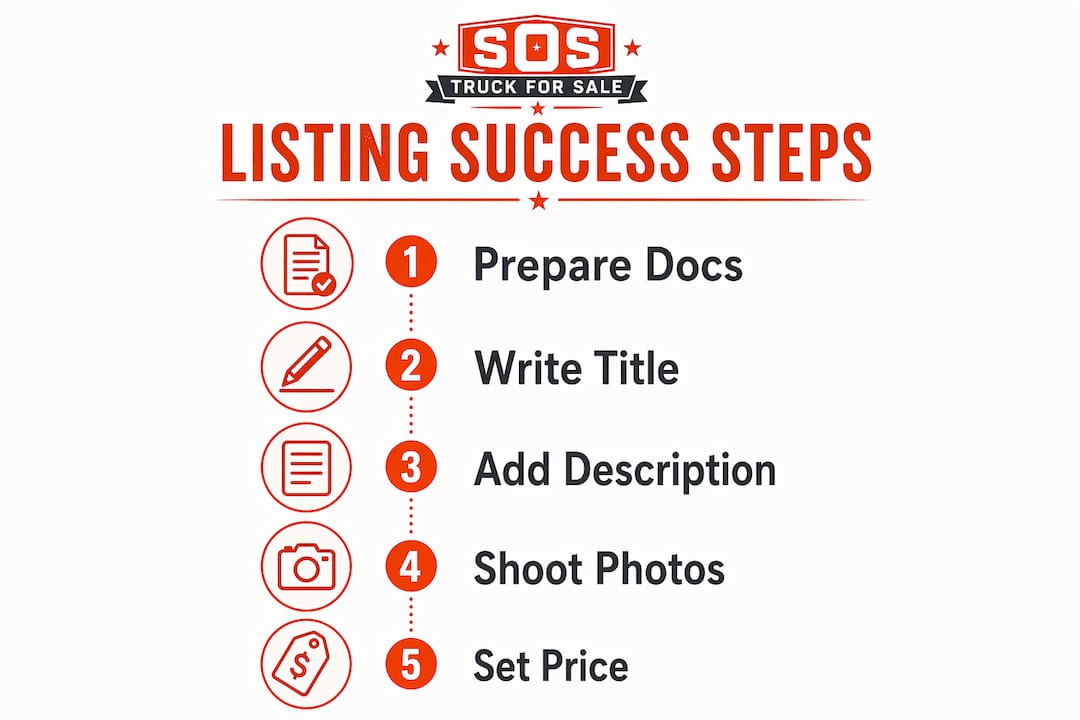
The title is the first filter buyers use. A fact-complete title includes year, make, model, trim, and one key selling point. A strong example: "2019 Ford F-450 XL Flatbed 6.7L Diesel, Low Miles, Clean Title." A weak example: "Flatbed truck, runs good." The first tells a buyer exactly what they are getting. The second tells them nothing and signals a seller who is not serious.
Avoid vague phrases like "well maintained," "priced to sell," or "must see." These phrases appear in thousands of listings and carry zero information. Replace them with specifics: mileage, recent service dates, and measurable specs.
Structure your description in this order:
- Opening line: restate the year, make, model, and one standout feature
- Bullet feature list: deck length, payload capacity, liftgate, hitch rating, tire condition, engine hours if applicable
- Condition paragraph: honest notes on wear, any known issues, and recent maintenance with dates
- Price and next steps: state the asking price, whether you accept offers, and how to contact you
Descriptions that pre-answer buyer objections with honest condition notes and recent maintenance details reduce back-and-forth questions and accelerate the sale. A practical example: "New brakes installed in january 2026, minor surface rust on rear frame rail, see photo 9, asking $38,500 OBO." That one sentence eliminates three common buyer questions.
Pro Tip: Write your description for mobile readers. Use short bullet points, not long paragraphs. Most buyers browse listings on a phone, and dense text gets skipped.
What photo strategy maximizes engagement on your listing?
Photos are the most powerful element in any flatbed truck listing. Listings with 8 or more clear photos sell 2–3 times faster than listings with fewer images. For a flatbed truck, aim for 12–15 photos minimum because the bed, undercarriage, and equipment details require dedicated shots that a standard vehicle listing does not.
Follow this sequence for maximum buyer confidence:
- Hero shot: front three-quarter angle, full truck visible, clean background
- Rear three-quarter: shows bed length and rear equipment clearly
- Driver side profile: full length, level with the truck
- Passenger side profile: same framing
- Flatbed deck: top-down view showing surface condition, tie-downs, and any racks
- Cab interior: dashboard, seats, steering wheel, and any visible wear
- Engine bay: clean or noted as dirty, with any visible maintenance items
- Odometer: clear, in-focus, engine running if possible
- Tires: all four, close-up showing tread depth
- Data plate and VIN tag: sharp, fully readable
- Any damage: close-up of every scratch, dent, or rust spot referenced in your description
Marketplace photo rules require blurred license plates on all images and prohibit promotional overlays, text badges, and watermarks. Violations result in listing removal. Blur plates before uploading, not after.
Shoot in natural daylight, ideally on an overcast day to avoid harsh shadows. Park on a clean, uncluttered surface. A gravel lot or empty parking area works well.
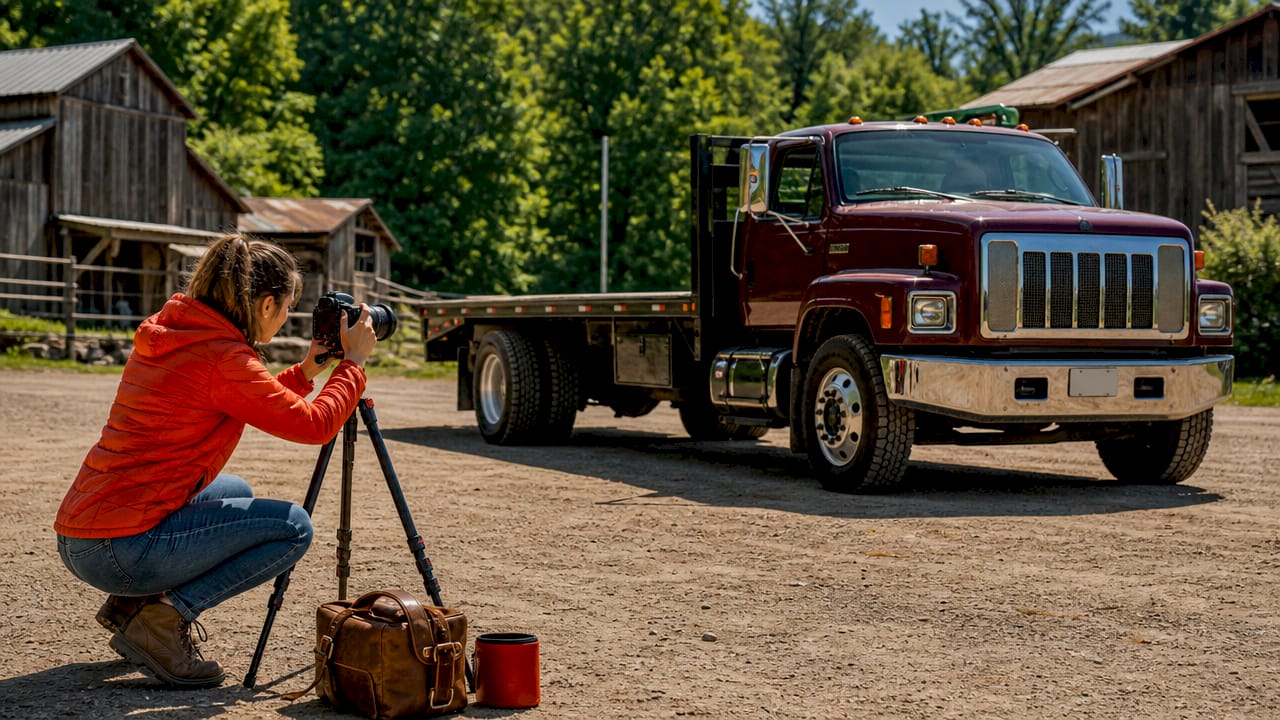
Pro Tip: Shoot your hero shot from a slightly elevated angle, about chest height, with the truck at a 45-degree angle to the camera. This framing shows the most truck in a single frame and matches the angle buyers expect from professional listings.
How to price your flatbed truck competitively
Pricing is where most private sellers lose money or lose the sale entirely. Overpriced trucks list for weeks without selling, while underpriced trucks leave money on the table. The fix is straightforward: research comparable listings before you set your number.
Search for trucks matching your year, make, model, mileage range, and flatbed configuration on at least two platforms. Note the asking prices, how long listings have been active, and whether sellers have reduced their price. Active listings that have been sitting for 30 or more days are almost certainly overpriced for their condition.
Set three price points before you list:
- Asking price: the number you post publicly, with room for negotiation
- Target price: the number you actually want to walk away with
- Walk-away price: the floor below which you will not sell
Prepare your transaction documents before the first offer arrives. A bill of sale should include the year, make, model, VIN, sale price, date, and odometer reading. The sale date triggers the title transfer process in most states.
Protect yourself from payment fraud. Accept certified bank checks only after verifying them directly with the issuing bank, or use a secure payment platform. Never release the title before funds clear.
- Verify any check with the bank before signing over the title
- Meet buyers in a public location for initial inspections
- Bring a witness or inform someone of the meeting location and time
- Keep a copy of the buyer's ID before completing the transaction
What mistakes should you avoid in your flatbed truck listing?
The most common listing errors are preventable. Accurate specs and searchable metadata like exact mileage, VIN, title status, transmission, and fuel type reduce buyer questions and improve marketplace search ranking. Skipping these fields is the fastest way to make your listing invisible.
Avoid these specific mistakes:
- Vague titles: "Flatbed for sale" does not tell a buyer the year, make, or configuration
- Under-uploading photos: fewer than 8 photos signals the seller is hiding something
- Inconsistent specs: if your title says 2018 but your VIN decodes to 2017, buyers lose trust immediately
- Missing flatbed details: deck length, liftgate capacity, and rack type are searchable keywords that qualified buyers use to filter results
- No price listed: listings without a price get fewer clicks because buyers assume the worst
"Buyers prefer listings that read like technical documentation rather than marketing flyers." — High-Converting Heavy Equipment Listings
Treat your flatbed specs the way a parts catalog treats specifications. List deck and equipment details as searchable keywords: "12-ft steel deck, 2,000-lb liftgate, headache rack, 2-inch receiver hitch, spray-in bed liner." That format reduces repetitive buyer questions and attracts contacts who already know what they want.
Renew or repost your listing every 7–10 days on platforms that allow it. Fresh listings rank higher in search results. Respond to inquiries within a few hours. Slow responses cost you serious buyers who move on to the next listing.
Key takeaways
A complete, accurate, and well-photographed flatbed truck listing consistently outperforms vague or incomplete ads across every major marketplace.
| Point | Details |
|---|---|
| Prepare before listing | Gather VIN, title, service records, and flatbed specs before writing a single word. |
| Write a fact-complete title | Include year, make, model, trim, and one key selling point to attract qualified buyers. |
| Upload 12–15 photos minimum | Follow a consistent sequence from hero shot to damage close-ups to build buyer trust. |
| Price with market data | Research comparable listings and set asking, target, and walk-away price points in advance. |
| List flatbed specs as keywords | Deck length, liftgate capacity, and rack type are searchable terms that filter in serious buyers. |
What I have learned from watching flatbed listings succeed and fail
The sellers who move their trucks fast share one habit: they treat the listing like a technical document, not an advertisement. I have reviewed hundreds of commercial truck listings, and the pattern is consistent. The listings that generate serious inquiries within 48 hours are the ones that look like they were written by someone who knows the equipment cold.
The biggest mistake I see is sellers writing descriptions that sound confident but contain no data. "Well maintained, runs great" tells a buyer nothing. "Oil changed at 87,400 miles, new alternator in october 2025, all four tires replaced in march 2025 with 275/70R18 LT tires" tells a buyer everything. The second version closes objections before the buyer even thinks to ask.
I also see sellers consistently underestimate the value of flatbed-specific photos. A standard vehicle listing can get away with 8 photos. A flatbed truck needs shots of the deck surface, the tie-down rails, the liftgate mechanism, and the undercarriage. Buyers of working trucks want to see the equipment they are actually buying, not just the cab.
One practical shortcut: use your VIN to pre-fill listing fields on any platform that supports it. VIN-driven data auto-fill prevents the kind of small inaccuracies that make buyers question everything else in your listing. A wrong model year or incorrect engine spec in one field undermines trust in your entire description.
The sellers who respond to inquiries within two hours close more deals than those who wait a day. Serious buyers are often comparing three or four listings at once. Speed signals professionalism and gives you the first conversation.
— Dave
List your flatbed truck on Sostruckforsale
Sostruckforsale is built for commercial and industrial equipment sellers who need a focused platform, not a general classifieds site buried in consumer vehicles.
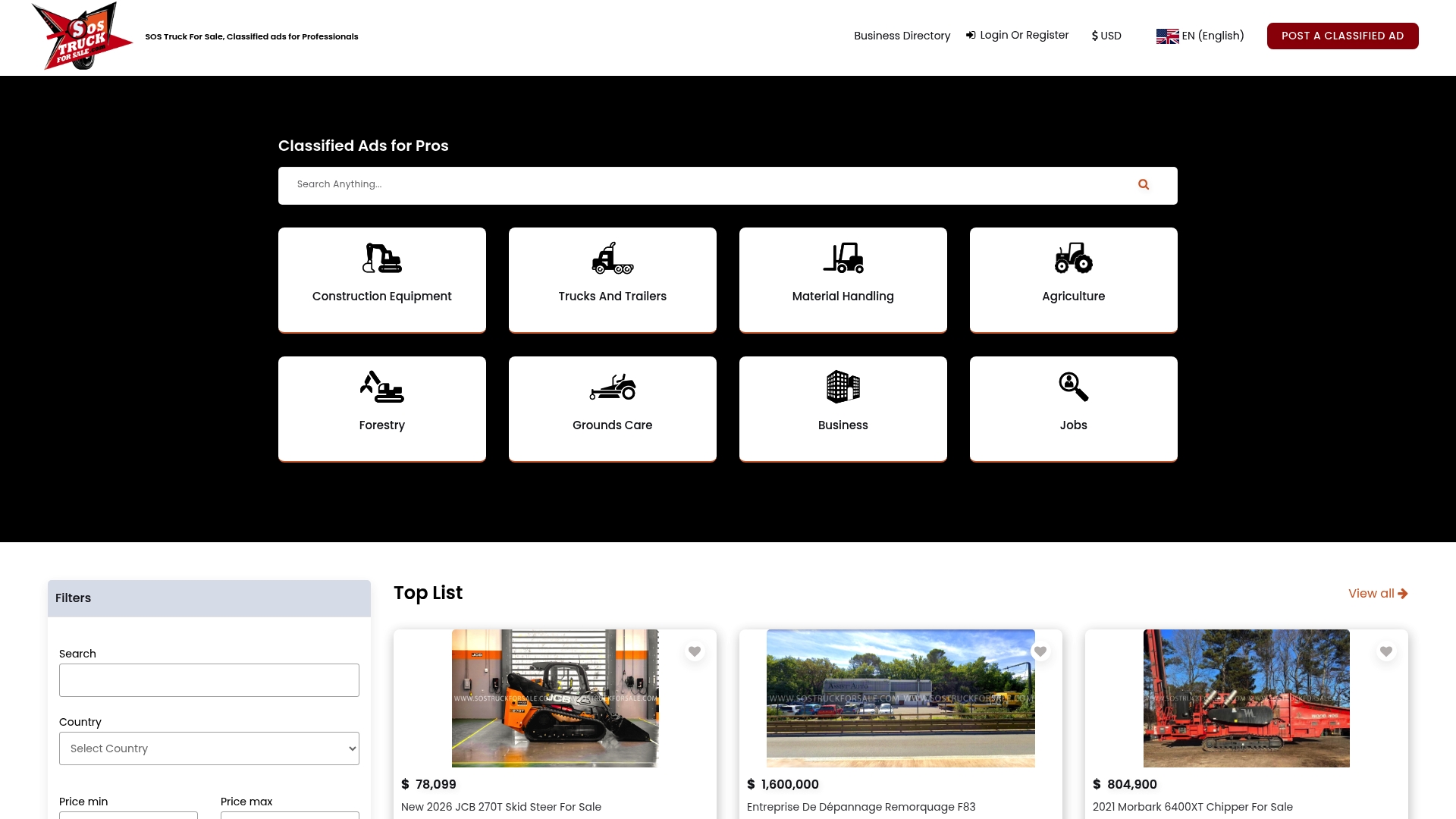
When you list a flatbed truck on Sostruckforsale, you reach buyers who are specifically searching for heavy-duty and commercial trucks, not browsing for passenger cars. The platform supports detailed spec fields for flatbed configurations, photo uploads, and direct buyer contact. Sellers can post complete technical descriptions, upload high-resolution images, and set pricing that reaches a qualified commercial audience. Sostruckforsale also lists semi trucks, heavy-duty trucks, and excavators, so your listing sits alongside the equipment your buyers are already searching for.
FAQ
How many photos should a flatbed truck listing include?
Upload at least 12–15 photos for a flatbed truck listing. Cover the hero shot, all four sides, deck surface, cab interior, engine bay, odometer, tires, data plate, and any damage.
What should a flatbed truck listing title include?
A strong title includes the year, make, model, trim, and one key selling point such as mileage or a major spec. Example: "2020 Ram 5500 Tradesman Flatbed 6.7L Diesel, 48K Miles, Clean Title."
How do I price my flatbed truck for a fast sale?
Search comparable listings on two or more platforms and note active prices and listing age. Set an asking price with room to negotiate and define your minimum acceptable price before you receive any offers.
Why should I use a VIN when creating my listing?
A VIN auto-populates key fields like make, model, year, engine, and transmission. This prevents data entry errors and builds buyer trust by ensuring your listing matches the actual vehicle.
What flatbed-specific details should I include in my listing?
List deck length, deck width, material type, liftgate capacity, rack configuration, tie-down type, and hitch rating. These terms function as search keywords and filter in buyers who already know what they need.