
Getting more semi truck inquiries requires a deliberate combination of targeted digital outreach, a shipper-focused website, and fast quote response systems. Lead generation in freight sales, the recognized industry term for building a consistent pipeline of shipper contacts, depends on three pillars: visibility, relevance, and speed. Dealers who master all three consistently outperform those relying on referrals alone. Sostruckforsale connects dealers with buyers actively searching for commercial trucks, making it a practical starting point for any inquiry generation effort. The strategies below are built specifically for semi truck dealers and sales teams ready to increase inquiry volume and close more deals.
How to get more semi truck inquiries with digital tools
The foundation of any inquiry generation effort is a website built for shippers, not just truck buyers. Most small carrier websites do not generate leads. Converting shipper prospects at 8–15% requires clear lane information, equipment listings, and a fast quote response form on every relevant page. A dealer whose site lists "Midwest to Southeast flatbed capacity" with a one-click quote request form will outperform a generic "contact us" page every time.
Lane-specific SEO is the second digital pillar. Lane-specific landing pages take 3–4 months to generate consistent inbound inquiries, but they produce contract-level margins rather than spot-load rates. That time investment pays off because direct shipper relationships are far more durable than load board transactions. A page targeting "refrigerated freight Chicago to Dallas" attracts shippers with recurring needs, not one-time spot loads.
LinkedIn Sales Navigator is the third tool worth deploying. It allows dealers and sales teams to filter logistics decision-makers by company size, industry, and geography. Structured LinkedIn outreach targeting logistics professionals yields 5–15 qualified shipper conversations monthly, converting roughly 8% of contacts. That conversion rate is modest, but the quality of those conversations is far higher than cold calls to unverified lists.

| Tool | Primary function | Key prerequisite |
|---|---|---|
| Shipper-focused website | Inbound lead capture | Lane pages, quote form, mobile speed |
| LinkedIn Sales Navigator | Targeted outreach | Defined shipper persona, daily volume |
| Cold email campaigns | Lane and equipment outreach | Verified contact list, personalized copy |
| Import data prospecting | Identify active shippers by cargo | Access to import/export trade databases |
Pro Tip: Build a separate landing page for each major freight lane you serve. Each page should list equipment type, transit time, and a quote request form. This is the fastest path to ranking for lane-specific search terms.
How to execute outreach that generates qualified inquiries
Targeted outreach is the fastest way to attract more freight inquiries when your website is still building organic traffic. LinkedIn prospecting produces meaningful shipper conversations within 2–4 weeks when outreach volume stays at 15–20 targeted connections per day. That daily discipline separates dealers who build a pipeline from those who send a few messages and wait.
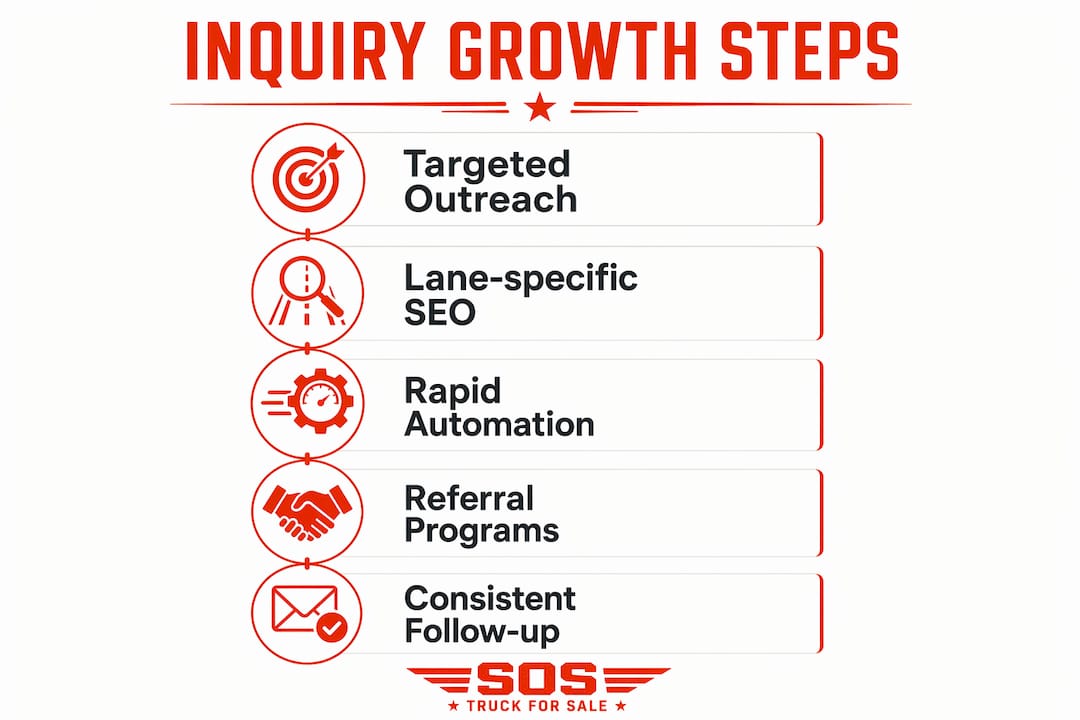
The message itself determines whether a connection becomes a conversation. Spray-and-pray outreach fails because it treats every shipper the same. Framing messages around specific shipper needs, such as capacity gaps on a particular lane or equipment availability during peak season, drives better engagement and higher quality inquiries. A message that says "I have three dry van units running Chicago to Atlanta every Monday" is far more compelling than "We offer reliable trucking services."
Trade show participation adds a channel that digital tools cannot fully replicate. The key is attending shipper industry events, such as food and beverage expos or manufacturing conferences, rather than trucking-only events. Shippers at their own industry events are in buying mode, not selling mode. That context makes conversations shorter and more productive.
A multi-channel approach using email, phone, and LinkedIn achieves better lead qualification and sales credibility than any single channel alone. The sequence that works: connect on LinkedIn, follow up with a personalized email within 48 hours, then call if there is no response after three business days.
Here is a repeatable outreach sequence for semi truck dealers:
- Identify 20 target shippers daily using LinkedIn Sales Navigator or import data tools.
- Send a connection request with a short, lane-specific note (under 300 characters).
- After acceptance, send a value message referencing a specific freight lane or equipment type.
- Follow up by email within 48 hours if there is no reply on LinkedIn.
- Call the prospect on day five with a direct reference to the prior messages.
- If no response after two full cycles, move the contact to a monthly newsletter list.
Pro Tip: Lead with value before asking for business. Sharing a freight market update or lane capacity alert in your first message positions you as a resource, not a vendor. Leading with value builds trust and generates warmer inbound leads over time.
How can automation and responsiveness improve inquiry conversion?
Speed is the single most underrated factor in freight sales. Responding first to spot quote requests wins roughly 70% of competitive freight bids. That number reflects a simple reality: shippers call multiple carriers simultaneously, and the first competent quote earns the load. A dealer who takes 24 hours to respond loses to one who responds in 90 minutes.
Automation closes that speed gap. AI-powered quoting tools generate fast, market-accurate freight quotes without requiring a sales rep to be at their desk. These tools pull current lane rates, apply equipment and distance variables, and return a quote in minutes. The result is a competitive response time that no manual process can match consistently.
A CRM system ties the automation together. When a shipper submits a quote request form, the CRM should trigger an immediate email acknowledgment, assign the lead to a sales rep, and set a follow-up reminder for two hours later. Without that structure, inbound leads fall through the gaps between shifts and weekends.
Key benefits of combining rapid quoting with CRM integration:
- Dealers capture inquiries outside business hours without losing response speed.
- Sales reps receive instant alerts when a shipper submits a quote form.
- Follow-up sequences run automatically if a shipper does not respond to the first quote.
- CRM data shows which lanes and equipment types generate the most inquiries, informing future outreach.
- Conversion rates improve because no lead sits uncontacted for more than a few hours.
Pro Tip: Set up an automated quote acknowledgment that goes out within five minutes of form submission. Even if the full quote takes longer, that instant response tells the shipper their request was received and is being processed. It reduces the chance they call a competitor while waiting.
What strategies sustain and grow inquiry volume through referrals?
Referral leads are the highest-quality inquiries a semi truck dealer can receive. Referral leads convert 3–5 times higher than cold outreach, and they arrive with a built-in level of trust that no cold email can replicate. A shipper referred by a trusted colleague already believes you can deliver before the first conversation starts.
Existing customers generate 15–25% annual revenue growth through referrals and upselling without requiring additional sales hires. That growth rate makes account management one of the highest-return activities a sales team can prioritize. Dealers who treat every closed deal as the start of a relationship, rather than the end of a transaction, build a self-sustaining inquiry pipeline.
Proactive quarterly business reviews with top customers uncover expansion opportunities and generate high-value referrals. A 30-minute call to review lane performance, discuss upcoming freight needs, and ask for introductions to peers in the same industry produces more qualified inquiries than a month of cold outreach.
Networking in independent freight forwarder groups and shipper associations also accelerates referral volume. These communities share vendor recommendations actively. A dealer who participates consistently, answers questions, and demonstrates lane knowledge earns referrals without ever making a direct pitch.
- Ask for referrals directly after a successful delivery or positive interaction.
- Offer a small incentive, such as a rate discount on the next load, for introductions that convert.
- Stay visible in shipper communities by sharing useful freight market updates monthly.
- Track referral sources in your CRM to identify which customers generate the most introductions.
What I've learned about winning freight inquiries that most dealers miss
The dealers I see consistently winning more inquiries share one habit: they treat outreach as a daily discipline, not a quarterly campaign. They send 15–20 LinkedIn messages every morning before checking email. They review their CRM pipeline every Friday. They call their top five customers once a month with no agenda other than to check in. That consistency compounds over time in ways that no single tactic can replicate.
The second thing most dealers underestimate is lane ownership through SEO. A well-built lane page ranks for years and delivers inbound inquiries with zero ongoing cost per lead. I have seen dealers dismiss this because results take 3–4 months to appear. That patience is exactly what creates a competitive moat. By the time a competitor decides to build lane pages, you are already ranking and collecting direct shipper relationships.
Speed in quoting is the third area where I see dealers leave money on the table. Responding to a spot quote request the next morning is not fast enough. The shipper has already booked with someone else. Automation is not optional in 2026. It is the baseline expectation for any dealer serious about converting inbound inquiries into revenue.
The dealers who combine targeted outreach, lane-specific SEO, and fast quote automation do not just get more inquiries. They get better ones, from shippers who are ready to move freight and willing to pay contract rates.
— Dave
Sostruckforsale: a platform built for dealer inquiry growth
Semi truck dealers who want to increase inquiry volume need more than a strategy. They need a platform where qualified buyers are already searching.
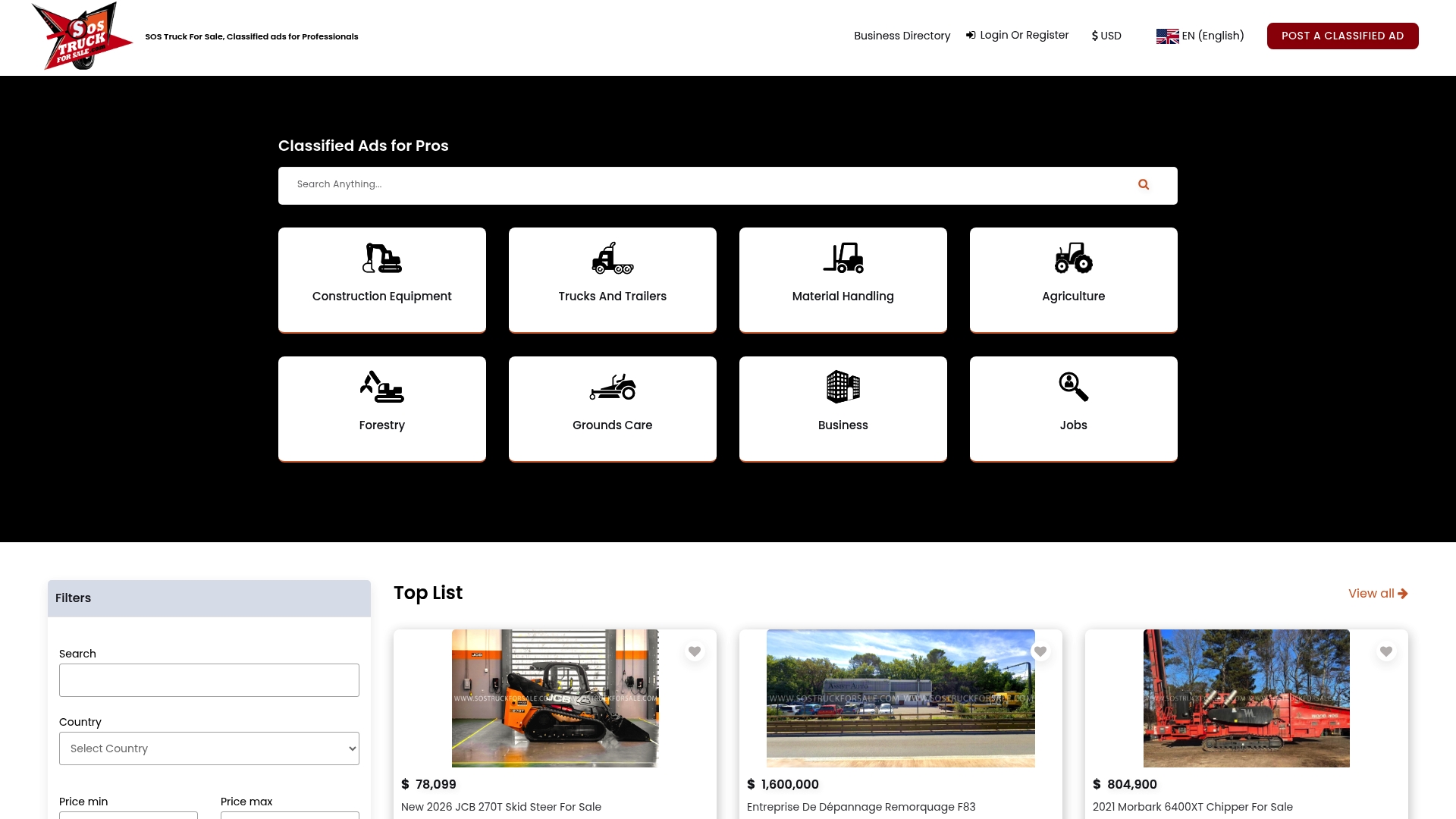
Sostruckforsale gives dealers a dedicated listing environment built for commercial and heavy equipment sales. Each listing on Sostruckforsale is structured to capture buyer interest with clear equipment details, direct contact options, and visibility to shippers and fleet buyers actively in the market. Dealers can list semi trucks, heavy duty trucks, and other commercial equipment with the specifications buyers need to make fast decisions. The platform puts your inventory in front of buyers who are already searching, reducing the time between listing and first inquiry. For dealers ready to generate more truck customer interest without rebuilding their entire sales process, Sostruckforsale is a practical next step.
FAQ
How many LinkedIn contacts should I send daily to get truck leads?
Maintain 15–20 targeted LinkedIn connections per day to generate meaningful shipper conversations within 2–4 weeks. Consistency in daily volume is what produces results, not occasional bursts of activity.
How fast do I need to respond to a freight quote request?
Responding first to spot quote requests wins roughly 70% of competitive freight bids. Aim to send an initial response within 90 minutes of receiving any inbound inquiry.
Do referrals really outperform cold outreach for semi truck sales?
Referral leads convert 3–5 times higher than cold outreach. Existing customers who trust your service are the most reliable source of high-quality, ready-to-book inquiries.
How long does lane-specific SEO take to generate inquiries?
Lane-specific SEO takes 3–4 months to generate consistent inbound inquiries. The payoff is direct shipper relationships with contract-level margins rather than spot-load rates.
What is the best way to boost trucking business inquiries without hiring more staff?
Combining automated quote forms, CRM follow-up sequences, and a referral program generates inquiry growth without adding headcount. Existing customers alone can drive 15–25% annual revenue growth through referrals and upselling.
Key takeaways
Dealers who combine targeted outreach, lane-specific SEO, rapid quote automation, and referral programs generate more qualified semi truck inquiries than those relying on any single tactic alone.
| Point | Details |
|---|---|
| Lane-specific SEO builds durable leads | Build dedicated pages per freight lane to rank for shipper searches and earn contract-rate relationships. |
| Daily LinkedIn outreach drives pipeline | Send 15–20 targeted connections per day to generate 5–15 qualified shipper conversations monthly. |
| Speed wins competitive freight bids | First competent quote response wins roughly 70% of spot bids; automate to respond within 90 minutes. |
| Referrals convert far above cold leads | Warm introductions convert 3–5 times higher; prioritize quarterly reviews with top customers to generate them. |
| Existing accounts fuel revenue growth | Focused account management produces 15–25% annual growth through referrals and upselling without extra hires. |