

Screening commercial truck buyers is the process of identifying qualified prospects through comprehensive outreach, evaluation of purchasing criteria, and validation of buying intent to maximize successful transactions. Fleet managers and dealers who skip this step waste time on unqualified leads and lose deals to faster competitors. The Work Truck Show Report confirms that 92.36% of buyers conduct multi-dealer outreach simultaneously. That figure means your window to engage a serious buyer is narrow and closing fast. Platforms like Sostruckforsale and tools like SyncGTM now give dealers the data infrastructure to qualify buyers before the first phone call.
What tools and prerequisites do you need to screen commercial truck buyers?
Effective buyer screening starts with the right data infrastructure, not instinct. Before you contact a single prospect, you need verified information on their budget, vocational specifications, and purchase timeline. Collecting these three data points upfront separates tire-kickers from fleet managers ready to sign.
The core tools for qualifying commercial truck buyers include:
- SyncGTM for buying committee mapping and multi-stakeholder contact enrichment
- CRM platforms (such as Salesforce or HubSpot) for tracking outreach history and response timing
- Telematics data providers for presenting real vehicle performance metrics to buyers evaluating total cost of ownership
- Commercial Truck Trader and Sostruckforsale listing analytics for identifying high-intent inbound leads
- Pre-purchase inspection (PPI) reports to validate truck condition before buyer negotiations begin
Vocational fit is a non-negotiable data point. A refrigerated carrier evaluating a day-cab configuration and a construction company sourcing a heavy-duty dump truck have entirely different spec requirements. Collecting those requirements before outreach lets you match inventory precisely and qualify faster.
Real-time telematics and driver-behavior analytics provide better pricing power than traditional unit-price negotiation. That insight from PACCAR's 2026 marketing approach reflects a broader shift: buyers now expect performance data, not just spec sheets.

Pro Tip: Build a one-page buyer intake form covering GVW requirements, vocational application, fleet size, financing status, and target delivery date. Send it before the first call. Buyers who complete it are serious.
How do you identify and engage the full buying committee?
The fleet manager is rarely the only decision-maker. Buying committees include the Fleet Manager, CFO, Operations Director, and Safety Officer. Missing even one of these stakeholders early in the process creates veto risk at the approval stage.
Follow this sequence to map and engage the full committee:
- Identify the fleet manager first. Use LinkedIn, company websites, or SyncGTM to confirm their role and direct contact details.
- Map adjacent stakeholders. Ask the fleet manager directly: "Who else will be involved in the final approval?" Most will tell you.
- Enrich contact data. Use SyncGTM or similar tools to find verified emails and phone numbers for CFO and Operations contacts.
- Tailor your message by role. CFOs respond to total cost of ownership (TCO) data. Safety officers respond to uptime records and driver safety ratings. Operations directors respond to payload capacity and route flexibility.
- Initiate parallel outreach. Contact at least two stakeholders simultaneously. Do not wait for the fleet manager to forward your materials internally.
- Follow up within 3–24 hours. The Work Truck Show Report shows 77% of high-intent buyers expect a response within that window. Delays signal low urgency and cost deals.
The NTEA Work Truck Week 2026 Buyer Guide confirms that trade show buyers arrive with detailed checklists focused on long-term service and parts availability. That behavior pattern applies equally to inbound digital leads. Buyers who ask specific questions about parts support and service intervals are high-intent prospects worth prioritizing.
Pro Tip: When a fleet manager goes quiet after initial contact, reach out directly to the CFO or Operations Director with a TCO summary. This re-engages the deal without pressuring the primary contact.
What criteria and checklists help evaluate serious buyers?
A structured evaluation checklist separates buyers with genuine purchasing intent from those still in early research mode. The checklist below covers the four dimensions that matter most.
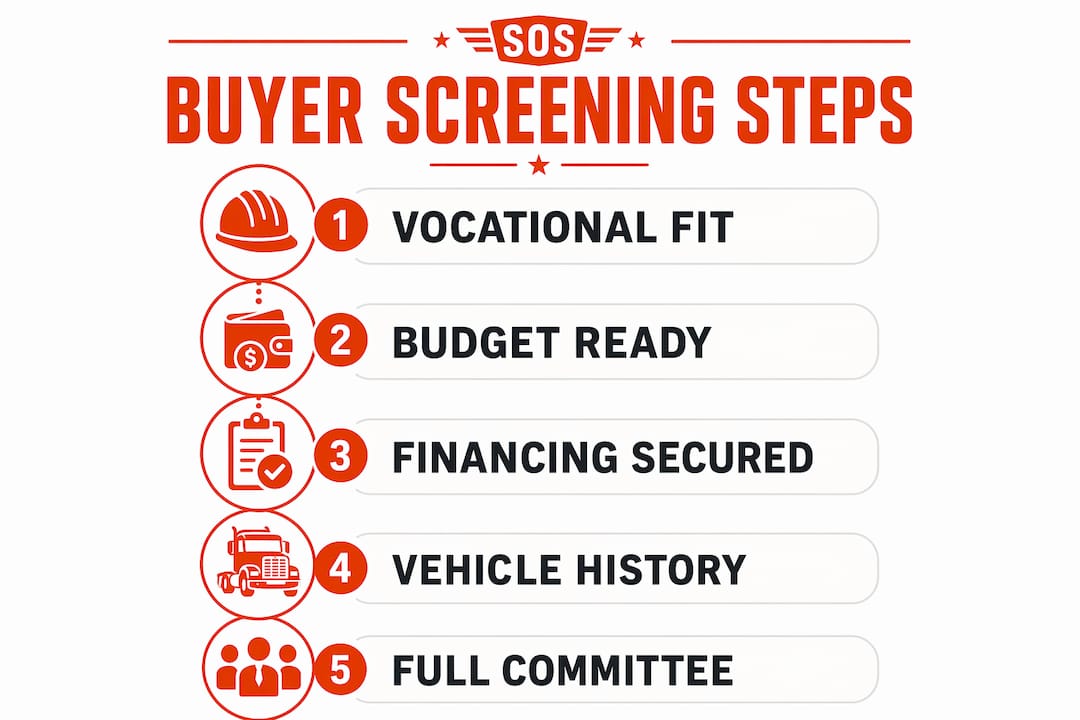
| Evaluation Area | Key Criteria to Verify |
|---|---|
| Budget readiness | Confirmed financing pre-approval or cash reserve; budget buffer for repairs |
| Vocational fit | GVW, axle configuration, body type, and application match to listed truck |
| Vehicle history review | Clean title, no salvage flag, service records available |
| Insurance and documentation | Certificate of insurance with physical damage coverage ready before pickup |
The buying process involves 9 critical steps, including vocational spec definition, budget confirmation, vehicle history review, and an independent pre-purchase inspection. Trucks that fail more than 5 points on a 50-point inspection are flagged as a pricing risk. That standard gives dealers a clear benchmark for pre-listing condition disclosures.
Experienced buyers negotiate on total cost of ownership, not sticker price. Fleet managers subtract repair costs identified during inspections from the asking price rather than rejecting trucks outright. Knowing this in advance lets you price listings to account for that negotiation behavior.
Additional buyer signals worth tracking:
- Requests for multiple photos or a video walkthrough (high-intent behavior)
- Questions about financing terms or dealer financing programs
- Inquiries about trade-in valuation for existing fleet units
- Requests for service history documentation or maintenance logs
Listings with over 10 photos generate 60% more email leads. Buyers who engage with photo-rich listings are further along in their decision process and easier to qualify quickly.
What are the most common pitfalls when screening buyers?
The most damaging mistake in buyer screening is single-threading. Single-threading to only the fleet manager limits sales success and creates veto risk when other stakeholders weigh in late. Buying committees can include 3–7 stakeholders across multiple departments. A deal that looks closed at the fleet manager level can collapse when the CFO reviews the financing terms.
Other frequent pitfalls include:
- Late insurance documentation. Funding delays often result from missing insurance certificates. Lenders require proof of physical damage coverage before disbursing funds. Buyers who have not secured an insurance binder before pickup day create last-minute delays that can kill the deal.
- Misreading multi-dealer outreach. Because 92.36% of buyers contact multiple dealers, a buyer going quiet does not always mean disinterest. It often means a competitor responded faster. Re-engage with a specific value offer, not a generic follow-up.
- Opaque pricing. Listings without a price listed generate significantly fewer qualified leads. Price transparency filters out low-intent browsers and attracts buyers ready to negotiate.
- Ignoring financing readiness. Buyers who have not confirmed financing pre-approval are not yet qualified. Ask directly about financing status in the first conversation.
"Successful commercial truck procurement depends on proactive multi-department engagement to align finance, operations, and safety needs, preventing internal vetoes during approval processes." — Sales Training: Multi-Contact Strategies in Fleet Sales
Competitive Allowance Programs (CAP) and Commercial Pricing Agreements (CPA) are tools serious fleet buyers use to secure multi-year pricing and volume discounts. Buyers referencing these programs in early conversations signal high intent and purchasing authority. Treat those conversations as priority leads.
Key Takeaways
Screening commercial truck buyers effectively requires multi-stakeholder engagement, verified buyer data, and fast response times to convert high-intent leads before competitors do.
| Point | Details |
|---|---|
| Engage the full buying committee | Contact the CFO, Operations Director, and Safety Officer early to prevent late-stage vetoes. |
| Respond within 3–24 hours | High-intent buyers expect fast replies; delays hand the deal to faster competitors. |
| Use a buyer intake form | Collect GVW requirements, vocational specs, financing status, and timeline before the first call. |
| Price listings transparently | Include price and 10+ photos to attract qualified leads and filter out low-intent browsers. |
| Verify insurance and financing early | Confirm insurance binders and financing pre-approval before scheduling pickup to avoid funding delays. |
My take on where buyer screening is heading in 2026
The dealers winning in 2026 are not the ones with the largest inventory. They are the ones who qualify buyers faster and engage more stakeholders earlier. I have watched deals collapse at the finish line because a CFO was never brought into the conversation until the purchase order was on the table. That is a process failure, not a negotiation failure.
The shift toward telematics-backed pricing is real and accelerating. Buyers who walk in with performance data from their existing fleet are negotiating from a position of strength. Dealers who can match that with verified vehicle performance records from their listings will close more deals at better margins. PACCAR's 2026 approach makes this explicit: data-driven conversations outperform unit-price haggling every time.
The insurance and financing documentation issue is one I see repeatedly. Buyers get to pickup day without an insurance binder, and the lender holds the funds. The fix is simple: build a documentation checklist into your qualification process and send it to the buyer at the point of first serious inquiry. Do not wait until the deal is signed.
Multi-dealer outreach is not a threat. It is a filter. Buyers who contact five dealers and then respond to your follow-up are telling you they are serious and that your offer resonated. The dealers who treat multi-dealer outreach as a reason to disengage are the ones losing deals they should have won.
— Dave
Sostruckforsale: a platform built for serious buyer screening
Attracting qualified fleet buyers starts with a listing that gives them everything they need to self-qualify.
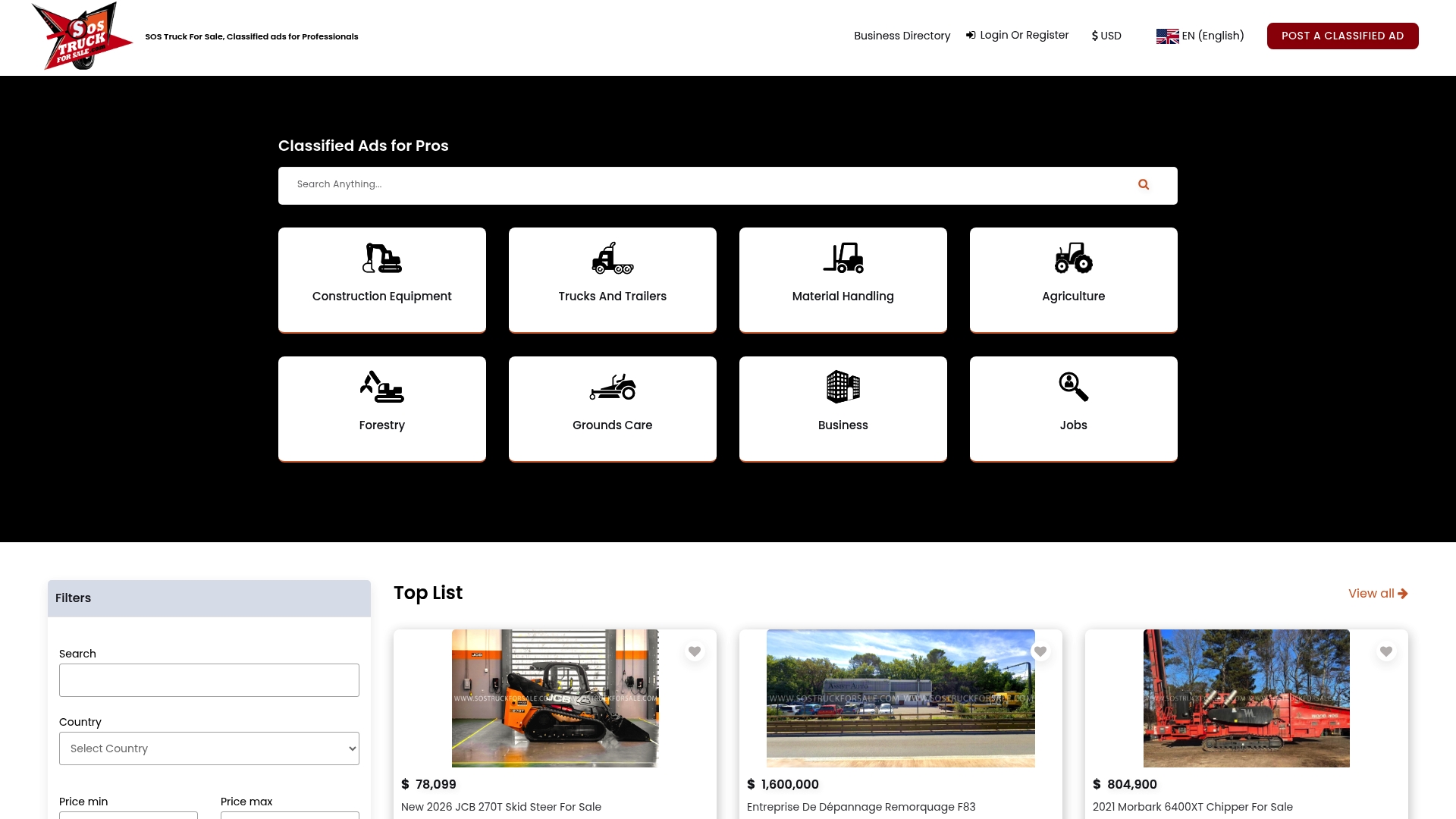
Sostruckforsale is a centralized marketplace for commercial and heavy-duty trucks, semi trucks, and industrial equipment. Listings on the platform support detailed specifications, multiple photos, and transparent pricing, the exact combination that drives higher-quality lead volume. Fleet managers searching for semi trucks, heavy-duty work trucks, or specialized vocational equipment can find verified inventory in one place. For dealers, the platform provides the visibility needed to attract serious buyers and move inventory faster. List your trucks on Sostruckforsale and put your inventory in front of buyers who are ready to act.
FAQ
What does it mean to screen commercial truck buyers?
Screening commercial truck buyers means verifying a prospect's budget, vocational requirements, financing status, and purchase timeline before investing significant sales effort. The goal is to identify buyers with genuine purchasing intent and the authority to close a deal.
How many stakeholders are typically in a commercial truck buying committee?
Buying committees for commercial truck purchases typically include 3–7 stakeholders, covering the Fleet Manager, CFO, Operations Director, and Safety Officer. Engaging all relevant parties early prevents late-stage vetoes.
How quickly should dealers respond to commercial truck inquiries?
Dealers should respond within 3–24 hours. The Work Truck Show Report shows 77% of high-intent buyers expect a reply within that window, and delays consistently result in lost deals to faster competitors.
Why do funding delays happen in commercial truck purchases?
Funding delays most often occur because buyers have not secured an insurance certificate with physical damage coverage before pickup day. Lenders require this documentation before releasing funds, so buyers should obtain an insurance binder well in advance.
What listing features attract the most qualified truck buyers?
Listings with more than 10 photos generate 60% more email leads, and listings that include a price produce significantly higher lead response rates. Detailed specifications and transparent pricing are the two most effective filters for attracting serious buyers.