
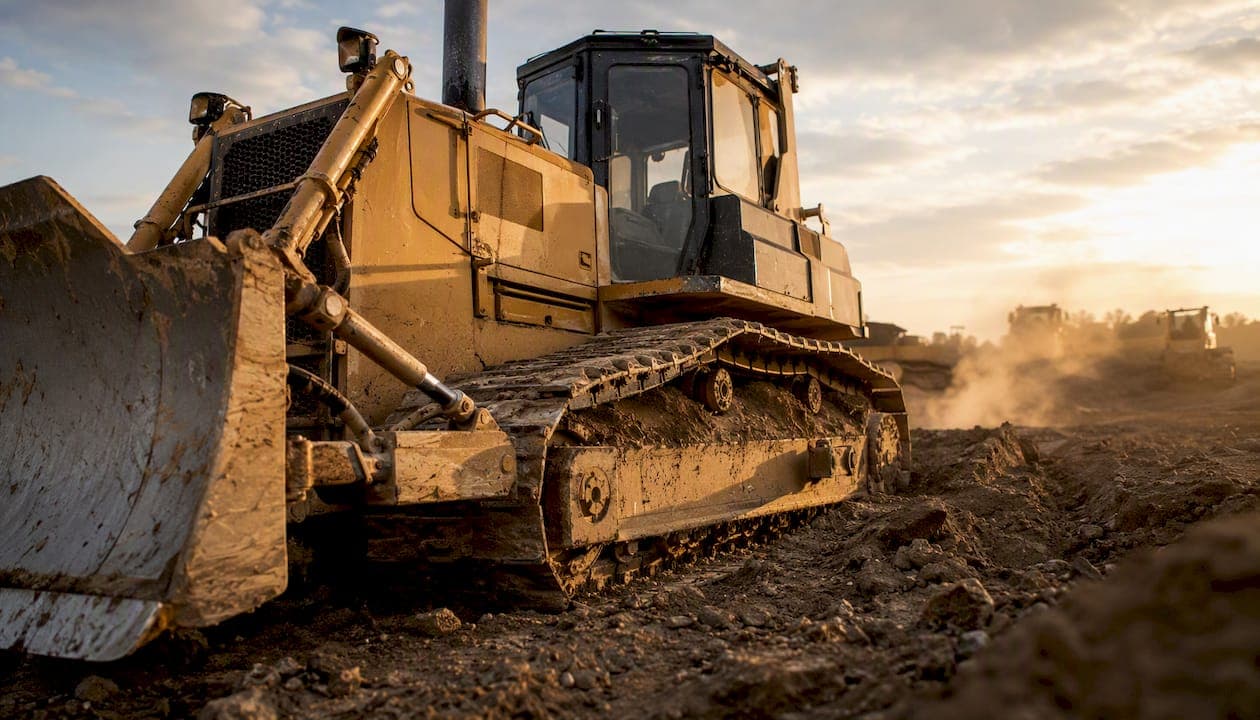
Match a crawler dozer to soft, rough, or steep terrain where traction and low ground pressure matter most. Match a wheel dozer to hard-surface work like ports, landfills, and stockyards where speed and mobility win the day. That's the industrial bulldozer types guide in one sentence, and everything below builds out the sizing, blade, and procurement detail behind it.
For quick reference, here's how four common project categories map to machine family:
- Mass earthmoving or mining: large crawler dozer, typically high flywheel horsepower, straight or semi-U blade.
- Finish grading or landscaping: small or compact crawler, sometimes a mini dozer, with a universal or straight blade for precise work.
- Port, yard, or landfill work: wheel dozer ideal for speed and self-mobility across hard, cleared surfaces.
- Land clearing or forestry prep: crawler dozer often fitted with a mulcher head or root rake instead of a standard blade.
Size everything to your worst-case task, not your average day, and confirm dealer parts availability and undercarriage support before you commit to a purchase or long-term rental.
Key Takeaways
Matching a dozer's running gear, size class, and blade to your worst-case task, not your average one, is what actually controls project cost and uptime.
| Point | Details |
|---|---|
| Size to the worst-case task | Undersized machines wear faster and burn more fuel when run near capacity every day. |
| Running gear decides terrain fit | Crawlers suit soft, steep, or rough ground; wheel dozers suit hard, cleared surfaces like ports and yards. |
| Blade choice changes capability | Straight blades favor penetration and grading precision; universal blades favor volume and cast distance. |
| Dealer network matters as much as specs | Parts availability and service response time often decide uptime more than small horsepower differences. |
| Undercarriage condition drives resale and cost | Request photos and service history before committing to any purchase or long-term rental. |
| Compare real listings before deciding | Sostruckforsale lets buyers filter by operating weight, blade type, and dealer proximity across current listings. |
Table of Contents
- What Is an Industrial Bulldozer and Why Type Selection Matters
- What Are the Main Types of Construction Bulldozers?
- How Do Bulldozer Size Classes Break Down?
- Which Blade and Attachment Setup Fits Your Job?
- How Should You Choose the Right Dozer for Your Project?
- Quick Specs Reference by Machine Class
- What Drives Maintenance and Operating Costs?
- What Do Major Manufacturers Bring to a Shortlist?
- An Equipment Manager's Take on Specifying a New Dozer
- Compare Listings and Connect With Dealers on Sostruckforsale
- Sources
What Is an Industrial Bulldozer and Why Type Selection Matters
A bulldozer is a tractor chassis fitted with a front-mounted blade, and frequently a rear ripper, built to push, grade, or rip material rather than haul it. The chassis rides on one of two running gears: crawler tracks or rubber tires. That single distinction, tracked versus wheeled, decides more about a machine's fit for your job than almost any other spec on the sheet.
Crawler dozers spread weight across a long track, which drops ground pressure and lets the machine work soft, wet, or uneven ground without sinking. Wheel dozers concentrate weight on four tires, which raises ground pressure but multiplies travel speed across compacted surfaces. Picking the wrong running gear doesn't just hurt productivity. It accelerates undercarriage wear, spikes fuel burn per yard moved, and can strand a machine on a site it was never built to cross.
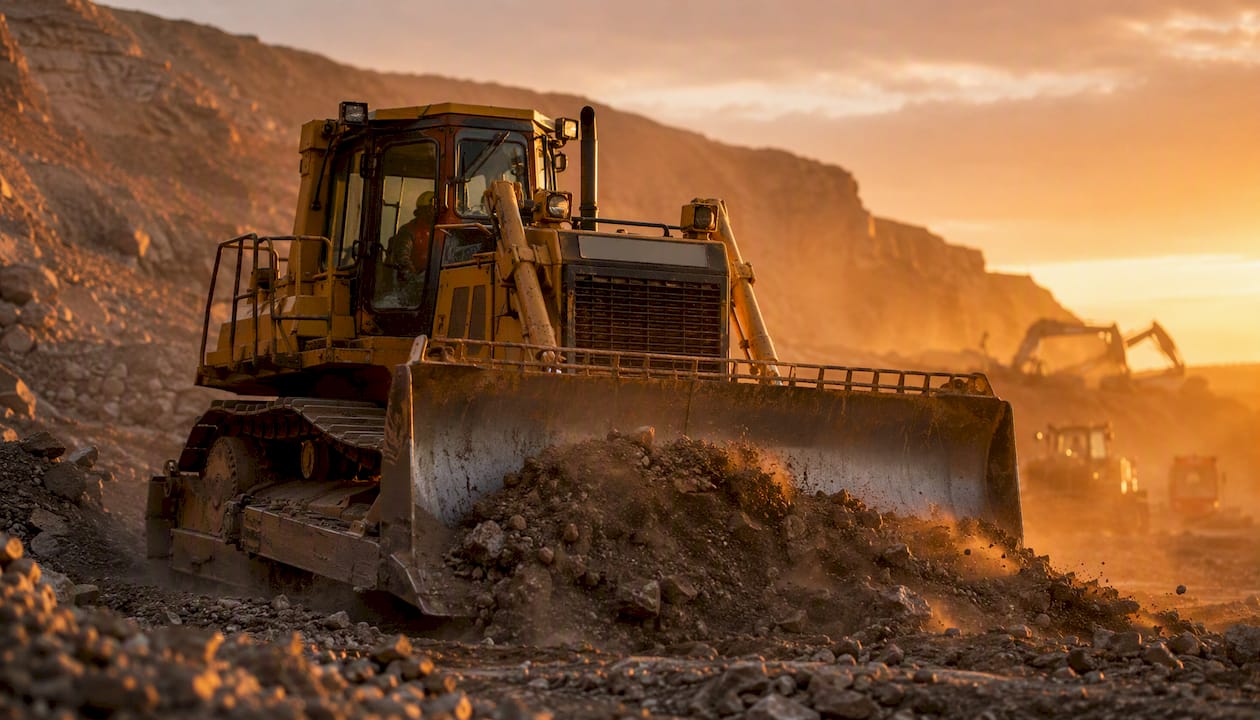
Blade type compounds that decision. Straight blades favor penetration and fine grading. Universal blades favor volume and cast distance. According to Wikipedia's engineering overview of bulldozers, a straight (S) blade is built for fine grading and high penetration, a universal (U) blade maximizes load volume, and a semi-universal (S-U) blade splits the difference for mixed material. Get the running gear and blade combination wrong on a bid, and you're either renting a second machine mid-project or eating hours of lost production waiting on a swap.
Pro Tip: Before you spec anything, write down the single hardest task the machine will face all year, not the typical one. A dozer sized for your average Tuesday will struggle on your worst February.
What Are the Main Types of Construction Bulldozers?
Crawler and wheel dozers cover most of the market, but several specialized variants exist because standard configurations can't handle every ground condition or task.
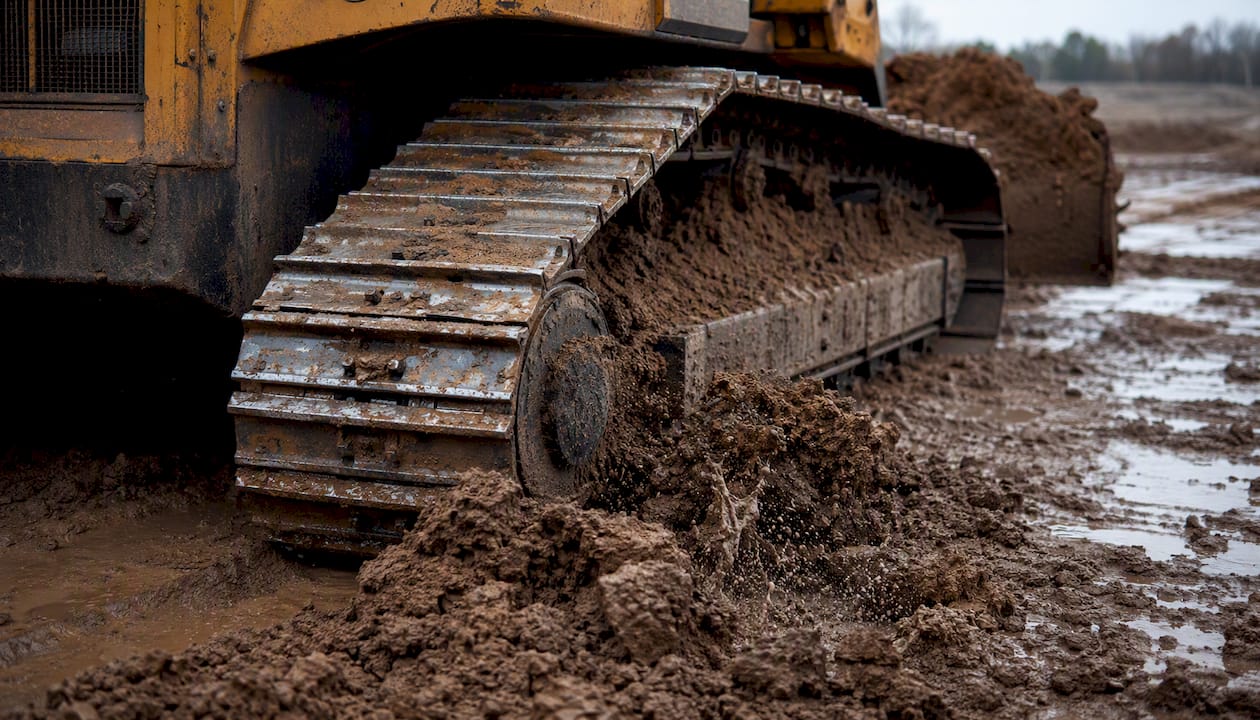
Crawler (track) dozers deliver the highest traction-to-weight ratio in the category. Low ground pressure lets them work mud, sand, and steep grades that would bog down a wheeled machine, and that's why they dominate mass earthmoving, road building, and site prep. The trade-off is transport: tracked machines typically need a lowboy trailer and pilot escort for longer moves, which adds cost and lead time to multi-site work.
Wheel dozers trade some traction for speed and self-mobility. A wheel dozer can drive itself between work zones on a paved yard or hauled surface at speeds a crawler can't touch, which is exactly why ports, landfills, and stockyards favor them for repetitive material-pushing on hard ground. The trade-off shows up in tire costs. A single set of large dozer tires can rival a track chain's price, and rough or debris-heavy ground chews through rubber fast.
Beyond the two primary configurations, several specialized variants solve narrower problems:
- Mini or compact dozers fit tight residential lots, utility trenching, and landscaping jobs where a full-size crawler simply won't clear the gate.
- Low ground pressure (LGP) or swamp dozers run wide, extended tracks for wetlands, reclamation sites, and other ground that would swallow a standard undercarriage.
- Shiphold or port dozers are compact, often low-profile crawler units built to work inside vessel cargo holds, a niche but steady demand driver at bulk terminals.
- Mulcher or brush-clearing dozers swap the blade for a mulching head to clear vegetation and prep right-of-way or forestry sites in one pass.
- Hybrid and electric dozers are starting to appear in emissions-restricted urban work and enclosed environments where diesel exhaust is a liability.
- Remote and tele-remote dozers let operators run the machine from a safe distance on unstable slopes, landfill caps, or contaminated sites.
Field guides that catalog these categories consistently list crawler, wheel, mini, mulcher, hybrid, and shiphold models as the common variants contractors actually specify, each engineered around a specific task rather than general-purpose grading.
How Do Bulldozer Size Classes Break Down?
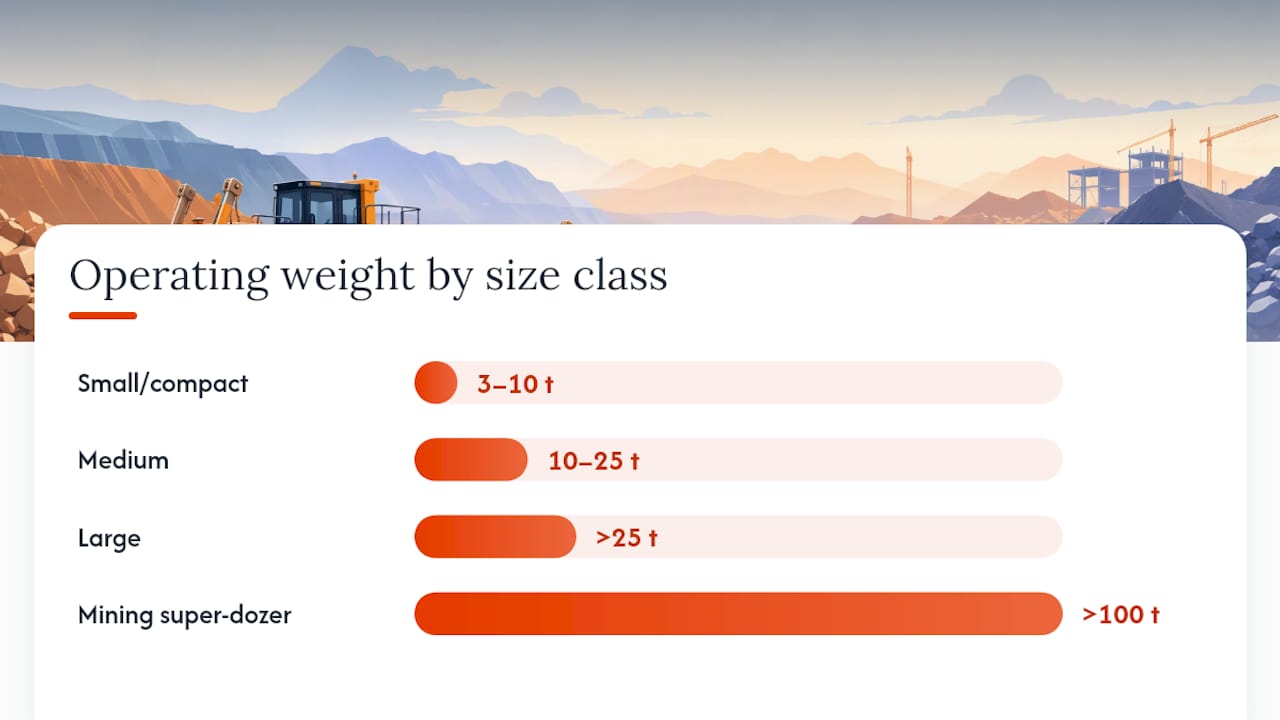
Operating weight, measured in working trim with fuel, blade, ripper, and operator included, is the number that actually predicts what a dozer can do on your site. Horsepower matters, but weight is what generates drawbar pull and blade penetration.
Industry references generally split the market into four bands. Small or compact dozers run roughly 3 to 10 metric tons and suit landscaping, utility work, and tight residential sites. Medium dozers span roughly 10 to 25 tons and cover general grading, road work, and moderate earthmoving. Large dozers exceed 25 tons and handle mass earthmoving, quarry work, and heavy site development. Mining super-dozers push past 100 tons and are purpose-built for overburden removal and pit production. That size-to-task mapping is the fastest way to narrow a shortlist before you ever call a dealer.
| Size class | Operating weight range | Typical flywheel horsepower | Typical applications |
|---|---|---|---|
| Small/compact | Suitable for smaller scale | Moderate horsepower range | Landscaping, residential grading, utility trenching |
| Medium | Suitable for general tasks | Mid-range horsepower | General grading, road building, moderate site work |
| Large | Suitable for heavy tasks | Higher horsepower | Mass earthmoving, quarry work, heavy development |
| Mining super-dozer | Suitable for very large scale | High horsepower | Overburden removal, pit production, reclamation |
Two practical notes belong next to any sizing decision. First, transport and site access can override raw capability. A large crawler that clears every productivity target on paper is useless if it can't reach the site over a narrow access road or fit through a job-site gate. Second, size to the worst task, not the average one. A machine that's constantly maxed out wears its undercarriage and burns fuel far faster than one with reasonable headroom.
Which Blade and Attachment Setup Fits Your Job?
Blade choice changes what the same tractor base can actually accomplish, sometimes more than moving up or down a size class.
Straight (S) blades are shorter and flatter, built for fine grading, backfilling, and high-penetration work where precision matters more than volume. Universal (U) blades curve more and mount taller side wings, which lets them carry and cast far more material per pass, ideal for mass dirt pushing. Semi-universal (S-U) blades split the difference, giving decent volume with better material control for mixed loads. Angle and power-angle-tilt (PAT) blades add side-to-side pivot and tilt, useful for road ditching, side-casting, and finish contouring where a fixed blade can't reach the geometry.
Attachments extend that flexibility further:
- Single-shank rippers break up compacted or lightly cemented ground before a blade pass.
- Multi-shank rippers tackle softer rock and frozen ground across a wider swath.
- Winches pull cable-laid pipe or assist logging operations on steep terrain.
- Mulchers replace the blade entirely for vegetation clearing and right-of-way prep.
- Rear blades and root rakes handle land-clearing debris without swapping the whole machine.
- Landfill waste-handling blades use a serrated or reinforced edge built for compacted refuse rather than dirt.
Pro Tip: Manufacturer-rated blade capacity isn't always apples-to-apples across brands. Check whether the spec sheet cites capacity under SAE J1265 or ISO 9246, the two industry standards for measuring blade volume, before comparing two machines side by side. A blade rated under one standard can look bigger on paper than an equivalent blade rated under the other.
How Should You Choose the Right Dozer for Your Project?
Selection works best as a sequence, not a checklist you jump around in. Start with the job and work outward to the machine.
- Define the worst-case task. Identify the hardest material, steepest grade, and tightest space the dozer will face, not the typical daily task.
- Match terrain and material density to running gear. Soft, wet, or steep ground points to crawler tracks; hard, cleared surfaces point to wheels.
- Pick the size class off that worst-case task. Undersizing a machine to save on rental cost typically backfires through accelerated wear and slower production.
- Choose blade and attachments last, after class is set. A straight blade with a single-shank ripper suits grading and light rock; a universal blade suits mass pushing.
- Check site access and transport logistics. Confirm the machine physically fits your haul route, gate widths, and any weight-restricted bridges or roads.
- Verify undercarriage configuration. Ask whether the machine runs standard, extended-track (EX), or low ground pressure (PX) undercarriage, since this affects both flotation and parts cost.
- Weigh ownership versus rental economics. Short, single-scope projects usually favor rental; recurring or multi-year work usually favors ownership once utilization clears a break-even point.
Buyer criteria that consistently matter, according to BigRentz's breakdown of bulldozer types, include terrain, material density, site access, blade and attachment needs, operator skill, and dealer support network. That last item deserves its own conversation with any dealer before you sign anything:
- Ask about local parts availability for the specific undercarriage and engine model.
- Ask what rebuild intervals the manufacturer recommends for that machine's typical duty cycle.
- Ask what the undercarriage warranty actually covers and for how long.
- Ask about on-site service response times in your operating area, not just the nearest branch address.
- Ask what tooling packages, such as grade control or telematics, come standard versus as a paid option.
If you're also vetting subcontractors or vendor relationships as part of a larger buildout, a construction subcontractor selection guide covers similar due-diligence questions worth applying to your equipment dealer, too.
Quick Specs Reference by Machine Class
Model-level numbers vary by manufacturer and configuration, so treat this table as a starting benchmark, then confirm exact figures on the specific machine's data sheet before you finalize a bid or rental order.
A few terms are worth defining so procurement teams read specs consistently. Operating weight is the machine's working trim weight, meaning fuel, blade, ripper, and operator included, not the bare chassis weight some marketing sheets quote. Flywheel horsepower is engine output measured at the flywheel before drivetrain losses, the number you should compare across brands rather than gross or net horsepower, which are measured differently. Blade capacity is the rated volume the blade can carry in a loaded push, and it should be checked against the SAE J1265 or ISO 9246 standard noted earlier. Buyers comparing sheets from manufacturer spec aggregators will also see telematics and integrated grade control listed as standard features on most medium and large machines now, a shift that's made finish-grading accuracy far less dependent on raw operator experience.
What Drives Maintenance and Operating Costs?
Undercarriage wear is the single largest controllable cost on a crawler dozer's ledger. Track shoes, rollers, and idlers absorb the machine's full weight and every abrasive particle on the job site, and replacement can run into tens of thousands of dollars on a large machine if neglected past the point of economical repair.
Three habits keep that cost in check. Match shoe width and grouser pattern to your ground conditions rather than running a generic shoe on abrasive rock. Keep track tension within the manufacturer's spec, since a loose track wears bushings and pins far faster than a properly tensioned one. Inspect wear points on a fixed cadence, not just when something starts making noise, because undercarriage components typically wear in a predictable curve until the last 10 to 15 percent of life, when failure risk climbs fast.
Fuel and emissions compliance is the second major cost lever. Engine tier and available eco modes influence burn rate directly, and EPA emission standards guidance is the reference point for understanding what tier a given engine meets, which matters most for urban work or any job near an emissions-restricted zone.
Before signing a purchase or long rental agreement, push for these terms:
- Telemetry access so you can track utilization, idle time, and fault codes remotely.
- A documented rebuild and service history if the machine isn't new.
- Grouped service points that cut technician time on routine maintenance.
- A clear resale value estimate tied to hours and undercarriage condition, not just age.
What Do Major Manufacturers Bring to a Shortlist?
No single brand wins every job-site priority, and that's the point worth internalizing before you let brand loyalty decide a bid. Buyers comparing Caterpillar and Komatsu consistently find both build competitive large-class machines, with differences showing up more in dealer coverage and parts lead time in a given region than in raw output.
- Caterpillar is widely cited for one of the largest dealer networks in North America, which matters directly for parts availability and service response on remote sites.
- Komatsu is frequently noted for fuel efficiency and intelligent Machine Control grading systems that reduce the operator skill barrier on finish work.
- John Deere tends to draw praise for operator ergonomics and cab visibility, a real factor on long shifts.
- Volvo Construction Equipment is often associated with environmental performance and lower emissions profiles, relevant for regulation-sensitive work.
- JCB carries a reputation for value pricing on smaller and mid-size machines, appealing where budget constraints outweigh top-end specs.
Pro Tip: Weight your shortlist toward dealer coverage, uptime guarantees, and undercarriage parts availability before you weight it toward brand name. A slightly less powerful machine backed by a dealer who can get you a part in 24 hours will out-earn a marginally faster machine sitting idle for a week waiting on a shipment.
Total cost of ownership, not list price, should decide close calls between comparable machines. Resale value, undercarriage rebuild cost, and fuel burn over a multi-year ownership window typically outweigh a few thousand dollars of difference at purchase.
An Equipment Manager's Take on Specifying a New Dozer
Most spec sheets get read backwards. Buyers start with horsepower and blade width because those numbers feel concrete, then try to justify the machine against the job afterward. That sequence produces oversized, undersized, and mismatched fleets more often than it should.
The better order is worst-case task first, machine class second, blade and attachment third, dealer checks fourth, and a test rental fifth if you have any doubt at all. Skipping the test rental is the step buyers regret most, because a spec sheet can't tell you how a machine handles on your actual dirt, in your actual access conditions, with your actual operators behind the controls.
The risk-minimizing move that gets overlooked: request undercarriage photos and full service history before you commit, even on a machine that looks clean in the sales photos. Undercarriage condition is the single hardest thing to judge from a listing and the single most expensive thing to discover was wrong after delivery.
[EDITOR: insert Dave's professional background and any relevant procurement case examples here]
Compare Listings and Connect With Dealers on Sostruckforsale
Once you know the class, blade, and attachment package you need, the next problem is finding real machines that match, fast, without cold-calling a dozen dealers one at a time. Sostruckforsale is built for exactly that step: a marketplace where you filter equipment listings by category, subcategory, price, and country, so you can compare operating weights, blade packages, and dealer locations side by side instead of chasing scattered classifieds.
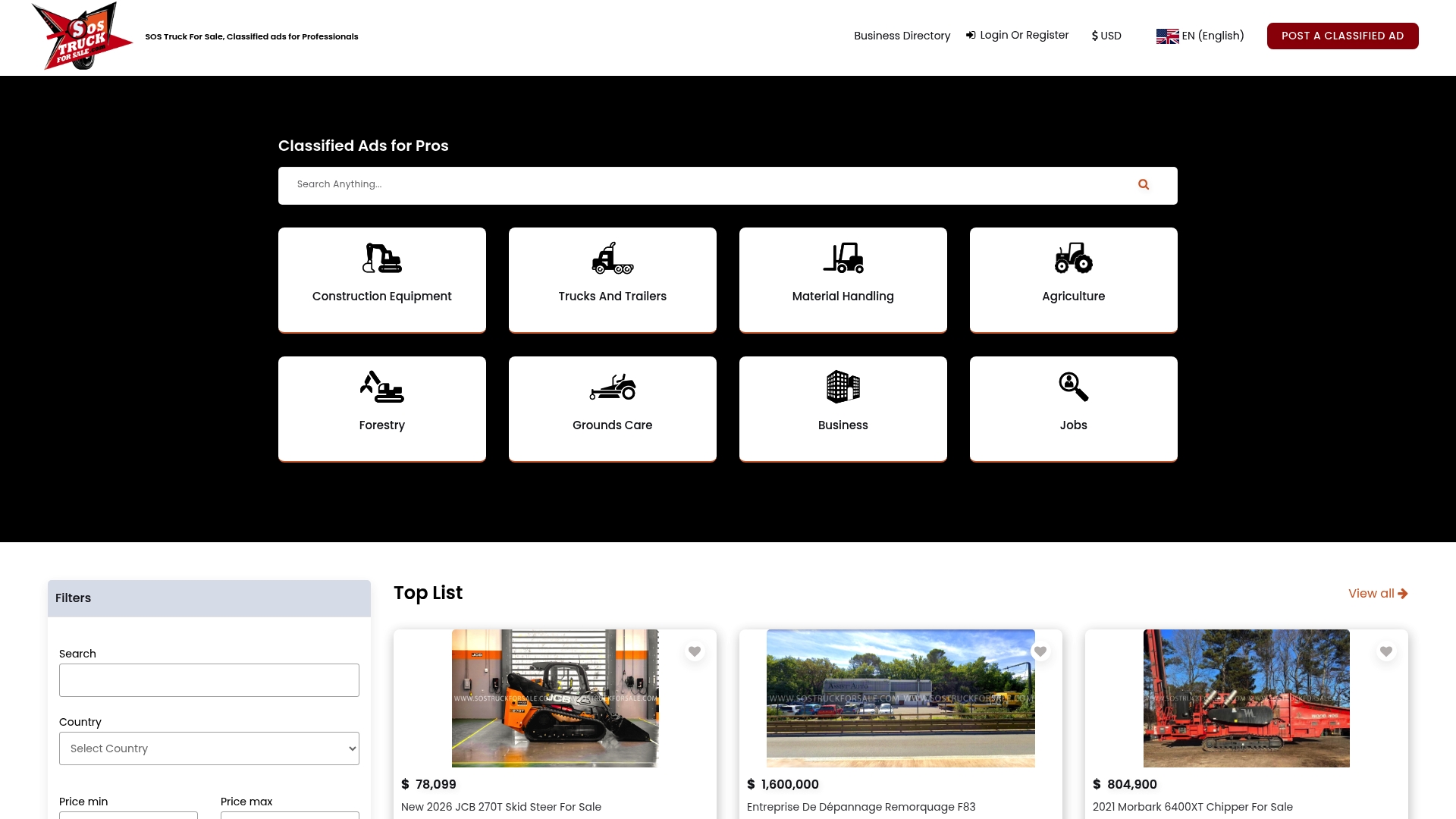
When you search, filter by operating weight and blade type first, then narrow by attachments and dealer proximity so you're not comparing a straight-blade grading unit against a universal-blade mass-pushing machine. Before you commit to any listing, message the seller directly and ask for undercarriage photos and service history, the same checks covered above, since a listing photo alone rarely shows track wear or bushing condition. Start browsing heavy equipment listings on Sostruckforsale and build your shortlist against real available machines instead of guessing from spec sheets alone.