
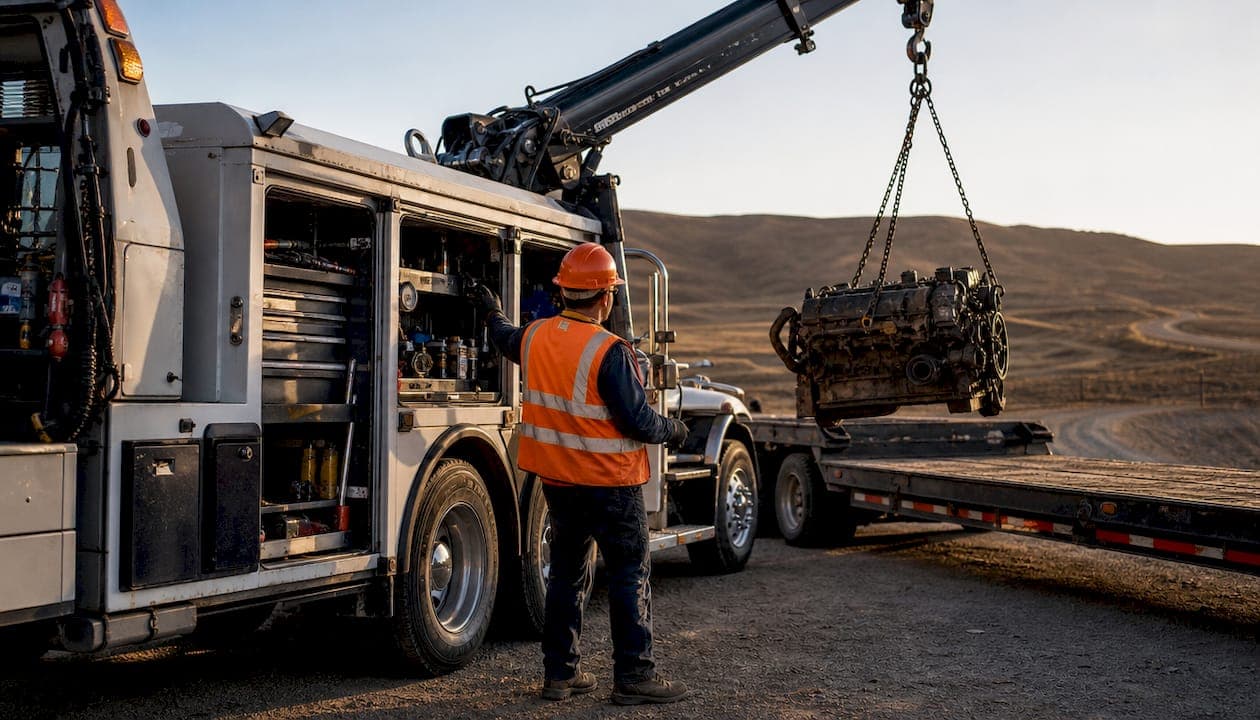
A mechanic truck is defined as a purpose-built mobile workshop vehicle equipped to perform heavy-duty repairs and maintenance directly at the job site, eliminating the need to return to a central depot. Unlike a standard service van, a mechanic truck carries integrated cranes, air compressors, welding equipment, and organized tool storage as standard working systems. The result is immediate on-site repair capability for construction fleets, mining operations, utilities crews, and long-haul transport. For any professional managing heavy equipment downtime, understanding what a mechanic truck is and how it works is the first step toward smarter fleet maintenance decisions.
What is a mechanic truck explained in full?
A mechanic truck is a specialized mobile workshop vehicle capable of on-site repairs and maintenance without returning to a central shop. The industry also refers to these units as service trucks or lube trucks, depending on their primary function. The core distinction is that a mechanic truck carries the tools, power systems, and lifting equipment needed to complete complex repairs in the field, not just basic fluid checks.
The practical impact is significant. When a piece of heavy equipment breaks down on a remote job site, towing it to a shop costs time and money. A mechanic truck eliminates that cost by bringing the shop to the machine. Sectors including construction, mining, utilities, and long-haul transport rely on these vehicles as the backbone of field maintenance programs.
What are the main features and equipment of a mechanic truck?
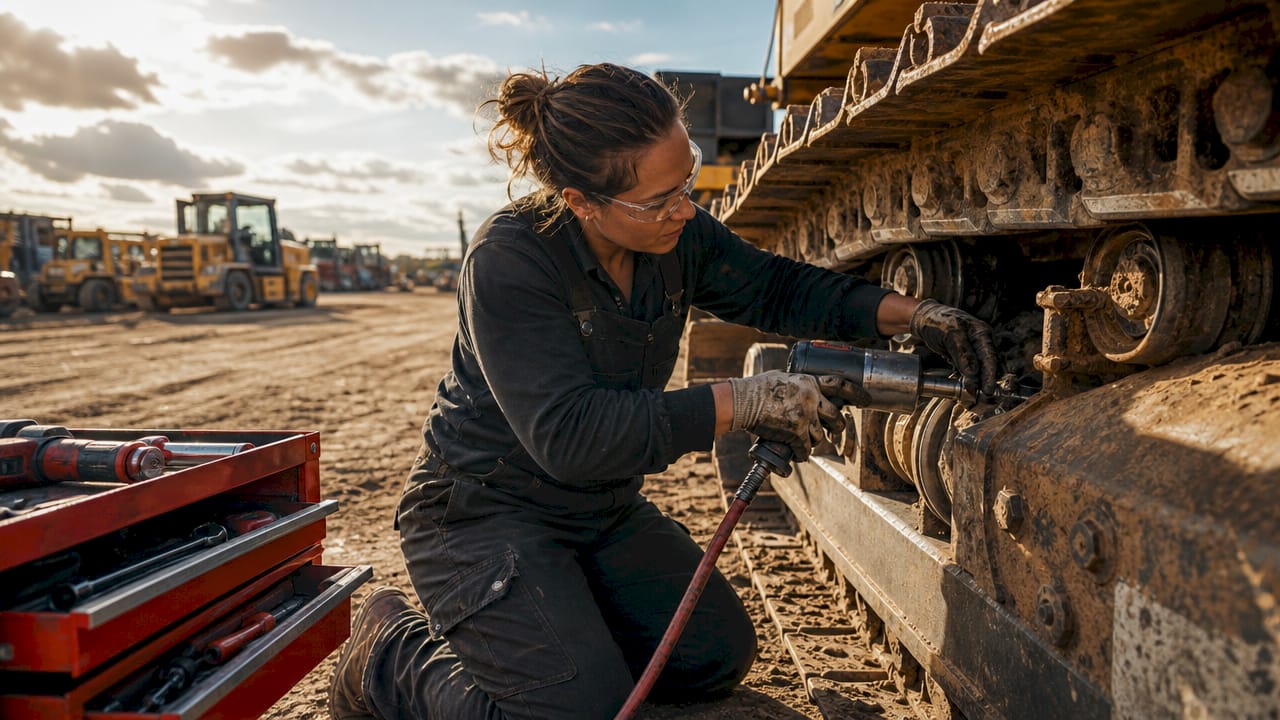
The feature set of a mechanic truck separates it from any other service vehicle on the road. These are not bolt-on accessories. They are integrated systems engineered to work together under field conditions.
Cranes and lifting systems
Modern mechanic trucks carry hydraulic cranes with serious lift capacity. The 2026 Peterbilt 537 model, for example, includes a hydraulic crane lifting over 11,000 lbs, hydraulic outriggers for stability, and a GVWR reaching 33,000 lbs. That capacity covers engine pulls, transmission swaps, and component replacements that would otherwise require a separate crane truck on site.
Air, power, and welding systems
Multi-function air and power systems consolidate multiple power sources into one unit. A single compressor can run pneumatic tools, inflate tires, and supply air for brake system work simultaneously. Welding equipment is standard on most full-spec mechanic trucks, covering structural repairs and fabrication tasks that arise unexpectedly in the field.
Storage and organization
Lockable compartments, specialized holders for gas cylinders, and dedicated drawers for hand tools keep the workspace functional under pressure. Poor storage organization costs technicians time on every job. The best configurations use labeled, segmented drawers with foam inserts so every tool returns to a known location.
Pro Tip: Specify lockable aluminum drawers with full-extension slides when ordering a mechanic truck. Drawers that only open 75% of the way make deep storage inaccessible in the field.
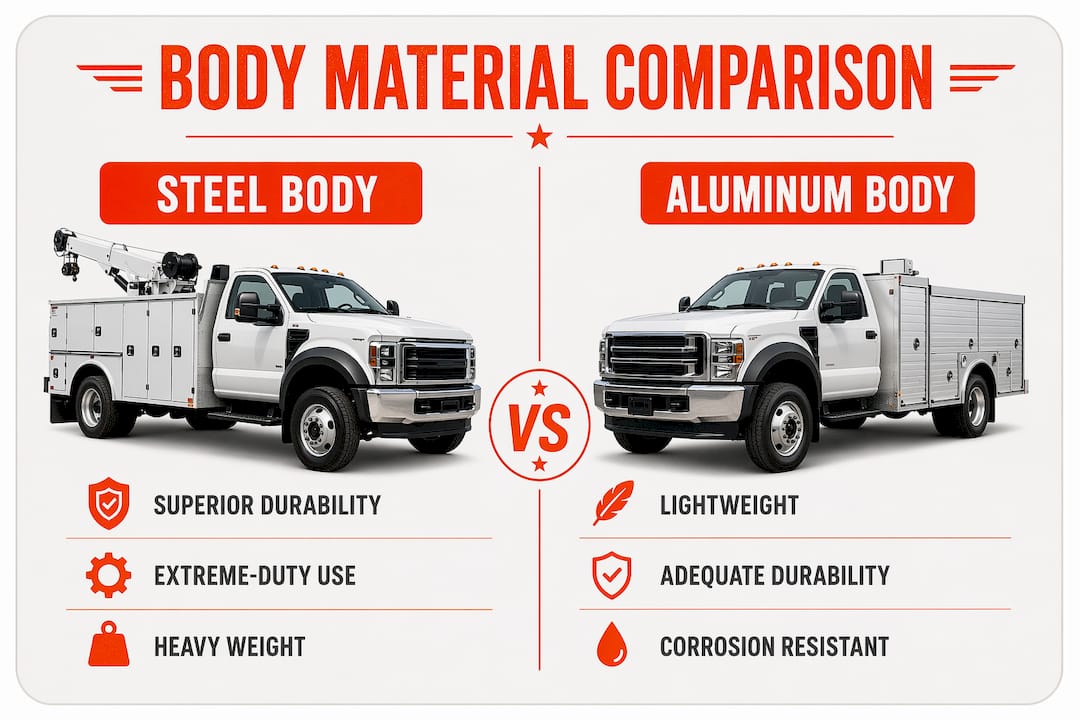
Body material: steel vs. aluminum
| Feature | Steel body | Aluminum body |
|---|---|---|
| Durability | Superior for extreme-duty use | Adequate for standard field work |
| Corrosion resistance | Lower without coating | Higher as a base material |
| Weight | Heavier, reduces payload | Lighter, increases payload capacity |
| Best use case | Mining, demolition, heavy construction | Fleet maintenance, utilities, transport |
Steel and aluminum bodies each present real trade-offs. Steel handles punishment better in extreme-duty environments. Aluminum is increasingly favored where fleet efficiency and payload matter more than raw toughness.
How do mechanic trucks benefit fleet operations and industrial maintenance?
The core benefit of a mechanic truck is time. Every hour a piece of heavy equipment sits idle costs money in lost productivity, delayed project timelines, and idle crew wages. A mechanic truck addresses that problem at the source.
"Mobile repair capabilities include electronic fault code diagnostics, brake inspection, and suspension repair directly at the job site. Using mechanic trucks reduces downtime and eliminates the need for costly towing by enabling on-site complex repairs."
The operational benefits extend well beyond simple time savings:
- Electronic diagnostics: Technicians connect directly to equipment control modules to read fault codes, identify failure points, and clear errors without transporting the machine.
- Brake and suspension repair: Full brake inspections and suspension adjustments happen on site, keeping vehicles road-legal and safe without a shop visit.
- Welding and fabrication: Structural damage gets addressed immediately rather than waiting for a shop appointment.
- Tire service: Air compressors and tire tools handle flat repairs and inflation checks on the spot.
- Fluid maintenance: Lube systems on full-spec units handle oil changes, hydraulic fluid top-offs, and coolant service in the field.
The construction sector uses mechanic trucks to keep excavators, bulldozers, and graders running through long project cycles. Mining operations depend on them to service haul trucks and loaders at remote sites where towing is not a practical option. Utilities fleets use them to maintain bucket trucks and digger derricks between scheduled service intervals.
What technical design features enhance mechanic truck performance?
Engineering decisions made at the design stage determine how well a mechanic truck holds up over years of heavy use. Two features stand out as particularly important: crane support design and workbench bumper configuration.
Crane support and structural integrity
Crane torq-isolator designs transfer lifting stresses to the truck's stabilizers and subframe rather than to the body panels and compartment doors. This is critical. Without proper stress transfer, repeated heavy lifts warp body panels, misalign compartment doors, and eventually compromise the structural integrity of the entire unit. A torq-isolator system extends the working life of the truck body significantly.
Workbench bumpers
Workbench bumpers provide a dedicated rear workspace with vise mounts and integrated long bar storage. Experienced technicians rate this feature highly because it creates a stable prep surface without consuming compartment space. Cutting, grinding, and assembly work happens at the bumper, keeping the truck bed and compartments clear for parts and tools.
Hydraulic systems and compartment security
Accessible hydraulic reservoirs reduce service time on the truck itself. Compartments with multi-point locking systems protect expensive tools from theft at unsecured job sites. These details matter in real operations where a stolen set of specialty tools can shut down a field repair program for days.
Pro Tip: Specify a hydraulic reservoir with a sight glass and drain valve accessible from ground level. Checking and changing hydraulic fluid becomes a two-minute task instead of a 20-minute one.
The following table summarizes key design considerations for buyers evaluating mechanic truck configurations:
| Design element | Function | Impact on operations |
|---|---|---|
| Torq-isolator crane mount | Transfers stress to subframe | Prevents body warping and door misalignment |
| Workbench bumper | Rear prep workspace with vise mount | Frees compartment space, speeds field work |
| Aluminum body | Reduces vehicle weight | Increases payload, reduces fuel consumption |
| Multi-function compressor | Runs pneumatic tools and tire service | Consolidates power sources into one unit |
| Ground-level hydraulic access | Simplifies fluid maintenance | Reduces service time on the truck itself |
Who operates mechanic trucks and what skills are required?
A mechanic truck is only as effective as the technician operating it. Operators must combine technical literacy with analytical skills to diagnose complex faults accurately. The modern heavy equipment technician does not simply swap parts until the problem disappears. They use diagnostic tools to isolate the root cause before touching a wrench.
The skill profile for an effective mechanic truck operator includes:
- Diagnostic tool proficiency: Reading electronic fault codes, interpreting sensor data, and using manufacturer-specific diagnostic software.
- Hydraulic system knowledge: Understanding pressure circuits, flow rates, and component failure patterns in heavy equipment hydraulic systems.
- Welding certification: MIG and stick welding for structural repairs and fabrication tasks in the field.
- Crane operation: Safe rigging practices, load calculations, and outrigger setup for stable lifts.
- Licensing awareness: Trucks under 26,000 lbs GVWR do not require a Commercial Driver's License, simplifying hiring for smaller fleet operations. Trucks above that threshold require a CDL, which affects both operator hiring and operational planning.
The industries that rely most heavily on skilled mechanic truck operators include heavy construction, open-pit mining, utilities infrastructure, and long-haul trucking fleets. Each sector demands a slightly different skill emphasis. Mining technicians prioritize hydraulic and electrical systems on large haul trucks. Transport fleet technicians focus on brake systems, engine diagnostics, and DOT compliance.
Mechanic trucks are only as effective as the technicians operating them. Investing in operator training delivers a measurable return because a well-trained technician resolves faults faster, reduces repeat failures, and extends equipment life.
Key Takeaways
A mechanic truck is the most cost-effective tool for reducing heavy equipment downtime because it brings full repair capability directly to the job site, eliminating towing costs and shop delays.
| Point | Details |
|---|---|
| Core definition | A mechanic truck is a mobile workshop with cranes, compressors, and tool storage for on-site repairs. |
| Body material choice | Steel suits extreme-duty work; aluminum reduces weight and improves payload for standard fleet use. |
| Crane design matters | Torq-isolator mounts protect body integrity by transferring stress to the subframe, not the panels. |
| GVWR drives licensing | Trucks under 26,000 lbs GVWR avoid CDL requirements, simplifying fleet hiring and compliance. |
| Operator skill is the multiplier | Diagnostic proficiency and analytical skills determine repair quality more than equipment alone. |
What I've learned from watching mechanic trucks evolve on the job
The biggest shift I've observed over the past decade is not in the trucks themselves. It's in what operators are expected to do with them. Ten years ago, a field technician needed strong mechanical instincts and a good set of hand tools. Today, the job requires reading fault codes from a laptop, interpreting sensor data, and making decisions based on electronic diagnostics before touching a single component.
That shift has made the mechanic truck more capable and more demanding at the same time. The trucks now carry more technology than most small repair shops did 15 years ago. But the technology is only useful if the operator knows how to apply it. I've seen expensive, fully equipped units sitting idle because the assigned technician wasn't trained on the diagnostic software.
The material debate between aluminum and steel is real, but operators often overthink it. For most fleet maintenance applications, aluminum wins on payload and corrosion resistance. Steel is the right call for demolition, mining, and environments where the truck itself takes physical punishment daily.
The future of these vehicles points toward remote diagnostics and lighter composite materials. Some operators are already using telematics to pre-diagnose equipment faults before the mechanic truck even rolls out. That capability will become standard within the next few years. The operators who invest in training now will be the ones who get the most value from those systems when they arrive.
— Dave
Finding the right mechanic truck for your operation
Professionals ready to put a mechanic truck to work need access to verified listings with accurate specifications and clear pricing.
Sostruckforsale lists a wide range of heavy-duty service trucks suited to construction, mining, utilities, and transport fleet applications. Each listing includes detailed specifications so you can match crane capacity, GVWR, body material, and onboard systems to your exact operational requirements. Browse current inventory at Sostruckforsale to find units ready for immediate deployment, or contact the team directly for guidance on which configuration fits your fleet's maintenance demands.
FAQ
What is a mechanic truck used for?
A mechanic truck is used to perform on-site repairs and maintenance for heavy equipment and vehicles, eliminating the need to tow machines to a central shop. Common tasks include electronic diagnostics, crane-assisted component replacement, welding, brake inspection, and fluid service.
What crane capacity do mechanic trucks typically carry?
Mechanic truck cranes vary by configuration, but full-spec units carry hydraulic cranes capable of lifting over 11,000 lbs. Capacity depends on the truck's GVWR, outrigger setup, and crane boom design.
Do you need a CDL to drive a mechanic truck?
Trucks with a GVWR under 26,000 lbs do not require a Commercial Driver's License. Units above that threshold require a CDL, which affects operator hiring and fleet compliance planning.
What is the difference between a steel and aluminum mechanic truck body?
Steel bodies offer superior durability for extreme-duty environments like mining and demolition. Aluminum bodies reduce vehicle weight and resist corrosion better, making them the preferred choice for standard fleet maintenance and utilities applications.
How do mechanic trucks reduce fleet operating costs?
Mechanic trucks cut costs by eliminating towing fees, reducing equipment idle time, and enabling immediate on-site repairs. Electronic diagnostics and full repair capability at the job site mean faster resolution and fewer repeat failures.