

A refrigerated truck is a temperature-controlled commercial vehicle designed to transport perishable goods within a defined thermal range throughout the cold chain. The global truck refrigeration market is projected to reach $11.26 billion by 2033. That figure reflects how critical reliable reefer capacity has become for food logistics operators. When you list refrigerated trucks for sale or search existing refrigerated truck listings, the details you include or evaluate directly determine whether a transaction serves your business or costs you cargo. Brands like Thermo King and Carrier dominate the refrigeration unit market, and understanding their systems is as important as knowing the truck chassis itself.
What types of refrigerated trucks are listed for sale?
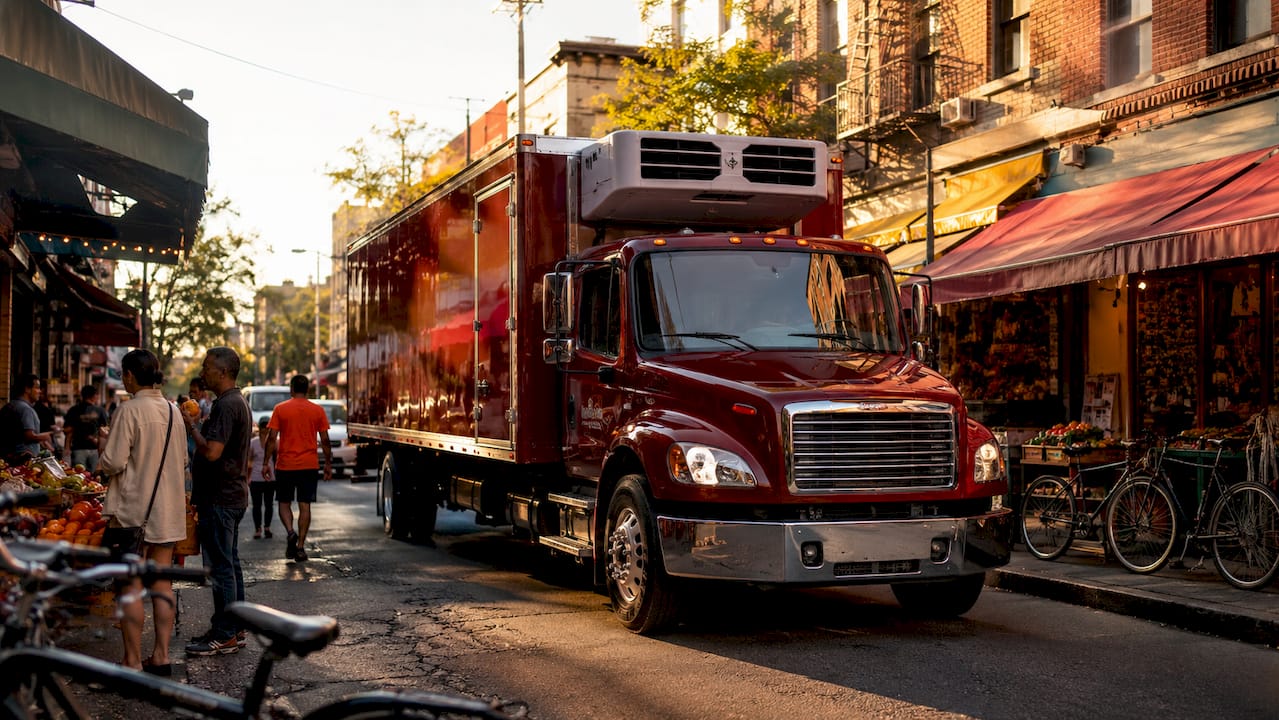
Choosing the right truck category is the first decision every buyer must make. Refrigerated trucks are classified by payload into three main groups: small vans handling 1–3 tons, medium trucks handling 5–7 tons, and heavy trucks rated at 10 or more tons. Each tier serves a distinct delivery profile in food transport.
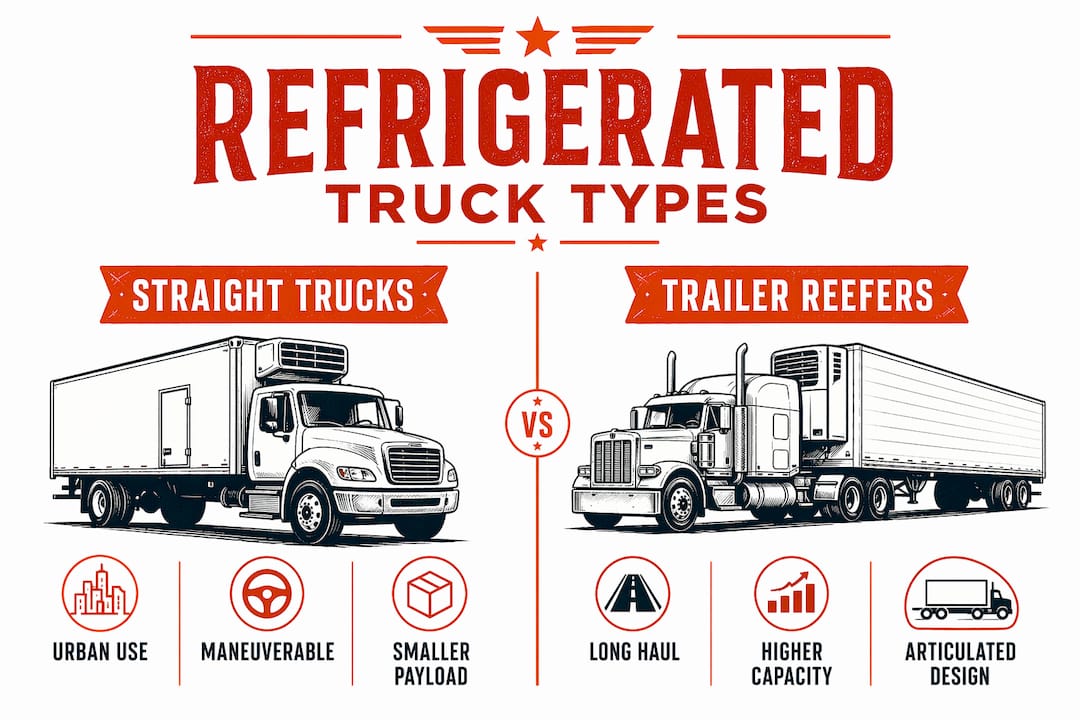
Straight trucks vs. trailer reefers
Straight trucks suit local deliveries and urban distribution routes where maneuverability matters. Articulated trailer reefers are built for long-haul runs where maintaining a consistent temperature over hundreds of miles is the priority. A grocery distributor running daily routes within a metro area needs a different unit than a national frozen food shipper crossing state lines.
Chiller units vs. freezer units
Refrigeration technology splits into two core categories based on temperature range. Chiller units maintain 2°C to 8°C for fresh produce, dairy, and beverages. Freezer units hold temperatures at -18°C or below for ice cream, frozen meats, and pharmaceutical products. Some trucks carry multi-temperature zone bodies, which allow one vehicle to carry both fresh and frozen cargo simultaneously. Single-zone units are simpler to maintain and cost less upfront, but multi-zone units reduce the number of vehicles needed for mixed loads.
| Truck Type | Payload Range | Best Use Case | Refrigeration Category |
|---|---|---|---|
| Small refrigerated van | 1–3 tons | Last-mile urban delivery | Chiller or light freezer |
| Medium straight truck | 5–7 tons | Regional food distribution | Chiller or freezer |
| Heavy straight truck | 10+ tons | High-volume food logistics | Freezer or multi-temp |
| Articulated trailer reefer | 20+ tons | Long-haul interstate transport | Freezer or multi-temp |
Pro Tip: Match your refrigeration category to your primary cargo before you match it to your budget. A chiller unit running frozen goods will fail prematurely and compromise every load it carries.
How to create an effective refrigerated truck listing
A strong listing does more than describe the truck. It gives serious buyers the technical data they need to make a decision without a phone call. High-quality maintenance history documentation and transparent listings increase buyer confidence and reduce transaction friction. Vague listings attract low-quality inquiries and slow the sale.
What every listing must include
Every refrigerated truck listing should contain the following details:
- Truck make, model, year, and mileage (e.g., 2019 Isuzu NPR, 145,000 miles)
- Refrigeration unit brand, model, and type (e.g., Thermo King T-680R, diesel/electric standby)
- Temperature range capability (chiller, freezer, or multi-temp with specific degree ranges)
- Box dimensions and insulation condition (interior length, width, height; foam integrity)
- Door seal condition (rear and side doors, gasket wear or replacement history)
- Refrigerant type and last service date
- Maintenance records (refrigeration unit service logs, not just chassis oil changes)
- BTU capacity of the refrigeration unit
- Electric standby availability (yes or no, with voltage specification)
Refrigerated trucks require active cooling systems, not just insulation. Buyers who understand this will look directly at the refrigeration unit's service history. If your listing omits that data, qualified buyers will move on.
Pro Tip: Include at least six photos: exterior, interior box, refrigeration unit nameplate, door gaskets, floor drains, and the maintenance log cover page. Photo documentation cuts negotiation time significantly.
A well-maintained refrigeration unit impacts reliability and cargo safety more than truck chassis mileage or age. A 2016 truck with a freshly overhauled Carrier unit is often a stronger buy than a 2020 truck with a neglected refrigeration system showing 12,000 hours of unserviced runtime.
How to evaluate and buy refrigerated trucks step by step
Buying a refrigerated truck without a structured process leads to costly mistakes. Follow these steps to move from search to purchase with confidence.
- Define your cargo and route requirements. Identify the temperature range you need, the payload capacity, and whether your routes are local, regional, or long-haul. This determines truck type before you look at a single listing.
- Search refrigerated truck listings by category. Filter by payload class, refrigeration type, and year range. Platforms that list used refrigerated trucks for sale allow you to narrow by make and refrigeration brand.
- Verify specs against your requirements. Confirm the listed BTU capacity matches your regional climate. Purchasers must align reefer BTU capacity to regional climate to avoid premature equipment failure from overwork in hot environments. A unit rated for moderate climates will struggle in Texas summers.
- Inspect the refrigeration unit and box condition. Check the refrigeration unit for refrigerant leaks, condenser coil condition, and hours of operation. Inspect the box interior for moisture intrusion, floor drain function, and insulation integrity. Damaged or worn insulation and door gaskets often cause unseen cold air loss that increases system load, fuel consumption, and unit breakdown risk.
- Confirm maintenance records. Request the refrigeration unit service log separately from the truck's chassis maintenance records. Look for documented refrigerant checks, belt replacements, and condenser cleanings.
- Test the equipment under load. Run the refrigeration unit to its target temperature before loading any cargo. Verify it reaches and holds the set point within a reasonable time frame.
- Negotiate based on refrigeration condition, not just chassis age. Use any deferred maintenance items as negotiating points. A unit with 8,000 hours and no service records carries real cost risk.
Common buyer mistakes to avoid
- Ignoring refrigeration unit runtime hours in favor of truck mileage
- Buying a freezer unit when a chiller unit fits the cargo (or vice versa)
- Skipping a pulp temperature test before finalizing the purchase
- Overlooking electric standby capability for routes with extended dock time
Pro Tip: The pulping process checks core product temperature before loading and prevents cargo rejection at delivery. Ask the seller to demonstrate the unit reaching target temperature during your inspection visit.
Matching truck type and refrigeration capabilities precisely to delivery routes and cargo types maximizes efficiency and reduces operating costs. This is the single most important principle for buyers evaluating the best refrigerated trucks for food transport.
Operational care after you purchase a refrigerated truck
Buying the right truck is only the start. Ongoing maintenance determines whether that truck performs reliably for five years or fails in the first season.
Electric standby allows reefer units to run off external electric power during stops, reducing fuel use and noise compared to diesel engine power. If your operation includes extended dock time or overnight parking at a facility with shore power, electric standby pays for itself quickly in fuel savings.
Maintenance priorities for reefer operators
- Refrigerant level checks: Inspect monthly. Low refrigerant is the leading cause of temperature excursions.
- Condenser and evaporator coil cleaning: Clean every 250 operating hours or quarterly, whichever comes first.
- Door gasket inspection: Check weekly. A worn gasket on a freezer unit can raise interior temperature by several degrees and force the unit to run continuously.
- Floor drain inspection: Clear drains prevent moisture buildup that degrades insulation from the inside out.
- Belt and hose inspection: Replace on schedule per the manufacturer's service manual, not when they fail.
Early warning signs of refrigeration unit failure include the unit cycling on and off more frequently than normal, longer-than-expected pull-down times to reach set temperature, and visible frost buildup on the evaporator coil. Address any of these signs before the next loaded run.
Pro Tip: Log every service event in a dedicated refrigeration unit maintenance book, separate from the truck's chassis log. This documentation protects your cargo liability and adds resale value when you eventually list the truck for sale.
Key Takeaways
The best refrigerated trucks for food transport are those matched precisely to cargo temperature requirements, route type, and regional climate before any other factor is considered.
| Point | Details |
|---|---|
| Classify by payload and temperature | Match truck size and refrigeration category to your cargo before evaluating price or chassis age. |
| Refrigeration unit condition matters most | A well-serviced Thermo King or Carrier unit on an older chassis outperforms a neglected unit on a newer truck. |
| Listings require technical detail | Include BTU capacity, refrigeration unit model, door seal condition, and service history to attract qualified buyers. |
| BTU capacity must match climate | Undersized refrigeration units fail prematurely in hot regions; verify capacity against your operating environment. |
| Ongoing maintenance protects cargo | Monthly refrigerant checks, gasket inspections, and coil cleanings prevent the failures that cause cargo loss. |
What I've learned from watching buyers get refrigerated trucks wrong
I've reviewed hundreds of refrigerated truck transactions, and the pattern is consistent. Buyers focus on the truck. They check the engine hours, the chassis condition, the tire wear. Then they get the unit home, load it with product, and discover the refrigeration system hasn't been serviced in three years. The Thermo King unit runs warm, the cargo arrives compromised, and the buyer is looking at a $4,000 to $8,000 refrigeration overhaul they didn't price into the deal.
The refrigeration unit is the truck's entire value proposition in this category. A reefer with a failed cooling system is just an insulated box on wheels. I tell every buyer the same thing: spend 80% of your inspection time on the refrigeration unit and 20% on everything else.
The other mistake I see constantly is mismatched capacity. A buyer in Phoenix purchases a unit rated for moderate climates because it was cheaper. By August, the unit is running at 100% duty cycle trying to hold temperature in 110-degree ambient heat. It fails by September. Thermo King and Carrier both publish climate-specific sizing guides. Use them.
For sellers, the lesson is equally clear. A listing with full refrigeration service records, photos of the unit nameplate, and documented BTU capacity sells faster and at a higher price than a listing that just says "cold unit, works great." Buyers who know what they're doing will pay a premium for transparency. Those are the buyers you want.
— Dave
Find refrigerated trucks for sale on Sostruckforsale
Sostruckforsale lists commercial and industrial heavy equipment for sale, including refrigerated trucks across all payload categories. Whether you need a small urban delivery van or a heavy straight truck for regional food distribution, the platform gives you direct access to verified listings with detailed specifications. Browse refrigerated truck listings by make, model, year, and refrigeration type to find units that match your cold chain requirements. Sostruckforsale updates inventory regularly and provides seller contact details so you can move from search to inspection without delay. Start your search today at Sostruckforsale.
FAQ
What is a refrigerated truck?
A refrigerated truck, also called a reefer truck, is a commercial vehicle equipped with an active cooling system to transport temperature-sensitive cargo within a defined thermal range. Common refrigeration brands include Thermo King and Carrier.
What temperature ranges do refrigerated trucks maintain?
Chiller units maintain 2°C to 8°C for fresh produce and dairy. Freezer units hold temperatures at -18°C or below for frozen foods and pharmaceuticals.
How do I find used refrigerated trucks for sale?
Search specialized commercial vehicle listing platforms like Sostruckforsale, filtering by payload class, refrigeration type, and year. Always request the refrigeration unit service history before making an offer.
What should I check before buying a refrigerated truck?
Inspect the refrigeration unit hours, refrigerant level, condenser coil condition, door gasket integrity, and insulation condition. A well-maintained refrigeration unit is more important than low chassis mileage.
What is electric standby on a refrigerated truck?
Electric standby allows the refrigeration unit to run on external shore power instead of the truck's diesel engine during stops. This reduces fuel consumption and extends refrigeration unit life during extended dock or overnight periods.