
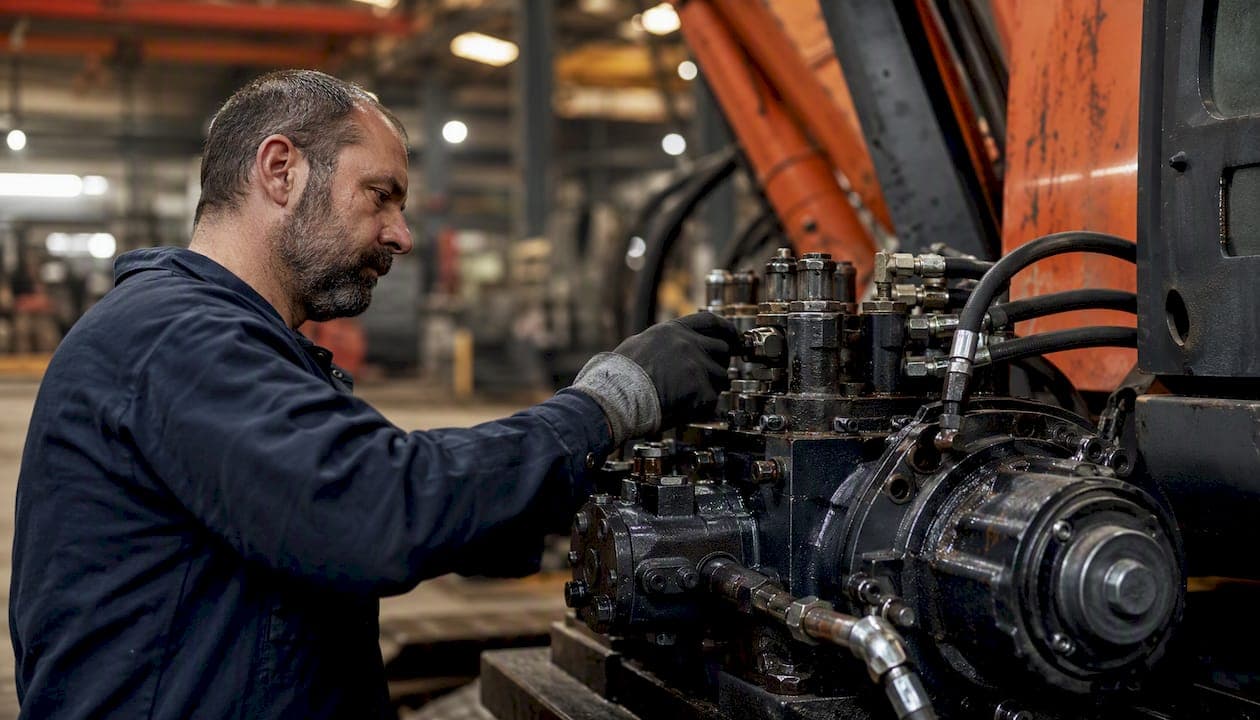
Hydraulic system equipment converts pressurized fluid into controllable force and motion, giving machinery the power density, precision, and reliability that mechanical linkages and electric motors alone cannot match. This is what lets a 40-ton excavator dig with the same control an engineer expects from a lab instrument. The physics traces back to Pascal's law: pressure applied to a confined fluid transmits equally in all directions, and that principle underwrites everything from aircraft flight controls to injection molding presses. Engineers designing or specifying equipment reference ISO 4413 for safety and performance requirements in fluid power systems.
- Delivers high force in a small package, outperforming mechanical alternatives on power-to-weight ratio
- Offers precise, repeatable motion control, critical for presses, molding equipment, and aircraft actuation
- Handles heavy-duty, continuous-load applications where electric motors would overheat or stall
Key Takeaways
Hydraulic system equipment works because it converts pressurized fluid into controllable, high-density force, and system reliability depends on matching component specs to duty cycle while controlling contamination.
| Point | Details |
|---|---|
| Force equals pressure times area | Use F = P × A to size actuators against your application's real load requirements. |
| Contamination drives most failures | Set an ISO cleanliness target in the spec and sample fluid on a fixed interval. |
| Match system type to duty | Industrial hydraulics prioritize precision; mobile hydraulics prioritize durability and thermal tolerance. |
| Verify standards before purchase | Check ISO 4413, ISO 1219, and relevant OSHA guidance during design and procurement. |
| Compare listings before buying | Sostruckforsale lets you compare hydraulic machinery specs and contact sellers directly. |
Table of Contents
- What Is the Core Function of Hydraulic Equipment?
- What Are the Key Components of a Hydraulic System?
- Industrial vs. Mobile Hydraulics: What Changes?
- How Do You Specify the Right Hydraulic Equipment?
- What Causes Hydraulic System Failures?
- What Standards and Safety Checks Apply to Hydraulic Equipment?
- What Belongs in a Hydraulic Equipment Procurement Checklist?
- Where to Find Inspected Hydraulic Equipment and Machinery
- Sources
What Is the Core Function of Hydraulic Equipment?
Every hydraulic system exists to transmit power and control motion, and it does this through five functional roles that map directly to hardware categories. Force transmission is the headline job. Fluid under pressure carries energy from a pump to wherever it's needed, without the mechanical losses of gears or belts. Precision motion control comes next: valves throttle flow and direction so a cylinder extends at a controlled rate instead of lurching. Energy storage, load holding, and power splitting round out the list, letting one power source drive multiple functions simultaneously.
- Force transmission — pumps generate flow, converting mechanical input into hydraulic energy
- Motion control — valves direct, meter, and regulate that energy
- Output and work — actuators (cylinders and motors) turn hydraulic energy into linear or rotary motion
- Energy storage — accumulators buffer pressure spikes and store energy for peak demand
- Load holding — check valves and counterbalance valves keep loads stationary without drift
Hydraulics get chosen over purely mechanical or electrical drives because fluid power delivers more force per pound of hardware and reacts faster to control input, a tradeoff Britannica's overview of hydraulics backs up when comparing flexibility and response time across power transmission methods.
What Are the Key Components of a Hydraulic System?
A hydraulic system breaks down into five essential components: pump, valves, actuators, conductors, and fluid, and each carries a distinct role in generating, directing, and delivering power/01%3A_Introduction_to_Hydraulics/1.02%3A_Five_Basic_Components_of_a_Hydraulic_System_and_Their_Functions). Getting familiar with each one's failure points is half the job of keeping a machine running.
Pumps convert mechanical input into flow. What matters here is displacement (cc per revolution), pressure rating, and whether the pump runs fixed or variable displacement. Variable pumps adjust output to match load demand, which saves energy on duty cycles that vary.
Valves manage where fluid goes and how much gets there. Directional valves route flow; pressure valves protect the system from overload; flow control valves regulate speed. Proportional valves give smooth, modulated control for automation, while simpler on/off valves suit basic start-stop functions.
Actuators turn hydraulic energy into mechanical work. Cylinders produce linear force; motors produce continuous rotation. The core sizing formula every technician should know: force equals pressure multiplied by area (F = P × A). A 3-inch bore cylinder at typical operating pressures generates substantial force, which is why bore size and system pressure both belong on every spec sheet.
- Reservoirs store fluid, dissipate heat, and let contaminants settle
- Filtration removes particulates before they score valve spools and pump gears
- Conductors (hoses and tubing) move fluid between components and are common leak points
Pro Tip: Specify filtration by ISO cleanliness code, not just "10 micron." A pump rated for ISO 18/16/13 fluid fails early if the system runs dirtier than that, and a quick fluid sample tells you where you actually stand.
Industrial vs. Mobile Hydraulics: What Changes?
Stationary and mobile hydraulic systems solve the same physics problem with different priorities, and that distinction should shape design decisions from day one. Industrial systems, bolted to a factory floor, optimize for repeatable precision and tight integration with automation controls. Mobile systems, riding on equipment that digs, plows, or drills outdoors, optimize for durability, power density, and tolerance for dust, vibration, and temperature swings.
Circuit topology reflects that split. Closed-loop hydrostatic transmissions dominate mobile equipment because they recirculate fluid efficiently within a compact footprint, while industrial plants often run open-center circuits that trade some efficiency for simpler cooling and filtering, a tradeoff detailed in general references on hydraulic machinery design.
- Construction — excavators and loaders need high force in tight, variable-load cycles
- Agriculture — tractors and combines rely on hydraulics for lift, steering, and implement control
- Marine — steering gear and winches demand corrosion-resistant, high-reliability circuits
- Aviation — flight control actuators need fast, precise, fail-safe response
- Presses and injection molding — consistent, high-tonnage force under repeatable control is the whole job
- Drilling rigs — sustained torque and pressure under continuous duty cycles, as detailed in the Wells Manager blog
How Do You Specify the Right Hydraulic Equipment?
Specifying hydraulic equipment comes down to matching six measurable parameters to the application's actual load and duty cycle, not to a manufacturer's default catalog spec.
- Max working pressure (psi or bar) — sets the ceiling for every seal, hose, and fitting downstream
- Flow rate (L/min or GPM) — determines actuator speed and cycle time
- Displacement (cc/rev) — fixes how much fluid a pump moves per revolution
- Actuator area — the variable that turns pressure into usable force via F = P × A
- Power (kW or HP) — confirms the prime mover can sustain the required pressure and flow together
- Duty cycle and temperature range — governs component life and cooling requirements
Before signing off on a spec, run through a short checklist: expected duty cycle (continuous vs. intermittent), environmental exposure (dust, moisture, temperature extremes), contamination control targets, fluid compatibility with seals and hoses, and physical access for maintenance. A pump sized purely on peak flow without checking duty cycle often runs hot and short-lived. Modular hydraulic power units, which bundle pump, reservoir, and valves into one serviceable block, simplify matching a system to variable operating conditions while keeping maintenance access straightforward.
Pro Tip: Write particle-count targets directly into the purchase spec (for example, ISO 4406 18/16/13) rather than leaving filtration to "manufacturer standard." Vague filtration language is where warranty disputes start.
What Causes Hydraulic System Failures?
Contaminated fluid causes more hydraulic failures than any other single factor, and air trapped in lines degrades performance almost as fast. Six failure modes account for most service calls: contamination, aeration or foaming, overheating, seal wear, hose failure, and valve sticking.
A working maintenance rhythm looks like this:
- Check fluid temperature and pressure gauges during every shift startup
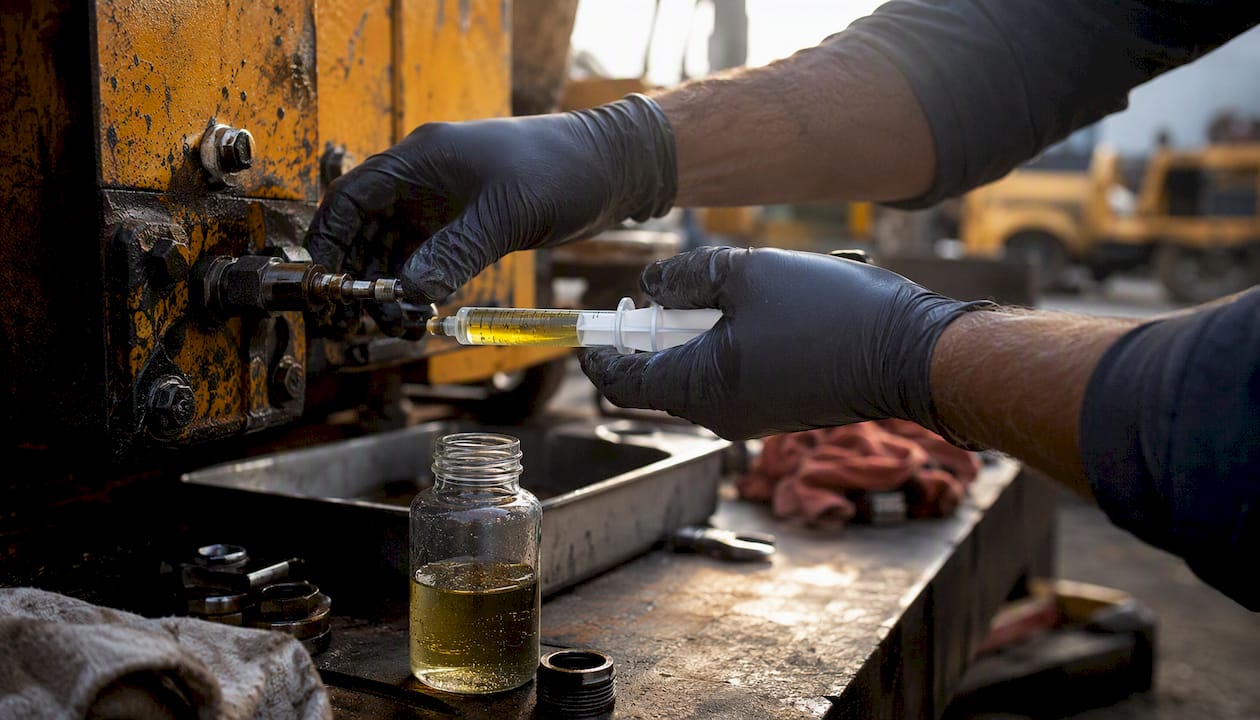
- Pull an oil sample for particle-count analysis on a set interval, typically every 250 to 500 operating hours
- Inspect hoses and fittings visually for weeping, abrasion, or bulging
- Change filters on a calendar or differential-pressure trigger, whichever comes first
- Log any unusual noise, vibration, or slow actuator response immediately
When something goes wrong, the diagnostic sequence usually narrows fast:
- Sluggish or erratic actuator movement → likely aeration or a sticking valve → check for air in the return line and inspect valve spools
- Rising fluid temperature → likely undersized cooling or internal leakage → check cooler flow and pump case drain
- Visible fluid discoloration or metallic sheen → likely contamination or component wear → pull a sample and check filter condition
- External fluid on the machine or floor → likely hose or seal failure → trace the leak to its source before running the system further
Pro Tip: Install sampling ports downstream of the pump and upstream of the return filter, and track particle counts over time rather than as a single snapshot. A steady upward trend in particle count usually shows up weeks before an actual component failure.
What Standards and Safety Checks Apply to Hydraulic Equipment?
Every procurement or design review should confirm compliance with ISO 4413 for industrial hydraulic system safety, and ISO 1219 for consistent circuit symbols across documentation. Where machinery interacts with personnel, check applicable OSHA machine-guarding guidance as part of the safety review.
- Confirm pressure relief valves are installed and set correctly for the circuit's maximum rating
- Require interlocks and guarding on any exposed moving actuator or rotating shaft
- Verify hose ratings and end fittings match the system's working pressure, not just its nominal rating
- Plan for leak containment and fire risk where fluid runs near hot surfaces or ignition sources
- Request component certificates, pressure test records, and fluid cleanliness verification from suppliers before acceptance
What Belongs in a Hydraulic Equipment Procurement Checklist?
A procurement package should give suppliers no room to guess at what "adequate" means for your application.
- State required performance: max pressure, flow rate, and duty cycle
- Specify environmental ratings: operating temperature range, ingress protection, exposure to dust or saltwater
- Define maintenance and accessibility requirements, including service intervals and access clearances
- List required spare parts and expected lead times
- Set filtration and fluid specifications, including target ISO cleanliness code
- Require inspection and test reports before shipment
- Confirm warranty terms and service support availability
- Sample spec line: "Pump: 45 cc/rev variable displacement, 3,000 psi rated, ISO 18/16/13 target cleanliness; Actuator: 4-inch bore, 24-inch stroke, 3,500 psi rated."
- Ask every supplier for a baseline oil sample and their recommended maintenance schedule before the equipment ships. If a hydraulic circuit diagram isn't included, request one, since components that look similar on the outside can be wired or piped very differently.
What Actually Gets a Hydraulic System Back Online Fastest?
Clean fluid and an accessible sampling port beat almost every other fix on the shop floor. When specifying a replacement or retrofit, mounting pattern, port sizing, and control interface compatibility matter more than a slightly better pressure rating. Lifecycle cost, not the sticker price, decides which pump earns its keep.
Where to Find Inspected Hydraulic Equipment and Machinery
Sourcing the right pump, actuator, or complete machine gets a lot faster when you can compare specs side by side instead of chasing individual dealers. Sostruckforsale lists used and new heavy equipment, including excavators, presses, and drilling rigs built around hydraulic systems, filtered by category, price, and location, so engineers and procurement teams can compare listings without cold-calling every seller in the region.
Before committing to any listing, ask the seller three things: can they provide recent fluid sample or test reports, what spare parts are readily available for that model, and what the documented maintenance history looks like. Those three answers tell you more about a machine's real condition than the photos ever will. Browse current listings on Sostruckforsale to compare specs and contact sellers directly.