
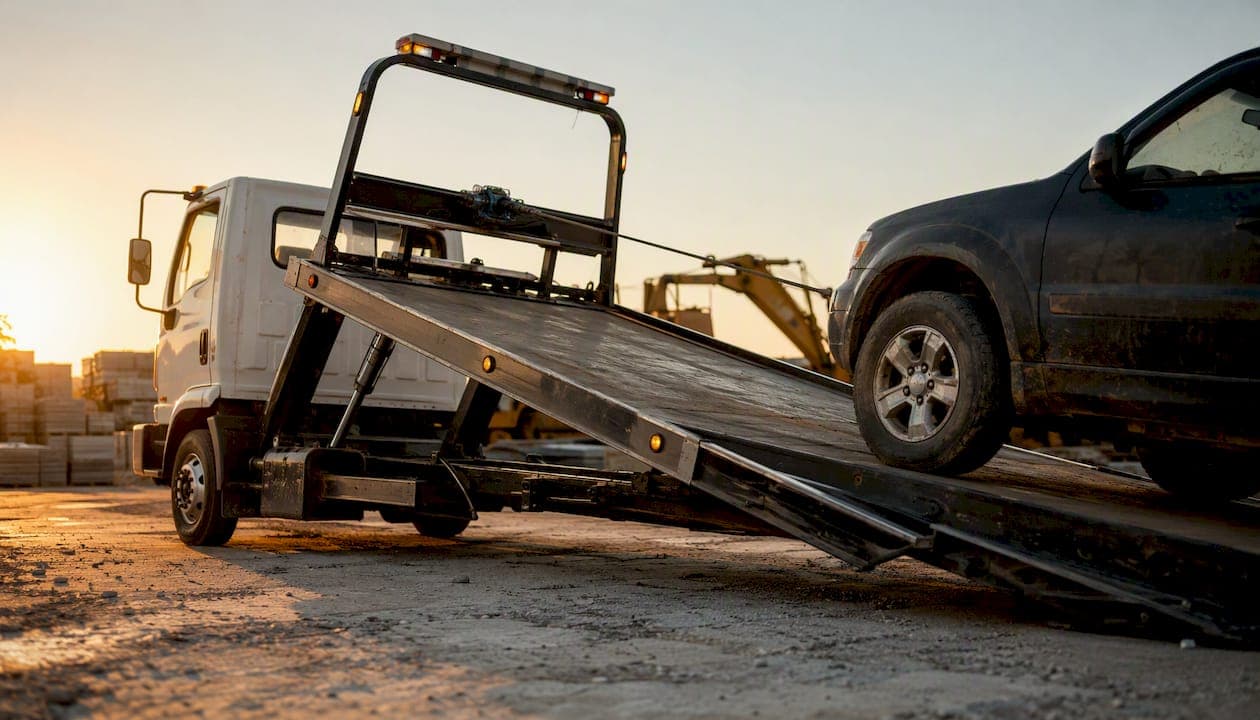
A rollback truck, also called a flatbed tow truck, uses a hydraulically tilted and sliding bed that lowers to ground level so vehicles load flat without any lifting or wheel contact with the road. If your operation depends on damage-free transport of disabled vehicles, low-clearance cars, or heavy machinery, a rollback is the right tool. Skip it only if you handle light, local hook-and-chain recoveries where a wheel-lift suffices.
Two questions to answer before you read further:
- GVWR and payload: Does your target load require a Class 3–4 light-duty bed (up to 14,000 lb GVWR), a Class 5–6 medium-duty unit, or a heavy-duty rollback rated well above 26,000 lb GVWR? The FMCSA CDL threshold sits at 26,001 lb GCWR, so your payload decision directly drives your licensing cost.
- Secondary equipment: Do you need a wheel-lift as a secondary recovery tool, or will a pure flatbed cover all your jobs?
Listings are available today on CommercialTruckTrader, TruckPaper, Comvoy, and Sostruckforsale.
Key Takeaways
A rollback truck is the right choice for damage-free vehicle transport, and buying one well requires matching GVWR to payload, verifying hydraulic health, and running a VIN check before any offer.
| Point | Details |
|---|---|
| CDL threshold | FMCSA requires a CDL when GCWR exceeds 26,000 lb, which most loaded medium-duty rollbacks reach. |
| Inspection priority | Run the 12-point inspection covering frame, hydraulics, winch, and PTO before purchase. |
| Upfit brand matters | Jerr-Dan and Ledwell units carry resale premiums and wider dealer service networks. |
| No-Lube tech reduces costs | No-Lube fittings cut grease-point maintenance intervals and lower fleet downtime risk. |
| Search on Sostruckforsale | Sostruckforsale offers category-filtered rollback listings with dealer profiles and direct contact forms. |
Table of Contents
- How does a rollback tow truck work?
- What does a rollback truck cost, and when do you need a CDL?
- Where can you find rollback trucks for sale?
- What should you inspect before buying a used rollback?
- Which upfit manufacturers should you prioritize?
- What are the ongoing operating and maintenance costs?
- Why search for rollbacks on Sostruckforsale?
- What is the right next step after deciding on a rollback?
- The used vs. new tradeoff deserves more honesty than most guides give it
- Sostruckforsale connects you to verified rollback listings fast
- Sources
How does a rollback tow truck work?
The core mechanism is straightforward. A power take-off (PTO) unit draws power from the truck's transmission and drives a hydraulic pump. That pump extends and tilts the bed rearward until the tail contacts the ground, then a winch cable pulls the disabled vehicle up the inclined deck. Once loaded, the bed slides forward and locks level. The result is a fully flat load with no wheel dangling, no drivetrain stress on the towed vehicle, and minimal risk of undercarriage damage.
Comvoy's rollback explainer describes the tilt-and-slide flatbed mechanism and the main components used to load vehicles flat without additional lifting. Key components to know:
- Bed/deck: Steel or aluminum, typically 19–22 ft on light/medium-duty units, and 28–30 ft on heavy-duty machinery movers
- Winch: Cable or strap-based, rated by pulling capacity; remote-control operation is standard on modern units
- Headboard: Structural front wall that absorbs load shift during transport
- PTO: Transfers engine power to hydraulics; gear-driven or direct-mount configurations
- Remote controls: Pendant or wireless remotes for bed tilt, slide, and winch from outside the cab
- Wheel-lift (optional): Secondary recovery arm for vehicles that cannot be winched flat
A rollback's flat-loading design makes it the preferred choice for electric vehicles, all-wheel-drive cars, and low-clearance sports cars, where any wheel lift or tow dolly risks drivetrain or battery damage.
Common types by application:
- Class 3–4 light-duty: Handles passenger cars, light trucks, and motorcycles; common in roadside assistance fleets
- Class 5–6 medium-duty: Covers larger pickups, vans, and small commercial vehicles; bed lengths typically range from 19–22 ft
- Heavy-duty and machinery-moving: Ledwell's machinery-moving rollback bodies offer 28–30 ft beds, hydraulic subframes, and high-capacity winches for construction equipment and heavy loads
- Battery-electric: Horizon Motor's HM5 BEVTR is a Class 5 all-electric rollback projecting lower fuel and maintenance costs versus diesel, though upfront MSRP and charging infrastructure requirements differ from conventional units
Blaine Brothers' 24/7 heavy-duty towing operation illustrates the real-world demand for winching, recovery, and long-haul transport that drives operators toward heavier rollback configurations.
What does a rollback truck cost, and when do you need a CDL?
Price varies significantly by duty class, condition, and upfit. General bands based on current market listings:
- Used light-duty (Class 3–4): Prices vary depending on mileage, upfit brand, and bed condition
- Used medium-duty (Class 5–6): Prices vary, with higher amounts generally reflecting documented service history
- New medium-duty with name-brand upfit: A 2026 Freightliner M2 106 with a 22 ft Jerr-Dan steel deck, Cummins B6.7 engine, and Allison transmission carries extended engine and structural warranty coverage and exemplifies typical upper range medium-duty new pricing
- Heavy-duty and machinery-moving units: New units with 28–30 ft reinforced beds and high-capacity winches often command significantly higher prices
CDL threshold: A Commercial Driver's License is generally required when the GCWR (Gross Combined Weight Rating) of the truck plus its load exceeds 26,000 lb, according to federal regulations. Most medium-duty rollbacks towing a loaded vehicle will cross that threshold, so budget for CDL compliance from the start.
Cost drivers that push the price up:
- Bed length and rated deck capacity
- Upfit manufacturer (Jerr-Dan, Ledwell, and similar name brands carry a resale premium)
- Winch capacity and remote-control system
- PTO type and hydraulic pump configuration
- Drivetrain spec (Allison automatic vs. manual, diesel engine tier)
- Manufacturer structural and hydraulic warranty coverage
On financing, most commercial truck dealers offer in-house or captive-lender programs with terms from 36–72 months. Third-party lenders such as commercial equipment finance companies often provide more flexible structures for used units. Manufacturer structural warranties on new upfits typically cover the bed frame and hydraulic cylinder for two to five years; engine warranties follow the OEM schedule. Pep Boys' roadside pricing structure illustrates how medium-duty towing commands higher per-mile rates than light-duty service, which directly affects revenue modeling for operators buying a rollback for commercial use.
Where can you find rollback trucks for sale?
Four marketplaces cover the majority of U.S. inventory:
- CommercialTruckTrader: Large national inventory with strong filter options for GVWR, mileage, and location; good for comparing dealer and private-seller pricing side by side
- TruckPaper: Skews toward dealer listings with detailed spec sheets; useful for new and nearly-new units with full upfit documentation
- Comvoy: Focused on commercial towing equipment with editorial content that helps buyers understand specs before contacting sellers
- Sostruckforsale: Classified listings for commercial trucks and heavy equipment with category filters tailored to rollback buyers, dealer directory access, and direct lead-contact forms
Search filters to apply in this order:
- GVWR range (match to your payload and CDL status)
- Bed length (19–22 ft for light/medium-duty; 28–30 ft for heavy-duty machinery moving)
- Upfit brand (Jerr-Dan, Ledwell, or equivalent name-brand preferred; verify bed length per duty class)
- Winch rating (minimum capacity for your heaviest expected load)
- Condition and mileage band
- Location and delivery radius
- Certified pre-owned or dealer warranty flag
How to read a listing quickly: Start with deck photos. Look for clear shots of the full bed surface, frame rails from underneath, and the hydraulic valve block. Listings that show only exterior cab photos and skip the deck are a red flag. Check the spec field for bed capacity rating, not just bed length.
Pro Tip: Request a VIN history report and full service records before scheduling any site visit. AAA's roadside and towing workflow confirms that flatbed selection depends on vehicle condition, which means a rollback with an undocumented history may have handled loads beyond its rated capacity. A VIN check through NMVTIS or Carfax confirms title status, accident history, and odometer consistency.
What should you inspect before buying a used rollback?
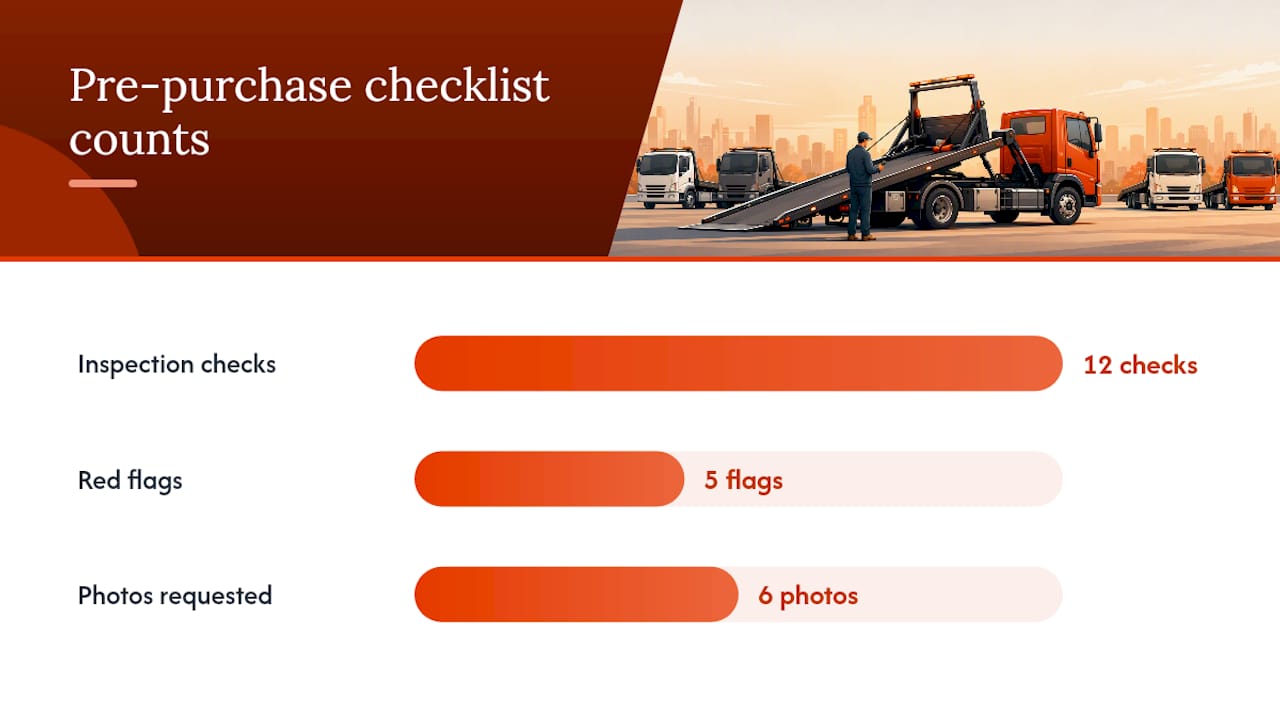
Run this 12-point inspection yourself or hire a certified commercial vehicle inspector. Do not skip it for any unit priced under $80,000 where documentation is thin.
- Frame and bed structure: Check main rails and crossmembers for cracks, weld repairs, or visible rust-through. Any repair to the main frame rails requires documentation of the repair method and load rating.
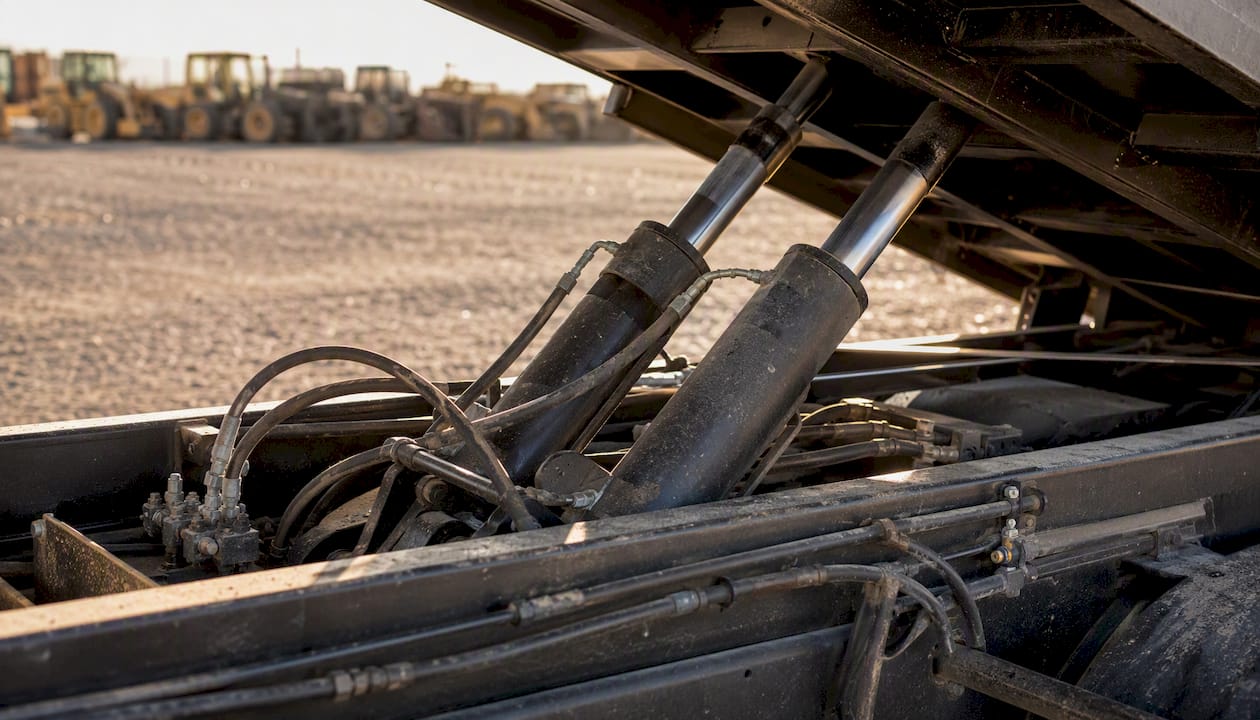
- Hydraulic function: Cycle the bed through full tilt and slide under no load. Watch for hesitation, uneven travel, or fluid weeping at cylinder seams and hose fittings.
- Hydraulic fluid and hoses: Inspect hose condition for cracking, chafing, or makeshift repairs. Fluid should be clean and at the correct level.
- PTO operation: Engage and disengage the PTO multiple times. Listen for grinding or delayed engagement, which signals worn gears or a failing clutch pack.
- Winch cable integrity: Inspect the full cable length for kinks, broken strands, or corrosion. A damaged cable is a safety hazard and a replacement cost.
- Headboard and anchor points: Check for deformation, cracked welds, and missing or damaged tie-down rings. These are load-retention points under full transport stress.
- Electrical wiring and lights: Verify all work lights, bed-position indicators, and remote-control functions operate correctly. Trace visible wiring for splices or heat damage near the hydraulic lines.
- Wheel-lift condition (if fitted): Extend and retract fully. Check pivot pins and hydraulic rams for play and leaks.
- Brakes and suspension: Road-test with a loaded bed if possible. Check brake adjustment, air system pressure hold, and suspension travel.
- Engine, mileage, and service history: Cross-reference odometer reading with service records. Inconsistent intervals or missing records suggest deferred maintenance.
- Tires and wheel seals: Check tread depth and sidewall condition on all axles. Look for oil weeping at hub seals, which indicates bearing or seal wear.
- Title and VIN verification: Confirm the VIN on the door jamb, frame rail, and title document all match. Run a NMVTIS or equivalent VIN check.
Red flags that justify walking away:
- Welded or plated main frame rail repairs without load-rating documentation
- Service records that stop abruptly or show inconsistent mileage entries
- Slow or uneven bed travel under hydraulic power (soft-bed operation)
- Rust-through on main bed rails or crossmembers
- Winch cable with visible broken strands or kinks
Photos to request from remote sellers: Full-length bed surface from above, both frame rails from underneath, hydraulic valve block and hose connections, PTO serial tag, winch gearbox and cable drum, and all four corner tie-down anchor points. Ledwell's machinery-moving rollback guidance warns specifically about load placement and deck point loads, which makes deck-surface photos non-negotiable for heavy-duty units.
Which upfit manufacturers should you prioritize?
The upfit brand on a rollback affects resale value, warranty coverage, parts availability, and how easily a dealer can service the unit. Two names dominate the U.S. market.
Jerr-Dan is the most widely recognized upfit manufacturer in North America. Steel and aluminum deck options, a broad dealer network, and strong resale value make Jerr-Dan units easier to finance and sell. The 2026 Freightliner M2 106 example cited above pairs a 22 ft Jerr-Dan steel deck with a Cummins B6.7 engine and Allison transmission, with extended structural warranty coverage, which is the spec combination most independent operators target for medium-duty work.
Ledwell specializes in heavy-duty and machinery-moving configurations. Their reinforced crossmember designs and hydraulic subframe options handle loads that standard rollback decks cannot safely carry. For construction equipment transport, Ledwell's 28–30 ft beds with high-capacity winches are a practical choice.
Key differentiators to check on any upfit:
- Deck material (steel vs. aluminum) and surface treatment
- Winch capacity and cable or strap system
- Low-angle loading design for low-clearance vehicles
- Hydraulic cylinder quality and service access
No-Lube technology is worth understanding before you buy. McMahon Truck Centers explains that No-Lube fittings reduce grease points on the bed and slide mechanism, cutting routine maintenance time and lowering the risk of missed lubrication intervals that cause premature wear. For fleet operators running multiple units, that reduction in scheduled downtime adds up.
Turnkey dealers that sell the chassis and perform the upfit installation in-house simplify warranty claims considerably. When the chassis and body come from separate vendors, a hydraulic failure can trigger a dispute over which warranty covers the repair. A single-vendor purchase eliminates that friction, as McMahon Truck Centers notes in their rollback buying guidance.
| Upfit Factor | What to Check |
|---|---|
| Deck material | Steel for durability; aluminum for weight savings on lighter chassis |
| Winch rating | Must exceed your heaviest expected single load |
| No-Lube fittings | Reduces maintenance intervals and downtime risk |
| Dealer network | Wider network means faster parts and service access |
| Warranty scope | Confirm structural and hydraulic coverage terms in writing |
What are the ongoing operating and maintenance costs?
Hydraulics are the largest maintenance cost category for rollback trucks, ahead of tires and drivetrain. A hydraulic hose failure on a loaded bed is both a safety event and an unplanned repair bill, so preventive inspection is not optional.
Expected maintenance items and approximate intervals:
- Hydraulic fluid and filter: Inspect every 250–500 operating hours; replace per manufacturer schedule
- Hydraulic hoses: Visual inspection at every PM; replace on condition, typically every 3–5 years depending on cycle frequency
- Winch cable or strap: Inspect before each shift for kinks, fraying, or corrosion; replace at first sign of strand damage
- PTO and pump: Check engagement mechanism and fluid level at each PM; rebuild or replace at manufacturer-specified intervals
- Deck surface and tie-downs: Inspect for cracks, loose anchor points, and surface wear after heavy loads
- Axle and brake service: Follow OEM schedule; air brake systems on Class 6+ units require annual inspection under FMCSA regulations
- Tires: Rotate and inspect every 25,000–30,000 miles; commercial-grade tires on a heavy rollback are a significant per-unit cost
Pro Tip: Fleet operators using equipment tracking tools can log hydraulic cycle counts and maintenance intervals per unit, which prevents the missed-PM problem that causes most premature hydraulic failures on rollback trucks.
No-Lube fittings on Jerr-Dan and similar upfits reduce the number of grease points that require attention at each service, which matters most for fleets running three or more units where a missed grease interval on one truck can cascade into a bearing failure.
Insurance and registration: GVWR drives both costs. Units above 26,000 lb GVWR require commercial vehicle registration in most states and carry higher liability insurance minimums. Budget for commercial auto liability, cargo coverage, and on-hook towing liability as separate line items. Monro's towing partner workflow illustrates how service limits and dispatch logistics affect operator revenue, which feeds directly into how much insurance coverage is economically justified per unit.
Why search for rollbacks on Sostruckforsale?
Sostruckforsale aggregates classified listings for commercial rollback trucks and heavy equipment in one place, with category filters that let you narrow by truck type, payload class, and location without sorting through unrelated inventory. The dealer directory connects buyers directly to commercial equipment sellers who list rollback tow trucks alongside semi trucks, trailers, and construction equipment, so you can compare multiple units from a single dealer in one session.
Listing features that matter to rollback buyers:
- Category and subcategory filters for tow trucks and flatbed equipment
- Direct lead-contact forms to request service records, inspection photos, or VIN documentation from sellers
- Dealer profile pages showing listing counts and contact details
- Promoted listings that surface dealer-supported units with more complete documentation
Pro Tip: When you find a listing on Sostruckforsale, use the contact form to request the 12-photo package described in the inspection section above before committing to a site visit. Sellers who respond promptly with complete documentation are demonstrably more reliable than those who provide only exterior photos.
Search current rollback listings and connect with dealers at Sostruckforsale.
What is the right next step after deciding on a rollback?
Choose a rollback when low-damage transport, long-distance hauling of disabled vehicles, or machinery moving is central to your operation. A wheel-lift or wrecker is sufficient for light local recovery work where load damage is not a concern.
Three-step action plan:
- Define your specs: Confirm required GVWR, bed length, winch capacity, and whether you need a wheel-lift secondary. Determine your CDL status relative to the FMCSA 26,001 lb GCWR threshold.
- Shortlist listings: Search Sostruckforsale, CommercialTruckTrader, TruckPaper, and Comvoy. Apply GVWR, bed length, upfit brand, and location filters. Flag units with complete service documentation.
- Schedule inspection and VIN check: Run a VIN history report before the site visit. Execute the 12-point inspection or hire a certified commercial vehicle inspector. Negotiate price after confirming hydraulic health, winch condition, and frame integrity.
Before making an offer, confirm:
- Payload capacity matches your heaviest expected load and aligns with the listed bed length (19–22 ft for medium-duty, 28–30 ft for heavy-duty)
- Hydraulic system cycles smoothly with no leaks or hesitation
- Winch cable or strap is in serviceable condition
- Service history is documented and consistent with the odometer reading
The used vs. new tradeoff deserves more honesty than most guides give it
Most buying guides treat "new vs. used" as a budget question. It is actually a risk-tolerance question, and the answer depends on how much unplanned downtime costs your operation.
A new rollback with a turnkey upfit from a dealer like McMahon Truck Centers gives you a single warranty covering chassis and body, a known maintenance baseline, and a truck that has never been overloaded or improperly operated. For a fleet operator running daily dispatch, that predictability is worth the premium. The 2026 Freightliner M2 106 with Jerr-Dan deck and Allison transmission is a reasonable benchmark for what a well-specified new medium-duty unit looks like.
Used units make sense when cash is limited, the truck will run occasional jobs rather than daily routes, or you have the mechanical expertise to evaluate and address deferred maintenance. The risk is not the mileage itself. It is the undocumented load history. A rollback that spent three years hauling machinery beyond its rated deck capacity may show no visible frame damage but will have accelerated fatigue in the hydraulic subframe and winch gearbox.
The emerging battery-electric segment, represented by units like the Horizon Motor HM5 BEVTR, projects lower fuel and maintenance costs but requires charging infrastructure and carries a higher upfront cost. For most operators in 2026, diesel remains the practical choice unless your routes are short, your depot has charging capacity, and you qualify for applicable incentives.
My practical recommendation: prioritize certified structural and hydraulic warranty coverage and a complete service record over saving $8,000–$12,000 on a unit with gaps in its history. The inspection cost and the warranty premium are cheap insurance against a hydraulic failure on a loaded deck.
Sostruckforsale connects you to verified rollback listings fast
Buyers comparing rollback tow trucks across multiple marketplaces spend time filtering out unrelated inventory and chasing sellers for basic documentation. Sostruckforsale cuts that process by focusing its listings on commercial trucks and heavy equipment, with dealer profiles that show listing counts and direct contact options in one place.
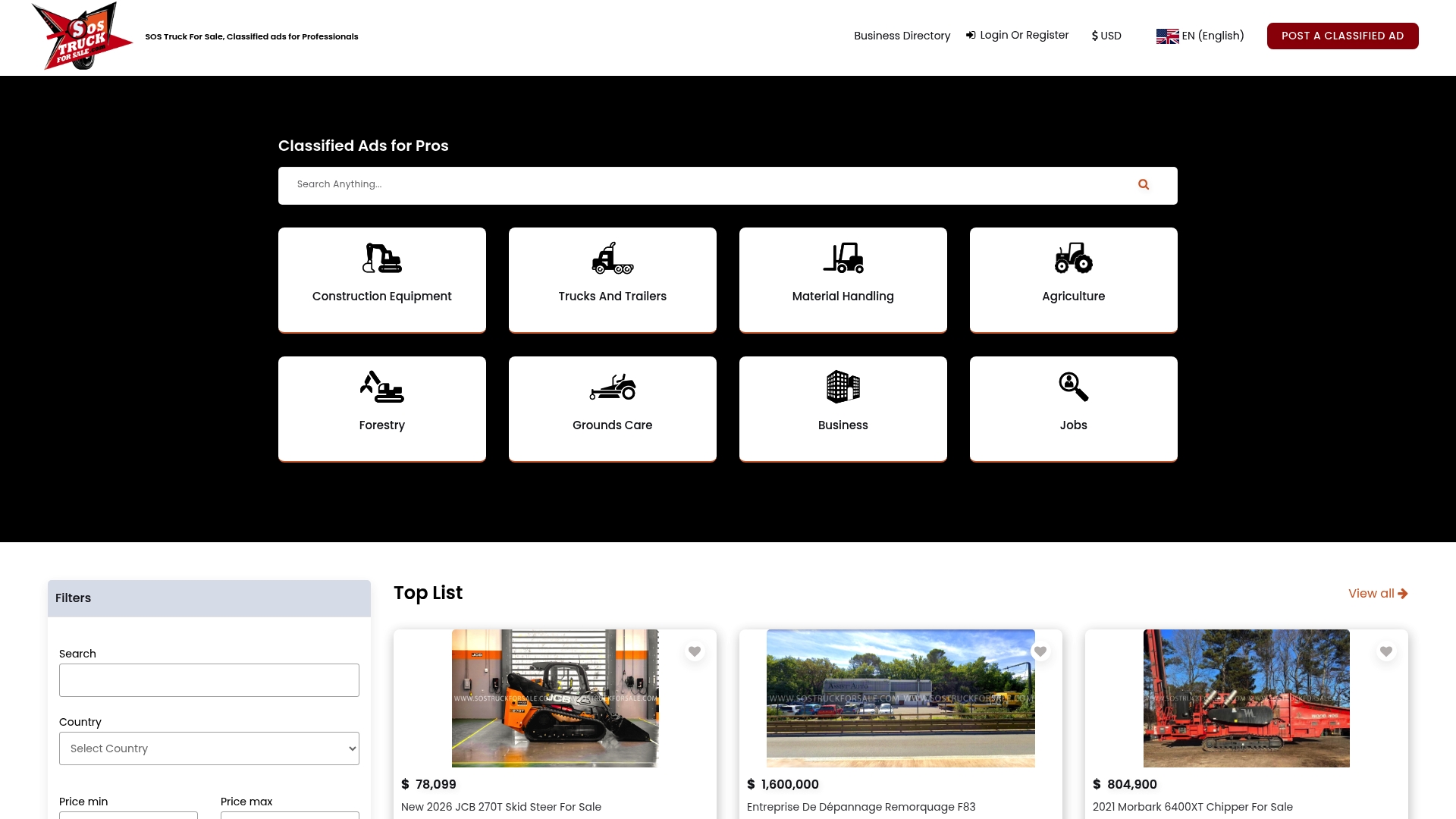
The platform's category filters let you search specifically for rollback and flatbed tow trucks, compare dealer-listed units with full spec documentation, and request VIN history or service records directly through the listing contact form. Dealer directory listings show which sellers carry multiple units, which is a practical signal of inventory depth and after-sale support. For buyers who want to move from research to a shortlist quickly, browse current rollback listings on Sostruckforsale and use the lead form to request inspection photos before committing to a site visit.