
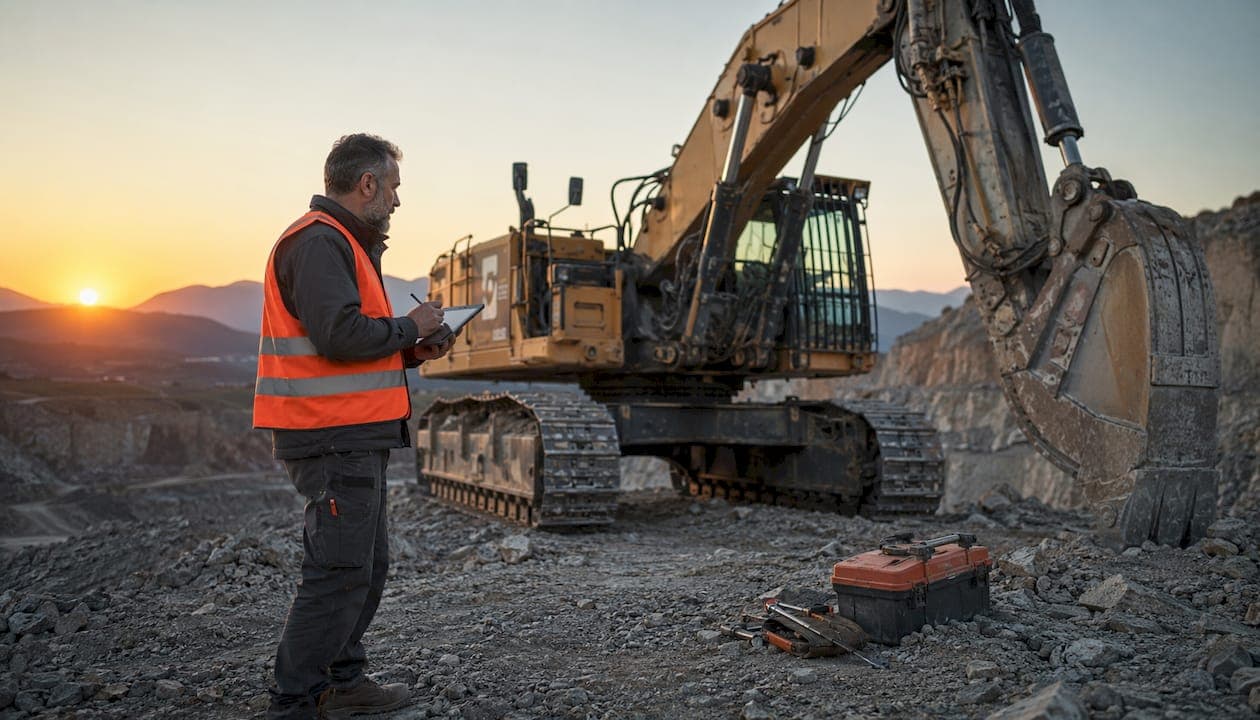
To ship sold heavy equipment safely in the U.S., complete three steps before the carrier arrives: photograph and document the machine's condition with labeled, timestamped images; confirm the carrier's MC authority, USDOT number, and insurance limits; and secure All-Risk cargo insurance for the full replacement value. Eagle Rigging identifies loading and unloading transitions as the highest-risk moments in any heavy equipment move, which means a written load plan and professional spotters are not optional extras. FMCSA cargo securement rules govern how equipment must be tied down for interstate moves, and every seller is responsible for understanding those requirements before the truck rolls.
Table of Contents
- What should you do before the carrier arrives?
- How do you pick a carrier that actually reduces risk?
- Selecting the right trailer and securing the load correctly
- When do you need permits, escorts, and state DOT approval?
- What insurance do you actually need, and how do you file a claim?
- Loading and unloading: the step-by-step sequence that limits hazards
- What does heavy equipment shipping actually cost, and how long does it take?
- Common mistakes sellers make and how to prevent each one
- How should you protect different types of heavy equipment during transit?
- Why a pre-shipment mechanical inspection protects both parties
- Communication protocols between seller, carrier, and buyer during transit
- Who is legally responsible when equipment changes hands during shipment?
- Contingency planning for delays, damage, or disputes
- Key Takeaways
- Why documentation and carrier selection protect your sale proceeds
- Sostruckforsale helps sellers list, document, and connect with buyers
- Authoritative resources and further reading
What should you do before the carrier arrives?
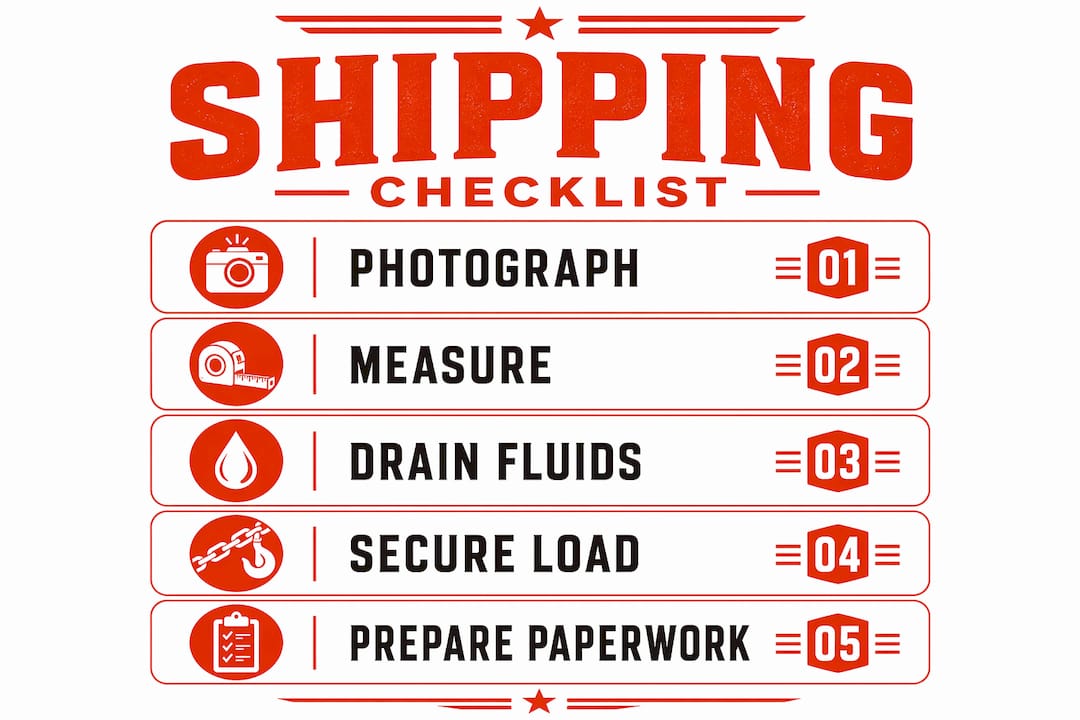
A complete pre-shipment checklist prevents delays, insurance denials, and transit damage. Work through each item in sequence.
Documentation and condition record:
- Photograph every side, the undercarriage, cab interior, serial number plate, and all wear points. Use timestamps and label each image (e.g., "left track — front idler").
- Shoot a short walkthrough video that captures running status, any pre-existing damage, and attachment condition.
- A labeled photo and diagram trail serves as both a safety guide and critical evidence if an insurance claim arises.
Equipment spec sheet: Record overall height, width, and length (measured with attachments in travel position), operating weight, fuel level, battery state, and manufacturer-designated tie-down points. This data feeds directly into the carrier's permit application.
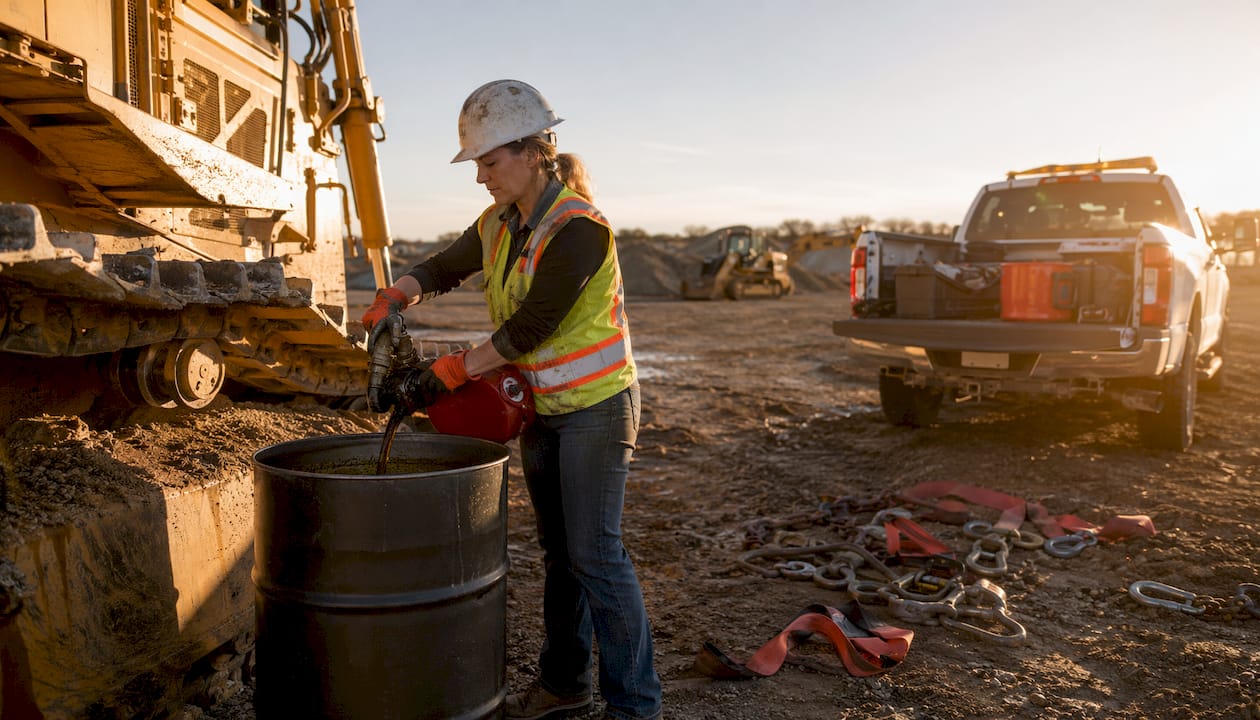
Physical preparation: Drain or secure fluids per carrier instructions, remove loose tools and accessories, retract booms, lower buckets, and lock steering and brakes where the manufacturer requires. Crate or remove attachments that cannot be secured to the machine.
Paperwork packet: Prepare a Bill of Lading-ready information sheet, commercial invoice if applicable, ownership documents, and any export or import paperwork for cross-border moves. Customs or documentation errors can trigger demurrage fees and extended port holds, so accuracy here pays off.
Pro Tip: Mark manufacturer-designated tie-down points with a paint pen or chalk before the carrier arrives. Drivers under time pressure will use the nearest anchor they can find — give them the correct ones.
How do you pick a carrier that actually reduces risk?
For high-value or complex machinery, the logistics partner's knowledge of the machine is the critical risk reducer. Choosing a broker or carrier that understands mechanics, not just lanes, is what separates a clean delivery from a damage claim.
Start with regulatory verification. Confirm the carrier's MC authority and active USDOT number through the FMCSA's online portal, check their safety rating, and verify state operating authority for oversized or overweight loads on your specific route.
Ask for references from recent hauls of the same machine type. A carrier experienced with tracked excavators may not have the right equipment or crew for a wheeled crane. Confirm whether they run their own lowboys and RGNs or subcontract, and ask what loading gear they will supply at origin.
Insist on an itemized quote. Base haul, fuel surcharge, terminal handling charges, escort and permit fees, and any disassembly and reassembly labor should appear as separate line items. A single bundled number makes it impossible to evaluate what you are actually paying for.
Confirm real-time tracking, a named point of contact at origin and destination, and the carrier's claims handling process before signing anything.
Selecting the right trailer and securing the load correctly
Trailer selection is determined by machine footprint, weight, and loading method.
| Trailer Type | Best For | Key Consideration |
|---|---|---|
| Lowboy | Heavy construction equipment (dozers, excavators) | Keeps overall height low; most common for tracked machines |
| RGN (Removable Gooseneck) | Very tall equipment or ground-level loading | Detachable neck allows machine to drive onto deck |
| Flatbed / Step Deck | Smaller running machinery under weight limits | Easy loading; limited height clearance |
| RoRo Vessel | Wheeled equipment for ocean moves | Efficient drive-on/drive-off loading; cost-effective for international |
Securement fundamentals:
- Use only manufacturer-designated tie-down points. Attaching chains to hoses, cylinders, or brake components is a primary cause of transit damage and a safety hazard.
- Use rated chains and binders sized to the equipment's working load limit, with edge protection at all contact points.
- Apply redundant front, rear, and side restraint. Soft straps alone are not adequate for heavy anchor points.
- Request a load-plan diagram from the carrier showing axle distribution, chain locations, and binder types before departure.
When do you need permits, escorts, and state DOT approval?
Permits are required when a load exceeds standard legal dimensions: typically width over 8.5 feet, height above state-specific limits, axle weights beyond statutory thresholds, or overall length beyond legal maximums. Each state sets its own thresholds, so a multi-state route requires a separate permit for every state crossed.
Depending on dimensions, a move may also require oversized banners, flashing lights, pilot cars, or police escorts. Some states mandate route surveys or bucket trucks for overhead clearance checks. Use FMCSA guidance for interstate rules and each state's DOT permit portal for route-specific requirements.
Confirm in writing who secures the permits and who pays the fees. That responsibility defaults to the carrier in most contracts, but it must be explicit.
What insurance do you actually need, and how do you file a claim?
Standard carrier liability is frequently far below the replacement value of high-value machines. It is typically expressed per pound or per unit, not per machine value. Do not assume it covers a $200,000 excavator.
Buy All-Risk cargo insurance for full protection covering loading and unloading damage, weather events, and accidents. Before binding coverage, verify policy exclusions — improper securement by the shipper is a common exclusion that voids claims.
Claims documentation checklist:
- Timestamped photos taken at handover and again at delivery
- Signed Bill of Lading noting any pre-existing damage
- Maintenance logs if mechanical condition is disputed
- Vendor or repair estimates obtained promptly after delivery
Ask your insurer: what is the deductible, are loading and unloading incidents covered, and who handles salvage or subrogation if the machine is a total loss?
Loading and unloading: the step-by-step sequence that limits hazards
Loading and unloading are the highest-risk moments in any heavy equipment move. A defined sequence and clear crew roles reduce both incidents and liability exposure.
Sequence: Site walkthrough to identify hazards → place wheel chocks and cribbing → establish hand signals → spotters in position → slow, controlled machine movement → confirm final securement before departure.
Crew roles: Lead rigging supervisor, two trained spotters (one guiding the driver, one covering blind spots), equipment operator, and a safety observer managing traffic and escort coordination.
Pro Tip: Inspect every chain and binder for certification markings before use. Uncertified hardware is a compliance violation under FMCSA rules and voids most cargo insurance policies if it contributes to a loss.
Custom protective covers with VCI (vapor corrosion inhibitor) chemistry are worth specifying for long-distance or ocean moves. VCI-equipped covers have been reported to reduce corrosion risk by up to 95%, which matters on any move lasting more than a few days in humid or coastal conditions.
What does heavy equipment shipping actually cost, and how long does it take?
Timeline and cost vary significantly by move type. Local truck moves usually take a few days, interstate ground transport varies by distance and permits, and international RoRo or container moves can take several weeks including port operations.
Primary cost drivers are distance, trailer type, permit and escort fees, disassembly and reassembly labor, terminal handling charges, and insurance premiums. Freight class for oversized shipments is determined by density, stowability, handling complexity, and liability, all of which push costs higher for non-standard loads.
When timelines are tight, disassembly and containerization increase cost but can open routes that would otherwise be impossible due to height or width restrictions.
Common mistakes sellers make and how to prevent each one
- Insufficient photo documentation. Create a labeled photo log tied to the Bill of Lading and keep originals in a separate folder from the transaction file.
- Assuming carrier liability equals insurance. Buy All-Risk cargo coverage and get written confirmation of what the policy covers before the carrier arrives.
- Using incorrect tie-down points. Consult the manufacturer's manual, mark certified anchor points before loading, and do not let a driver improvise.
- Failing to plan loading and unloading. Schedule professional spotters and require a written load plan, consistent with Eagle Rigging's guidance on standardized loading procedures.
Pro Tip: Never release a machine to a carrier without a signed Bill of Lading that notes pre-existing condition. An unsigned or blank BOL eliminates your ability to prove when damage occurred.
How should you protect different types of heavy equipment during transit?
Protection requirements vary by machine type and move duration. Tracked machines (excavators, dozers) need boom and arm pinned in travel position, bucket lowered, and track tension checked. Wheeled machines (wheel loaders, motor graders) need tires inflated to travel pressure and steering locked. Cranes and boom trucks require boom sections nested and pinned, with counterweights removed or crated separately.
For any machine exposed to weather during transit, wrap hydraulic cylinders, exposed pins, and electrical connectors with stretch wrap or foam padding. On ocean moves or long-haul routes through coastal areas, VCI-treated covers add a meaningful layer of corrosion protection. Cab glass and mirrors should be covered with foam-backed padding or plywood panels secured with strapping, not tape, which can damage paint.
Why a pre-shipment mechanical inspection protects both parties
A pre-shipment inspection identifies mechanical issues that could become disputed damage claims after delivery. Have a qualified technician check fluid levels, hydraulic system pressure, electrical systems, and undercarriage wear before the machine moves. Document findings in writing and share the report with the buyer before shipment.
If a machine arrives with a hydraulic leak that was present before loading, an inspection report dated before departure eliminates the dispute. Without it, the carrier, the seller, and the buyer each have competing claims about when the problem started. The inspection also flags issues that could make the machine unsafe to load, such as a failed park brake or a cracked boom pin, which protects the loading crew.
Communication protocols between seller, carrier, and buyer during transit
Establish a single point of contact on each side before the truck departs. The seller should have a direct number for the driver or dispatch, and the buyer should receive the carrier's tracking link or dispatch contact at pickup confirmation.
Set check-in intervals in writing: a departure confirmation, a midpoint status update for moves over 500 miles, and a delivery ETA at least 24 hours in advance. If the buyer needs to arrange a forklift, crane, or spotters at the destination, 24 hours is the minimum lead time. Delays happen; the damage comes from silence, not the delay itself.
Who is legally responsible when equipment changes hands during shipment?
Liability transfer in heavy equipment sales is governed by the terms of the purchase agreement and the Bill of Lading. The most common structure is FOB (Free On Board) origin, where risk transfers to the buyer once the carrier takes possession at the seller's location. FOB destination transfers risk only when the machine is delivered and accepted.
Get the agreed Incoterm or FOB point in writing in the purchase agreement before the carrier is booked. The signed Bill of Lading at pickup is the legal record of condition at transfer. If the BOL is signed clean and damage is found at delivery, the carrier bears the burden of explanation. Sellers should never sign a blank or incomplete BOL and should retain a copy for at least three years.
This article is general information, not legal advice. Confirm the specific terms of your purchase agreement and applicable state law with a qualified attorney for your situation.
Contingency planning for delays, damage, or disputes
Build a contingency plan before the truck departs, not after something goes wrong. Identify the carrier's claims contact and the insurer's claims line and keep both numbers in the transaction file. Confirm the buyer's availability window at destination; a machine that arrives when no one is present to receive it generates storage fees and potential damage from unsecured equipment.
For damage disputes, the sequence is: photograph damage immediately at delivery, note it on the delivery receipt before signing, notify the carrier in writing within 24 hours, and file a formal claim with the cargo insurer within the policy's stated window (commonly 30 days). Missing that window can void coverage entirely. For delays caused by permit processing or weather, communicate proactively with the buyer and document every update in writing.
Key Takeaways
Sellers who document condition thoroughly, verify carrier credentials, and buy All-Risk cargo insurance before the truck arrives eliminate the three most common causes of disputed claims and delivery failures.
| Point | Details |
|---|---|
| Document before anything moves | Take labeled, timestamped photos and a walkthrough video; tie them to the signed Bill of Lading. |
| Verify carrier credentials | Confirm MC authority, USDOT number, safety rating, and state operating authority before booking. |
| Buy All-Risk cargo insurance | Standard carrier liability rarely covers replacement value; All-Risk fills the gap for high-value machines. |
| Use manufacturer tie-down points | Incorrect anchor use is a leading cause of transit damage; mark certified points before the carrier arrives. |
| List on Sostruckforsale first | Sostruckforsale connects sellers with buyers and provides listing templates that prompt documentation steps before shipment. |
Why documentation and carrier selection protect your sale proceeds
The sellers who avoid post-delivery disputes are almost always the ones who treated documentation as a commercial asset, not a formality. A complete photo log, a signed BOL noting pre-existing condition, and a written load plan give you a defensible position in any claim. Without them, you are negotiating against a carrier's version of events with no evidence.
Carrier selection matters just as much. An experienced heavy-equipment carrier who understands your machine type is less likely to trigger an insurance exclusion through improper securement. Keeping the buyer informed throughout transit prevents refusals at destination, which generate return freight costs that typically fall on the seller. Every step in this checklist connects directly to protecting the money you already agreed to receive.
Sostruckforsale helps sellers list, document, and connect with buyers
Sellers who list heavy equipment on Sostruckforsale get immediate exposure to a buyer base that is actively searching for commercial vehicles, excavators, cranes, and construction machinery. The platform's listing structure prompts sellers to include the specification details, condition notes, and photo documentation that buyers need before committing to a purchase and arranging transport.
That documentation work done at listing time doubles as your pre-shipment condition record, which means less rework when the sale closes and the carrier is booked. Post your equipment on Sostruckforsale today and connect with serious buyers who are ready to move.
Authoritative resources and further reading
- FMCSA Cargo Securement Rules — Federal requirements for tie-downs, working load limits, and commodity-specific securement for interstate moves. Start here for compliance.
- Eagle Rigging — Essential Guide to Transporting Heavy Equipment — Field-level guidance on loading and unloading procedures, spotter roles, and risk reduction from an active rigging operation.
- Beck & Pollitzer — Safe Machinery and Equipment Move Guide — Detailed procedures for documentation, load planning, and claims preparation for complex machinery moves.
- Höegh Autoliners — Guide to Shipping Heavy Equipment — Covers RoRo shipping methods, international carrier liability limits, and insurance options for ocean moves.
- Transhield USA — Protecting Heavy Equipment in Transit — Guidance on VCI protective covers, correct tie-down anchor selection, and corrosion prevention for long-distance moves.
- State DOT permit portals — Each state's Department of Transportation issues oversize and overweight permits independently. Search "[state name] DOT oversize permit" to reach the correct portal for every state on your route.