
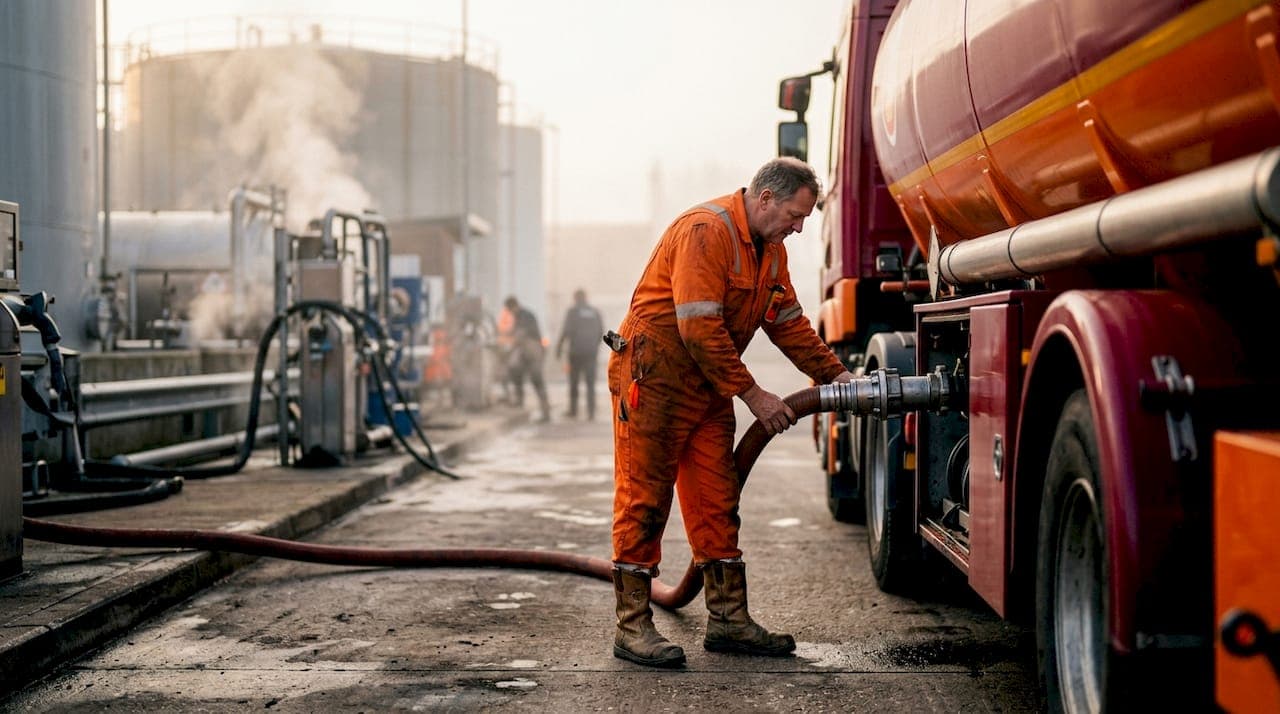
A tanker truck is a specialized vehicle engineered to transport bulk liquids safely across industries ranging from petroleum distribution to food processing. The role of a tanker truck goes well beyond simple hauling. These vehicles carry fuel, chemicals, milk, industrial gases, and other liquids that require strict containment, specialized handling, and regulatory compliance at every stage. Under US federal law, tanker trucks must operate within an 80,000-pound gross vehicle weight limit, which directly determines how much liquid a given truck can legally carry based on cargo density. Fleet managers and logistics professionals who understand these constraints make better procurement, routing, and compliance decisions.
What are the primary functions and operational roles of tanker trucks?
The primary function of a tanker truck is the safe containment and delivery of bulk liquid cargo that cannot be transported in standard freight containers. Liquids present unique physical challenges during transport, including wave action, shifting weight, and pressure buildup. Tanker truck functions are therefore built around managing these forces through engineering and operational discipline.
Cargo types span a wide range of industries:
- Petroleum products: Gasoline, diesel, and aviation fuel for fuel distribution networks
- Food-grade liquids: Milk, juice, edible oils, and liquid sugar for food and beverage manufacturers
- Industrial chemicals: Acids, solvents, and caustic materials for manufacturing plants
- Compressed and liquefied gases: Propane, ammonia, and liquid nitrogen for energy and industrial use
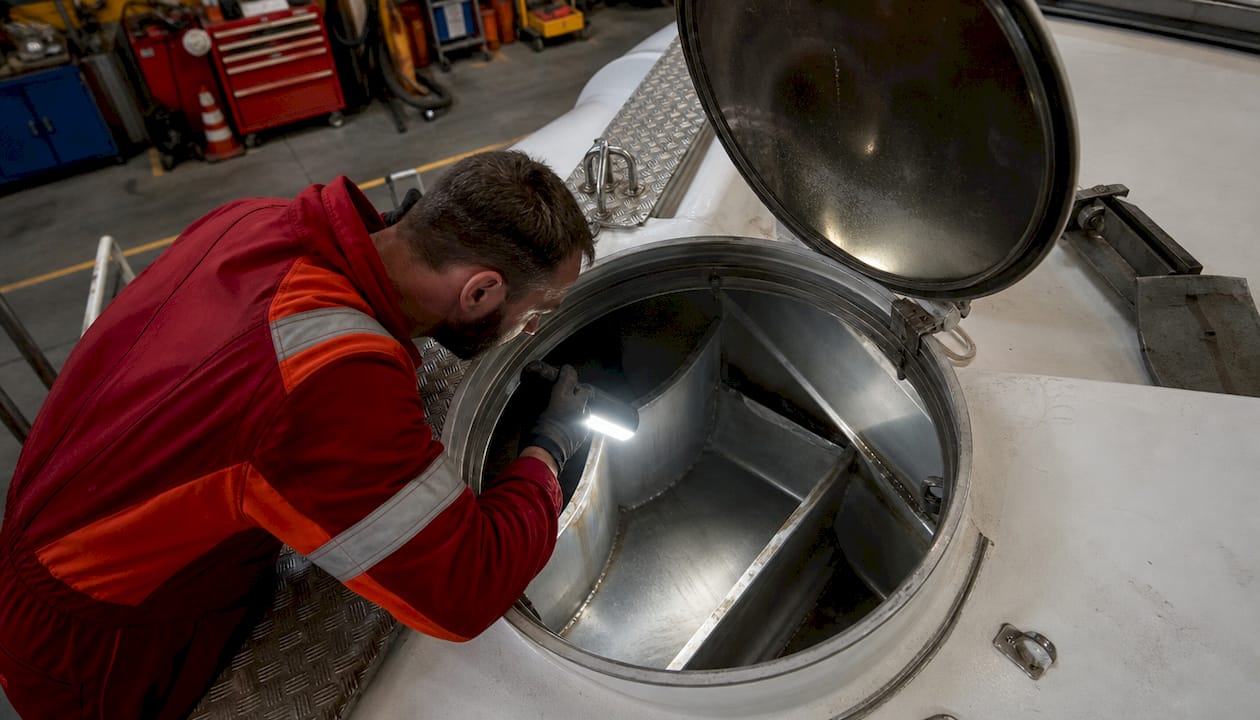
Tank design adapts to each cargo type. Internal baffles reduce liquid surge by breaking the tank into smaller compartments, which limits the wave effect during braking and cornering. Compartmentalization also allows a single truck to carry multiple products simultaneously, which is common in petroleum distribution.
Tanker truck capacity varies significantly by vehicle configuration. Rigid tankers used in urban delivery carry 5,000–15,000 liters, while long-haul semi-trailer tankers carry 25,000–60,000 liters. The US gross vehicle weight limit means that denser liquids like sulfuric acid fill a tank to a lower volume than lighter liquids like gasoline. A fleet manager planning routes for chemical distribution must account for this weight-to-volume relationship to avoid overloading.
Pro Tip: When planning loads for dense chemical cargo, calculate the weight per gallon before dispatching. A tank that holds 6,000 gallons of water will be overweight at the federal limit if filled with a liquid that weighs more per gallon.
The tanker truck transportation role also splits between urban short-haul and long-haul delivery. Urban tankers make frequent stops at gas stations, food plants, and industrial facilities. Long-haul tankers cover interstate routes to bulk terminals and distribution hubs. Each operational profile demands different driver skills, vehicle specifications, and maintenance schedules.
How do tanker trucks ensure safety when transporting liquids?
Safety is the defining engineering challenge in tanker truck operations. Liquid cargo creates dynamic forces that do not exist with dry freight, and the consequences of a failure can include spills, fires, or environmental contamination.
Engineering features that protect cargo and driver
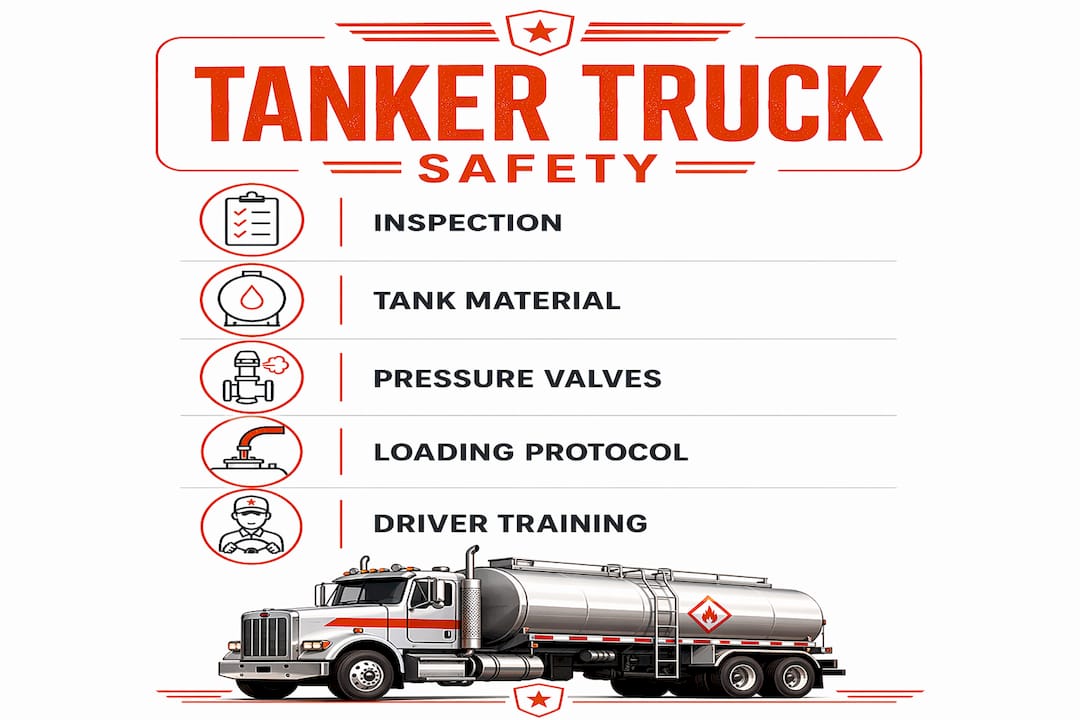
Tank construction material is the first line of defense. Steel tanks offer strength and weldability, making them common for petroleum and chemical service. Aluminum tanks reduce overall vehicle weight, which increases legal payload capacity, but changing from steel to aluminum affects repair options and rollover safety margins because aluminum deforms differently under impact. Stainless steel is standard for food-grade and pharmaceutical liquids due to its corrosion resistance and cleanability.
Pressure relief valves prevent tank rupture during temperature-driven pressure buildup, which is critical for volatile petroleum products. Emergency shut-off valves stop flow immediately if a hose or coupling fails during loading or unloading. Modern tanker trucks also include anti-static systems and real-time tank pressure and leak detection monitoring, which reflects the integration of Industry 4.0 technology into fleet safety management.
Regulatory and licensing requirements
| Requirement | Details |
|---|---|
| CDL Class A license | Required for operating combination vehicles over 26,001 lbs |
| "N" endorsement | Required for tanker vehicles carrying liquids or gases |
| "H" endorsement | Required for hazardous materials transport |
| Federal weight limit | 80,000 lbs gross vehicle weight on interstate highways |
| DOT placarding | Required for hazardous cargo identification |
Drivers must hold a CDL Class A with "N" and "H" endorsements due to the risks associated with volatile cargo and the specialized vehicle dynamics of liquid loads. This is not a formality. The combination of a high center of gravity and liquid surge creates rollover conditions that do not apply to dry van drivers.
Loading and unloading safety protocols
Modern loading terminals require breakaway couplings and overfill protection systems that communicate with vehicle sensors to prevent spills. A breakaway coupling disconnects automatically if a truck pulls away while still connected to a loading arm. Overfill protection shuts down the pump when the tank reaches capacity. These systems work together as a safety network, not as independent features.
Pro Tip: Never rely solely on the truck's onboard sensors during loading. Verify that the terminal's overfill protection system is actively communicating with the vehicle before starting the pump.
What different types of tanker trucks exist and how do their roles vary?
Tanker truck uses differ substantially by cargo type, and selecting the wrong tanker for a given product creates legal, safety, and financial problems. Choosing the correct tanker type is the most critical operational decision influencing regulatory compliance and risk management.
| Tanker type | Primary cargo | Key construction feature | Regulatory focus |
|---|---|---|---|
| Petroleum tanker | Gasoline, diesel, jet fuel | Compartmentalized aluminum or steel | DOT hazmat, vapor recovery |
| Chemical tanker | Acids, solvents, caustic materials | Lined or stainless steel, pressure-rated | EPA, DOT, OSHA standards |
| Food-grade tanker | Milk, juice, edible oils | Stainless steel, sanitary fittings | FDA food safety regulations |
| Pneumatic tanker | Dry bulk (flour, cement, lime) | Pressurized aluminum, blow-off valves | Weight and pressure limits |
| Cryogenic tanker | Liquid nitrogen, oxygen, LNG | Vacuum-insulated double-wall tank | DOT cryogenic gas rules |
Food-grade and chemical tankers cannot legally interchange cargo due to contamination risks. A tanker that carried a solvent cannot be repurposed for milk transport without full decontamination certification, and in most cases the regulatory burden makes the switch impractical. This limits fleet versatility and directly affects resale value.
The importance of tanker trucks in each category extends to maintenance and insurance. Chemical tankers require more frequent liner inspections and carry higher liability premiums. Food-grade tankers must pass sanitation audits. Petroleum tankers need vapor recovery system checks. Specialization in tanker selection dictates compliance, maintenance, and insurance protocols, which means misalignment between cargo and vehicle type creates costly operational mistakes that compound over time.
What operational challenges and best practices define tanker truck logistics?
Tanker truck logistics present challenges that dry freight operations simply do not face. The physical behavior of liquid cargo under motion requires drivers and fleet managers to adapt their practices at every level.
-
Train drivers specifically for liquid dynamics. Standard CDL training does not fully prepare drivers for the free surface effect, which is the shift in a liquid's center of gravity as it moves inside the tank. Drivers must learn to anticipate how a partially filled tank behaves differently from a full one.
-
Manage rollover risk on curves. Liquid momentum during maneuvers can cause rollovers that would not occur with dry van loads. A speed reduction of 5 mph on tight curves can prevent accidents. Fleet managers should build this into driver training and route planning.
-
Account for residual liquid waste. Pumps cannot recover the last 3–5% of liquid because they lose prime when air enters the system. On multi-product distribution routes, this residual affects product accounting and can create contamination issues if the next load is incompatible.
-
Match the tanker to the cargo before every dispatch. Cargo-specific tanker selection prevents contamination, protects the tank lining, and keeps the operation within regulatory bounds. A fleet that runs mixed cargo types needs a clear assignment protocol to avoid costly errors.
-
Integrate advanced loading and unloading equipment. Terminal-side safety hardware, including breakaway couplings, vapor recovery systems, and grounding cables, must be compatible with the truck's fittings and sensors. Incompatible equipment creates both safety gaps and operational delays.
Pro Tip: Build a cargo compatibility matrix for your fleet. List each tanker by tank material, liner type, and approved cargo list. Review it every time a new product is added to your distribution network.
Key Takeaways
The role of a tanker truck is defined by specialized engineering, strict regulatory compliance, and cargo-specific operational discipline that separates liquid transport from all other freight categories.
| Point | Details |
|---|---|
| Capacity depends on cargo density | The 80,000-lb federal weight limit means denser liquids reduce usable tank volume. |
| Baffles and compartments control liquid surge | Internal tank design directly reduces rollover risk and product loss during transit. |
| CDL endorsements are non-negotiable | Class A with "N" and "H" endorsements are legally required for tanker and hazmat operations. |
| Tanker type must match cargo | Food-grade and chemical tankers cannot legally swap cargo, limiting fleet flexibility. |
| Residual liquid affects multi-product routes | The last 3–5% of liquid is unrecoverable by pump, which matters for product accounting and contamination control. |
What I've learned from watching fleets get tanker selection wrong
Fleet managers consistently underestimate how much the tanker type decision affects everything downstream. I've watched operations buy a general-purpose tanker at a lower price point, then spend twice the savings on liner replacements, failed audits, and rerouted loads because the tank wasn't rated for the actual cargo. The upfront cost difference between a standard petroleum tanker and a properly lined chemical tanker is real, but it is far smaller than the cost of a regulatory violation or a contaminated load.
The liquid dynamics issue is the other area where I see consistent gaps. Drivers who come from dry van backgrounds often don't fully internalize how a partially filled tank changes vehicle behavior. A tanker at 60% capacity is more dangerous on curves than one at 95% capacity because the liquid has more room to shift. That counterintuitive fact needs to be part of every onboarding session for new tanker drivers, not buried in a manual.
Technology is genuinely improving the safety picture. Real-time pressure monitoring and leak detection have moved from optional upgrades to expected features on modern tanker builds. Fleet managers who haven't updated their safety technology specifications in the last three years are likely running equipment that doesn't meet current best practices, even if it still meets the minimum regulatory standard. The gap between compliant and current is worth closing before an incident forces the issue.
— Dave
Finding the right tanker truck for your fleet
Tanker truck procurement is a long-term commitment. The wrong vehicle creates compliance gaps, maintenance costs, and operational constraints that follow a fleet for years.
Sostruckforsale lists a wide selection of commercial tanker trucks available for purchase, covering petroleum, chemical, and food-grade configurations. Fleet managers can search by specification, capacity, and condition to find vehicles that match their cargo requirements and regulatory obligations. Whether you are expanding an existing tanker fleet or sourcing a first unit, Sostruckforsale provides the inventory and detail needed to make a confident buying decision. Visit Sostruckforsale to browse current listings.
FAQ
What is the role of a tanker truck in logistics?
A tanker truck transports bulk liquid cargo, including fuel, chemicals, and food-grade liquids, using specialized containment systems that prevent spills and manage liquid dynamics during transit.
How much liquid can a tanker truck carry?
Small tanker trucks carry up to 3,000 gallons, while large semi-trailer tankers carry up to 11,600 gallons, with actual capacity limited by the federal 80,000-pound gross vehicle weight ceiling and cargo density.
What license does a tanker truck driver need?
Tanker truck drivers must hold a CDL Class A license with an "N" endorsement for tanker operations and an "H" endorsement for any hazardous materials cargo.
Why can't food-grade and chemical tankers share cargo?
Cross-contamination risks make it legally and practically prohibited to interchange food-grade and chemical cargo between tankers, as residual chemicals can render food products unsafe and violate FDA regulations.
What makes tanker trucks more dangerous than dry vans?
Liquid cargo shifts weight dynamically during braking and cornering, raising the center of gravity and increasing rollover risk. Partially filled tanks are more hazardous than full ones because the liquid has more room to surge.