

The transmission in a semi truck is defined as the mechanical system that transfers engine power to the drive wheels by managing gear ratios and multiplying torque for varying load and speed conditions. Without it, a diesel engine producing peak torque at a narrow RPM band could not move a loaded 80,000-pound rig from a dead stop, let alone cruise efficiently at highway speed. The role of transmission in semi trucks has grown more complex as electronic controls now allow real-time communication between the gearbox and the engine. Fleet adoption of AMTs for new Class 8 orders in the U.S. exceeds 90% as of 2026. That figure signals a fundamental shift in how the industry thinks about drivetrain management.
How do different transmission types function in semi trucks?
Three transmission architectures dominate the Class 8 market: manual, automated manual (AMT), and full torque-converter automatic. Each handles power delivery differently, and each suits a different operating environment.
Manual transmissions
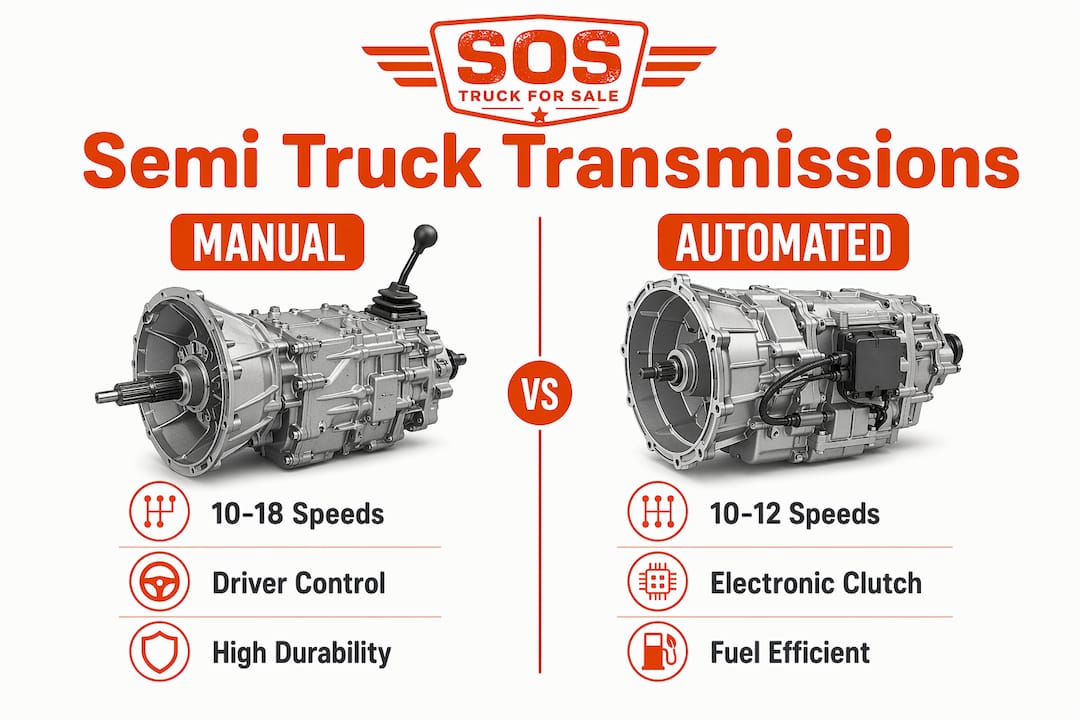
Manual transmissions use a driver-operated clutch pedal and gear lever to select from 10 to 18 forward speeds. The high gear count exists because diesel engines produce usable torque across a narrow RPM window, typically 1,000–1,800 RPM. Splitter and range gears let drivers fine-tune engine load across flat roads, grades, and variable cargo weights. Skilled drivers can extract excellent fuel economy from a manual, but the learning curve is steep and consistency depends entirely on the individual behind the wheel.
Automated manual transmissions (AMTs)
AMTs share the same internal gear structure as a manual but replace the driver-operated clutch with an electronic actuator. The transmission control module reads throttle position, vehicle speed, and load data to select gears automatically. Modern AMTs communicate in real-time with the engine via data buses, coordinating shifts to keep the engine in its efficiency sweet spot. Most AMT units offer 10 to 12 forward gears, which covers the majority of long-haul and regional applications without the complexity of an 18-speed manual.

Full torque-converter automatics
Full automatics use a fluid-filled torque converter instead of a mechanical clutch, paired with planetary gearsets that shift under hydraulic pressure. The torque converter absorbs shock loads during low-speed launches, which protects the driveline in severe stop-and-go work. These units typically offer fewer forward ratios than AMTs but deliver smoother power flow at low speeds. Refuse trucks, concrete mixers, and urban delivery fleets favor this design for exactly that reason.
| Transmission type | Gear count | Best application | Key advantage |
|---|---|---|---|
| Manual | 10–18 speeds | Long-haul, experienced drivers | Driver control, low initial cost |
| Automated manual (AMT) | 10–12 speeds | Long-haul, regional | Fuel efficiency, reduced driver fatigue |
| Torque-converter automatic | 6–8 speeds | Vocational, stop-and-go | Smooth launches, driveline protection |
Pro Tip: Never ride the throttle while inching an AMT-equipped truck through a loading dock. AMTs use a dry clutch, and slow throttle creeping generates heat that accelerates clutch wear faster than normal highway driving.
Why does transmission choice affect fuel efficiency and driver performance?
Fuel economy is the clearest financial argument for transmission selection. AMTs improve fuel economy 1–3% over manual transmissions by removing driver shifting variability. On a fleet running 100,000 miles per truck per year at $4.00 per gallon diesel, even a 1% improvement translates to measurable savings per unit annually. Multiply that across a 50-truck fleet and the number becomes a strong business case on its own.
Driver performance is the less-discussed factor. Manual transmission proficiency takes months to develop and years to master. Fleets that spec AMTs reduce training time significantly and bring new drivers to full productivity faster. Consistency also improves: an AMT shifts at the same optimal point every time, regardless of driver fatigue or experience level.
The four operational areas where transmission type most directly shapes outcomes are:
- Fuel consumption — AMTs eliminate late upshifts and early downshifts that waste fuel on grades.
- Driver fatigue — Removing 500 to 1,000 manual shifts per day on a long-haul route reduces physical and mental load.
- Training cost — Fleets report shorter onboarding cycles when new hires train on AMTs rather than manuals.
- Maintenance predictability — AMT electronic controls protect components by preventing overloads, making service intervals more consistent.
The 90% AMT adoption rate for new Class 8 orders reflects all four of these pressures converging at once. Fleet operators are not choosing AMTs for convenience alone. They are choosing them because the total cost of ownership math supports the decision.
What are the key considerations for matching transmission to truck application?
Mission-matching a transmission to the truck's specific duty cycle is the single most important factor in long-term reliability. A transmission designed for over-the-road long-haul work will generate excess heat and wear when forced into heavy vocational stop-and-go service. That mismatch shortens service life and raises maintenance costs in ways that are entirely preventable.
The core selection criteria break down as follows:
- Long-haul and regional OTR: AMTs are the standard choice. They keep the engine in the optimal RPM range across thousands of miles, reduce driver fatigue, and deliver consistent fuel economy.
- Severe vocational duty (refuse, concrete, utility): Torque-converter automatics handle repeated low-speed launches and driveline shock better than any AMT. The fluid coupling absorbs impact loads that would stress a dry clutch.
- Mixed regional and pickup-and-delivery: Either an AMT or a torque-converter automatic works, depending on the ratio of highway to urban miles. Fleets with more than 40% urban stop-and-go miles generally benefit from the torque converter's smoother launch behavior.
- Construction and off-road: Full automatics with power take-off (PTO) capability suit equipment that needs consistent low-speed torque and frequent direction changes.
Heat generation is the hidden enemy in misapplied transmissions. An AMT running repeated short-cycle stops in a refuse application cannot cool its dry clutch between engagements. The result is accelerated wear and unplanned downtime. Proper mission-matching prevents this category of failure entirely.
Pro Tip: When evaluating a used semi truck, ask for the transmission model number and cross-reference it against the truck's original vocation. A long-haul AMT installed in a truck that spent its life on a construction site is a red flag for hidden wear.
How does proper transmission maintenance extend semi truck life?
Transmission maintenance is the area where the most preventable failures occur. Timely fluid changes prevent approximately 80% of transmission failures. That statistic deserves direct attention: the majority of gearbox failures in service are not mechanical defects but maintenance failures.
The practical maintenance framework for truck drivers, fleet operators, and mechanics covers four priorities:
- Fluid condition monitoring — Check transmission fluid color and viscosity at every major service interval. Dark, burnt-smelling fluid signals oxidation and heat damage. Replace fluid before it reaches that point, not after.
- Electronic fault code review — Modern AMTs log fault codes through the vehicle's data bus. Reviewing codes at each PM interval catches developing issues before they become failures. Ignoring stored codes is the fastest way to turn a $500 sensor problem into a $15,000 rebuild.
- Clutch behavior observation — For AMT-equipped trucks, drivers should report any change in shift quality, including hesitation, harsh engagement, or unexpected neutral drops. These symptoms indicate clutch pack wear or actuator issues that worsen quickly if ignored.
- Driver behavior training — AMT dry clutches wear faster when drivers ride the throttle at low speeds. Training drivers to use the brake to hold position on grades instead of throttle-feathering extends clutch life measurably.
The transmission's role as the drivetrain's electronic control center means that software updates from the manufacturer also count as maintenance. Transmission control module calibrations improve shift logic and protect components. Skipping software updates on a modern AMT is equivalent to skipping an oil change: the damage is not immediate, but it accumulates.
Key Takeaways
The transmission is the most operationally consequential component between the engine and the drive wheels, and selecting the right type for the right application determines fuel cost, maintenance frequency, and driver retention.
| Point | Details |
|---|---|
| AMT dominates new Class 8 orders | Over 90% of new U.S. Class 8 trucks ship with AMTs as of 2026, driven by fuel savings and ease of use. |
| Fuel savings are measurable | AMTs deliver 1–3% better fuel economy than manuals by removing driver shifting variability. |
| Mission-matching prevents failures | Applying a long-haul AMT to vocational stop-and-go work generates excess heat and accelerates wear. |
| Maintenance prevents most failures | Timely fluid changes and fault code monitoring prevent approximately 80% of transmission failures. |
| Torque-converter automatics suit severe duty | Refuse, concrete, and utility trucks benefit from smoother launches and reduced driveline shock. |
Transmission technology is moving faster than most fleets realize
I have watched the manual transmission go from the standard to the exception in less than a decade. When I started covering heavy equipment markets, a driver who could not double-clutch a 13-speed was considered unqualified. Today, fleets actively prefer drivers who have never touched a manual, because retraining habits is harder than building new ones.
What concerns me is the gap between how fast the technology is evolving and how slowly maintenance practices are catching up. Fleets that adopted AMTs five years ago are now seeing their first major clutch and actuator replacements. Many of them are surprised, because they assumed "automatic" meant "maintenance-free." It does not. The dry clutch in an AMT is a wear item, and the electronic control module needs attention just like any other computer on the truck.
The integration of transmissions with advanced driver assistance systems (ADAS) is the next frontier. Transmissions already talk to the engine and the ABS system. Within the next few years, they will coordinate with predictive cruise control and terrain mapping to shift before a grade, not in response to one. Mechanics who understand transmission electronics today will be the most valuable people in any fleet shop by 2028. The operators who invest in that training now will have a real advantage in uptime and operating cost.
Finding the right semi truck starts with knowing the transmission
Transmission knowledge changes how you evaluate a truck purchase. A truck listed with an AMT spec built for long-haul OTR work is a different asset than the same chassis fitted with a torque-converter automatic for vocational use. Knowing which one fits your operation saves money from day one.
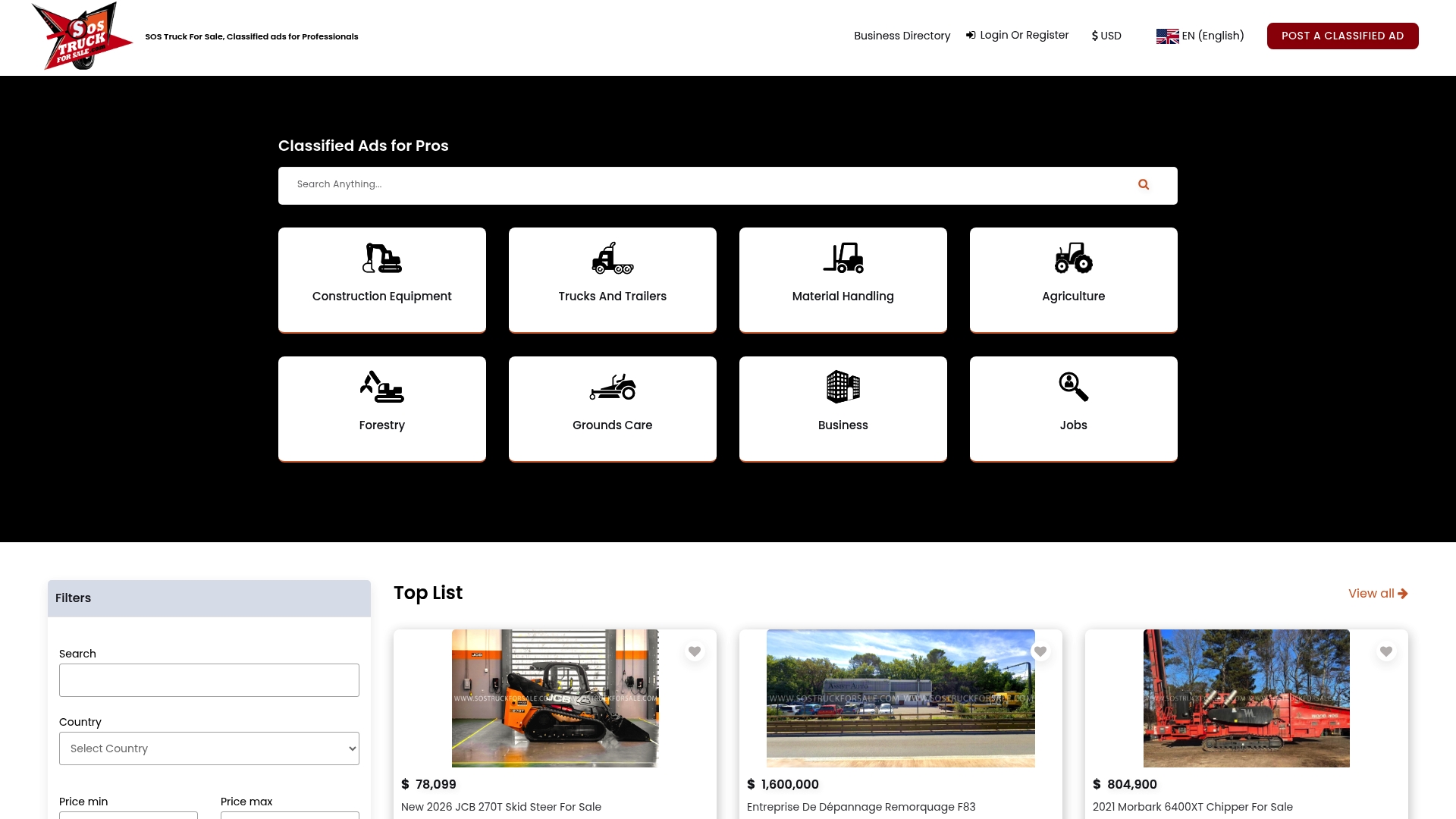
Sostruckforsale lists semi trucks for sale across a wide range of configurations, including trucks spec'd with AMTs, full automatics, and manual transmissions for buyers who still prefer driver-controlled shifting. Whether you manage a long-haul fleet or run vocational equipment, Sostruckforsale gives you the inventory detail to match the right transmission type to your duty cycle before you buy.
FAQ
What is the primary role of a transmission in a semi truck?
The transmission multiplies engine torque and manages gear ratios to keep the engine operating in its efficient RPM range under varying load and speed conditions. Without it, a diesel engine could not move a loaded truck from a stop or maintain highway speed efficiently.
What transmission type do most new semi trucks use in 2026?
Over 90% of new Class 8 semi trucks ordered in the U.S. ship with automated manual transmissions (AMTs) as of 2026. AMTs deliver better fuel economy and reduce driver fatigue compared to traditional manuals.
How many gears does a semi truck transmission have?
Manual semi truck transmissions typically have 10 to 18 forward speeds, while AMTs generally offer 10 to 12 forward gears. Full torque-converter automatics used in vocational trucks usually have 6 to 8 forward ratios.
How does transmission maintenance affect truck reliability?
Timely transmission fluid changes and electronic fault code monitoring prevent approximately 80% of transmission failures. Neglecting fluid condition or ignoring stored fault codes turns minor issues into costly rebuilds.
When should a fleet choose a torque-converter automatic over an AMT?
Torque-converter automatics are the better choice for severe stop-and-go vocational applications such as refuse collection, concrete delivery, and utility work. They absorb driveline shock during repeated low-speed launches in ways that AMT dry clutches cannot sustain long-term.
— Dave