
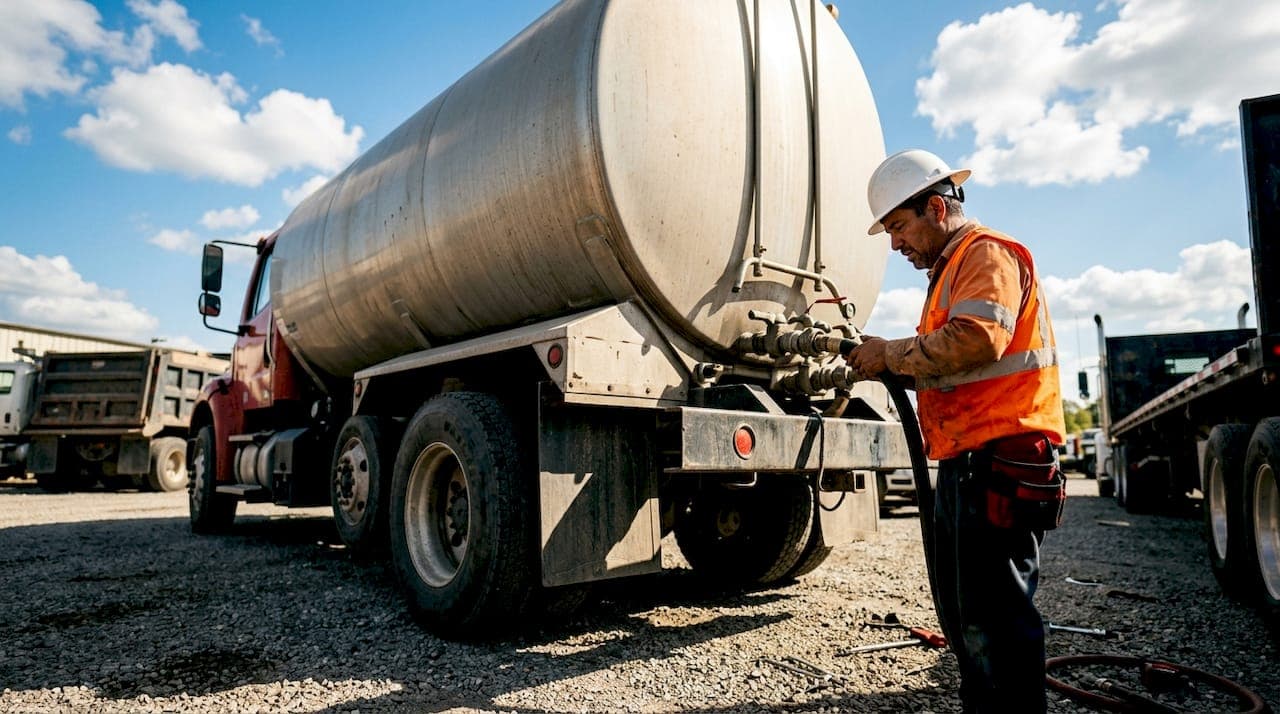
Water tanker trucks are defined as specialized heavy-duty vehicles fitted with large tanks, pump systems, and delivery equipment to transport and distribute water to locations without permanent water supply infrastructure. The role of water tanker trucks spans construction, agriculture, municipal services, and emergency response, making them one of the most versatile assets in any fleet. Approximately 42 million Americans rely on private wells or hauled water when municipal systems fall short. That figure alone signals how large the demand for mobile water delivery truly is. These trucks typically carry tanks ranging from a few thousand liters up to 30,000 liters, equipped with spray nozzles, metering devices, and pump systems that control flow and delivery with accuracy.
What are the main applications of water tanker trucks?
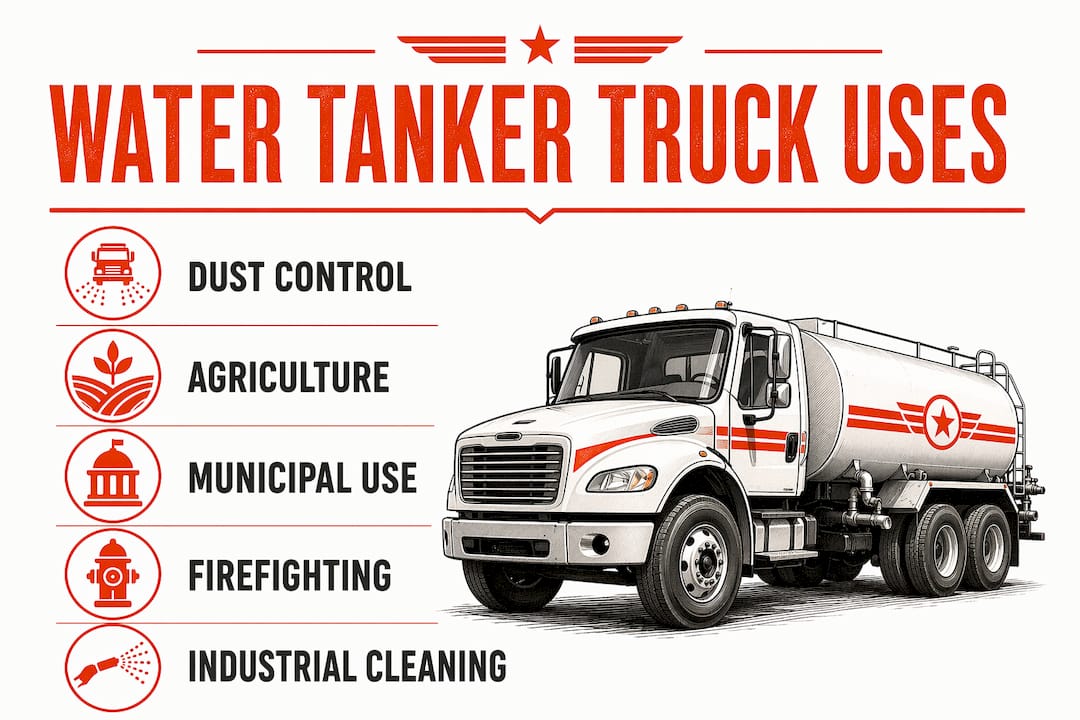
Water tanker trucks serve a wider range of industries than most fleet managers initially expect. Understanding each application helps you match the right truck specification to the right job, avoiding costly mismatches in capacity or equipment.
Dust suppression and soil compaction
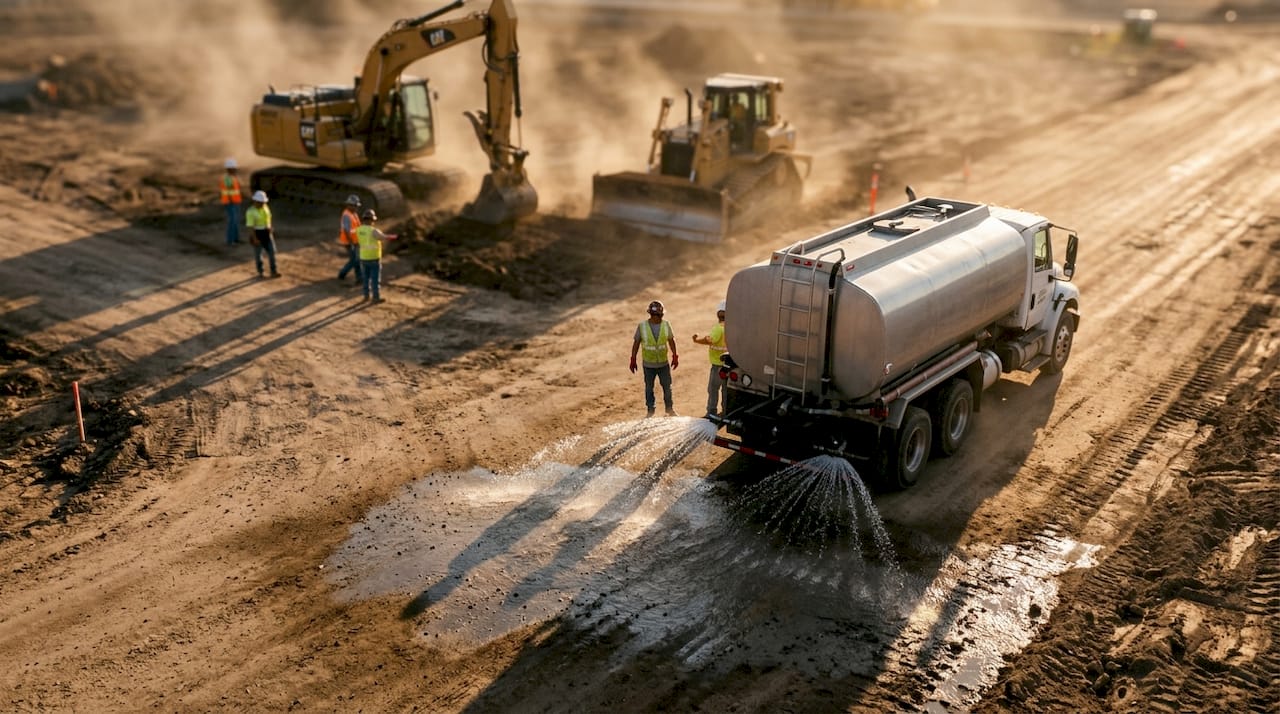
Construction and mining sites generate significant airborne dust that triggers environmental compliance requirements under regulations like the EPA's National Ambient Air Quality Standards. Fleet managers deploy water tankers for dust suppression and soil compaction as primary functions, avoiding the delays that come with extending permanent water lines to active job sites. A water truck makes multiple passes across unpaved haul roads, applying controlled water volumes to bind surface particles and stabilize the ground for heavy equipment traffic.
Agricultural and rural water delivery
Farms use water tanker trucks for irrigation, livestock watering, and drought management when fixed irrigation systems cannot reach all areas. During dry seasons, a single truck can service multiple paddocks or holding areas in one shift, reducing labor and equipment costs compared to temporary piping. Rural properties without reliable well capacity depend on scheduled water deliveries to maintain operations year-round.
Municipal services
Water tank trucks support municipal services including street cleaning, park irrigation, and emergency potable water supply. City departments use them to maintain public spaces without tapping into pressurized mains, which reduces strain on municipal water systems during peak demand. They also serve as rapid-response assets when water main breaks or natural disasters cut off supply to neighborhoods.
Firefighting and emergency response
Firefighting water trucks carry specialized equipment including foam systems, high-pressure monitors, and roof-mounted cannons for rapid emergency deployment. In rural or wildland areas where hydrant networks are sparse, these trucks are the primary water source for suppression crews. Their ability to refill from ponds, rivers, or portable tanks makes them operationally self-sufficient in remote terrain.
Industrial cleaning and cooling
Manufacturing facilities and processing plants use water trucks for equipment washdowns, cooling operations, and site cleanup. These applications often require non-potable water at high flow rates, which standard tankers handle efficiently without the cost of permanent plumbing infrastructure.
How do water tanker trucks work?
The mechanics behind water tanker trucks are straightforward, but the details determine operational reliability. Fleet managers who understand the key systems make better purchasing and maintenance decisions.
Tank materials and water type
Tank material selection is the first and most critical specification decision. Potable water tanks require food-grade stainless steel or NSF-certified coatings to prevent contamination. Non-potable tanks use chemical-resistant linings that handle sediment, minerals, and industrial runoff without corroding. Using the wrong tank material for the water type creates contamination risk and accelerates tank degradation, both of which generate significant liability.
Pump systems and delivery equipment
The pump system controls how water moves from the tank to the delivery point. Most trucks use centrifugal or gear pumps rated by flow volume in gallons per minute. Spray bars mounted at the rear or sides distribute water evenly across a wide path for dust suppression. Nozzles and metering devices allow operators to adjust flow rate and pressure for precise delivery, whether covering a haul road or filling a storage tank.
Filling and unloading procedures
Trucks fill from municipal hydrants, rivers, ponds, or dedicated fill stations depending on the job site location. Unloading happens through gravity feed, pump discharge, or pressurized spray depending on the application. Operators must follow site-specific protocols to prevent cross-contamination between potable and non-potable sources.
Pro Tip: Label all fill hoses and connections clearly by water type and inspect them before every fill cycle. Cross-contamination between potable and non-potable systems is the most common compliance failure in mixed-use fleets.
GPS tracking and logistics
GPS tracking and telemetry improve water usage efficiency by monitoring consumption, routing vehicles, and reducing waste. Fleet managers who integrate GPS data with dispatch software can schedule refills proactively, reduce empty miles, and maintain delivery windows that keep projects on schedule. Optimized routing and on-time delivery are not optional extras. Water delivery sits on the critical path of most construction and agricultural projects, and a missed delivery window translates directly into idle crews and equipment.
What are the operational benefits and cost considerations?
Fleet managers evaluating water tanker trucks face a core decision: own the asset or contract the service. Both paths have clear financial logic depending on project scale and frequency.
Ownership versus contracted service
- Ownership gives you full control over scheduling, availability, and truck specification. It suits operations with consistent, high-volume water demand across multiple sites year-round.
- Contracted hauling eliminates maintenance costs, insurance burdens, and idle asset depreciation. Hiring professional water hauling services reduces costs compared to ownership by removing idle assets and maintenance burdens, making it the better choice for seasonal or project-specific demand.
- Revenue potential for owned fleets is significant. A small fleet of five trucks can generate $500,000 to $1.5 million annually with net margins of 15–25%, reflecting the stable, recession-resistant nature of water hauling.
- Fuel and route efficiency directly affect margin. Trucks running inefficient routes burn excess fuel and add driver hours, compressing the margins that make water hauling profitable.
- Regulatory compliance adds a cost layer that fleet managers must budget for. GPS tracking mandates, environmental runoff restrictions, and water quality permits vary by state and municipality, and non-compliance generates fines that erode profitability quickly.
Scheduling and capacity planning
Seasonal demand spikes in agriculture and construction require advance capacity planning. A fleet that runs at full utilization in summer but sits idle in winter needs a different financial model than one serving year-round municipal contracts. Match truck count and tank capacity to your peak demand period, then use contracted services to cover overflow rather than buying excess capacity.
Pro Tip: Schedule preventive maintenance during your lowest-demand months. Downtime during peak season costs far more in lost revenue and project penalties than the maintenance itself.
Speed and reliability as competitive advantages
Water supply is a strategic tool that provides operational autonomy and prevents costly project delays where water is a critical path variable. The core value of water delivery trucks is not volume alone. Speed and reliability of delivery keep remote projects on schedule despite the absence of infrastructure. Fleet managers who treat water tankers as strategic assets rather than backup equipment build more reliable project timelines and stronger client relationships.
What challenges affect the deployment of water tanker trucks?
Every operational advantage comes with a corresponding challenge. Knowing these risks in advance lets you build mitigation into your fleet plan rather than reacting to problems mid-project.
- Water quality management: Contamination between potable and non-potable loads is the most serious risk. Dedicated trucks for each water type, combined with documented cleaning protocols, are the standard mitigation approach.
- Logistical coordination: Scheduling multiple trucks across multiple sites requires dispatch software and clear communication protocols. Without coordination, trucks queue at fill stations or arrive at sites with empty tanks.
- Permit and regulatory requirements: Many jurisdictions require permits for drawing water from natural sources, operating on public roads above certain gross vehicle weights, and discharging water near storm drains. Research local requirements before committing to a route or fill source.
- Maintenance burden: Pump seals, hose fittings, and tank linings degrade faster than most fleet managers expect, especially in high-cycle operations. Build a maintenance reserve into your operating budget from day one.
- Environmental concerns: Runoff from dust suppression operations can carry sediment and chemicals into storm drains. Use metered delivery systems and apply only the volume needed to meet compliance thresholds, not more.
- Tank size and refill logistics: Larger tanks reduce refill frequency but add gross vehicle weight, which limits road access on some job sites. Smaller tanks offer better site access but require more refill cycles, increasing fuel and labor costs.
Water tankers as strategic assets, not backup equipment
Water tanker trucks are strategic assets when fleet managers treat them that way. Most operations I have seen underuse these trucks by deploying them reactively, only when a site runs dry or a complaint arrives. That approach guarantees delays and cost overruns.
The smarter approach is to map water demand into the project schedule from day one. Identify every phase where water is a critical input, whether for concrete curing, dust suppression, or soil compaction, and schedule truck availability the same way you schedule excavators or concrete pumps. Water is not a secondary resource on most job sites. It is a primary one.
The ownership versus contracting question deserves more nuance than most fleet guides provide. Owning trucks makes sense when you have predictable, high-frequency demand and the maintenance infrastructure to support the fleet. Contracting makes sense for seasonal peaks, remote projects, or when your core business is not water hauling. Many experienced fleet managers use a hybrid model: own a base fleet for core demand and contract additional capacity for peak periods.
Technology adoption separates efficient fleets from expensive ones. GPS telemetry, automated dispatch, and consumption monitoring are not luxuries. They are the tools that let a five-truck operation compete with larger fleets by running tighter routes and fewer empty miles. Invest in the technology before you need it, not after a costly quarter forces the decision.
— Dave
Water tanker trucks available at Sostruckforsale
Fleet managers ready to add water hauling capacity have a direct path to verified listings at Sostruckforsale. The platform lists commercial and industrial heavy equipment for sale, including water tanker trucks suited to construction, agricultural, and municipal applications.
Sostruckforsale connects buyers with sellers across the United States, giving fleet managers access to a wide selection of trucks at various capacities and specifications. Whether you need a single unit to support a project site or multiple trucks to build a dedicated water hauling fleet, the listings cover both ends of the demand spectrum. Browse current inventory and contact sellers directly to match equipment to your operational requirements.
Key Takeaways
Water tanker trucks are most effective when treated as planned operational assets rather than reactive backup equipment, with tank specification, GPS logistics, and maintenance schedules built into the fleet plan from the start.
| Point | Details |
|---|---|
| Tank material determines water type | Potable water requires food-grade stainless steel; non-potable needs chemical-resistant linings. |
| GPS and routing drive efficiency | Telemetry and optimized dispatch reduce empty miles and keep deliveries on the critical path. |
| Own versus contract based on demand | High-frequency operations favor ownership; seasonal or project-specific demand favors contracted hauling. |
| Revenue potential is strong | A five-truck fleet can generate $500,000 to $1.5 million annually with 15–25% net margins. |
| Compliance is a budget line item | Permits, environmental restrictions, and GPS mandates add costs that must be planned for, not absorbed. |
FAQ
What is the role of water tanker trucks on construction sites?
Water tanker trucks supply water for dust suppression, soil compaction, and concrete operations on construction sites where permanent water mains are unavailable. They keep projects on schedule by eliminating dependence on fixed infrastructure.
How do water tanker trucks work mechanically?
Water tanker trucks use onboard pump systems to draw water from a fill source and deliver it through spray bars, nozzles, or hose connections at controlled flow rates. Tank capacity, pump rating, and delivery equipment vary by application.
What is the difference between potable and non-potable water tankers?
Potable water tankers use food-grade stainless steel or NSF-certified tank coatings to meet drinking water safety standards. Non-potable tankers use chemical-resistant linings suited to industrial, agricultural, or dust suppression water that does not require drinking water quality.
Is it better to own or hire water tanker trucks?
Ownership suits operations with consistent, year-round water demand and in-house maintenance capacity. Hiring professional services reduces costs for seasonal or project-specific demand by eliminating idle assets and maintenance overhead.
What industries rely most on water tanker truck applications?
Construction, mining, agriculture, municipal services, and emergency response are the primary industries. Each sector depends on water tankers to deliver supply reliably to locations where permanent water infrastructure is absent or insufficient.