
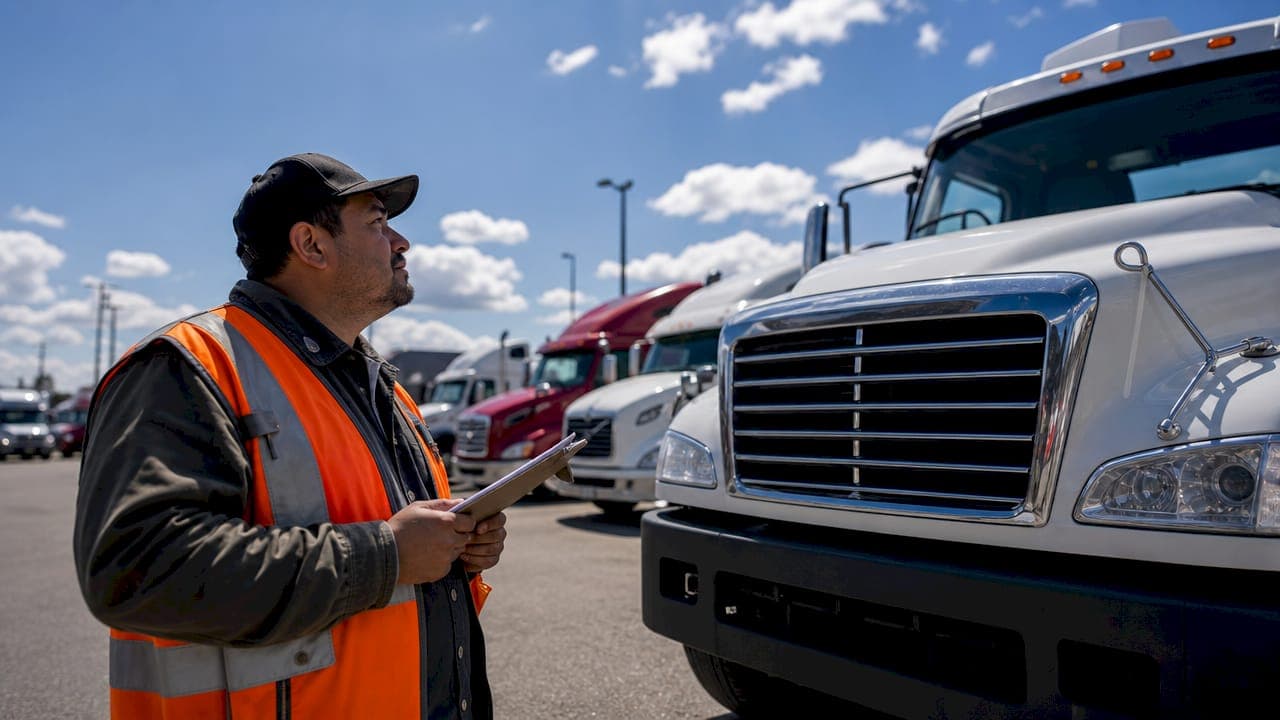
A truck auction is a competitive bidding event where commercial and industrial vehicles are sold to the highest bidder, typically at prices below standard retail. These events run in both live and online formats, covering everything from fleet liquidations and government surplus sales to wholesale dealer inventory. Buyers gain access to a wide range of semi trucks, heavy duty trucks, and specialized equipment in a single marketplace. Understanding what is a truck auction explained in full means knowing the process, the risks, and the real financial advantages before you place your first bid.
What is a truck auction and how does it work?
A truck auction is a structured procurement channel where sellers offer vehicles through open competitive bidding rather than fixed pricing. The industry term for this format is a "public vehicle auction" or "commercial vehicle auction," and it operates under standardized terms set by the auction house. Buyers register, inspect available inventory, then bid against other registered participants until the highest bid wins.
Auction formats split into two main types. Live auctions take place at a physical yard or facility, where buyers walk the lot and bid in real time. Online auctions run through digital platforms, allowing buyers to bid remotely using proxy bids or live streaming. Both formats follow the same core process, though online bidding requires more preparation since you cannot physically inspect the truck on auction day.
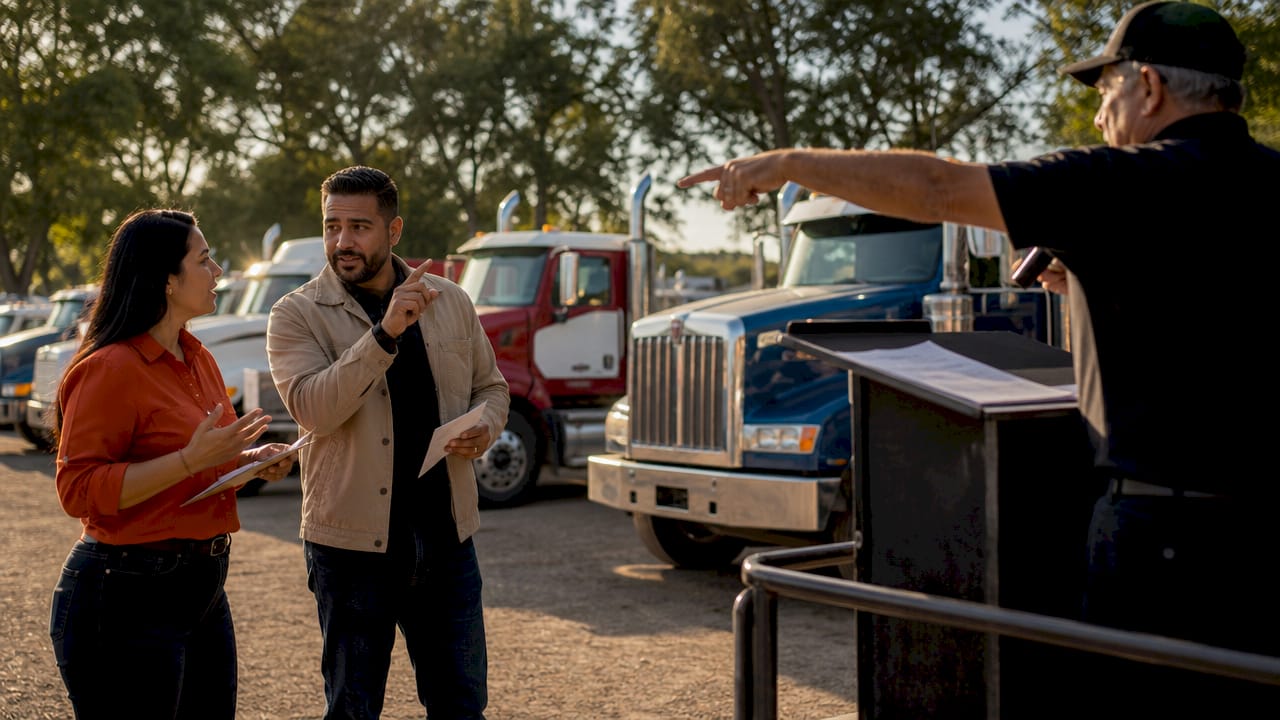
The seller pool at truck auctions includes fleet operators liquidating aging assets, government agencies disposing of surplus vehicles, and dealers moving wholesale inventory. Each seller type brings different documentation standards and vehicle conditions, which directly affects how you approach due diligence.
How does the truck auction process work step by step?
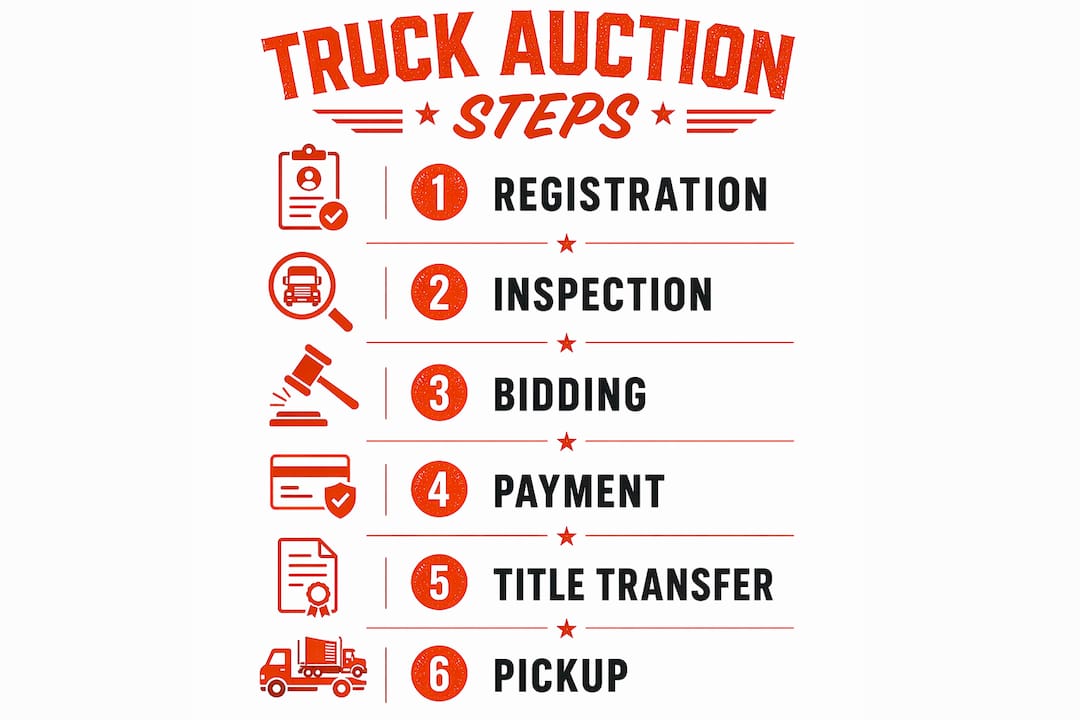
The auction process follows a predictable sequence. Knowing each stage removes the uncertainty that causes first-time buyers to overbid or miss critical steps.
-
Registration and verification. Every auction house requires buyers to register before bidding. You submit identification, proof of business or personal address, and often a refundable deposit. Some auctions require a dealer license for wholesale-only events.
-
Preview and inspection period. Reputable auction houses schedule a preview day before the sale. This is your window to physically examine trucks, check VINs, and review condition reports. Pre-purchase professional diagnostics using tools like JPRO or Cummins INSITE, costing $200–$400, can expose hidden mechanical defects before you commit. That cost is small compared to a surprise engine rebuild after winning a bid.
-
Bidding. Live auctions use an auctioneer who calls bids in real time. Online auctions use a countdown timer with proxy bidding. Set your maximum bid before the event starts and do not adjust it under competitive pressure.
-
Winning and payment. After a successful bid, payment deadlines are 24–48 hours post-auction. Missing that window results in penalties or forfeiture of your deposit. Accepted payment methods vary by auction house but commonly include wire transfer, certified check, and sometimes financing through approved lenders.
-
Title transfer and documentation. Standard commercial auctions transfer a clean title at the time of payment. Government surplus sales are different. Government surplus auctions provide certificates of origin rather than standard titles, requiring additional DMV processing time that can delay registration by several weeks. Plan your deployment timeline accordingly.
-
Vehicle removal and transport. Most auction trucks are non-roadworthy at the time of sale. Auction trucks lack current licensing and insurance, so driving off the lot is often illegal without proper clearance. Arrange flatbed towing or specialized transport before you win the bid, not after.
Pro Tip: Book your transport carrier before auction day. Auction yards charge daily storage fees, and delays in pickup add costs that eat into your savings.
What are the benefits of buying trucks at auction?
Truck auctions deliver several concrete advantages over buying from a dealership or placing a new OEM order.
- Cost savings through avoided depreciation. Buying used auction trucks avoids the 20–30% depreciation that new vehicles absorb in the first year. That preserved capital goes directly back into operations.
- Market transparency. Open bidding publishes prices in real time, giving buyers objective market value data that private negotiations never provide. You see exactly what other buyers are willing to pay for the same asset.
- Faster acquisition timelines. Auctions compress acquisition timelines compared to new OEM orders, which can carry lead times of several months. A winning bid can put a truck in your yard within days.
- Access to bulk and rare inventory. Fleet liquidations and government surplus sales release large volumes of trucks simultaneously. Buyers can acquire multiple units in a single event, which is impossible through retail channels.
- Standardized transaction terms. Auction houses publish their terms and conditions before the sale. There is no negotiation theater, no back-and-forth on price, and no hidden dealer fees beyond the published buyer's premium.
- Price benchmarking. Watching live bidding on comparable trucks gives you real data on current market values. That intelligence is useful even when you do not win a specific lot.
The primary advantage of truck auctions is market transparency rather than just price savings. Procurement teams that use auction data to benchmark asset values make better buying decisions across all channels, not just at auction.
What are the risks of buying trucks at auction?
Truck auctions carry real risks. Buyers who treat them as a guaranteed bargain channel without preparation consistently overpay or acquire trucks with expensive hidden problems.
- As-is sales with no warranty. Auction trucks are sold without any warranty or return option. The condition report is the only protection you have, and condition reports vary widely in accuracy.
- Hidden mechanical issues. Cosmetic condition does not reflect mechanical health. A truck with clean paint can carry a failing transmission or a compromised frame. Sellers unwilling to allow pre-auction inspections are a red flag.
- Title and documentation delays. As noted, government surplus sales issue certificates of origin rather than standard titles. That delay can prevent you from registering and deploying the truck for weeks.
- Logistics costs. Transport, storage fees, and insurance add up quickly. Buyers who forget to budget for these costs often find their "deal" costs more than a retail purchase.
- Buyer's premiums and fees. Most auction houses charge a buyer's premium of 5–15% on top of the winning bid. Add applicable taxes, documentation fees, and transport, and your total acquisition cost rises significantly above the hammer price.
- Overbidding under pressure. Live auction environments create competitive pressure. Buyers without a firm ceiling bid more than they planned and end up underwater on the purchase.
Pro Tip: Build a total cost sheet before every auction. Include the buyer's premium, estimated repairs, transport, registration fees, and insurance. If the total exceeds local retail value, walk away.
Accounting for all acquisition costs is the single most effective way to prevent overpaying at auction. Treat the hammer price as just one line item in a longer budget.
Where can buyers find reputable truck auctions?
Reputable truck auctions are identifiable by specific signals. Knowing where to look and what to verify protects you from poorly run events with limited recourse.
Types of truck auctions to consider
| Auction type | Typical inventory | Key consideration |
|---|---|---|
| Fleet liquidation auctions | High-mileage commercial trucks from single operators | Consistent maintenance records often available |
| Government surplus auctions | Municipal and federal vehicles | Certificate of origin instead of standard title |
| Wholesale dealer auctions | Mixed commercial inventory | May require dealer license for access |
| Online auction platforms | Nationwide inventory, all categories | Inspection must happen before auction day |
| Live yard auctions | Regional inventory, heavy equipment | Physical inspection possible on preview day |
What to look for in a reputable auction house
- A valid auctioneer license issued by the state where the auction operates
- Published terms and conditions available before registration
- A scheduled preview or inspection period for every sale
- Transparent fee disclosure, including buyer's premium and documentation costs
- A verifiable track record of completed sales and accessible seller information
Auction calendars are published on auction house websites and through industry associations. Networking with fleet managers, mechanics, and transport brokers gives you early notice of upcoming sales before they are widely advertised. Sostruckforsale lists commercial truck inventory that buyers can review and vet before committing to any purchase decision.
Pro Tip: Attend one auction as an observer before you bid. Watch how the auctioneer handles disputes, how condition reports are presented, and how quickly payment and pickup are processed. That single visit teaches more than any guide.
Key Takeaways
Truck auctions are a disciplined procurement channel that rewards preparation, budgeting, and mechanical due diligence over opportunistic bidding.
| Point | Details |
|---|---|
| Auction process has six stages | Registration, inspection, bidding, payment, title transfer, and transport must all be planned in advance. |
| Payment deadlines are strict | Most auctions require full payment within 24–48 hours of winning or the bid is forfeited. |
| Market transparency is the top benefit | Open bidding publishes real-time prices, giving buyers objective data to benchmark asset values. |
| Total cost exceeds the hammer price | Add buyer's premium, transport, repairs, and registration fees to calculate true acquisition cost. |
| Government surplus titles take longer | Certificates of origin require additional DMV processing, delaying registration by several weeks. |
My honest take on truck auctions after years in the market
Buyers consistently underestimate how much preparation separates a profitable auction purchase from an expensive mistake. The trucks are real, the savings are real, but neither happens by accident.
The single biggest error I see is treating the hammer price as the final number. A buyer wins a Class 8 semi at $28,000 and feels like they got a deal. Then the buyer's premium adds $3,500, transport costs $1,200, a brake system repair runs $4,000, and registration fees add another $600. The total lands at $37,300. The same truck sat at a dealer lot for $39,500. The "deal" was real but thin, and it required weeks of logistics work to close.
Auctions reward buyers who treat them as a procurement process, not a treasure hunt. Set your ceiling before you walk in. Get a diagnostic inspection done during preview. Book your transport carrier before the auction closes. Know your title situation before you bid on government surplus lots.
The market transparency that open bidding provides is genuinely valuable, even when you do not win. Watching five buyers bid a specific truck model to $31,000 tells you exactly what that asset is worth in the current market. That data is worth more than any dealer quote.
Auctions are a serious procurement channel for serious buyers. Approach them that way and they deliver. Approach them casually and they will cost you.
— Dave
Ready to browse commercial trucks before you bid?
Sostruckforsale gives buyers a direct view of commercial and industrial truck inventory before committing to any auction or purchase. Reviewing detailed listings, specifications, and pricing across semi trucks and heavy duty trucks helps you build the market knowledge that makes auction bidding more confident and more precise.
Whether you are preparing for your first auction or expanding a fleet, Sostruckforsale connects you with verified listings across multiple truck categories. Browse current inventory, compare specifications, and arrive at your next auction knowing exactly what a fair price looks like.
FAQ
What is a truck auction?
A truck auction is a competitive bidding event where commercial and industrial vehicles are sold to the highest bidder, in either live or online formats, typically at prices below standard retail.
How does payment work after winning a truck auction?
Most auction houses require full payment within 24–48 hours of the winning bid. Missing that deadline results in penalties or forfeiture of your deposit.
Are auction trucks sold with a warranty?
Auction trucks are sold as-is with no warranty. Buyers are responsible for all repairs and mechanical issues discovered after purchase.
What is a buyer's premium at a truck auction?
A buyer's premium is an additional fee charged by the auction house on top of the winning bid, commonly ranging from 5–15%. It must be included in your total acquisition budget.
Can I drive an auction truck home after winning?
Most auction trucks lack current registration and insurance, making it illegal to drive them off the lot without proper clearance. Buyers must arrange flatbed towing or specialized transport in advance.