

Truck fleet disposal is defined as the structured process of retiring and offloading commercial trucks from a company fleet, typically through selling, scrapping, or a combination of both. The industry term for this process is "fleet disposal," and it differs meaningfully from fleet remarketing in both timeline and financial priority. Fleet disposal prioritizes moving vehicles out of service quickly and compliantly, rather than extracting maximum resale value. For fleet managers and business owners, understanding this distinction is the first step toward building a disposal process that controls costs, meets legal requirements, and keeps operations running without unnecessary delays.
What is a truck fleet disposal?
Truck fleet disposal is the process of removing trucks from active service once they are no longer operationally useful, cost-effective to maintain, or required by the business. The goal is a fast, compliant handoff, not a drawn-out sales campaign. Disposal classifies vehicles into disposition categories: sellable, scrap, or other, and then moves each unit through the appropriate channel with the right paperwork.
Fleet managers use disposal when replacement timelines are tight, maintenance costs have outpaced vehicle value, or a contract has ended and trucks need to leave the yard quickly. Speed and compliance drive every decision in this process. Maximizing the sale price is secondary.
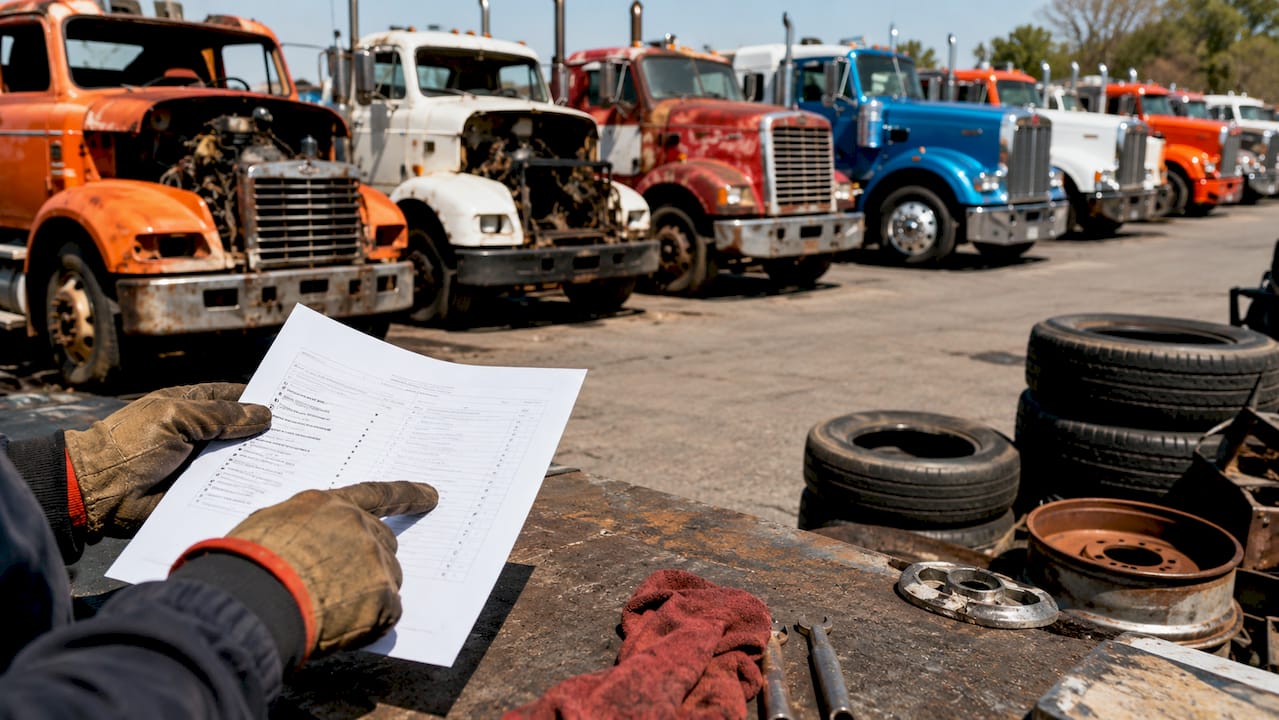
The U.S. federal government demonstrates this at scale. The GSA auctions over 30,000 vehicles annually, including medium and heavy trucks, through public sales. That volume reflects a disposal-first mindset: move units efficiently, document the transfer, and clear the liability.
What are the common methods for disposing of fleet trucks?
Fleet managers have several disposal channels available, each with distinct trade-offs in speed, return, and administrative effort.
- Public auction: Fast, transparent, and accessible to a wide buyer pool. Trucks sell quickly, but prices are market-driven and unpredictable. Best for high-volume disposal where speed matters more than price.
- Private auction or dealer sale: Offers more control over pricing and buyer qualification. Takes longer than public auction but typically yields a better return per unit.
- Online listing platforms: Listing trucks on commercial vehicle marketplaces reaches buyers nationally. Platforms like Sostruckforsale connect sellers of semi trucks and heavy duty trucks with buyers actively searching for specific equipment.
- Scrapping or junking: Used when trucks are beyond economical repair or have no resale market. Requires title surrender and compliance with state and federal regulations.
- Fleet liquidation: Selling multiple units in bulk, often to a single buyer or dealer. Faster than individual sales but typically at a discount to market value.
Each method suits a different scenario. A fleet with 20 aging semis nearing the end of their service life may benefit from a bulk liquidation deal. A single late-model heavy duty truck with low hours is better suited to an online listing or private sale, where the right buyer will pay closer to market value.
Pro Tip: Segment your trucks by condition and age before choosing a disposal channel. Mixing high-value and low-value units in the same sale often pulls down the return on your better equipment.
How does truck fleet disposal differ from fleet vehicle remarketing?
Fleet remarketing is a structured process focused on maximizing residual value through reconditioning, targeted marketing, and multi-channel sales. Remarketing averages 18 days with reconditioning included, while disposal can move vehicles in a matter of days. That gap in timeline reflects a fundamental difference in priorities.
The table below outlines the key operational differences between disposal and remarketing.
| Factor | Fleet disposal | Fleet remarketing |
|---|---|---|
| Primary goal | Fast offload, compliance | Maximum residual value |
| Typical timeline | Days to one week | 18+ days with reconditioning |
| Effort required | Low to moderate | High (prep, marketing, negotiation) |
| Payment timing | Fast, often at point of sale | Delayed until sale completes |
| Best suited for | End-of-life trucks, urgent offload | Late-model trucks with resale value |
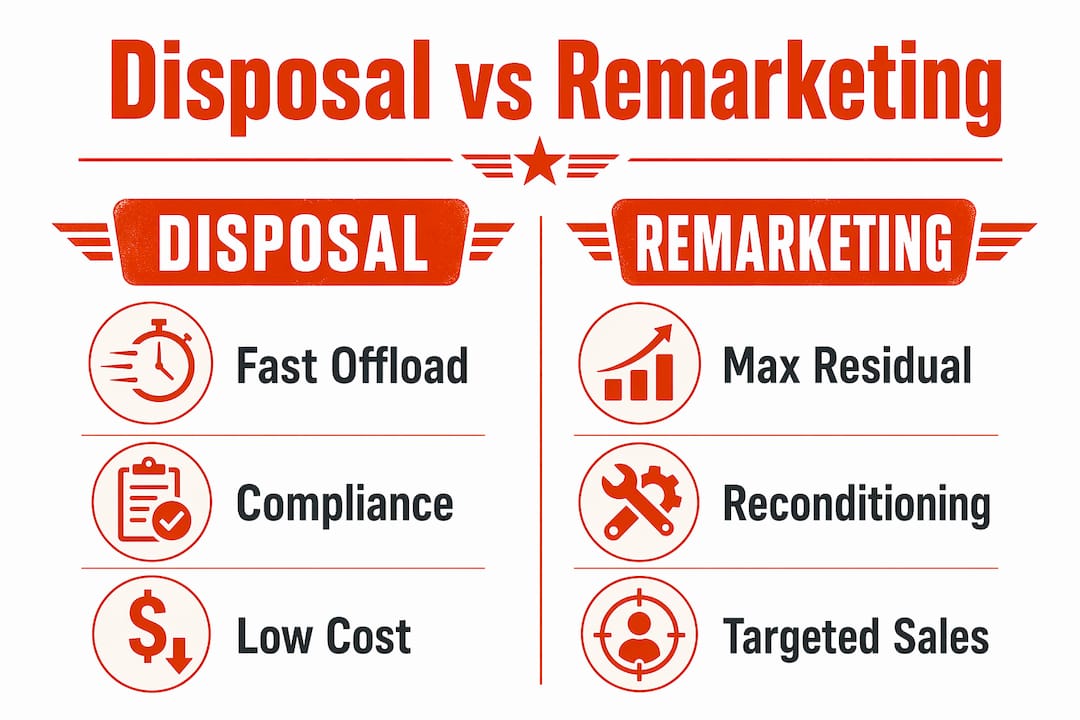
Disposal targets fast offload to reduce carrying costs like insurance, storage, and registration. Remarketing targets the highest return over a longer window. Fleet managers choose between them based on budget pressure, replacement timelines, and the condition of the vehicles being retired.
A practical rule: if a truck's repair costs exceed 50% of its market value, disposal is the right call. If the truck is late-model with documented maintenance history, remarketing will recover more money. Multi-channel remarketing trades longer sales timelines for higher residual value. Disposal trades value for speed to meet cash flow or operational needs.
What legal and environmental requirements affect truck fleet disposal?
Legal and environmental compliance is not optional in truck fleet disposal. Skipping documentation steps or mishandling fluids creates liability that outlasts the sale.
Ownership and title requirements
Scrapping a truck requires surrendering the Certificate of Title. Under Massachusetts vehicle junking law, for example, the title must be surrendered for cancellation within 10 days of the vehicle being junked, and the VIN must remain attached to the vehicle until destruction. Most states follow similar frameworks. A junked vehicle cannot be re-registered, so title cancellation is a permanent, legally binding step.
A Certificate of Destruction is issued by the scrapper or recycler and serves as your proof that the vehicle was properly disposed of. Keep this document. It protects you if questions arise later about the vehicle's status.
Environmental handling of fluids
Used motor oil contains toxic chemicals and heavy metals that require EPA-compliant recycling. Dumping or improper disposal triggers federal penalties. The EPA requires that used oil be re-refined into new oil, processed into fuel oils, or delivered to a certified collection facility. This applies to every truck in your fleet, not just those being scrapped.
Other fluids requiring compliant handling include coolant, transmission fluid, brake fluid, and diesel exhaust fluid. Each has its own disposal pathway under state and federal environmental rules.
Pro Tip: Build a pre-disposal compliance checklist that covers title surrender, Certificate of Destruction, fluid drain and certified disposal, license plate return, and insurance cancellation. Running through this list for every unit prevents the paperwork bottlenecks that delay final disposal.
Common compliance tasks before disposal:
- Confirm clear title and no outstanding liens
- Surrender title to the appropriate state DMV or recycler
- Obtain and file the Certificate of Destruction
- Drain and certify disposal of all fluids per EPA guidelines
- Remove and return license plates
- Cancel insurance and registration
- Document VIN removal or destruction
What steps should fleet managers take to optimize the disposal process?
A structured approach to truck fleet disposal reduces cost, prevents compliance gaps, and speeds up the time from decision to completed sale.
-
Assess and classify your fleet. Pull maintenance records and mileage for every unit under review. Classify each vehicle as sellable, scrap, or repair-and-hold. This step prevents wasting time and money on units that will never recover their preparation costs.
-
Get realistic repair estimates. Repair cost forecasts materially affect whether a truck is better scrapped or prepared for resale. A heavy duty truck needing a new transmission may cost more to fix than it will sell for. Get written estimates before committing to any reconditioning spend.
-
Align disposal timing with your replacement schedule. Every day a retired truck sits on your lot costs money in insurance, storage, and registration. Disposal timing directly impacts carrying costs. Match your disposal timeline to your incoming replacement delivery dates so you are not paying for two trucks doing one job.
-
Complete all compliance paperwork before the truck leaves your yard. Title transfers, fluid disposal certificates, and VIN documentation should be ready before the buyer or scrapper arrives. Compliance bottlenecks are almost always paperwork-related, not sale-related.
-
Choose your disposal channel based on unit condition and urgency. High-value late-model trucks go to listing platforms or private buyers. End-of-life units go to scrap. Bulk lots go to liquidation buyers. Matching the channel to the unit avoids leaving money on the table or wasting time on unsellable inventory.
Pro Tip: Do not overlook time-to-sale when calculating disposal costs. A truck sitting unsold for 60 days while you wait for a better offer often costs more in carrying expenses than the price difference would have recovered.
Key Takeaways
Truck fleet disposal is the fastest, most compliant way to retire commercial trucks, and the right process depends on vehicle condition, legal requirements, and operational timing.
| Point | Details |
|---|---|
| Disposal vs. remarketing | Disposal prioritizes speed; remarketing prioritizes maximum return over a longer timeline. |
| Classify before you sell | Segment trucks as sellable, scrap, or repair-and-hold before choosing a disposal channel. |
| Compliance is non-negotiable | Title surrender, Certificate of Destruction, and EPA-compliant fluid disposal are required steps. |
| Carrying costs add up | Every day a retired truck sits unsold adds insurance, storage, and registration expense. |
| Match channel to condition | Late-model trucks belong on listing platforms; end-of-life units go straight to scrap. |
The disposal decision most fleet managers get wrong
Fleet managers tend to treat disposal as a last resort rather than a planned phase of truck fleet management. By the time a truck is flagged for disposal, it has often been sitting in a maintenance queue for months, accumulating costs with no return. The real mistake is not the disposal method. It is the delay in making the call.
The most effective disposal programs I have seen treat retirement as a scheduled event, not a reactive one. Fleet managers who set mileage or age thresholds in advance move trucks out before they become a liability. Those who wait for a breakdown or a failed inspection end up with a scrap unit they thought was a resale unit, and the financial gap between those two outcomes is significant.
Compliance is the other area where I see consistent problems. Title paperwork and fluid disposal certificates are not complicated, but they get skipped when teams are moving fast. A single missing Certificate of Destruction can create a legal headache years after the truck is gone. Build the checklist into your process and treat it as non-negotiable, regardless of how urgent the disposal feels.
The trend worth watching is the shift toward online listing platforms for commercial trucks. Buyers are searching nationally now, and a well-listed heavy duty truck on the right platform reaches a far larger audience than a local auction ever did. That changes the math on remarketing vs. disposal for mid-life units with real resale value.
— Dave
Listing your trucks on Sostruckforsale
Fleet managers ready to move trucks quickly have a direct path through Sostruckforsale, a commercial vehicle listing platform built for heavy equipment sales.
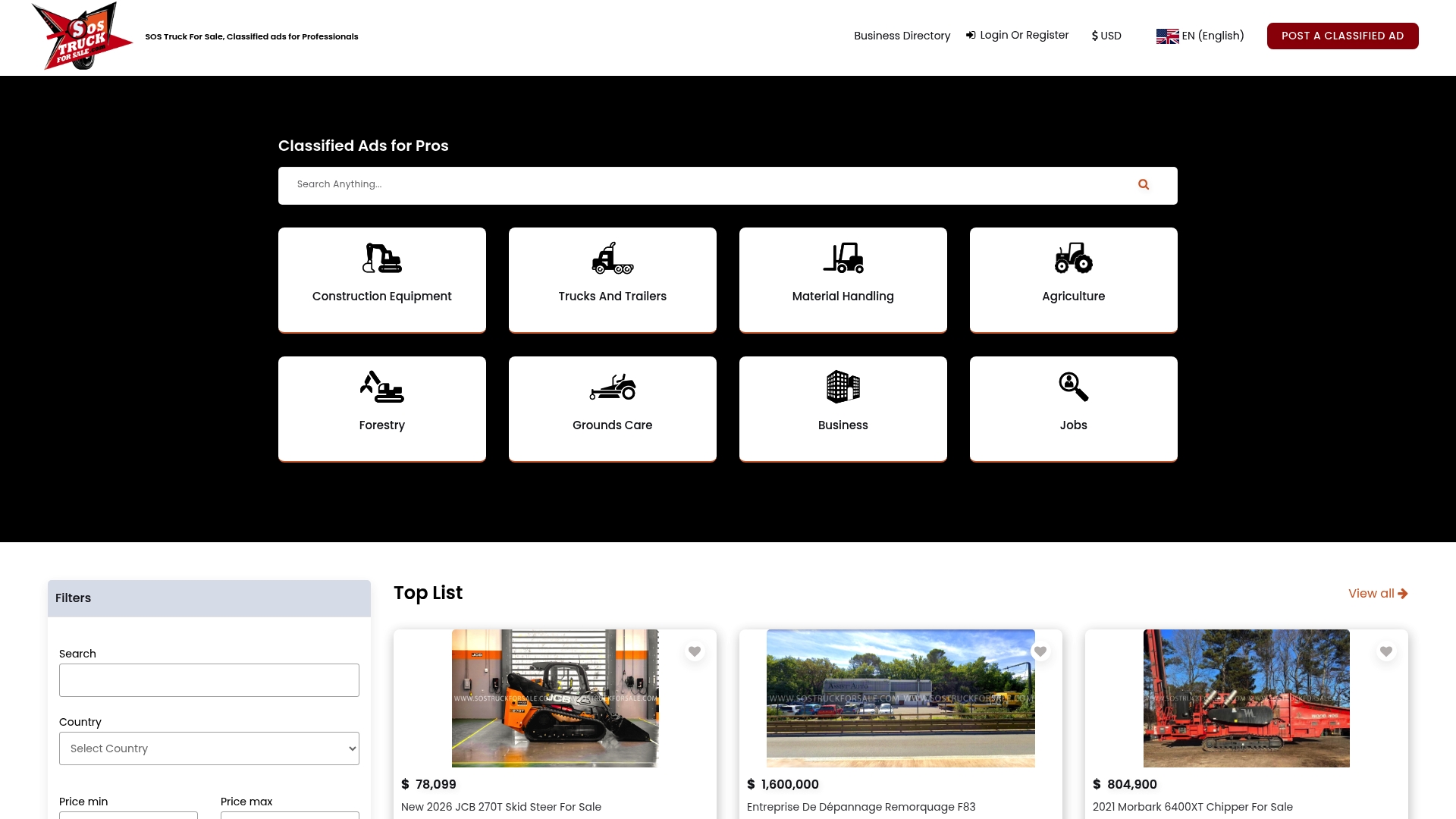
Sostruckforsale connects sellers of semi trucks, heavy duty trucks, and commercial equipment with buyers searching nationally. Listings reach an active buyer pool without the overhead of auction fees or dealer markups. Whether you are offloading a single unit or clearing a full fleet, the platform gives your trucks visibility where buyers are already looking. Post your inventory, set your price, and connect directly with qualified buyers ready to move.
FAQ
What is truck fleet disposal?
Truck fleet disposal is the process of retiring commercial trucks from a company fleet through selling, scrapping, or liquidation, with a focus on speed and compliance over maximum resale value.
How long does the truck disposal process take?
Disposal can move vehicles in a matter of days, compared to fleet remarketing, which averages 18 days or more when reconditioning is included.
What documents are required to scrap a fleet truck?
Most states require title surrender for cancellation and a Certificate of Destruction from the scrapper. Under Massachusetts law, the title must be surrendered within 10 days of junking and the VIN must remain on the vehicle until destruction.
How should used motor oil be handled during fleet disposal?
The EPA requires used motor oil to be re-refined, processed into fuel oils, or delivered to a certified collection facility. Improper disposal of used oil triggers federal penalties.
When should a fleet manager choose disposal over remarketing?
Choose disposal when trucks are end-of-life, repair costs exceed resale value, or operational timelines require fast offload. Choose remarketing when trucks are late-model with documented maintenance history and time allows for a structured sale.