

A cab-over engine (COE) truck places the cab directly above or forward of the front axle, creating a vertical "flat-face" front where the driver sits elevated over the drivetrain rather than behind a long hood. You'll hear these called COE, cab forward, flat-face, flat-nose, or forward control depending on the region. The main variants to recognize at a glance:
- Light-duty COE: Cab-chassis and cutaway vans, typically under 19,500 lb GVWR, used for parcel delivery and utility bodies
- Medium-duty COE: The most common new-market option in the U.S. today, 19,501–33,000 lb GVWR, used for beverage, refuse, and vocational work
- Heavy-duty COE: Class 8 tractors, largely absent from the new U.S. highway market but still available used and in vocational configurations
- Cab-over-axle (COA): American style, cab sits directly above the front axle, requires a climb up behind the wheel to enter
- Cab-forward of axle: European/Asian style, cab is forward of the axle, allowing straight-on entry with handrails
- Tilt-cab: Cab tilts forward hydraulically for engine access; the dominant design on modern COEs
- Fixed cab: No tilt; engine access through panels or from below; less common on newer models
- Cutaway/cab-chassis: Cab and front frame only, body fitted separately; popular for ambulances, box trucks, and specialty vehicles
Buying verdict: A COE is usually the right tool for urban routes, vocational applications, and any job where a tight turning radius and compact footprint matter more than long-haul ride comfort.
Table of Contents
- What are the main types of cab over trucks?
- How does cab-over design affect performance and specs?
- Cab over vs. conventional trucks: where each one wins
- Are cab over trucks safe for drivers?
- Why did cab over trucks decline in the U.S. but stay popular overseas?
- Which U.S. industries still rely on cab over trucks?
- What cab over trucks can you actually buy in the U.S. today?
- How to choose the right cab over truck: a practical checklist
- Key Takeaways
- The case for COEs that most buyers miss
- Find your next cab over truck on Sostruckforsale
- Useful sources for further research
What are the main types of cab over trucks?
Cab-over designs split cleanly into categories by duty class, cab position, and configuration. Each combination serves a distinct job profile.
-
Light-duty COE (Class 3–5, up to ~19,500 lb GVWR): These are mostly cutaway cab-chassis units built on van platforms. A delivery company running a parcel route in a dense city grid fits here. The body is fitted after purchase, so the same chassis can become a box truck, ambulance, or utility rig.
-
Medium-duty COE (Class 6–7, 19,501–33,000 lb GVWR): The most practical entry point for U.S. buyers today. Beverage distributors, refuse haulers, and urban freight operators rely on this class. New inventory from global and regional vocational builders is still available, making it the most accessible COE category in the current market.
-
Heavy-duty COE tractor (Class 8, over 33,000 lb GVWR): Once common on U.S. highways in the 1970s, these are now rare as new vehicles in the domestic market. They remain available used and continue in production for export markets where length laws still favor the COE format.
-
Cab-over-axle (COA) — American style: The cab sits directly above the front axle. Entry requires climbing up behind the front wheel and moving forward into the cab. This is the configuration most associated with classic U.S. COE tractors and many current vocational models.
-
Cab-forward of axle — European/Asian style: The cab is positioned slightly forward of the front axle, allowing drivers to enter straight-on using handrails on both sides. This design is standard across Europe, Japan, and China, and is increasingly seen in U.S. medium-duty imports.
-
Tilt-cab COE: The entire cab tilts forward on a hinge, exposing the engine for service. Modern hydraulic systems make this fast and safe. Most new medium-duty and heavy-duty COEs use this configuration.
-
Fixed-cab COE: The cab does not tilt. Engine access is through side panels or from underneath. Older models and some light-duty cutaways use this approach, though it limits service convenience.
-
Sleeper cab COE: A tilt-cab or fixed-cab unit with a bunk behind the driver's seat. Despite the compact exterior, COE sleepers can accommodate single or bunk beds, making them viable for regional overnight runs.
-
Day-cab COE: No sleeper compartment. Standard for vocational, urban, and terminal work where the driver returns to base daily.
How does cab-over design affect performance and specs?
The defining engineering choice in a COE is where the engine sits relative to the cab. In a conventional truck, the engine occupies a hood in front of the driver. In a COE, that space is eliminated: the engine sits below or just behind the cab, which compresses the overall vehicle length significantly.
For Class 8 tractors, a shorter wheelbase means the tractor itself takes up less of the legal overall length limit, leaving more room for a longer trailer. For medium-duty rigid trucks, the same principle applies differently: less length consumed by cab and engine means more usable body length on a given wheelbase, which translates directly to payload volume.
The Federal Bridge Formula governs how axle spacing affects maximum allowable load in the U.S. When a COE's wheelbase is very short, axles can end up too close together, reducing the legal payload. Buyers operating at or near maximum weight should confirm axle spacings against their planned loads before purchase.
Tilt-cab access changed the maintenance equation for COEs. Early fixed-cab designs required mechanics to work through cramped side panels or from below, which added labor time. Modern hydraulic tilt systems lift the entire cab in minutes, exposing the engine as cleanly as any conventional hood. That improvement removed one of the strongest historical objections to COE ownership.
Visibility is a genuine COE strength. Without a hood blocking the forward sightline, the driver sees the road closer to the front bumper, reducing forward blind spots. Entry and egress, however, depend on the cab position variant. The American cab-over-axle style requires a climb up behind the front wheel before moving into the cab, which drivers on high-frequency stop routes notice over a full shift. The European cab-forward style allows straight-on entry with handrails, a meaningful ergonomic difference for drivers making dozens of stops per day.

Pro Tip: When spec'ing a medium-duty COE for a high-stop-count route, ask the dealer specifically about the entry style (cab-over-axle vs. cab-forward) and request a demo drive that includes at least 10 full entry/egress cycles. Driver fatigue from climbing adds up fast on a 60-stop beverage route.

Cab over vs. conventional trucks: where each one wins
The decision between a COE and a conventional long-nose truck comes down to route profile and job type more than any single spec.
| Dimension | Cab-Over (COE) | Conventional Long-Nose |
|---|---|---|
| Best for / typical use case | Urban delivery, refuse, terminal yards, vocational bodies | Long-haul highway, off-road, remote area operations |
| Maneuverability / turning radius | Tighter; shorter wheelbase and no hood improve turning in alleys and docks | Wider turning radius; hood length adds to swept path |
| Driver visibility | Better forward visibility; reduced front blind spots | Hood limits forward sightline; larger blind zone ahead |
| Ride comfort / ergonomics | Harsher over rough roads; driver sits over front axle | Smoother ride; engine/hood absorbs some road input |
| Maintenance / engine access | Tilt-cab gives full engine exposure; older fixed-cab is harder | Hood opens easily; straightforward access for most shops |
| Payload / axle load | Often lighter chassis; can carry more payload at same GVWR | Heavier chassis; Federal Bridge Formula less restrictive |
| Regulatory / length | Shorter overall length; advantage where length limits are strict | Benefits from relaxed U.S. length laws post-1980s |
| U.S. availability (new) | Medium-duty and vocational; heavy-duty COE tractors rare new | Widely available across all duty classes |
On fuel efficiency, the COE's aerodynamic profile is a mixed story. The flat face creates more drag at highway speeds than a sloped conventional hood, which can increase fuel consumption on long open-road runs. At urban speeds and stop-and-go duty cycles, that drag penalty shrinks considerably, and the COE's lighter chassis weight can partially offset it. For last-mile and regional operations, fuel efficiency differences between the two designs are often marginal in practice.
Total cost of ownership favors the COE in urban vocational work: lower acquisition cost on medium-duty models, better payload efficiency per GVWR, and reduced tire wear from tighter maneuvering. On long-haul routes, the conventional's ride comfort, fuel economy at speed, and broader service network typically win.
Are cab over trucks safe for drivers?
The cab-over layout changes crash dynamics in a specific way. In a conventional truck, the hood and engine absorb some frontal crash energy before it reaches the driver. In a COE, the driver sits at the very front of the vehicle, which historically raised concerns about crush protection in head-on collisions.
Modern COEs address this directly. Reinforced cab structures, high-strength steel in the cab floor and front wall, integrated airbag systems, and collision mitigation technology have substantially reduced the gap between COE and conventional crash protection. Seat suspension systems tuned for the over-axle position also reduce vibration fatigue on longer shifts.
Checklist for a COE demo drive:
- Forward visibility: Sit in the driver's seat and confirm the sightline to the front bumper and both corners of the cab
- Ingress/egress: Complete at least 10 entry/exit cycles and note step height, grab handle placement, and fatigue
- Seat comfort and suspension: Drive over a rough surface and assess vibration transmitted through the seat
- Noise and vibration at idle: Engine sits closer to the cab; check for excessive noise or vibration at operating temperature
- Emergency egress: Locate and operate the emergency exit; confirm it opens freely
- Tilt-cab safety checks: Verify hydraulic tilt mechanism engages and locks; inspect safety prop or support rod; check latch condition on both sides of the cab
- Cab lock confirmation: Confirm the cab is fully seated and locked before any road test
The tilt-cab mechanism itself requires periodic inspection. Hydraulic lines, pivot points, and safety props should be part of every scheduled service interval. A cab that does not lock fully is a serious safety risk.
Why did cab over trucks decline in the U.S. but stay popular overseas?
The answer is a single regulatory shift. Through the 1970s, many U.S. states enforced strict overall vehicle length limits. A COE tractor's compact cab allowed operators to run longer trailers within those limits, making the COE the dominant highway tractor design. When federal legislation relaxed those length restrictions in the late 1970s and into the 1980s, conventional tractors with long hoods became legal to operate with equally long trailers. The COE's primary length advantage disappeared almost overnight.
In Europe, Japan, and much of Asia, overall vehicle length limits remain strict, and urban road networks favor compact designs. COE trucks are the standard highway and urban tractor in those markets because the regulatory environment never changed in the way the U.S. rules did.
The Federal Bridge Formula added a second pressure specific to the U.S. market. Because the formula penalizes closely spaced axles at maximum weight, a very short COE wheelbase could force an axle placement directly behind the front bumper to stay legal, creating the awkward climb-in entry that U.S. drivers found uncomfortable compared to the straight-on entry of European cab-forward designs. Conventional trucks, with their longer wheelbases, spread axles more naturally and avoided that constraint.
Today the regional pattern is clear: COEs dominate urban and vocational use in the U.S., are the standard tractor format across Europe and Asia, and are common for both highway and urban use in markets like Australia, Mexico, and New Zealand where both design traditions coexist. U.S. long-haul highway trucking remains firmly conventional.
Which U.S. industries still rely on cab over trucks?
Several industries have stuck with COEs not out of habit but because the design genuinely fits the job:
- Refuse and garbage collection: Tight urban routes, frequent stops, and the need to maneuver in narrow alleys make the COE's turning radius a daily operational advantage
- Beverage delivery: High stop frequency and the need to pull close to loading docks in congested areas favor the compact footprint; frequent ingress/egress is easier to manage on a COE with a well-designed entry
- Urban parcel and last-mile delivery: Lighter medium-duty COEs fit weight and size constraints for city routes and can access locations that a long-nose truck cannot
- Terminal and yard tractors: Moving trailers in a confined yard is where the COE's tight turning radius is most obvious; purpose-built terminal tractors are almost exclusively cab-over designs
- Vocational bodies (cranes, flatbeds, utility): The cab-chassis COE format allows body builders to maximize usable frame length, which matters for boom placement and equipment mounting
- Transit buses and shuttle services: The flat-face design is standard for transit buses, where passenger capacity per vehicle length is the primary constraint
- Collector and enthusiast market: Classic COE models from the 1960s through the 1980s retain strong resale value among collectors. Well-restored examples trade in a separate market from fleet vehicles and can hold value better than comparable conventional classics
What cab over trucks can you actually buy in the U.S. today?
The new-vehicle market for COEs in the U.S. is concentrated in medium-duty and vocational categories. Global manufacturers and regional vocational builders offer cab-over chassis in the Class 6–7 range, and purpose-built vocational COEs (refuse, terminal, utility) are available new from several manufacturers. Autocar, the oldest surviving American motor vehicle manufacturer, produces primarily cab-over trucks and remains an active source for vocational COE chassis.
Heavy-duty COE highway tractors are a different story. That segment largely exited the U.S. new-vehicle market after the 1980s regulatory shift. Used examples from that era are available, and some specialty importers offer converted or rebuilt units, but new Class 8 COE highway tractors are not a standard dealer-stock item in the U.S.
A renewed interest in COE designs for last-mile and regional delivery is visible in the market. Lighter, shorter rigs that meet modern emissions standards and distribute weight more efficiently are attracting fleet operators who need to comply with urban access restrictions and weight-per-axle rules.
When evaluating a COE for purchase or lease, verify these specifics with the dealer before committing:
- GVWR and axle weight ratings relative to your planned payload
- Axle spacing and Federal Bridge Formula compliance at your operating weight
- Tilt-cab mechanism condition and hydraulic system service history
- Available body configurations and upfitter compatibility
- Warranty coverage and service network density in your operating area
- Emissions certification (EPA and, if applicable, CARB compliance)
Pro Tip: For used COE purchases, request the full service history for the tilt-cab hydraulic system specifically. That system is often deferred on high-mileage fleet units, and a rebuild adds cost that should factor into your offer.
For buyers comparing COE box truck options against other fleet configurations, a detailed look at box truck fleet factors can help clarify where the COE format fits within a broader fleet strategy.
How to choose the right cab over truck: a practical checklist
Work through these questions before contacting a dealer or signing a lease:
- Route profile: Is the primary route urban, regional, or long-haul? COEs are strongest on urban and regional; conventionals win on long-haul highway.
- GVWR requirement: What is the maximum loaded weight, including truck, body, and cargo? Confirm the chassis rating covers it with margin.
- Wheelbase vs. body length: How long does the cargo body need to be? A COE's shorter cab-to-axle length allows a longer body on the same wheelbase.
- Body type: What body will be mounted? Confirm the cab-chassis is compatible with your upfitter's requirements.
- Tilt-cab or fixed: Does your maintenance shop have the equipment and training to service a tilt-cab system? Factor this into total cost.
- Axle spacing: At your planned operating weight, does the axle configuration comply with the Federal Bridge Formula? Ask the dealer for the axle spacing spec sheet.
- Emissions compliance: Does the engine meet EPA Tier standards and, if you operate in California, CARB requirements?
- Service network: How many authorized service locations are within your operating area? Parts availability matters for uptime.
- Resale and residual value: For medium-duty COEs, check recent auction results for comparable models and years.
- Test drive scope: Plan a demo that includes your actual route conditions, not just a parking lot.
Questions to ask the dealer:
- What engine options are available, and what are the rated torque and horsepower outputs?
- What is the front axle weight rating, and how does it interact with the tilt-cab weight?
- What is the standard service interval for the tilt-cab hydraulic system?
- Are factory-trained technicians available at your nearest service location?
- What is the lead time for common wear parts (clutch, brake components, cab pivot hardware)?
- Is a factory warranty transferable if the vehicle is resold within the warranty period?
- What upfitter-approved body configurations has this chassis been certified for?
On total cost of ownership: fuel, insurance, maintenance, and residual value all vary by application. Urban vocational COEs tend to have lower fuel costs per stop than conventionals on the same route, lower acquisition costs in medium-duty classes, and competitive residual values in active vocational markets. Get quotes on insurance for the specific GVWR and body type before finalizing the budget.
Key Takeaways
Cab-over trucks remain the most practical choice for urban, vocational, and high-frequency-stop operations in the U.S., where maneuverability and payload efficiency outweigh long-haul ride comfort.
| Point | Details |
|---|---|
| COE types by duty class | Light (cutaway/cab-chassis), medium-duty (most available new in U.S.), and heavy-duty (primarily used market in U.S.) |
| Maneuverability advantage | Shorter wheelbase and no hood produce a tighter turning radius, the COE's primary advantage in urban and vocational work |
| Ride comfort tradeoff | Drivers sit over the front axle; ride can feel harsher than a conventional, though modern seat suspension reduces this |
| U.S. regulatory context | Relaxed length laws in the late 1970s–80s shifted long-haul demand to conventionals; Federal Bridge Formula affects axle spacing at max weight |
| Next step with Sostruckforsale | Search current COE listings on Sostruckforsale to compare available medium-duty and vocational cab-over trucks by GVWR, axle config, and body type |
The case for COEs that most buyers miss
The conventional wisdom treats the cab-over as a niche vehicle, a relic of 1970s highway trucking that survived only in refuse yards and terminal lots. That framing misses what is actually happening in the U.S. fleet market right now.
The real COE story in 2026 is about weight distribution and urban access, not nostalgia. As more cities tighten axle-weight enforcement on local roads and as last-mile operators face stricter emissions requirements, the COE's lighter chassis and shorter footprint become genuine competitive advantages, not consolation prizes. A medium-duty COE that puts more of its GVWR to work as payload, rather than carrying a heavy hood and engine forward of the axle, is a more productive asset on a dense urban route.
The ride comfort objection is real but often overstated. Modern seat suspension systems and cab isolation have narrowed the gap with conventionals considerably. Drivers who run high-stop urban routes frequently prefer the COE's visibility and compact entry over the smoother ride of a conventional they can barely fit into a loading dock.
The one area where buyers consistently underestimate the COE is the used heavy-duty market. Classic COE tractors from the 1970s and 1980s hold collector value that most fleet buyers do not account for. A well-maintained example can appreciate rather than depreciate, which changes the total cost calculation in ways that a standard residual value estimate will not capture.
Find your next cab over truck on Sostruckforsale
If you've worked through the checklist above and know which COE class fits your route, the next step is straightforward: check what's actually available in the market right now.
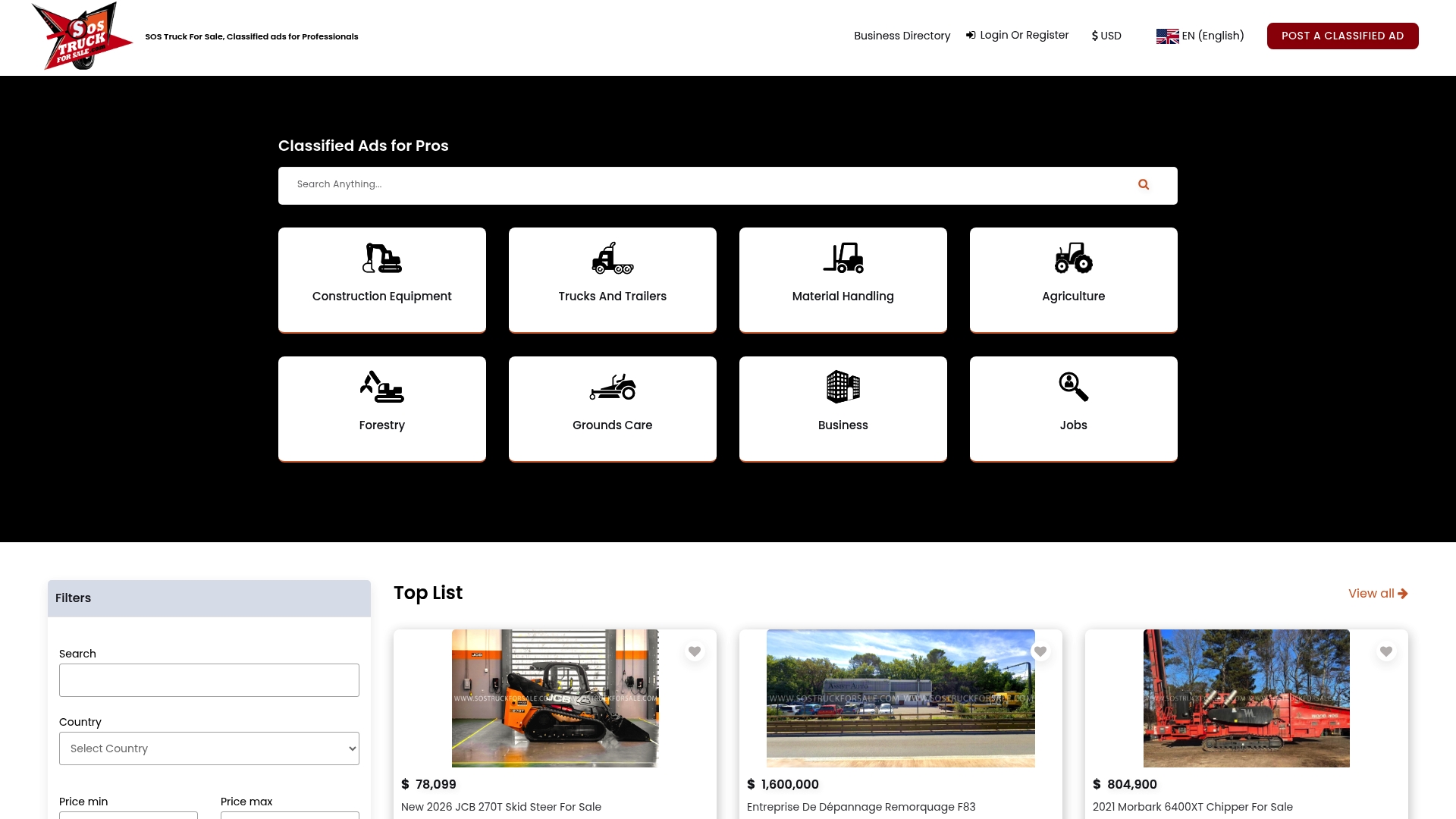
Sostruckforsale lists medium-duty and vocational cab-over trucks for sale alongside a broad inventory of heavy-duty commercial vehicles, so you can compare GVWR ratings, axle configurations, and body types in one place without calling a dozen dealers. Before you commit to any unit, confirm tilt-cab condition, axle spacing against your planned payload, and emissions certification for your operating state. Search current listings at Sostruckforsale and connect directly with sellers who can answer those spec questions before you make the trip.
Useful sources for further research
These resources support the technical claims in this article and are worth bookmarking for your own verification:
- Cab-over — Wikipedia: The most complete encyclopedic reference on COE design, history, regional variants, and the Federal Bridge Formula's effect on U.S. adoption. Start here for definitions and regulatory background.
- COE vs. Conventional Truck — Innomotive Solutions: A practical industry comparison of maneuverability, visibility, and operational tradeoffs. Useful for buyers weighing the two formats side by side.
- Old School Cabover Truck Guide — Smart Trucking: Covers driver experience, ride characteristics, entry/egress, and the collector market for classic COEs. Relevant for anyone evaluating used or vintage units.
- COE Trucks Making a Comeback — ABL Trucking: Covers the current U.S. resurgence in medium-duty and last-mile COE adoption, with context on emissions and weight-distribution drivers. Useful for understanding current market availability.
- International 9000 COE — Wikipedia: Detailed production history of one of the most significant U.S. heavy-duty COE lines, including the regulatory timeline that ended North American production. Useful for historical context and used-market research.