
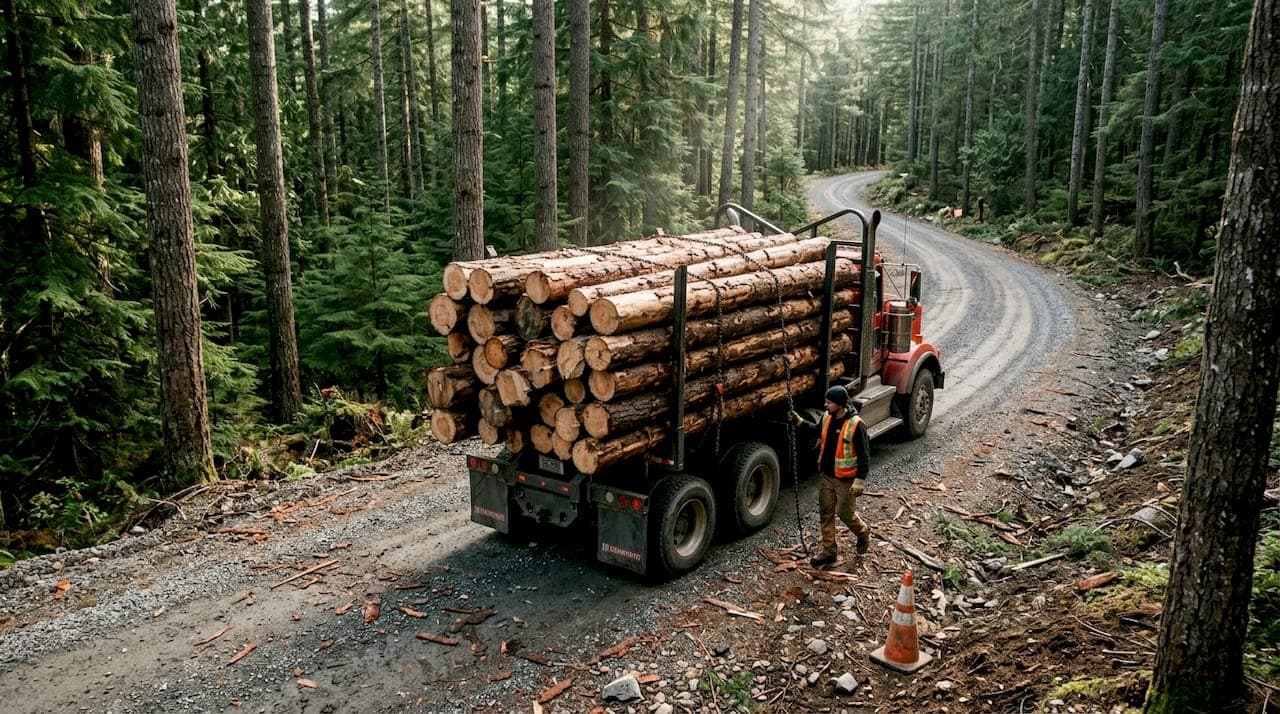
Logging trucks are defined as specialized heavy-duty commercial vehicles engineered to transport raw timber, processed wood materials, and forestry byproducts from harvest sites to mills or processing facilities. These vehicles differ from standard freight trucks in nearly every structural aspect, including reinforced frames, high-torque engines rated at 500+ HP, and power take-off (PTO) systems that drive hydraulic cranes or loaders. Understanding the types of logging trucks available is the first step toward matching the right equipment to your specific terrain, payload, and legal requirements. The right configuration directly affects your operating costs, safety record, and productivity.
1. What are the main types of logging trucks?
Logging trucks, formally called log trucks or timber trucks in the industry, fall into several distinct categories based on their chassis configuration, axle count, and intended operating environment. Each type suits a specific combination of terrain, haul distance, and load volume.
Short-log trucks carry cut-to-length logs, typically 8–20 ft sections, and use a rigid frame with a fixed bunk system. They are the most common choice for operations that pre-process timber at the harvest site before transport.
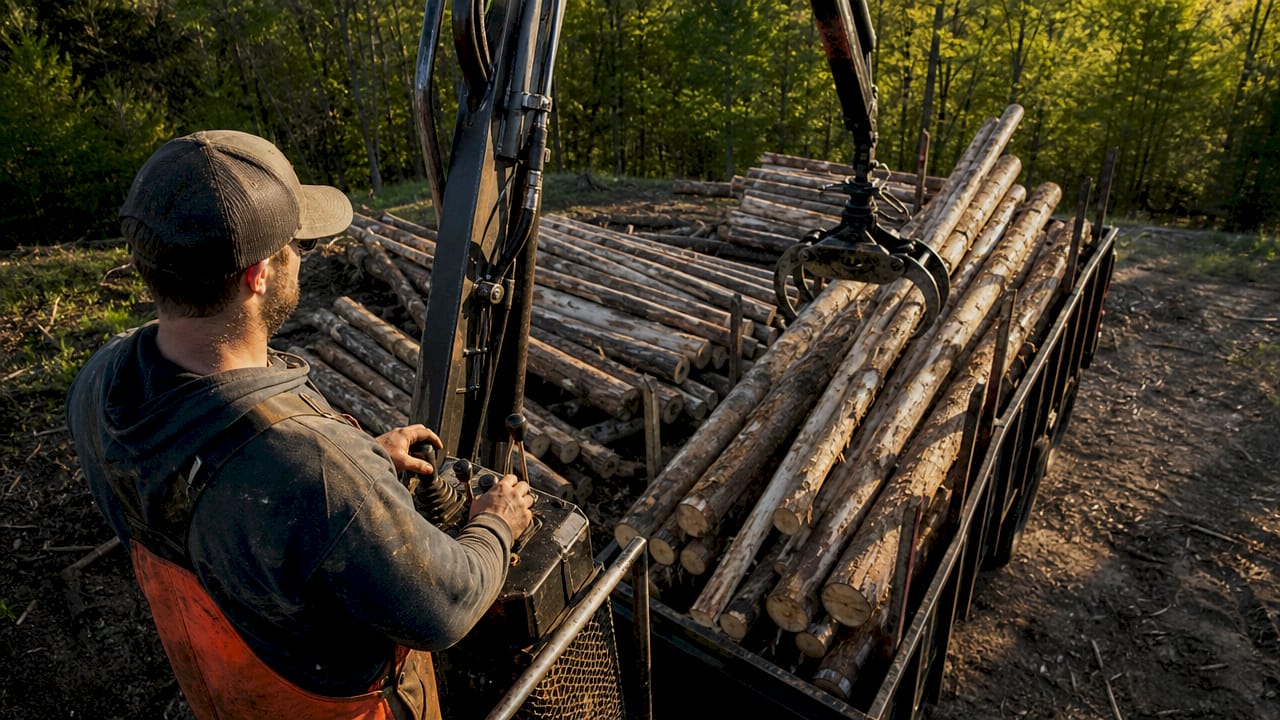
Tree-length trucks carry full-length logs that extend beyond the truck bed, requiring a pole trailer or extendable trailer to support the rear of the load. These are standard in operations where logs are processed at the mill rather than in the field.
Off-road extraction trucks are purpose-built for moving timber within the forest before it reaches a public road. They prioritize traction, ground clearance, and durability over payload capacity or highway speed.
Highway log trucks are configured for legal road travel, with axle layouts designed to comply with regional weight limits. They carry the heaviest payloads per trip and cover the longest distances.
Self-loading log trucks carry an integrated hydraulic crane or loader, eliminating the need for separate loading equipment at the landing. This configuration adds weight but reduces operational dependency on third-party machinery.
The most common configuration is a 4-axle truck paired with a 5-axle trailer, representing 63.5% of fleets studied, while 33% operate as 4-axle trucks alone. That data reflects how the industry balances payload capacity with road compliance across mixed terrain operations.
2. How do log trailers differ from standard flatbed freight trailers?
Log trailers are not flatbeds with stakes added. They are purpose-designed load-carrying systems built around the irregular geometry of raw timber.
Pole trailers use a single telescoping pole connecting the truck's rear bolster to the trailer's rear bunk. The logs themselves form the structural bridge between the two ends. This design handles tree-length loads efficiently and adjusts to varying log lengths.
Fixed-frame log trailers have a rigid chassis with multiple bunk stations spaced along the frame. They suit short-log operations where load length is consistent and predictable.
Extendable log trailers slide to accommodate different log lengths, making them flexible for operations that handle mixed-length timber. They are heavier than fixed-frame designs but reduce the need for multiple trailer types in a single fleet.
The bunk and stake system is what separates log trailers from flatbeds. Log trailers use open-frame bunk and stake designs instead of flat decks, which allows irregular round loads to sit securely without rolling or shifting during transit. Stakes on each bunk prevent lateral movement, and binders or chains secure the load vertically.
| Trailer Type | Best Use | Key Feature |
|---|---|---|
| Pole trailer | Tree-length logs | Telescoping pole, no fixed deck |
| Fixed-frame trailer | Short-log operations | Multiple fixed bunks, consistent length |
| Extendable trailer | Mixed-length timber | Adjustable frame length |
| Jeep/converter dolly | Multi-trailer combinations | Connects truck to trailing unit |
Log trailers typically range from 40 ft to 53 ft in length, with bunk systems constructed from high-strength steel to handle the concentrated point loads that raw timber creates. Standard flatbeds distribute load across a full deck surface. Log trailers concentrate load at bunk contact points, which demands a fundamentally different structural design.
3. What specialized features distinguish logging trucks by operating environment?
The operating environment determines which logging truck features matter most. A truck optimized for forest extraction will perform poorly on a highway haul, and vice versa.
Off-road extraction environments
Off-road logging trucks prioritize durability and recovery capability above all else. Key features include high-clearance axles that clear stumps and debris, debris-protected cooling systems that prevent overheating in dense forest conditions, and off-road tires with aggressive tread patterns for traction on wet or loose ground. These trucks often run lower payload capacities because the terrain limits what the road surface can support.
Mixed off-road and highway environments
Trucks operating across both terrain types need balanced axle layouts that distribute weight legally on public roads while still handling unpaved forest roads. High-traction builds suit short-haul extraction, while long-distance transport prioritizes lower tare weight and fuel-efficient gearing. A truck doing both jobs needs a compromise specification, which is why fleet managers often run separate vehicles for each role rather than one multipurpose unit.
Wet and seasonal climates
Operations in the Pacific Northwest, the Great Lakes region, or the Canadian boreal forest face seasonal road restrictions and extreme mud conditions. Trucks in these environments benefit from air-ride suspension systems that reduce road damage during spring thaw, corrosion-resistant frame coatings, and enclosed cab designs that protect electronics from moisture.
Pro Tip: If your operation runs in a state with seasonal weight restrictions, check your state DOT's posted road limits before specifying axle count. A truck that is legal in summer may exceed posted limits in spring, costing you fines or forced downtime.
4. How do axle configurations and legal considerations impact truck selection?
Axle configuration is the single most consequential specification decision in logging truck selection. It affects payload capacity, fuel consumption, tire costs, and legal compliance simultaneously.
A standard 4-axle truck distributes gross vehicle weight across four axle groups. Adding a 5-axle trailer creates a 9-axle combination that spreads weight across a longer wheelbase, allowing higher gross weights without exceeding per-axle legal limits. Multi-axle configurations of 8 or 9 axles are specifically designed to comply with regional weight limits while maximizing payload per trip.
More axles mean more tires, more bearings, and more brake components to maintain. That raises maintenance costs. However, the payload increase per trip typically offsets those costs when haul distances are long enough to make fewer trips economically worthwhile.
| Axle Configuration | Typical Gross Weight | Best Application |
|---|---|---|
| 4-axle truck only | Lower gross limit | Short hauls, restricted roads |
| 4-axle truck + 5-axle trailer | Higher gross limit | Long-haul highway operations |
| Multi-axle (8 or 9 total) | Maximum legal gross | High-volume, long-distance timber transport |
Regional regulations vary significantly. Some states permit higher gross weights on designated forest roads. Others impose strict limits year-round. Axle configuration must comply with regional weight limits before you finalize any purchase. Buying a truck that cannot legally operate on your primary haul routes is an expensive mistake.
Pro Tip: Request the specific bridge formula calculation for your intended routes from your state DOT before purchasing. The bridge formula governs how axle spacing and weight interact, and it can disqualify a configuration that looks legal on paper.
5. Logging truck specifications that matter most for buyers
Logging trucks transport tree-length logs, processed wood, and forestry byproducts, which means the cargo type directly shapes the specification requirements. Buyers who focus only on gross vehicle weight rating miss several equally critical specs.
Engine torque output matters more than horsepower in low-speed, high-load extraction work. A truck pulling loaded bunks up a forest grade needs peak torque at low RPM, not peak power at high RPM. Transmission range and gear spacing determine how well the truck handles grade changes without losing momentum or overloading the drivetrain.
Frame construction is a non-negotiable factor for off-road use. Logging trucks require reinforced frames to handle the torsional stress of uneven terrain. A frame that flexes excessively will crack at weld points within a few seasons of hard use. Buyers should verify frame rail thickness and cross-member spacing against the manufacturer's vocational rating for logging applications.
PTO compatibility determines whether a self-loading configuration is possible. Not every truck chassis supports a PTO-driven hydraulic system at the torque levels a loader crane requires. Confirm PTO rating before specifying a crane, or you risk hydraulic system failures under load.
Key Takeaways
The best logging truck for any operation is the one matched precisely to terrain, haul distance, axle regulations, and cargo type.
| Point | Details |
|---|---|
| Configuration dominates fleet decisions | The 4-axle truck with 5-axle trailer is the industry's most common setup for good reason. |
| Trailer type follows log length | Match your trailer design to whether you run short-log or tree-length timber. |
| Environment dictates specs | Off-road extraction needs traction and durability; highway hauling needs fuel efficiency and legal axle layout. |
| Axle count is a legal decision | Verify regional bridge formula rules before purchasing any multi-axle combination. |
| PTO compatibility is non-negotiable | Confirm PTO torque rating before specifying any integrated crane or loader system. |
What I've learned about choosing logging trucks the hard way
Most buyers walk into a logging truck purchase focused on payload capacity and engine horsepower. Those numbers matter, but they are rarely the deciding factor in whether a truck performs well for your specific operation.
The detail that catches buyers off guard most often is axle spacing relative to the bridge formula. You can buy a truck with the right gross weight rating and the right axle count and still find it cannot legally run your primary haul route because the axle spacing does not satisfy the formula for a specific bridge on that road. That is a $150,000 mistake that a single phone call to your state DOT could have prevented.
The second underestimated factor is tare weight. A self-loading truck with an integrated crane is genuinely convenient, but that crane adds significant tare weight. On a route with a tight gross weight limit, every pound of crane is a pound of timber you cannot carry. Over a full season, that payload loss adds up to real revenue.
My honest recommendation: define your primary haul route and its legal constraints before you define your truck specification. The route governs the truck, not the other way around. Operators who start with the truck and then figure out the route end up with compromises that cost them money every single day.
— Dave
Logging trucks and forestry equipment at Sostruckforsale
Finding the right logging truck configuration for your operation requires access to a wide selection of verified listings across all major truck types and axle setups.
Sostruckforsale lists heavy-duty logging trucks and commercial forestry vehicles across configurations, from 4-axle highway units to self-loading off-road extraction trucks. Each listing includes specifications, condition details, and seller contact information so you can evaluate options without guesswork. Whether you are sourcing a single replacement unit or building out a fleet, Sostruckforsale gives you the inventory depth to find equipment that matches your terrain, payload, and legal requirements.
FAQ
What are logging trucks used for?
Logging trucks transport raw timber, tree-length logs, processed wood, and forestry byproducts from harvest sites to mills or processing facilities. They are purpose-built for heavy loads across both forest roads and public highways.
What is the most common logging truck configuration?
The most common setup is a 4-axle truck paired with a 5-axle trailer, which represents 63.5% of log truck fleets. This combination balances payload capacity with legal road weight compliance.
How do I choose between an off-road and a highway logging truck?
Off-road trucks prioritize high-clearance axles, debris protection, and traction for forest extraction. Highway trucks prioritize lower tare weight, fuel-efficient gearing, and axle layouts that meet road weight regulations. Your primary haul environment determines which design fits your operation.
What engine power do logging trucks typically require?
Logging trucks typically run engines rated at 500+ HP with high torque output at low RPM to handle heavy loads on grades. PTO systems on self-loading trucks add hydraulic demand that the engine and transmission must also support.
Do log trailers work with standard flatbed trucks?
Log trailers require compatible fifth-wheel or bolster connections and are not interchangeable with standard flatbed setups. The bunk and stake system on a log trailer is structurally distinct from a flatbed deck and requires a truck chassis rated for logging vocational use.