

A semi truck is defined as a Class 8 tractor-trailer combination with a Gross Vehicle Weight Rating over 33,001 lbs, built to move freight at scale across every road type in the United States. The types of semi trucks you choose directly determine your operating costs, route options, and cargo compatibility. Class 8 semi trucks haul roughly 72% of U.S. freight by weight, making them the backbone of American logistics. The industry term for the power unit is "tractor," and the cargo unit is the "trailer." Understanding both is the foundation for every purchasing or leasing decision you will make.
1. What are the main types of semi trucks by cab style?
Cab style is the first classification decision for any logistics professional. The two primary designs are the conventional cab and the cab-over-engine (COE), and each serves a different operational reality.
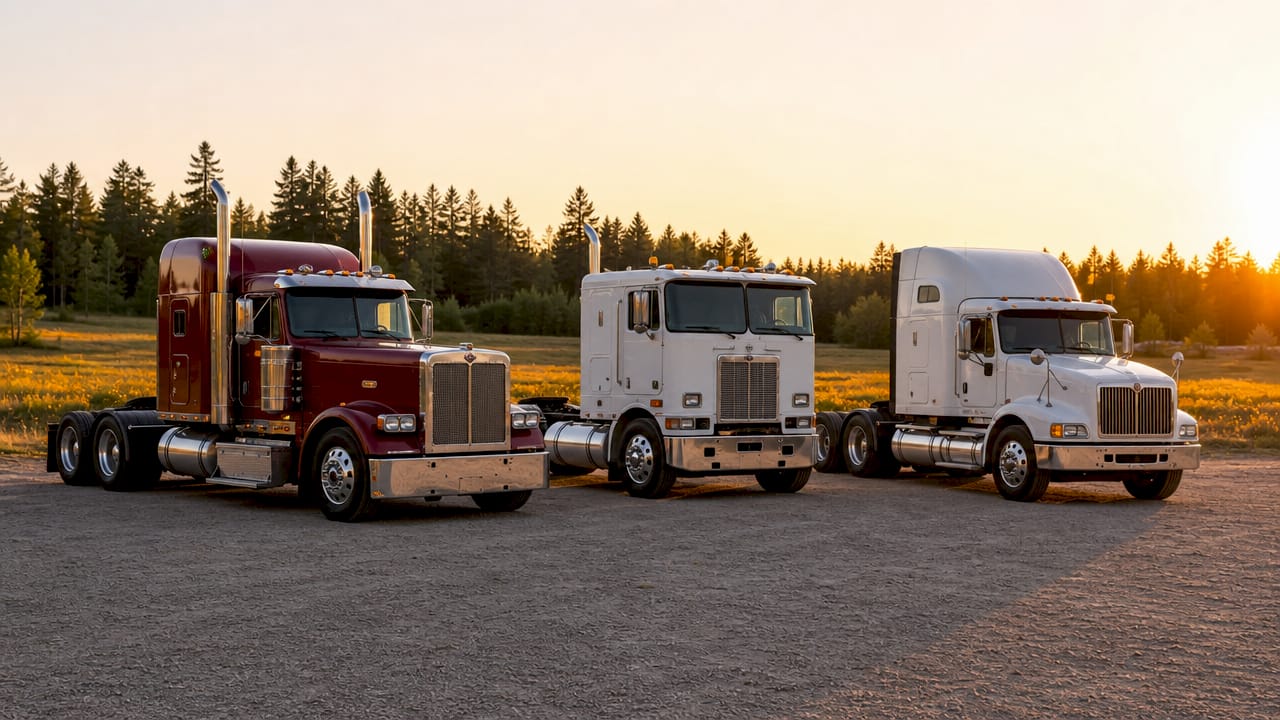
Conventional cab trucks mount the engine ahead of the cab. This design gives drivers more noise insulation, better crash protection, and significantly more room for sleeper compartments on long-haul routes. The tradeoff is overall vehicle length, which can limit access in tight urban terminals.
Cab-over trucks position the cab directly above the engine. This shortens the total rig length, which improves maneuverability in cities and complies with strict length regulations common in Europe and some U.S. states. The cab must tilt forward for engine access, which adds a maintenance step compared to conventional designs.
- Conventional cab: Best for long-haul, driver comfort, and sleeper configurations
- Cab-over-engine: Best for urban routes, tight docks, and regions with length restrictions
- Low-roof cab: A conventional variant with a lower profile for routes with height clearances
- Mid-roof cab: Offers standing room without the full height of a raised-roof sleeper
Pro Tip: If your fleet runs both regional and long-haul routes, a mid-roof conventional cab gives you the flexibility to assign the same tractor to either duty cycle without sacrificing driver comfort.
2. Sleeper cab trucks for long-haul operations
Sleeper cab trucks are the standard choice for long-haul freight, defined as routes exceeding 500 miles one way. Sleeper cabs provide living quarters for drivers, ranging from compact berths to full configurations with a kitchenette, refrigerator, and entertainment system. That range of amenities directly affects driver retention, which is a real cost factor in fleet management.
The raised-roof sleeper is the most common long-haul configuration in the U.S. market. It gives drivers full standing height inside the cab, reducing fatigue on multi-day runs. For owner-operators running dedicated lanes, the sleeper cab is often the single largest quality-of-life investment they make.
Sleeper cabs add weight and length to the tractor. Logistics managers need to account for that when calculating legal payload limits under federal bridge law formulas.
3. Day cab trucks for regional and urban hauling
Day cab tractors have no sleeper compartment, which reduces weight, shortens the cab, and lowers the purchase price compared to sleeper configurations. They are the right tool for regional distribution, port drayage, and any route where the driver returns home the same day.
The shorter cab profile improves sight lines and makes backing into tight loading docks faster and safer. For fleet operators running high-cycle regional routes, day cabs also reduce maintenance complexity because there are fewer cab systems to service.
Day cabs pair well with 53-foot dry van trailers on regional lanes and with tanker or flatbed trailers for industrial distribution. The lower tare weight of a day cab also means more legal payload per load, which directly improves revenue per mile.
Pro Tip: For port drayage operations, specify a day cab with a short wheelbase and a high-torque engine calibrated for stop-and-go traffic. Fuel economy on drayage cycles is very different from highway running, and the wrong spec costs money fast.
4. Common trailer types and their freight applications
The modular design of semi trucks allows a single tractor to swap between trailer types, giving fleets operational flexibility without buying additional power units. Trailer selection is as important as tractor selection when matching equipment to cargo.
| Trailer type | Primary use | Key feature |
|---|---|---|
| Dry van | General cargo, packaged goods | Enclosed, weather-protected |
| Flatbed | Oversized, construction, steel | Open deck, no height limit |
| Refrigerated (reefer) | Perishables, pharmaceuticals | Temperature-controlled interior |
| Tanker | Liquids, gases, bulk chemicals | Sealed cylindrical tank |
| Lowboy | Heavy equipment, machinery | Very low deck height |
| Car hauler | Automotive transport | Multi-level open rack |
Dry van trailers are the most common semi trailer type in the U.S. fleet. Their versatility across consumer goods, retail, and industrial freight makes them the default starting point for most carriers.
Flatbed trailers carry oversized or irregular loads, while refrigerated trailers maintain perishable goods at controlled temperatures. Both require specialized driver training and, in the case of reefers, additional fuel cost for the refrigeration unit.
5. Tanker and specialty freight trucks
Tanker trucks are a distinct category within the broader trucking vehicle categories because they require hazmat certification for most loads. They transport liquids such as fuel, chemicals, and food-grade products, as well as compressed gases. The cylindrical tank is either permanently mounted or detachable depending on the carrier's operational model.
Specialty trailers like lowboys and car haulers represent a smaller but high-value segment of the freight truck market. Lowboys carry construction equipment such as excavators and bulldozers, with a deck height low enough to stay within legal height limits when loaded. Car haulers use a multi-level open rack system and are a common sight on interstate highways near automotive plants.
These specialty configurations require tractors with specific fifth-wheel height settings and, in some cases, additional axles to distribute weight legally. Matching the tractor spec to the trailer type is not optional. It is a regulatory and safety requirement.
6. How to match semi truck type to route and cargo
Matching the right truck configuration to your specific operation is the most direct way to control costs. Four factors drive that decision: route length, terrain, payload weight, and cargo type.
- Route length: Long-haul routes over 500 miles require sleeper cabs and fuel-efficient drivetrains. Regional routes under 300 miles favor day cabs with high-torque engines for frequent stops.
- Terrain: Mountain routes require engines and transmissions rated for sustained grades. Flat interstate runs allow for more aggressive fuel economy calibration.
- Payload weight: Heavy payloads require tandem or tri-axle configurations to stay within federal bridge law limits. Light, high-volume freight benefits from lightweight aluminum trailers.
- Cargo type: Perishables require reefer trailers. Bulk liquids require tankers. Oversized industrial loads require flatbeds or lowboys with proper permits.
Choosing a semi truck that matches duty cycle, terrain, and climate while ensuring parts availability reduces downtime and total cost of ownership. That principle applies whether you are buying one truck or speccing a 50-unit fleet.
7. Key selection factors beyond truck type
Truck type is the starting point, not the finish line. The most reliable semi truck is the one best matched to the operator's specific conditions and with readily available parts, not necessarily the highest-rated model on a spec sheet.
- Service network coverage: A truck with a dense dealer and service network minimizes downtime when repairs are needed on the road. Gaps in coverage translate directly to higher towing costs and lost revenue days.
- Parts availability: Common platforms with widely stocked parts reduce repair wait times. Proprietary or imported components can extend shop time significantly.
- Total cost of ownership: Upfront purchase price is one line item. Fuel economy, tire wear, maintenance intervals, and resale value determine the actual cost over a five-year operating cycle.
- Engine and transmission spec: Specifying the right engine and transmission options tailored for dominant routes can optimize fuel economy and maintenance intervals. A vocational spec for a long-haul route wastes fuel. A highway spec on a construction site wears out faster.
- Driver ergonomics: Cab comfort affects driver retention. High turnover in trucking is expensive, and the cab environment is a controllable variable.
"Cost of ownership extends beyond upfront purchase price. Parts ubiquity and service network size critically influence downtime and operating costs." — Industry analysis, 2026
Key takeaways
The right semi truck type is determined by route length, cargo requirements, and total cost of ownership, not by brand reputation alone.
| Point | Details |
|---|---|
| Cab style drives operational fit | Conventional cabs suit long-haul comfort; cab-over designs improve urban maneuverability. |
| Trailer type defines cargo capability | Match trailer category to freight: dry van, flatbed, reefer, tanker, or specialty. |
| Sleeper vs. day cab is a route decision | Sleeper cabs serve long-haul; day cabs reduce weight and cost on regional runs. |
| Parts availability matters as much as specs | A well-supported truck with available parts outperforms a top-rated model with poor service coverage. |
| Modular design adds fleet flexibility | One tractor can serve multiple trailer types, reducing capital investment across cargo categories. |
What I've learned about spec'ing semi trucks the right way
The most common mistake I see logistics managers make is buying the truck with the best brochure instead of the truck that fits their actual operation. A raised-roof sleeper on a 200-mile regional lane is dead weight. A day cab on a cross-country dedicated run burns out drivers fast.
The second mistake is underestimating service network coverage. A truck that breaks down 800 miles from the nearest dealer is not a reliable truck, regardless of its reliability ratings. I have watched fleets buy premium equipment only to face week-long repair delays because parts had to be shipped from a regional warehouse.
Driver comfort is the factor most fleet managers treat as optional until turnover costs hit the P&L. The cab is where your driver spends 11 hours a day. Ergonomics, noise levels, and bunk quality are not luxury items. They are retention tools.
The best spec decision I have seen consistently is buying a conventional cab tractor with a mid-range sleeper and a well-supported powertrain, then pairing it with the trailer type that matches the primary freight lane. That combination gives you flexibility, driver satisfaction, and a service network that keeps the truck moving. Modularity is the real advantage of the tractor-trailer system. Use it.
— Dave
Find the right semi truck on Sostruckforsale
Sostruckforsale lists a wide range of semi trucks for sale across all major configurations, from sleeper cab long-haul tractors to day cab regional units and specialty freight trucks. Whether you are purchasing your first unit or expanding a fleet, the platform lets you filter by truck type, specs, and intended use to find equipment that matches your operation.
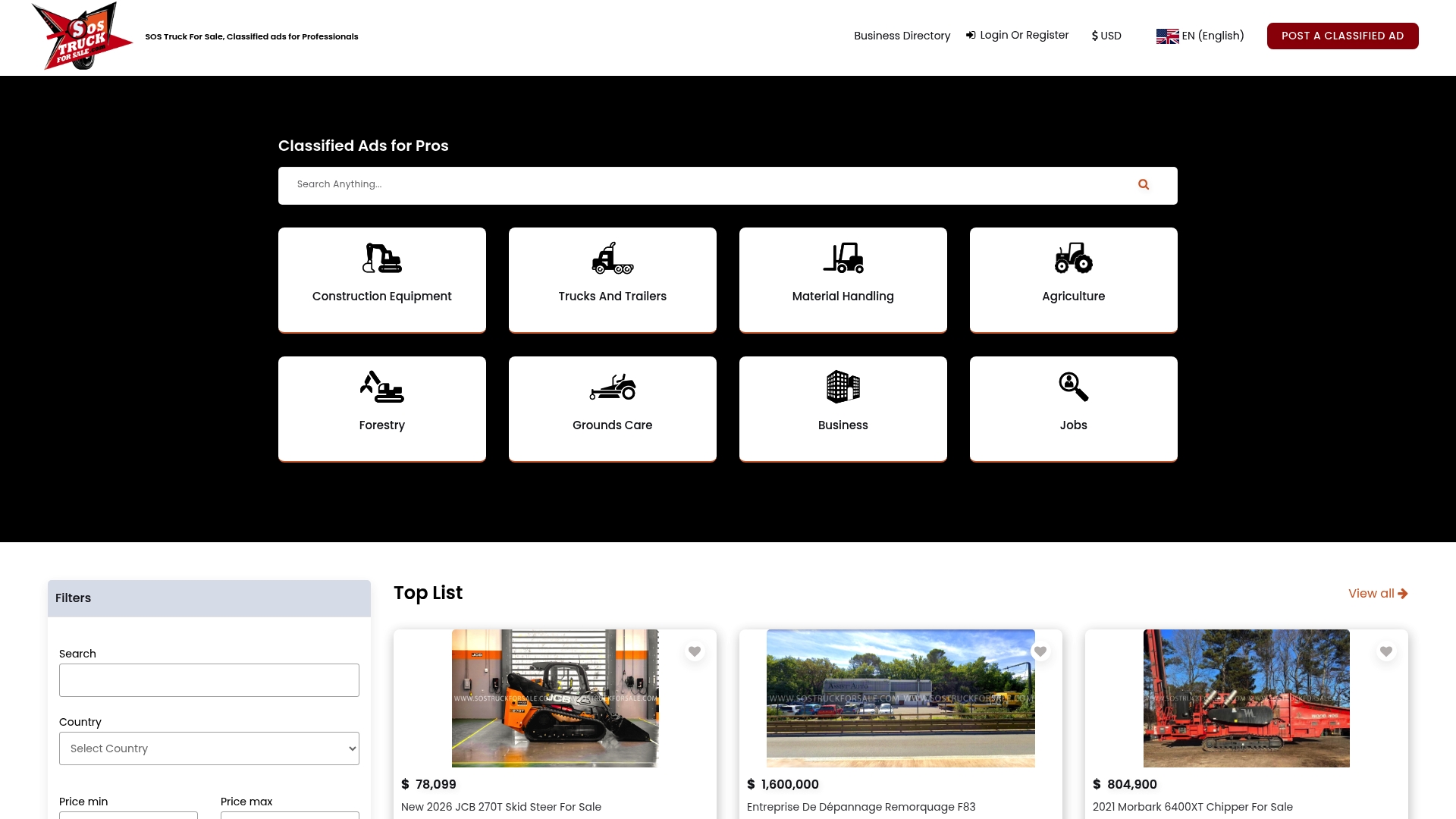
Listings include detailed specifications, condition reports, and direct seller contact information so you can move from research to purchase without guesswork. Check current inventory at Sostruckforsale and connect with sellers who specialize in the truck category you need.
FAQ
What is a semi truck, exactly?
A semi truck is a Class 8 tractor-trailer combination with a GVWR over 33,001 lbs. The tractor provides power and the trailer carries the cargo, connected via a fifth-wheel coupling.
What are the main types of semi trucks by cab design?
The two primary cab designs are conventional cab, with the engine ahead of the cab, and cab-over-engine, with the cab positioned above the engine. Each design suits different route types and regional length regulations.
What is the best semi truck for long-haul driving?
A conventional cab sleeper truck is the standard choice for long-haul routes. Sleeper cabs provide driver living quarters and are available in configurations ranging from compact berths to full kitchenette setups.
How do I choose between a day cab and a sleeper cab?
Day cabs are best for regional routes under 300 miles where drivers return home daily. Sleeper cabs are necessary for multi-day long-haul runs where rest stops are required between origin and destination.
What trailer types are compatible with most semi truck tractors?
Most Class 8 tractors are compatible with dry van, flatbed, refrigerated, and tanker trailers through the standard fifth-wheel coupling system. Specialty trailers like lowboys may require specific fifth-wheel height adjustments.