
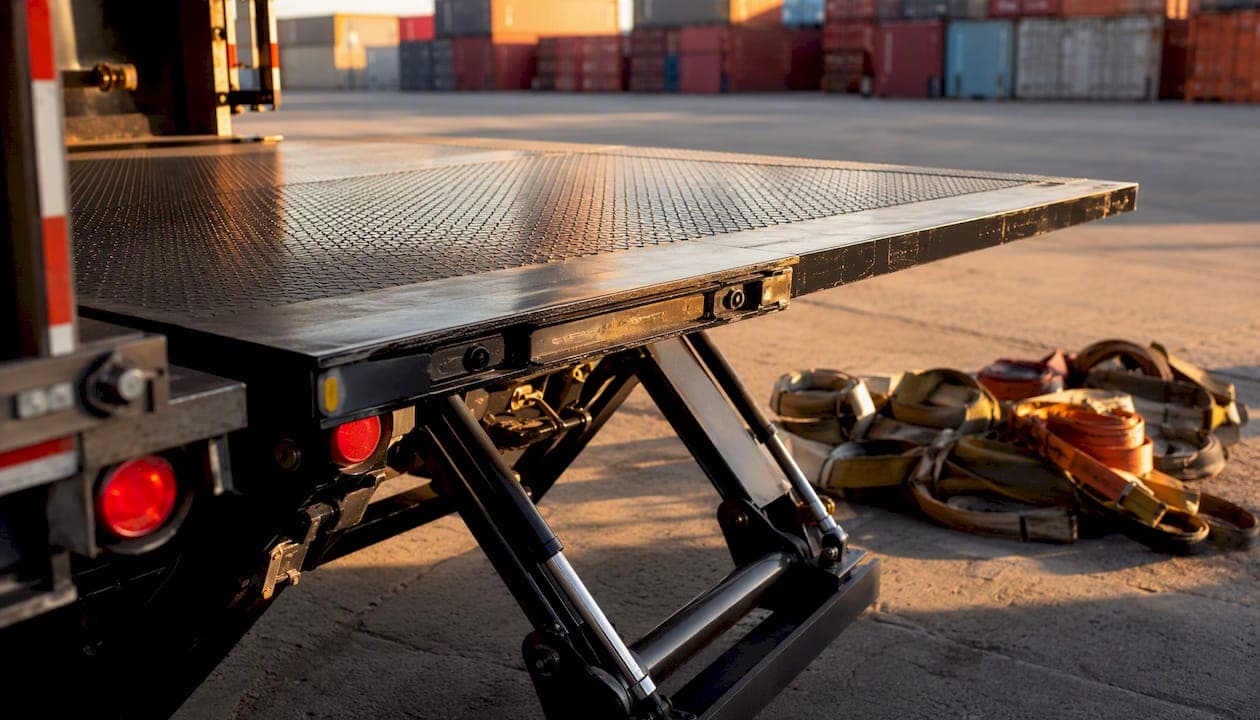
For fleet and logistics teams, specialized cargo vehicles are best classified by GVWR weight class and by cargo-handling purpose. The FMCSA recognizes eight weight classes, and most procurement decisions hinge on where a vehicle falls relative to the 26,000 lb threshold that triggers CDL requirements and commercial permit obligations. Understanding the types of specialized cargo vehicles before procurement prevents costly mismatches between body configuration, axle rating, and route restrictions.
The primary groups fleet managers work with:
- Refrigerated (reefer) trucks — temperature-controlled food, pharma, and perishables
- Flatbed, drop-deck, and extendable trailers — oversized industrial freight
- Tankers — liquid, gas, and dry-bulk commodities
- Lowboy/lowbed trailers — heavy construction and mining equipment
- Car carriers — automotive logistics
- Roll-off and hooklift trucks — waste management and demolition
- Heavy-haul modular transporters (SPMTs, HETs) — extreme-weight industrial moves
Key Takeaways
Matching cargo to the correct GVWR class and body type before procurement is the single decision that most reduces permit friction, compliance risk, and lifecycle cost for specialized cargo vehicles.
| Point | Details |
|---|---|
| Start with GVWR and cargo weight | Confirm payload headroom by subtracting curb weight and upfit weight from GVWR before specifying any body. |
| Match body type to loading method | Dock, liftgate, crane, or drive-on ramp requirements eliminate most body options before price enters the decision. |
| Budget permits as recurring costs | For heavy-haul routes, permits, pilot cars, and route surveys are fixed operational line items, not one-off expenses. |
| Specify telematics at purchase | Factory CAN bus integration costs a fraction of a retrofit and delivers complete axle-load, temperature, and diagnostic data. |
| Use Sostruckforsale to shortlist | Filter by GVWR, body type, and axle configuration to match listings directly to your procurement checklist. |
Table of Contents
- How U.S. GVWR weight classes shape your vehicle selection
- The practical catalog of specialized cargo vehicle types
- When to use very heavy, off-road, and heavy-haul transporters
- How to choose the right specialized cargo vehicle
- U.S. compliance and permit basics for specialized loads
- Maintenance, lifecycle, and total cost of ownership
- Upfits, telematics, and modern options that improve efficiency
- Why class-and-purpose selection is the right starting point
- Find the right specialized vehicle on Sostruckforsale
- Sources
How U.S. GVWR weight classes shape your vehicle selection
GVWR-based classification divides trucks into light (under 14,000 lb), medium (14,001–26,000 lb), and heavy (over 26,000 lb) categories, with very heavy transporters sitting outside normal highway classification entirely.
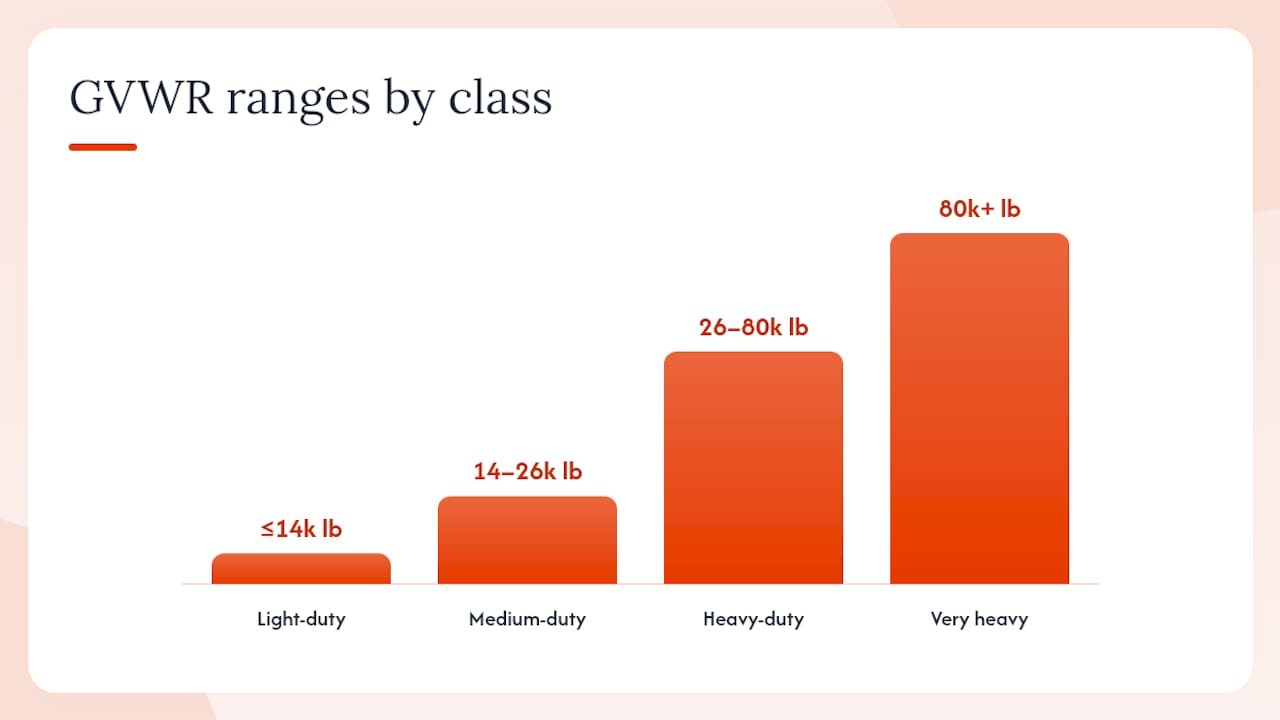
| Weight Class | GVWR Range | Typical Bodies | Driver/Permit Notes |
|---|---|---|---|
| Light-duty | Up to 14,000 lb | Cargo vans, small box trucks | Standard Class C license |
| Medium-duty | 14,001–26,000 lb | Straight trucks, curtain-siders, liftgate vans | Class B CDL at upper range |
| Heavy-duty | 26,000–80,000 lb | Semi tractors, flatbeds, reefers, tankers | Class A CDL required |
| Very heavy/off-road | 80,000+ lb (special) | Haul trucks, ballast tractors, SPMTs | Special permits, escorts required |
Why GVWR matters beyond the license:
- Bridge and road limits. Federal bridge formula governs axle spacing and load distribution on interstate routes. Exceeding posted limits without a permit is a federal violation.
- Insurance classification. Carriers price commercial auto policies by GVWR band. A misclassified vehicle can void a claim.
- Payload vs. curb weight. Payload capacity equals GVWR minus curb weight. A heavy upfit (crane, reefer unit, liftgate) reduces usable payload significantly.
- State oversize/overweight permits. Each state issues its own permits. The FMCSA provides federal baseline rules, but state DOT portals govern route-specific approvals.
The practical catalog of specialized cargo vehicle types
Specialized transport expanded well beyond flatbed and dry-van to cover cargo geometry and regulatory needs that standard trailers cannot address. The table below maps the most common types to their cargo, payload bands, and operational notes.
| Vehicle Type | Cargo Examples | Typical GVWR/Payload Band | Key Operational Notes |
|---|---|---|---|
| Refrigerated (reefer) truck | Food, dairy, pharma, frozen goods | Heavy-duty GVWR range | Requires BTU-rated reefer unit; fuel cost for standby cooling |
| Flatbed trailer | Steel coil, lumber, machinery | High payload band | Open deck; cargo must be tarped/strapped per DOT |
| Drop-deck/step-deck | Tall equipment, ag machinery | High payload band | Lower deck height clears height restrictions |
| Lowboy/lowbed | Excavators, cranes, bulldozers | Heavy payload band | Detachable gooseneck for drive-on loading |
| Tanker (liquid) | Fuel, chemicals, food-grade liquids | Heavy payload band | HAZMAT placarding; endorsement N or X required |
| Dry-bulk tanker | Cement, grain, sand | Heavy payload band | Pneumatic unload; Class A CDL + N endorsement |
| Car carrier | Passenger vehicles, light trucks | Up to 10 vehicles | Multi-level deck; height permits on some routes |
| Roll-off/hooklift | Debris, waste, construction material | Medium to heavy payload band | Interchangeable containers; hydraulic hoist system |
| Box truck with liftgate | Palletized freight, appliances | Medium GVWR band | Liftgate capacity rated separately from GVWR |
| Crane/boom truck | Construction materials, utility poles | Heavy GVWR band | Outrigger stabilization; crane operator certification |
| Curtain-sider | Palletized goods, time-sensitive freight | Medium to heavy GVWR band | Side-load access; no forklift clearance needed at rear |
| Container chassis | ISO shipping containers | Heavy GVWR band | Twist-lock compatibility; port and rail terminal use |
| SPMT/modular transporter | Turbines, reactors, bridge sections | Extreme heavy payload band | Self-propelled; engineered route plan required |
Custom equipment choices such as lowboys, step decks, and SPMTs are driven by cargo dimensions, not just weight. A wind turbine nacelle and a transformer both require oversized permits, but their loading methods differ entirely.
Loading and unloading compatibility notes:
- Liftgates suit palletized freight at dock-free stops; rate them at 25–30% above expected pallet weight.
- Detachable gooseneck lowboys allow drive-on loading for tracked equipment without a crane.
- Crane trucks need confirmed outrigger pad capacity at the delivery site before dispatch.
- Vacuum truck configurations offer an alternative for industrial suction and liquid recovery tasks where conventional tankers cannot access confined sites.
When to use very heavy, off-road, and heavy-haul transporters
Standard highway equipment tops out at 80,000 lb gross without a permit. Anything beyond that enters heavy-haul territory, where the vehicle, the route, and the regulatory plan must all be engineered together.
Haul trucks and mining dump trucks operate entirely off-highway. A Caterpillar 797F, for example, has a payload capacity exceeding 400 short tons. Moving one between sites requires a dedicated transport move, not a highway drive.
Ballast tractors and heavy haulers pull multi-axle platform trailers for oversized on-highway loads. The Oshkosh HET family illustrates the payload ceiling: purpose-built to move armored vehicles, these systems combine high payload capacity with highway-legal configurations when permitted. The M1000 semi-trailer carries tracked and wheeled vehicles up to approximately 70 tons using pendular suspension and multi-axle steering to distribute load across the road surface.
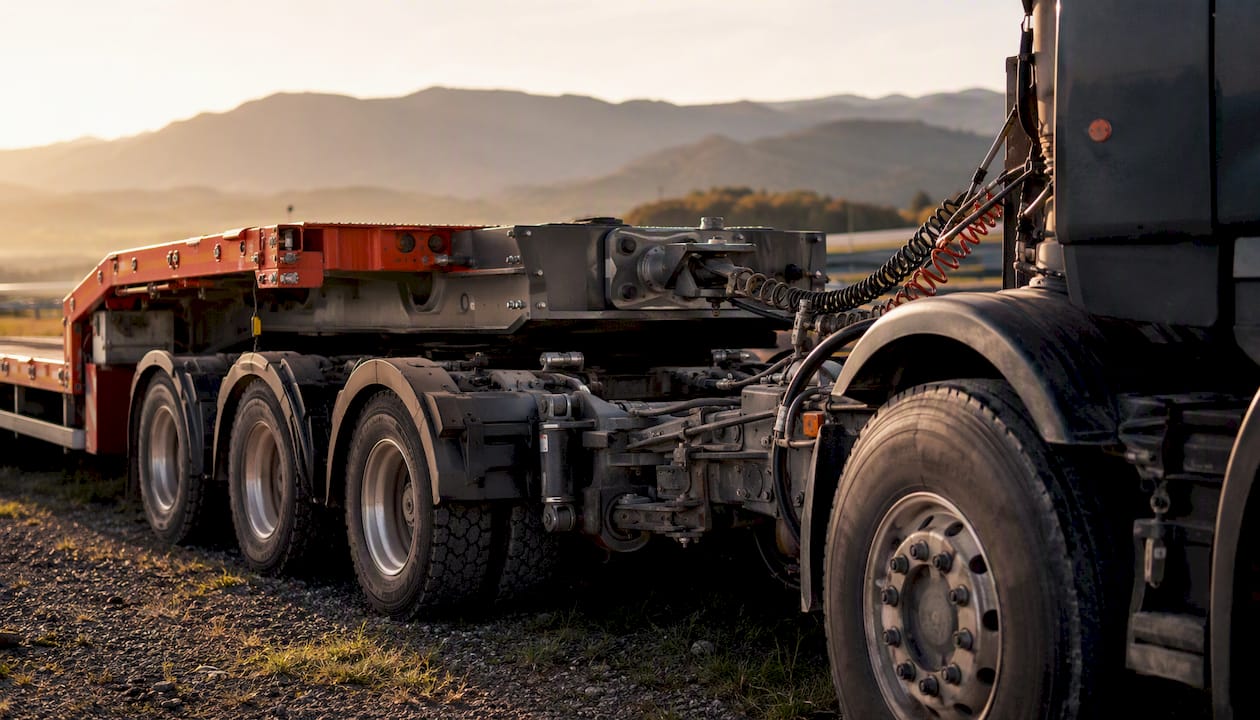
SPMTs (self-propelled modular transporters) handle the extreme end. A visual guide to trailer selection places SPMTs at 200+ metric tons, hydraulic modular systems at 80–200 metric tons, and extendable platforms at cargo lengths of 16–30 meters.
Operational triggers for heavy-haul selection:
- Gross weight exceeds 80,000 lb on a standard five-axle configuration
- Cargo dimensions exceed 8.5 ft wide, 13.5 ft tall, or 53 ft long
- Move includes non-road segments (plant interiors, port yards, mine sites)
- Cargo cannot be disassembled (transformers, pressure vessels, reactor components)
Perkins STC documents moves such as a 400-ton steam generator requiring engineered route plans, special permits, and heavy modular equipment. Treat permits, pilot cars, and route surveys as fixed line items in TCO for any regular heavy-haul program, not one-off expenses.
Regulatory note: Superloads (typically over 150,000 lb gross) require state-by-state permit approval, advance route surveys, and often law enforcement escorts. Lead times of 2–6 weeks are common for multi-state moves.
How to choose the right specialized cargo vehicle
Define cargo weight, dimensions, and loading method first. Everything else follows from those three inputs.
- Confirm gross cargo weight and GVWR headroom. Subtract curb weight and upfit weight from GVWR to get true payload. Never spec a vehicle at 100% of rated payload.
- Identify the loading/unloading method. Dock, liftgate, crane, drive-on ramp, or side-load? The answer eliminates most body types immediately.
- Map route constraints. Check bridge ratings, height clearances, and state permit requirements before selecting trailer length or deck height.
- Confirm driver qualifications. Class A CDL covers combination vehicles over 26,000 lb. Tankers add endorsement N; HAZMAT adds endorsement H or X. Crane operation may require a separate certification.
- Specify axle configuration early. Axle count and spacing determine bridge-formula compliance and permit eligibility. Changing axle configuration post-build is expensive.
- Plan the maintenance model. Reefer units, hydraulic systems, and crane booms all have manufacturer-specified service intervals that differ from the base chassis.
- Factor resale value. Highly customized upfits narrow the resale market. Spec only what the operation requires.
Procurement red flags:
- Deck height incompatible with the facility's dock height
- Axle rating below the loaded cargo weight
- No telematics port or CAN bus access on the chassis
- Liftgate capacity rated below the heaviest pallet in the fleet
Pro Tip: Design for axle-load distribution first, then determine trailer length. A trailer that distributes weight correctly across axles reduces permit friction and road damage fees more than any other single spec decision.
U.S. compliance and permit basics for specialized loads
Before any specialized move, confirm these minimum requirements:
- Oversize/overweight permits. Required when any dimension or gross weight exceeds federal or state legal limits. Apply through each state's DOT portal; multi-state moves require permits from every state crossed.
- DOT number and MC authority. Required for interstate commercial transport. Register through the FMCSA's online portal.
- HAZMAT placarding. Governed by 49 CFR Part 172. Tankers carrying flammable, corrosive, or toxic materials require correct placards and driver endorsement H or X.
- CDL endorsements. Tanker (N), HAZMAT (H), doubles/triples (T), and passenger (P) endorsements are issued by state DMVs after written and skills tests.
- Escort/pilot car requirements. Most states require a pilot car when width exceeds 14 ft or length exceeds 100 ft. Some superloads require law enforcement escort.
- Route surveys. Required for loads that approach or exceed bridge weight limits. Engineering firms provide certified route surveys accepted by state DOTs.
State permit portals vary significantly. The FMCSA's website links to each state's commercial vehicle permitting office. Plan for 1–10 business days for standard oversize permits; superloads can take 4–8 weeks.
Maintenance, lifecycle, and total cost of ownership
The highest TCO drivers for specialized cargo vehicles are duty cycle intensity, upfit complexity, axle and suspension maintenance, and specialty component servicing.
Cargo truck classification by type directly affects maintenance planning: reefers, tankers, and crane trucks each carry distinct service requirements that a generalist maintenance schedule will miss.
Key cost buckets to budget:
- Reefer unit fuel and service. Standby diesel consumption for refrigeration units runs continuously during delivery windows. Factor in annual compressor and evaporator service.
- Axle and suspension maintenance. Heavy-haul axles and air-ride suspensions require more frequent inspection intervals than standard highway equipment.
- Permit and escort costs. For regular heavy-haul routes, budget permits, pilot cars, and route surveys as recurring line items.
- Specialty tire replacement. Wide-base and super-single tires on heavy-haul equipment cost significantly more than standard drives.
- Uptime tracking. Monitor cost per mile, maintenance cost per unit per year, and downtime days per unit. These three KPIs expose underperforming assets before they become fleet liabilities.
Align warranty and extended-service contracts with the upfit vendor, not just the chassis OEM. A crane body or reefer unit from a third-party upfitter carries its own warranty terms, and gaps between chassis and body coverage create cost exposure.
Upfits, telematics, and modern options that improve efficiency
The highest-impact upfits are CAN bus-integrated telematics, auxiliary power units (APUs) for reefer standby operation, hydraulic systems for crane and SPMT applications, and automated liftgates with load-sensing controls.
Telematics features to require at purchase:
- Temperature monitoring with threshold alerts for reefer and pharma loads
- Geofencing for high-value cargo and route compliance
- Axle-load sensing to flag overloading before departure
- Remote diagnostics for reefer units, hydraulic systems, and engine fault codes
- Driver behavior monitoring (hard braking, idle time, speed) tied to fuel cost reporting
Electric and hybrid options are entering the medium-duty segment. Several OEMs now offer Class 6–7 electric straight trucks suited to urban reefer and liftgate delivery routes where daily range is predictable. Emissions compliance in California (CARB regulations) and other states with adopted CARB standards is already affecting fleet procurement decisions for 2026 and beyond.
Pro Tip: Specify telematics integration points and CAN bus access at the time of chassis purchase. Retrofitting a telematics system onto a vehicle without factory data ports costs two to four times more than factory-integrated installation and often provides incomplete data.
Vacuum truck body configurations illustrate how upfit complexity scales with application: industrial vacuum systems require dedicated hydraulic circuits, high-capacity debris tanks, and filtration systems that must be specified before the chassis is ordered.
Why class-and-purpose selection is the right starting point
Most procurement mistakes in specialized transport come from starting with a budget number rather than a cargo profile. A fleet manager who specs a vehicle by price first often ends up with a body that fits the chassis but not the load, or a GVWR that clears the budget but triggers a permit requirement nobody planned for.
The class-and-purpose framework forces the right sequence: define what the cargo weighs and how it loads, match that to a GVWR band and body type, then confirm the driver qualifications and route compliance before the purchase order is signed. That sequence eliminates the most common and most expensive mismatches.
Sostruckforsale's marketplace inventory spans semi tractors, trailers, and specialized bodies across all weight classes, which means buyers can cross-reference listings against the procurement checklist rather than starting from a blank spec sheet. The specs listed on marketplace units map directly to the decision criteria in this guide.
Find the right specialized vehicle on Sostruckforsale
Sostruckforsale gives fleet managers direct access to a broad inventory of commercial vehicles and heavy equipment, filtered by the exact spec criteria that matter: body type, GVWR range, axle configuration, and upfit options.
A practical workflow: search by vehicle category on Sostruckforsale, filter by GVWR band and body type, request the seller's spec sheet to verify axle rating and upfit details, then schedule a physical inspection before committing. Listings include semi trucks, flatbeds, reefer units, tankers, lowboys, and crane trucks from commercial dealers and private sellers across the U.S. Browse current heavy-duty truck listings to shortlist candidates that match your cargo profile and route requirements.
Sources
- M1000 heavy equipment transport semi trailer — Leonardo DRS
- What is Specialized Transport - Heavy Haulers Blog
- What Is Specialized Transport? A Complete Overview — Beardown Logistics
- Perkins Specialized Transportation Contracting
- Trailer types in special transport: visual guide · PASTOR
- Cargo truck classification: axles, traction and types - VEC Fleet