

Dealer floorplan financing is a revolving, asset-backed credit line that lets you stock high-cost inventory now and repay each advance only when that unit sells. The primary benefit is straightforward: your operating cash stays available for payroll, parts, and overhead while your lot stays full. According to Investopedia, floorplan financing helps dealers manage cash flow and seasonal demand because payment is triggered by the sale, not the purchase. If you carry high-ticket, VIN-tracked inventory with predictable turnover, floorplan financing is likely the right tool. If your inventory is non-identifiable or turns slowly, the interest and curtailment costs can erode margin fast.
- Floorplan advances are made per unit, secured by that unit's VIN or serial number.
- Repayment is due when the unit sells, typically within three business days.
- Lenders conduct periodic, sometimes unannounced, on-site audits to verify inventory.
- Additional collateral such as real estate or personal guarantees is common, especially for independent dealers.
Pro Tip: Before you apply, pull your current inventory aging report. Any unit over 90 days is a curtailment risk and a red flag in underwriting. Know your exposure before the lender does.
Key Takeaways
Dealer floorplan financing is a per-unit revolving credit line repaid from sale proceeds, and its cost, audit requirements, and curtailment schedules must be modeled into unit profitability before you commit.
| Point | Details |
|---|---|
| Core definition | A revolving line where each advance is secured by a specific unit and repaid when that unit sells. |
| Main cost drivers | Interest, documentation fees, and curtailment charges on aging units all reduce unit gross profit. |
| Audit readiness | Daily DMS reconciliation and VIN-level tracking are the controls that prevent out-of-trust findings. |
| When to choose floorplan | Use it for high-ticket, VIN-tracked inventory with turnover inside your curtailment window. |
| Sostruckforsale | Listing financed inventory on Sostruckforsale reduces days-to-sale and lowers curtailment exposure. |
Consult a CPA and legal counsel for accounting treatment and contract interpretation specific to your dealership.
Table of Contents
- How dealer floorplan financing works, step by step
- Who participates and which documents you will sign
- How floorplan pricing affects unit profitability
- Lender controls: audits, covenants, and out-of-trust risks
- Day-to-day controls your finance team should run
- When floorplan financing is the right choice
- How to qualify and apply for a floorplan facility
- What dealers wish they had known before signing a floorplan
- Sostruckforsale helps you move financed inventory faster
- Sources
How dealer floorplan financing works, step by step
The core mechanic is simple. When you order a unit from a supplier or manufacturer, the lender advances the purchase price directly to that supplier. You take possession of the unit, the lender holds a security interest in it, and you owe the principal plus accruing interest. When the unit sells, you remit the advance amount to the lender, the security interest releases, and that credit capacity becomes available again. The Comptroller's Handbook confirms that advances are made against specific collateral and repayment comes from sale proceeds.
A simple numeric example:
- Lender advances $80,000 against a semi truck.
- Unit sits on lot for 45 days at a daily interest rate of roughly $18 (assuming a 8% annual rate).
- You sell the truck and remit $80,000 to the lender within three days.
- Interest cost for 45 days: approximately $810. That $80,000 credit capacity is now free for the next unit.
Key terms every finance manager must know:
| Term | Definition |
|---|---|
| Advance | The lender's per-unit payment to the supplier on your behalf |
| Curtailment | A required partial principal reduction on aging units, typically triggered at 90 or 120 days |
| Reserve | Funds withheld by the lender as a buffer against default |
| Out-of-trust | A unit that has sold but whose advance has not been remitted to the lender |
| UCC-1 | A public filing that perfects the lender's security interest in the financed inventory |
Curtailment schedules reduce your outstanding principal on slow-moving units. These are not optional.
Who participates and which documents you will sign
Three parties appear in nearly every floorplan arrangement: you (the dealer), the lender, and the supplier or manufacturer. For new inventory, a captive finance company tied to the manufacturer often serves as lender. For used or independent inventory, a commercial bank or specialty finance company fills that role. The LegalClarity guide outlines the typical sequence from underwriting through UCC-1 perfection under Article 9 of the Uniform Commercial Code.
Documents you will sign:
- Master credit agreement: Sets the credit limit, interest rate, curtailment schedule, audit rights, and default triggers. Read every covenant clause before signing.
- Bank-manufacturer agreement: Governs how the lender pays the manufacturer and how repurchase obligations work if a unit is returned.
- UCC-1 financing statement: Filed publicly to perfect the lender's security interest. Without this filing, the lender's claim on your inventory is legally unprotected.
- Personal guarantee: Common for smaller or independent dealers. You are personally liable if the dealership defaults.
- Insurance certificate: Lenders require proof of physical damage and liability coverage on all financed units.
Contract clauses that carry the most operational risk:
- Curtailment triggers and timelines
- Out-of-trust cure periods
- Audit frequency and lender access rights
- Cross-default provisions (a default on one facility triggers another)
- Rate adjustment mechanisms tied to benchmark rates
How floorplan pricing affects unit profitability
Financing cost equals interest plus fees plus curtailment impact. Every one of those inputs needs to be modeled into your unit gross profit before you commit to a purchase. NADA notes that even a one-percentage-point rate increase can translate to millions of dollars in added cost across a large dealer network, which makes rate sensitivity a real operational concern.
Common fee types:
- Interest (daily or monthly float on outstanding principal)
- Documentation or origination fees
- Audit fees (some lenders pass audit costs to the dealer)
- Curtailment charges on aging units
- Reserve holdbacks
Unit profitability framework:
The accounting treatment matters too. Interest expense on floorplan debt is generally deductible in the period accrued, which affects your taxable income timing. The advance itself is a liability on your balance sheet, offset by the inventory asset. When the unit sells, both clear simultaneously.
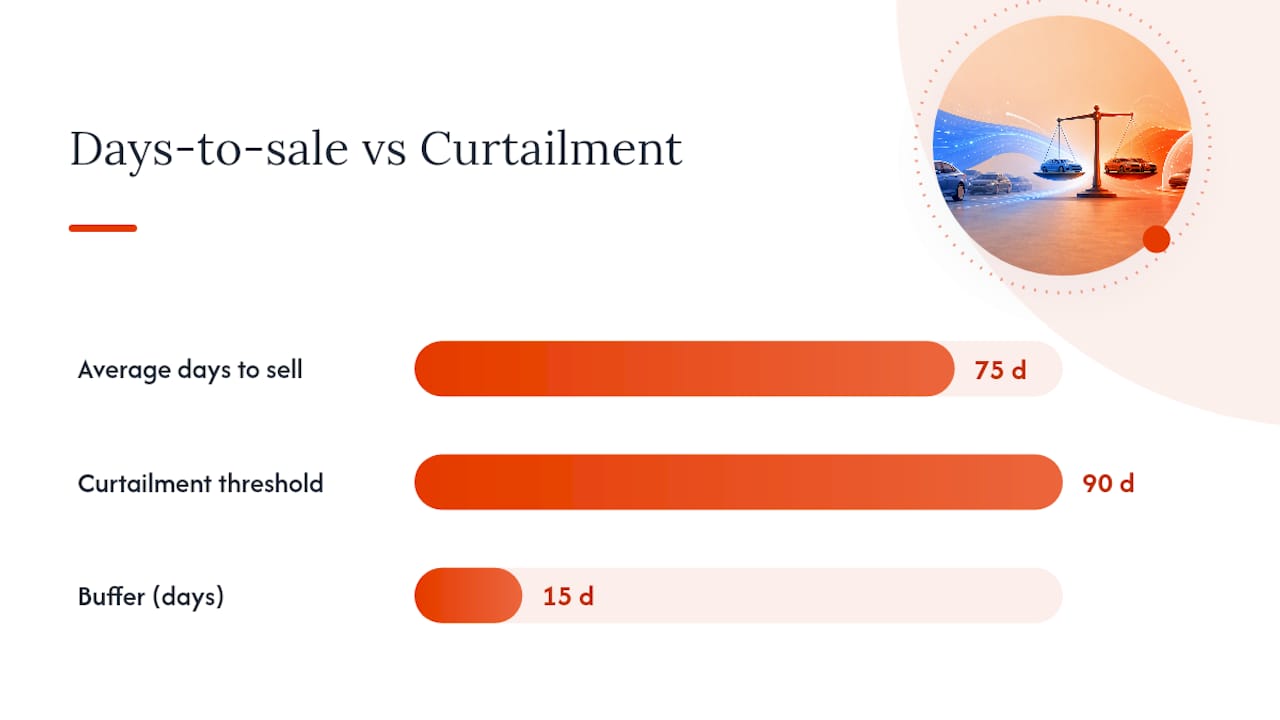
Pro Tip: Model your break-even days-to-sale for each unit class. If your average heavy equipment unit takes 75 days to sell and your curtailment kicks in at 90 days, you have a 15-day buffer. Shrink that buffer and you are paying curtailments routinely.
Consult a CPA and legal counsel for accounting treatment and contract interpretation specific to your situation.
Lender controls: audits, covenants, and out-of-trust risks
Periodic physical audits and covenant compliance are standard features of every floorplan facility. Failing an audit can trigger default, restrict your line, or cause the lender to demand immediate repayment. Per NADA, lenders perform on-site inventory inspections and treat floorplan loans as asset-backed instruments.
During an audit, the lender's representative will physically locate every financed unit, match VINs or serial numbers to the outstanding advance schedule, and verify titles and insurance documentation. Unannounced visits are common. An out-of-trust finding, where a sold unit's advance has not been remitted, is the fastest way to lose your facility.
Audit preparation checklist:
- Reconcile your DMS inventory list to the lender's advance schedule daily.
- Confirm every financed unit is physically on your lot or at an approved off-site location.
- Verify titles are in order and not released prematurely.
- Confirm insurance certificates are current and name the lender as loss payee.
- Document any units out for demo, repair, or transport with written lender approval.
Common covenants and default triggers:
| Covenant | Typical threshold |
|---|---|
| Curtailment compliance | Payment due at 90 or 120 days aging |
| Minimum liquidity ratio | Varies by lender |
| Physical storage requirement | All units on approved, insured premises |
| Out-of-trust cure period | Often 24–72 hours after discovery |
Pro Tip: Assign one staff member as the audit liaison. That person owns the daily reconciliation, knows where every unit is, and is the single point of contact when the lender walks in unannounced.

Day-to-day controls your finance team should run
Strong inventory controls and tight aging management directly reduce finance cost and audit risk. The dealers who pass audits cleanly are the ones who run the same reconciliation process every day, not just before an expected visit.
Systems and processes to implement:
- VIN or serial-number tagging on every financed unit
- Daily DMS reconciliation against the lender's advance schedule
- Electronic title workflow with clear custody tracking
- Automated aging alerts at 60, 90, and 120 days
Weekly and monthly KPIs to track:
- Days-to-sale by unit class
- Financed days outstanding (average across the portfolio)
- Curtailment exposure in dollars
- Audit exception count from the last lender visit
- Interest expense as a percentage of gross profit
Pro Tip: Segregate duties. The person who approves a sale should not be the same person who remits the floorplan payoff. This single control prevents the most common out-of-trust scenarios.
Pro Tip: Run a mock audit quarterly. Use your lender's actual audit checklist format and have a manager who is not the daily reconciler conduct it. Gaps surface before the lender finds them.
When floorplan financing is the right choice
Choose floorplan financing when you need high-ticket, VIN-tracked inventory with predictable turnover. Choose an alternative when your inventory is non-identifiable, turns unpredictably, or when you need flexible collateral.
| Funding option | Best for | Key tradeoff |
|---|---|---|
| Revolving floorplan | High-cost, VIN-tracked units with regular turnover | Audit burden; curtailment risk on slow movers |
| General line of credit | Flexible working capital needs | Higher rate; no per-unit tracking requirement |
| Consignment | Low-capital dealers or specialty items | No upfront cost; lower margin control |
| Vendor credit terms | Manufacturer-direct relationships | Limited to that supplier's terms |
The FTC notes that captive finance programs sometimes offer special incentives, which can make manufacturer-backed floorplan programs attractive when your inventory is brand-specific.
Decision checklist:
- Do your units have unique identifiers (VIN, serial number)?
- Does your average days-to-sale fall inside the curtailment window?
- Can you absorb the audit and compliance overhead?
- Is your gross margin wide enough to cover interest and fees?
How to qualify and apply for a floorplan facility
Lenders look for audited financials, DMS inventory reports, proof of titles, insurance, and personal guarantees. The typical underwriting timeline runs four to eight weeks from application to first advance.
Step-by-step application checklist:
- Prepare two to three years of audited or reviewed financial statements.
- Compile recent tax returns (business and personal if a guarantee is required).
- Pull a current inventory list with VINs, ages, and advance balances if you are refinancing.
- Gather supplier contracts and manufacturer agreements.
- Obtain a current insurance certificate naming the lender as loss payee.
- Complete the lender's credit application and authorize a business credit pull.
- Schedule the lender's site visit and have your lot organized and documented.
- Review the master credit agreement with legal counsel before signing.
Negotiation tips:
- Ask for a longer curtailment window (120 days instead of 90) for slow-turning unit classes.
- Request a rate floor/ceiling or a cap on benchmark rate pass-throughs.
- Negotiate audit frequency: quarterly is standard; some lenders will agree to semi-annual for clean accounts.
- Ask whether the lender charges audit fees back to the dealer and push to cap them.
What dealers wish they had known before signing a floorplan
The contract language around curtailments and audit rights looks routine until you are 110 days into a slow market and a unit has not moved. Margin pressure from interest and curtailment charges compounds faster than most dealers anticipate when turnover slows. Seasonal planning matters: build your advance schedule around your peak selling months and resist the urge to floor units you cannot realistically sell within the curtailment window.
The reconciliation cadence is not an administrative task. It is a risk management function. Dealers who treat it as a daily discipline rarely have audit surprises. Those who let it slip to weekly or monthly tend to discover out-of-trust positions at the worst possible moment.
Negotiate operational terms as hard as you negotiate the rate. A 25-basis-point rate reduction matters less than a 30-day extension on your curtailment schedule if your inventory turns slowly.
Consult a CPA for accounting treatment of interest deductions and a qualified attorney for contract interpretation before you sign any master credit agreement.
Sostruckforsale helps you move financed inventory faster
Slow-moving units are a direct cost. Every additional day a financed unit sits on your lot adds interest, pushes you closer to a curtailment trigger, and ties up credit capacity you could use for fresher stock. Listing your commercial vehicles and heavy equipment on Sostruckforsale puts your inventory in front of buyers who are actively searching for semi trucks, excavators, trailers, and industrial machinery.
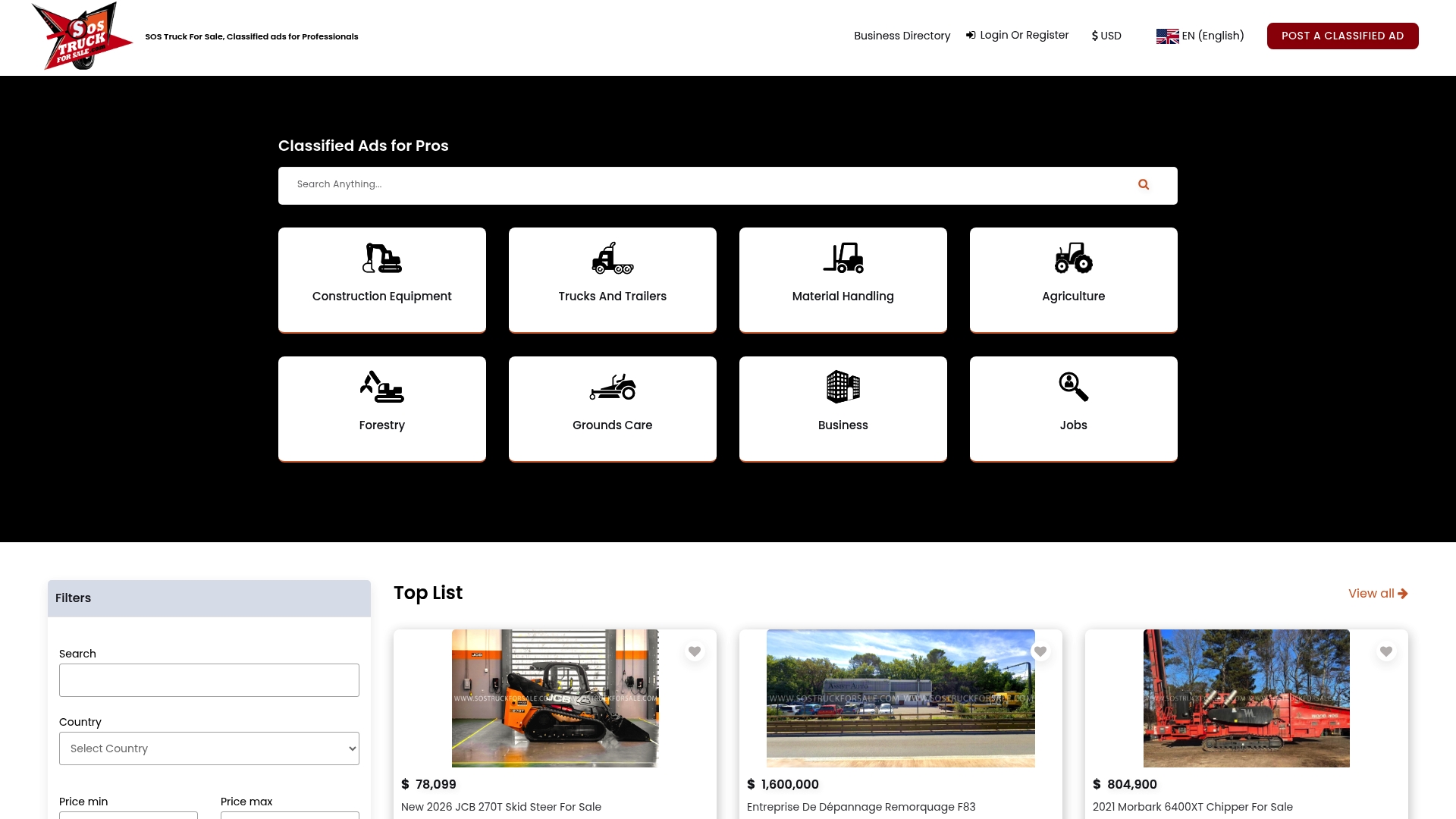
- Targeted exposure to commercial buyers, not general consumer traffic
- Promoted listing options to push aging units to the top of search results
- Dealer directory inclusion for ongoing brand visibility
- Listings filterable by category, price, and equipment type so qualified buyers find your units faster
Reducing days-to-sale by even a few days per unit lowers your financed days outstanding and shrinks curtailment exposure across your portfolio. Post your inventory on Sostruckforsale and keep your floorplan line working efficiently.
Sources
- Floor Plan Lending, Comptroller's Handbook
- Dealerships 101: What is Auto “Floor Plan” Lending?
- Floor Planning in Auto Sales: A Key Financing Tool
- What Is Floor Plan Financing and How Does It Work? - LegalClarity
- Financing or leasing a car
For contract interpretation and accounting treatment, consult a qualified CPA and a licensed attorney with experience in commercial lending.
This article is general information, not a substitute for advice from a qualified financial advisor. Consult a qualified financial professional about your own circumstances before acting on anything here.