
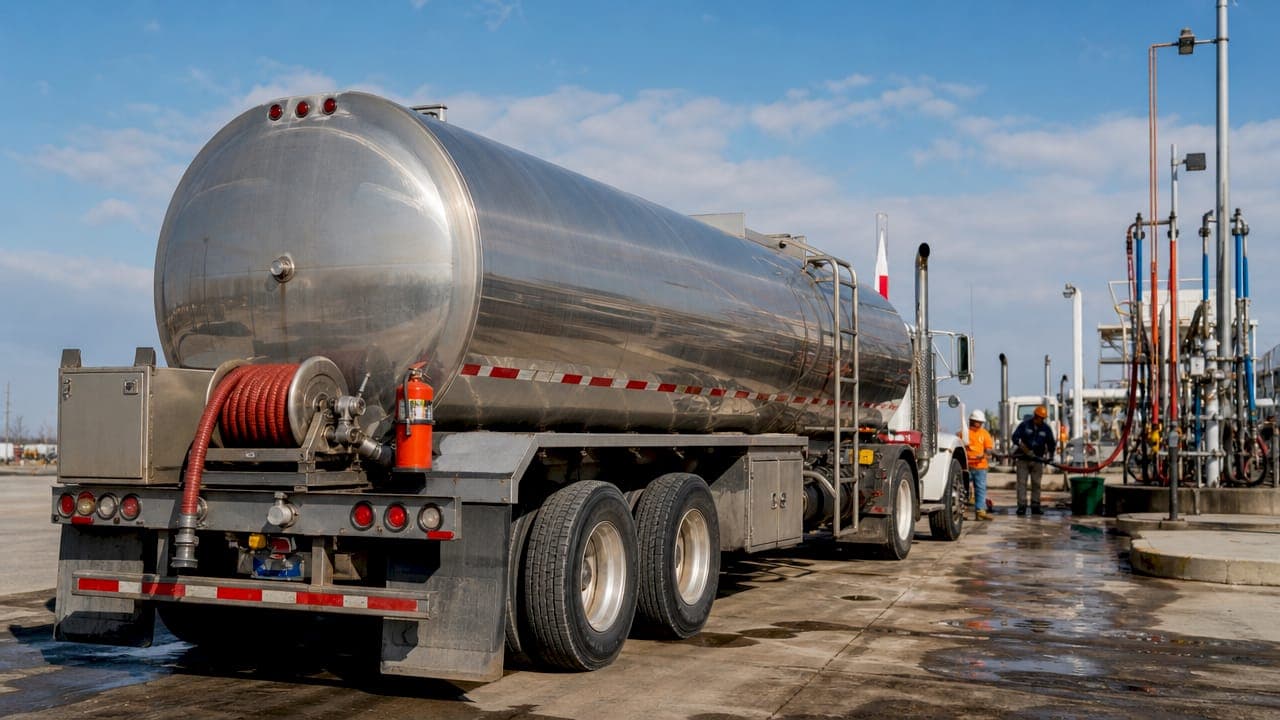
A fuel tanker truck is a specialized commercial motor vehicle equipped with sealed, pressurized tanks to transport liquid fuels such as gasoline, diesel, and jet fuel safely over public roads. The industry standard term is "tank truck" or "tanker truck," and the Federal Motor Carrier Safety Administration (FMCSA) classifies these vehicles as tank vehicles when individual tanks exceed 119 gallons and total capacity exceeds 1,000 gallons. These trucks are the backbone of fuel supply chains, serving gas stations, airports, commercial fleets, and industrial sites across the country. Understanding their design, capacity, and regulatory requirements is practical knowledge for anyone buying, operating, or contracting fuel transport services.
What is a fuel tanker truck and how is it classified?
A fuel tanker truck is defined as a commercial vehicle with one or more sealed tanks built to carry flammable liquid fuels in bulk. The FMCSA classifies tank vehicles using two thresholds: individual tanks must hold more than 119 gallons, and total aggregate capacity must exceed 1,000 gallons. That threshold matters because it triggers a separate set of commercial driver's license (CDL) endorsement requirements and federal safety regulations.
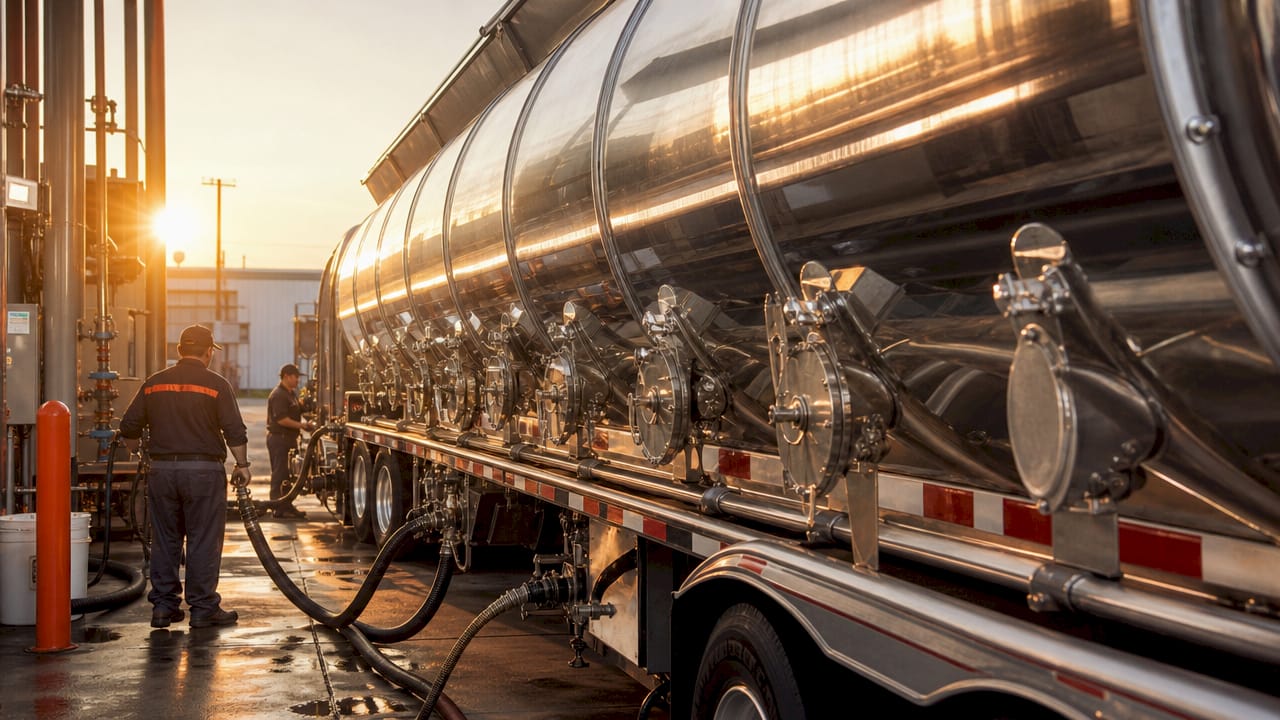
Fuel tankers also carry a specific hazardous material designation. The Type FL classification applies to vehicles transporting flammable liquids, and trucks must display the Class 3 red diamond hazmat symbol on all four sides. This marking tells emergency responders exactly what they are dealing with before they approach the vehicle. No other commercial truck class carries that same combination of structural and labeling requirements.
What are the main types and sizes of fuel tanker trucks?
Fuel tanker trucks come in a wide range of sizes, and the right choice depends entirely on the delivery environment and volume requirements. Capacities range from roughly 3,000 liters for small urban delivery trucks up to 44,000 liters for large highway semi-trailer tankers. That upper figure translates to approximately 11,600 US gallons, enough to supply a busy gas station for several days in a single load.
The table below summarizes the most common configurations:
| Truck type | Typical capacity | Common application | Tank material |
|---|---|---|---|
| Small rigid tanker | 3,000–8,000 liters | Urban fuel delivery, farms | Aluminum or steel |
| Medium rigid tanker | 8,000–15,000 liters | Regional distribution | Aluminum |
| Semi-trailer tanker | 21,000–44,000 liters | Highway bulk fuel transport | Aluminum or steel |
| Aviation refueler | 10,000–30,000 liters | Airport jet fuel delivery | Stainless steel |
Most highway tankers use aluminum because it is lighter than steel, which increases legal payload capacity. Steel tanks cost less upfront but add weight that cuts into the fuel load you can carry per trip. DOT-406 specifications govern tank shape, wall thickness, and safety equipment for fuel tankers in the United States. Compliance with DOT-406 is not optional. It directly determines whether a truck can legally operate on public roads.
Multi-compartment tanks are standard on most delivery tankers. A single trailer can carry gasoline, diesel, and premium fuel in separate sealed sections, allowing one truck to service an entire gas station in one trip.
Pro Tip: When evaluating a used fuel tanker, always verify the DOT-406 certification plate on the tank shell. A missing or expired certification means the truck cannot legally haul fuel until it passes a full re-inspection.
How do fuel tanker trucks work: key components and operational features?
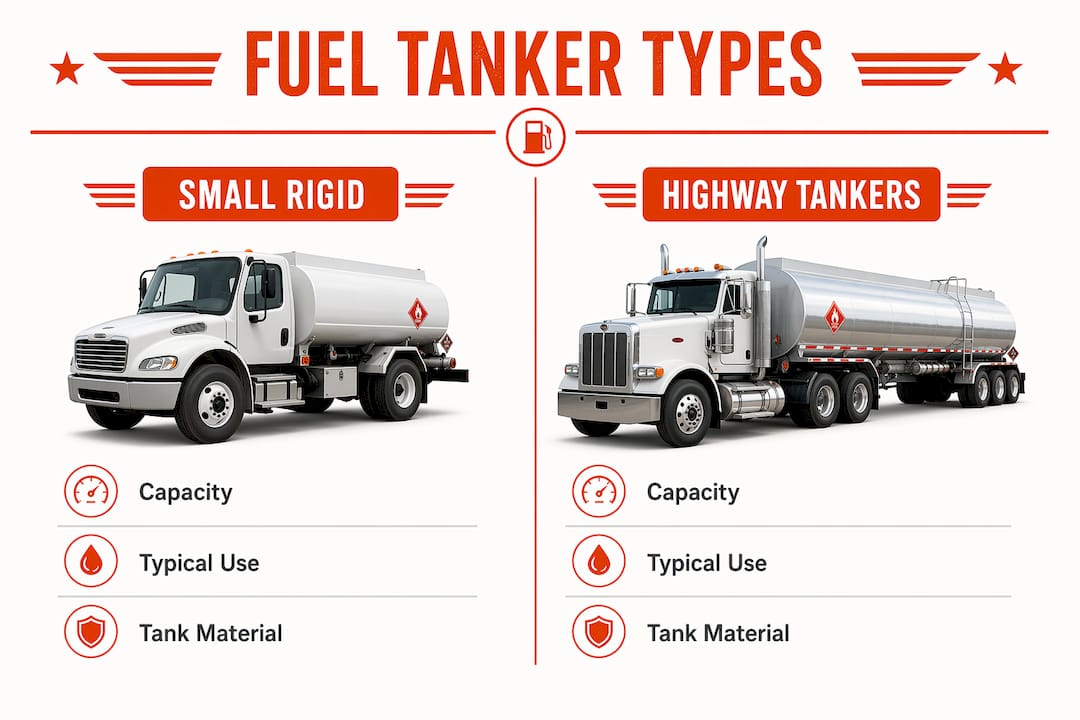
The tank shell is only one part of a fuel tanker's engineering. The full system includes loading and unloading equipment, safety interlocks, and vapor management technology that work together to prevent accidents during every phase of operation.
Bottom loading using 4-inch API adapters is now the industry standard for filling tanker trucks. Fuel enters through sealed couplers at the bottom of the tank rather than through an open top hatch. This keeps vapors contained in a closed loop and dramatically reduces explosion risk compared to older top-loading methods. Before fuel transfer can begin, the operator must connect vapor recovery lines first, enforcing a physical sequence that prevents skipping safety steps.
The major components of a fuel tanker truck include:
- Anti-surge baffles: Internal dividers that slow liquid movement inside the tank during braking and cornering
- Emergency shut-off valves: Automatically stop fuel flow if a hose ruptures or a connection fails
- Fuel pumps and flow meters: Control and measure the volume of fuel delivered to each customer
- Grounding cables: Discharge static electricity before and during fuel transfer to prevent ignition
- Vapor recovery systems: Capture fuel vapors during loading and unloading to reduce emissions and fire risk
- Fire-safe fittings and hose assemblies: Rated to contain fuel even under high heat conditions
Pneumatic interlocks on modern fuel trailers prevent drivers from pulling away from a loading terminal while hoses are still connected. The system physically locks the truck's air brakes until all connections are properly disconnected. This single feature has eliminated an entire category of terminal accidents.
Pro Tip: Grounding cables are often overlooked during pre-trip inspections. A damaged or missing ground cable is a serious fire hazard. Check it every time before connecting to a loading rack.
What safety regulations and classifications govern fuel tanker trucks?
Fuel tanker trucks operate under one of the most regulated frameworks in commercial trucking. Federal oversight comes primarily from the FMCSA and the Department of Transportation (DOT), with state agencies adding additional requirements in many jurisdictions.
Key compliance requirements include:
- CDL with Tank Vehicle (N) endorsement: Required for any driver operating a vehicle meeting FMCSA tank vehicle thresholds
- Hazmat (H) endorsement: Required when transporting Class 3 flammable liquids, which covers virtually all fuel tanker operations
- DOT-406 tank certification: Governs construction standards for fuel tanker shells, fittings, and pressure relief systems
- Type FL hazmat placarding: Mandatory Class 3 red diamond placards on all four sides of the vehicle
- Regular tank inspections: Federal rules require periodic pressure testing and visual inspection of tank integrity
The Type FL hazmat classification exists specifically so emergency responders can identify flammable liquid cargo without needing to approach the vehicle. That standardized marking system is a direct product of past accidents where first responders were unaware of what a tanker carried. Selecting the proper tank material and configuration in line with DOT-406 is the foundation of both legal compliance and safe daily operation.
State regulations vary. Some states impose lower weight limits on certain road classes, which affects which tanker sizes can operate on specific routes. Operators must verify both federal and state requirements before putting a new truck into service.
How are fuel tanker trucks used in transportation and logistics?
Fuel tanker trucks serve a broad set of customers across multiple industries. Common end-users include fuel distributors, gas stations, commercial trucking fleets, airlines, agricultural operations, and emergency fuel delivery services. Each customer type has different volume needs, delivery schedules, and fuel specifications, which is why tanker configurations vary so widely.
A typical fuel delivery workflow follows this sequence:
- Terminal loading: The driver connects grounding cables and vapor recovery lines before attaching the 4-inch API bottom-loading coupler
- Fuel transfer: The loading rack fills each compartment to its specified volume, tracked by flow meters
- Departure check: Pneumatic interlocks confirm all hoses are disconnected before the air brake system releases
- Road transport: The driver manages speed and braking to minimize liquid surging inside the tank
- Customer delivery: The driver connects delivery hoses, opens the correct compartment valve, and meters fuel into the customer's storage tank
- Documentation: Flow meter readings are recorded for billing and regulatory compliance
The free surface effect is the primary handling challenge during transport. When a tank is partially filled, liquid sloshes from side to side during turns and braking, shifting the vehicle's center of gravity unpredictably. Anti-surge baffles reduce this movement, but experienced operators know to avoid partial loads when possible and to drive at reduced speeds on curves. Compartmentalization helps by limiting how much liquid can move within any single section of the tank. Smaller compartments mean less liquid mass shifting at once, which directly improves vehicle stability.
Routine maintenance on fuel tankers includes inspecting valve seals, testing emergency shut-off systems, checking hose assemblies for wear, and verifying that all safety components function correctly before each run. Skipping maintenance on a fuel tanker is not a cost-saving measure. It is a liability that can result in spills, fires, and regulatory penalties.
Key takeaways
A fuel tanker truck is a regulated, purpose-built commercial vehicle where tank design, safety systems, and driver certification all work together to make bulk fuel transport safe and legal.
| Point | Details |
|---|---|
| FMCSA classification thresholds | Individual tanks over 119 gallons and total capacity over 1,000 gallons trigger tank vehicle regulations. |
| Capacity range | Tankers range from 3,000 liters for urban delivery up to 44,000 liters for highway semi-trailers. |
| Bottom loading is the standard | 4-inch API bottom loading with vapor recovery reduces explosion risk and is now industry standard. |
| Type FL hazmat designation | Class 3 red diamond placards are required on all four sides of any fuel tanker truck. |
| Free surface effect is a real hazard | Partial loads create dangerous liquid movement; baffles and compartments reduce but do not eliminate the risk. |
Why equipment choice matters more than most operators realize
I have spent years watching operators treat tanker selection as a purely financial decision. They compare sticker prices, check payload capacity, and move on. What they miss is that the wrong tank configuration creates compounding problems that cost far more than the price difference between two trucks.
The shift to bottom loading technology is a good example. Terminals that still use top loading are slower, generate more vapor emissions, and carry higher accident risk. An operator running a truck without bottom-loading compatibility is locked out of modern terminals and faces higher insurance premiums. That is a real operational cost that does not show up in the purchase price.
Driver training is the other factor that gets underestimated. The free surface effect is not intuitive. A driver who has only operated dry freight trucks will not automatically understand how a partially filled 10,000-liter tank changes the handling of a semi at highway speed. Proper tanker endorsement training covers this, but the quality of that training varies widely. The best operators I have seen invest in simulator time and mentored runs before putting new drivers on solo routes.
Vapor recovery technology is also evolving faster than most buyers track. Newer systems capture a higher percentage of emissions during loading and unloading, which matters both for environmental compliance and for reducing the fire risk at delivery sites. If you are buying a tanker that will be in service for the next decade, the vapor recovery spec deserves as much attention as the tank capacity.
— Dave
Fuel tanker trucks available at Sostruckforsale
Buyers looking for new or used fuel tanker trucks need a platform that lists verified commercial vehicles with clear specifications. Sostruckforsale connects buyers with a wide selection of fuel tanker trucks for sale, ranging from small rigid tankers suited for regional delivery to large semi-trailer configurations built for highway bulk transport.
Every listing on Sostruckforsale includes detailed specifications so you can match tank capacity, material, and configuration to your operational requirements before contacting a seller. Whether you need a DOT-406 certified aluminum tanker for a fuel distributor fleet or a compact unit for agricultural delivery, the platform covers the full range of commercial fuel transport vehicles.
FAQ
What is the minimum capacity that defines a tank vehicle?
The FMCSA defines a tank vehicle as a commercial motor vehicle with individual tanks over 119 gallons and total aggregate capacity over 1,000 gallons.
What CDL endorsements does a fuel tanker driver need?
Fuel tanker drivers need both the Tank Vehicle (N) endorsement and the Hazmat (H) endorsement, since fuel qualifies as a Class 3 flammable liquid under federal hazmat regulations.
Why is bottom loading preferred over top loading?
Bottom loading uses sealed 4-inch API couplers and vapor recovery lines to keep fuel vapors contained, which reduces explosion risk and meets modern terminal safety standards.
What is the free surface effect in tanker trucks?
The free surface effect occurs when a partially filled tank allows liquid to slosh during turns and braking, shifting the vehicle's center of gravity and reducing handling stability.
What does the Type FL classification mean for fuel tankers?
Type FL is the federal hazardous material classification for vehicles carrying flammable liquids. It requires Class 3 red diamond placards on all four sides of the truck so emergency responders can identify the cargo immediately.