
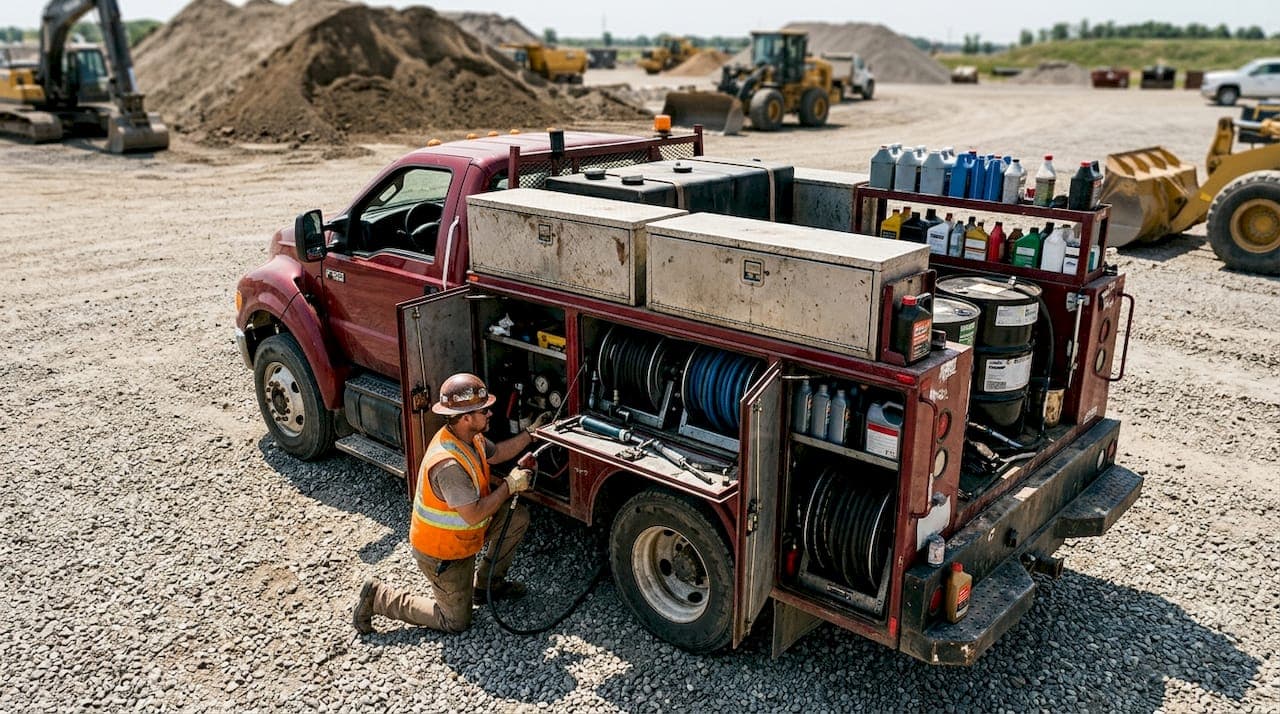
A lube truck is defined as a mobile maintenance vehicle built to store, manage, and dispense lubricants and fluids directly at a job site. These units serve excavators, dozers, loaders, graders, and trenchers without requiring operators to transport heavy machinery to a fixed shop. The lube truck definition covers a broad category of purpose-built service vehicles that handle engine oil, hydraulic fluid, gear oil, grease, and coolant in a single, self-contained platform. For owners and operators of industrial equipment, understanding what a lube truck does is the first step toward building a faster, more reliable maintenance program.
What is a lube truck and what does it do?
A lube truck is a specialized service vehicle that brings preventive maintenance directly to heavy equipment in the field. Rather than pulling a machine off a job site and hauling it to a shop, a lube truck operator drives to the equipment and performs fluid changes, lubrication, and inspections on the spot. This function alone separates lube trucks from general service vehicles.
Lube truck drivers perform lubrication, fluid changes, and preventive maintenance on excavators, dozers, loaders, graders, and trenchers. That range of equipment shows how broadly these trucks are deployed across construction, mining, oil and gas, and agriculture. The operator is a skilled technician, not just a driver.
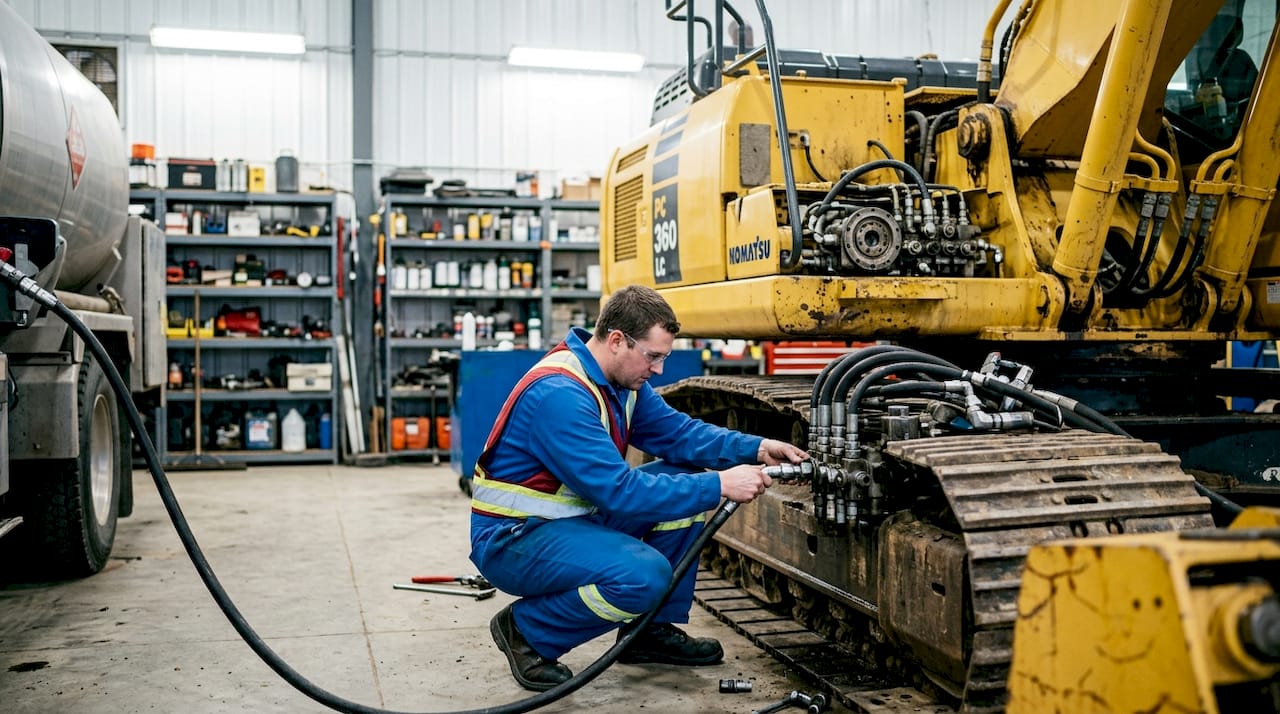
Mobile lubrication trucks integrate fluid management, compressed air, power generation, and tool storage into a single platform. This integration allows maintenance in remote or off-grid locations, which is where the real productivity gain appears. A crew working a pipeline corridor or a mine site cannot afford to idle a $500,000 excavator for a day just to get an oil change.
What are the main components and features of a lube truck?
A standard lube truck carries everything a technician needs to complete a full service call without outside support. The core hardware falls into three categories: fluid storage, dispensing systems, and power supply.
Fluid storage and compartments
A standard lube truck includes 3 to 6 product storage compartments, retractable hose reels, an integrated air compressor, and a self-contained power generator. Each compartment is dedicated to a specific fluid type to prevent cross-contamination. Waste fluid tanks are included to capture used oil and coolant for proper disposal.
Dispensing and power systems
Retractable hose reels connect to dedicated pumps for each fluid type. Digital flow meters track exactly how much fluid is dispensed per service call. That data supports environmental compliance reporting and helps fleet managers spot abnormal consumption patterns that signal equipment problems before a breakdown occurs.
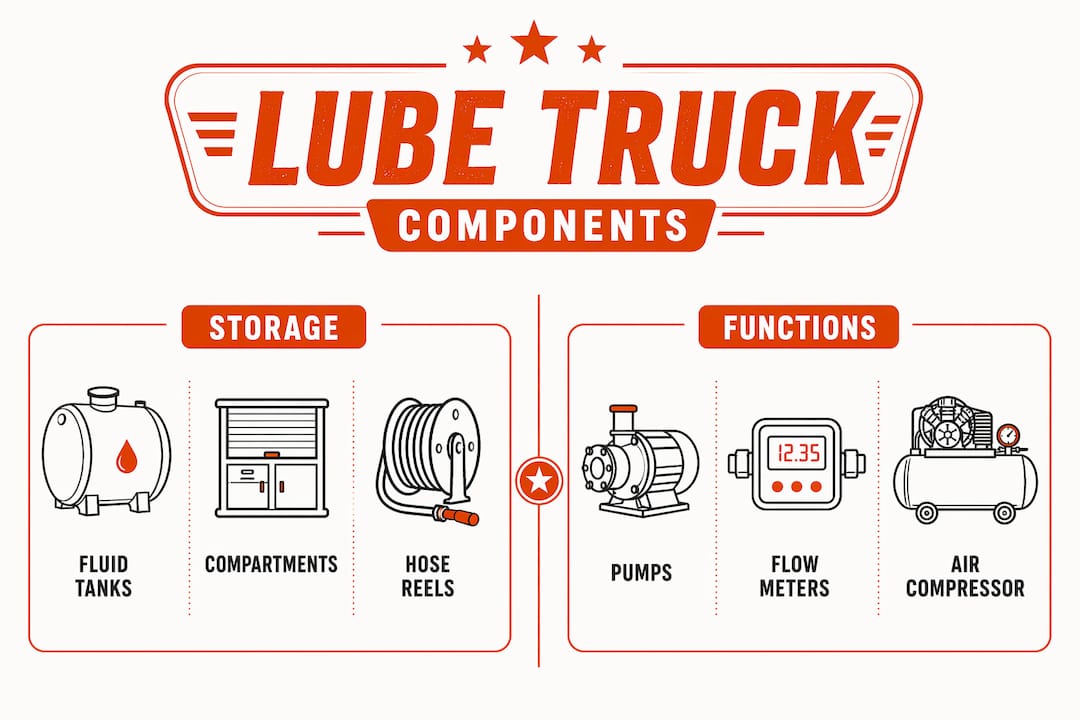
| Component | Function |
|---|---|
| Fluid compartments (3–6) | Separate storage for engine oil, hydraulic fluid, gear oil, grease, and coolant |
| Retractable hose reels | Deliver fluid to equipment access points with minimal spill risk |
| Air compressor | Powers pneumatic tools and assists with fluid transfer |
| On-board generator | Supplies electrical power independent of grid or equipment |
| Digital flow meters | Measure dispensed volumes for billing, compliance, and diagnostics |
| Waste fluid tanks | Contain used fluids for compliant off-site disposal |
Pro Tip: Install color-coded hose reel handles and fluid labels on every compartment door. Technicians working under time pressure in poor lighting make fewer errors when visual cues are unambiguous.
How does a lube truck reduce equipment downtime?
On-site lubricating avoids delays caused by moving bulky heavy equipment off site. That single operational shift changes the economics of fleet maintenance. A machine that stays on site loses minutes, not days, to a scheduled service.
The operational benefits stack up in a specific sequence:
- Scheduled service happens on time. When a lube truck arrives at the machine, there is no scheduling conflict caused by shop capacity or transport logistics. Preventive maintenance intervals are met consistently.
- Breakdowns drop. Consistent lubrication and fluid checks catch worn seals, low coolant, and contaminated hydraulic fluid before they cause component failure. Reactive repairs are far more expensive than preventive ones.
- Data drives planning. Modern lube trucks function as productivity assets that enable proactive maintenance planning through digital logging of service data. Real-time analytics help avoid equipment failures by tracking actual usage patterns across a fleet.
- Operators stay productive. Equipment operators do not wait for their machines to return from a shop. Work schedules hold, and project timelines stay intact.
- Fleet longevity increases. Machines that receive timely lubrication and fluid management last longer. That extends the return on capital investment for every unit in the fleet.
"Mobile lube trucks serve as real-time data collection points, enabling fleet managers to move from reactive repairs to proactive maintenance strategies. The truck is not just a service vehicle. It is a diagnostic tool on wheels."
What are common types of lube trucks and how do you choose the right one?
Lube trucks come in several configurations, and the right choice depends on fleet size, terrain, climate, and service volume. Getting this decision wrong costs money in either underperformance or unnecessary overhead.
Single-axle vs. tandem-axle
Single-axle lube trucks are lightweight and versatile for both highway and off-road use. Tandem-axle configurations provide greater fluid capacity and durability for larger fleets and extended service needs. The choice between axle designs directly affects service capacity and terrain suitability, which are critical factors in long-term fleet maintenance planning.
| Configuration | Best for | Trade-off |
|---|---|---|
| Single-axle | Smaller fleets, mixed highway and off-road routes | Lower fluid capacity per run |
| Tandem-axle | Large fleets, high-volume service, rough terrain | Higher purchase and operating cost |
| Open body | Mild climates, easy equipment access | No weather protection for fluids or tools |
| Enclosed body | Cold climates, harsh environments | Higher upfront cost, added weight |
Open vs. enclosed designs
Open body trucks offer easier access to compartments and lower weight. Enclosed trucks are the right call for cold-weather operations. Enclosed lube trucks feature insulation and heating systems that maintain fluid viscosity and pump performance in cold climates. Protecting fluids and systems in sub-zero conditions preserves equipment functionality and prevents pump failures that would sideline the service truck itself.
Key selection factors to evaluate before purchasing:
- Number of machines in the fleet and their fluid requirements
- Typical terrain and road conditions at job sites
- Average ambient temperature range across operating months
- Required fluid types and total volume per service cycle
- Regulatory requirements for waste fluid containment in your operating region
What best practices optimize lube truck operation?
Equipment alone does not guarantee productivity. Operational efficiency hinges on aligning the physical lube truck features with well-trained, consistent workflow patterns. A well-equipped truck operated by an undertrained crew will underperform a simpler unit run by a disciplined team.
Pro Tip: Map the full fluid circuit on paper before the first service run. Knowing exactly how fluid moves from supply tank through pump, hose, and application point to waste containment prevents valve sequencing errors that contaminate fluids or damage pumps.
The highest-impact practices for daily operation include:
- Train on the full fluid circuit. Training crews to understand the entire fluid circuit, from supply tanks through pumps and hoses to application points and back to waste containment, prevents errors like incorrect valve sequencing or fluid contamination. Operators with this knowledge reduce service mistakes and improve safety.
- Load strategically. Strategic loading places high-use fluids near hose reels and distributes weight evenly across the chassis. This reduces operator fatigue and prevents premature wear on suspension and tires.
- Standardize service sequences. A written checklist for each equipment type eliminates variation between technicians. Consistent sequences also make it easier to spot when something is wrong during a routine call.
- Inspect the truck itself. The lube truck is maintenance equipment. Hose reels, pump seals, flow meters, and generator components need scheduled inspection just like the machines they service.
- Use insulated units in cold climates. Fluid viscosity changes dramatically below freezing. An enclosed, heated unit is not optional in northern operations. It is the only way to maintain reliable pump performance and fluid delivery.
Key Takeaways
A lube truck is the most direct tool for converting reactive fleet repairs into a scheduled, data-driven maintenance program that protects uptime and equipment life.
| Point | Details |
|---|---|
| Core function | A lube truck delivers on-site lubrication and fluid management to heavy equipment without shop transport. |
| Key components | Storage compartments, hose reels, air compressor, generator, and digital flow meters form the service platform. |
| Downtime reduction | On-site servicing keeps machines running on schedule and supports proactive maintenance through data logging. |
| Configuration choice | Match axle type and body design to fleet size, terrain, and climate before purchasing. |
| Workflow training | Equipment capability only delivers results when crews understand the full fluid circuit and follow consistent procedures. |
Why lube trucks deserve more credit than they get
Most fleet managers think about lube trucks as support equipment, something that follows the real machines around. I think that framing undersells them badly. After years of watching maintenance programs succeed and fail, the pattern is clear: the fleets with the best uptime records are the ones that treat their lube trucks as primary productivity tools, not afterthoughts.
The data logging capability on modern units is the part that surprises operators most. When a technician records fluid consumption at every service call, that data builds a picture of each machine's health over time. Abnormal oil consumption on a specific excavator shows up weeks before a seal failure becomes a catastrophic repair. That is the difference between a $400 seal replacement and a $40,000 engine rebuild.
The other thing I have seen underestimated is the human side. A well-organized lube truck with logical fluid placement and clear labeling makes a technician's day measurably easier. Fatigue causes errors. Errors cause contamination. Contamination causes the exact equipment failures you were trying to prevent. The physical setup of the truck is not a minor detail. It is a safety and quality control decision.
If you are evaluating whether to add a lube truck to your fleet, the question is not whether you can afford one. The question is how much deferred and reactive maintenance is already costing you.
— Dave
Lube trucks available on Sostruckforsale
Sostruckforsale lists a wide range of commercial and industrial heavy equipment, including lube trucks for sale in single-axle, tandem-axle, open, and enclosed configurations. Whether you operate a small construction fleet or manage equipment across multiple sites, the platform connects you with verified listings that match your capacity and terrain requirements.
Buyers can filter by configuration, capacity, and condition to find units that fit their maintenance program without overpaying for features they do not need. Sostruckforsale also lists related heavy equipment including semi trucks, excavators, and heavy duty trucks, making it a practical single source for fleet acquisition decisions.
FAQ
What is a lube truck used for?
A lube truck is used to perform on-site lubrication, fluid changes, and preventive maintenance on heavy equipment including excavators, dozers, loaders, and graders. It eliminates the need to transport machinery to a fixed shop.
How does a lube truck work?
A lube truck carries dedicated fluid compartments, pumps, hose reels, an air compressor, and a generator. Technicians connect hoses to equipment service points and dispense measured amounts of oil, grease, hydraulic fluid, or coolant directly in the field.
What fluids does a lube truck carry?
Most lube trucks carry engine oil, hydraulic fluid, gear oil, grease, and coolant in separate compartments. Waste fluid tanks collect used fluids for compliant disposal.
What is the difference between a single-axle and tandem-axle lube truck?
Single-axle lube trucks are lighter and more maneuverable, suited for smaller fleets and mixed terrain. Tandem-axle units carry more fluid and handle heavier service demands across larger fleets.
Do lube trucks work in cold climates?
Enclosed lube trucks with insulation and heating systems maintain fluid viscosity and pump performance in sub-zero conditions. Open body units are not reliable in extreme cold without supplemental heating.