

A vocational truck is a specialized heavy-duty commercial vehicle engineered for specific industrial tasks rather than standard freight hauling. Unlike over-the-road trucks built for highway miles, vocational trucks are purpose-built for construction sites, waste management routes, mining operations, and utility work. Brands like Mack, Kenworth, and Freightliner dominate this segment with models designed around reinforced frames, Power Take-Off systems, and job-specific body configurations. If you are researching dump trucks, refuse haulers, or concrete mixers, you are already looking at vocational vehicles.
What is a vocational truck and how does it differ from other commercial trucks?
A vocational truck is defined by its duty cycle, not its size. These vehicles operate in low-speed, stop-and-go environments with continuous hydraulic loads, which is a fundamentally different demand than highway freight. The duty cycle difference between vocational and on-highway trucks is the single most important factor separating the two categories.
On-highway trucks like standard semi trucks are optimized for fuel efficiency at sustained highway speeds. Vocational trucks sacrifice fuel economy for durability, torque delivery at low RPM, and the structural capacity to carry or power heavy equipment. A concrete mixer running 30 stops per day puts entirely different stress on a drivetrain than a long-haul rig covering 600 miles overnight.
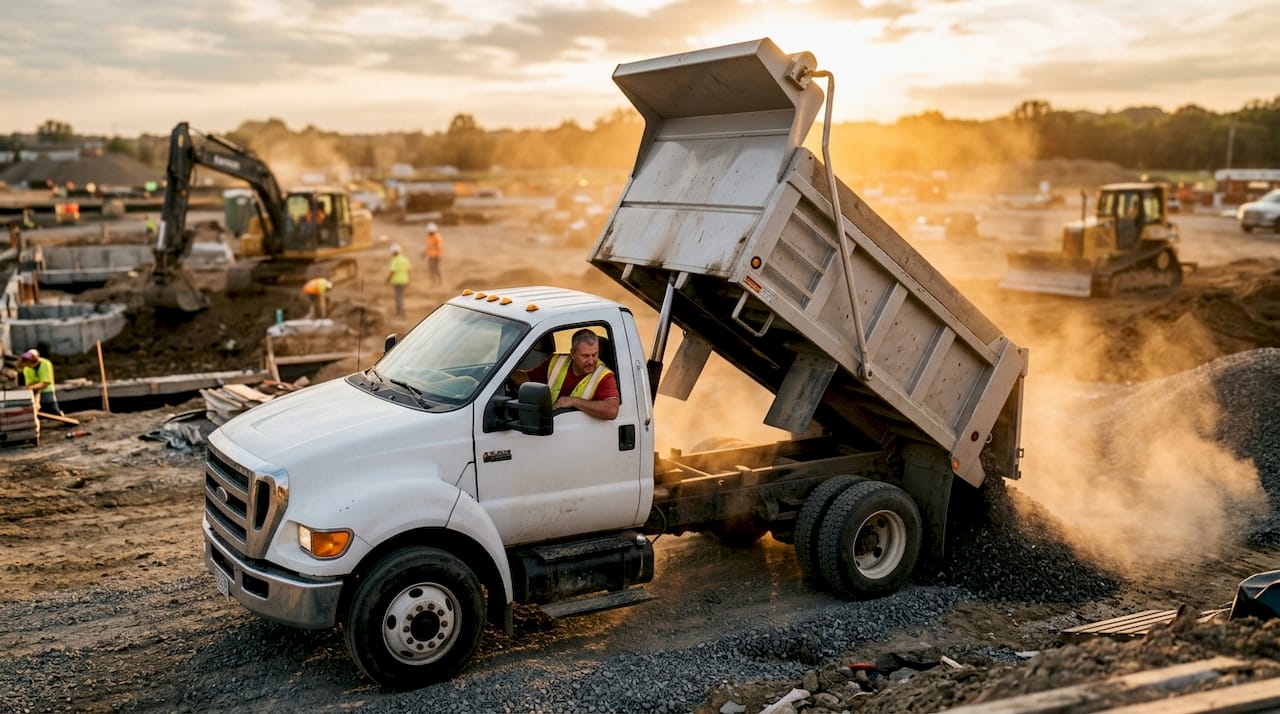
The term "vocational truck" is the recognized industry classification. You may also hear the phrase "vocational vehicle" used interchangeably in fleet procurement and regulatory contexts. Both terms refer to the same category of purpose-built commercial equipment.
What are the main types of vocational trucks and their specific uses?
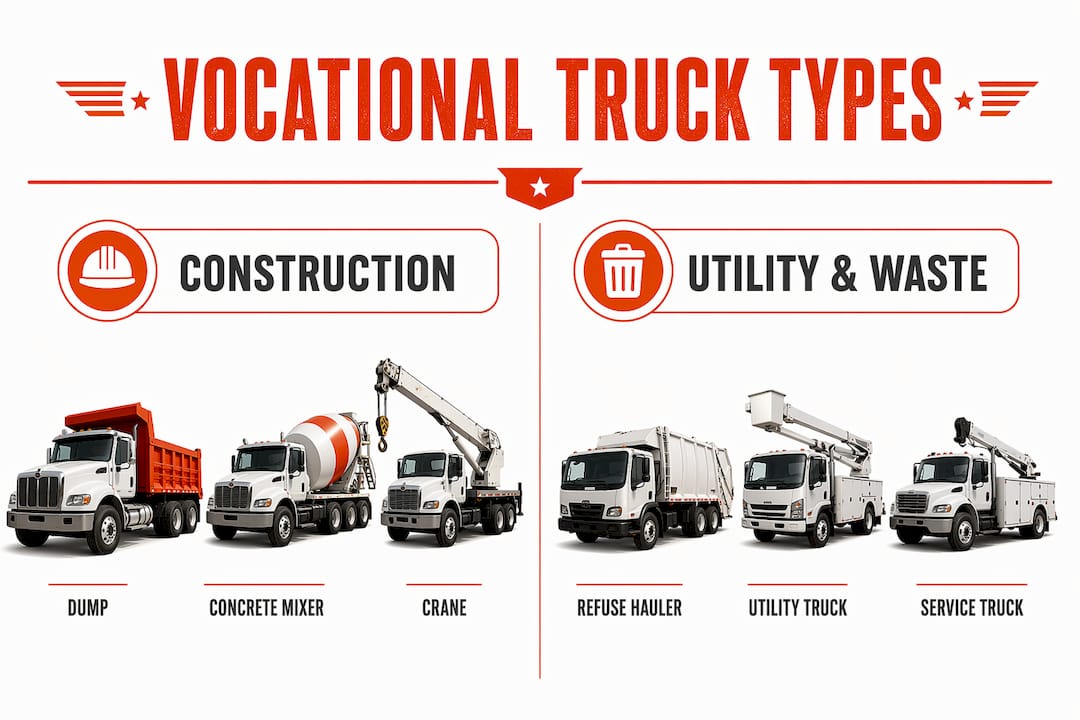
Common vocational truck types include dump trucks, refuse haulers, concrete mixers, service and utility trucks, and heavy-haul logging trucks. Each type is configured for a specific industry and task, with body designs that reflect the demands of that work.
- Dump trucks serve construction, mining, and excavation. They use hydraulic lift systems to unload loose material like gravel, sand, and demolition debris. Configurations range from standard rear-dump to side-dump and articulated off-road models.
- Refuse haulers operate on urban collection routes. Low-cab-forward designs like the Kenworth L770 improve driver visibility and reduce turning radius on tight city streets.
- Concrete mixers carry rotating drums that keep concrete in motion during transit. They require high-torque engines and PTO systems to drive the drum continuously.
- Utility and service trucks support electrical, telecom, and municipal crews. They carry aerial lifts, tool storage, and generator equipment.
- Logging and heavy-haul trucks move oversized loads across unpaved terrain. They use reinforced frames and multi-axle configurations to distribute extreme weight.
| Type | Primary Industry | Key Configuration |
|---|---|---|
| Dump truck | Construction, mining | Hydraulic lift bed, 6x4 or 8x4 axle |
| Refuse hauler | Waste management | Low-cab-forward, compactor body |
| Concrete mixer | Construction | Rotating drum, high-torque PTO |
| Utility truck | Utilities, telecom | Aerial lift, tool body |
| Logging/heavy-haul | Forestry, heavy industry | Reinforced frame, multi-axle |
The Kenworth L770 low-cab-forward is a strong example of how body configuration drives vocational truck design. Its tight turning radius and upfitter-friendly chassis make it a preferred choice for refuse operations in dense urban areas.
What are the defining features and technical specs of vocational trucks?
Vocational trucks are built around structural and mechanical systems that standard highway trucks do not carry. Reinforced frames and heavy-duty suspensions are the foundation. Frame racking, which is the twisting or warping of the chassis under uneven loads, is a real failure mode on job sites. Insufficient frame strength voids warranties and causes costly structural failures.
The core technical features that define vocational trucks include:
- Power Take-Off (PTO) systems that draw engine power to run auxiliary equipment like dump beds, cranes, and concrete drums. Experienced operators often prioritize PTO capability over raw engine horsepower.
- Drivetrain configurations such as 6x4, 6x6, and 8x8 that distribute torque across multiple axles for traction on unpaved or unstable terrain.
- High-torque engines rated for low-RPM pulling rather than high-speed cruising. Diesel engines in Class 8 vocational trucks typically produce torque figures suited to sustained hydraulic and mechanical loads.
- Electrical integration systems like the Mack Granite's BodyLink technology, which automates diagnostics between the chassis and the vocational body. This integration is becoming as important as engine torque for overall productivity.
- Upfitter-ready chassis with pre-wired connections and structural mounting points for cranes, aerial lifts, and specialized bodies.
Pro Tip: Match your PTO rating and hydraulic flow requirements to your specific body equipment before ordering. Retrofitting PTO systems after delivery adds significant cost and complicates the chassis warranty.
Vocational trucks also require more frequent maintenance than highway trucks. Air filter replacements and hydraulic fluid service must happen on shorter intervals because job site dust and continuous hydraulic cycling accelerate wear. Ignoring these schedules leads to early engine and hydraulic system failures.
How to evaluate and select the right vocational truck for your business
Selecting the wrong vocational truck costs more than the price difference at purchase. Mismatched specs relative to job terrain and duty cycle cause premature wear, higher repair costs, and reduced resale value. The most common mistake buyers make is chasing raw engine power instead of matching wheelbase, suspension, and axle configuration to actual job site conditions.
Follow these steps when evaluating a vocational truck purchase:
- Define your duty cycle first. How many stops per day? What terrain? What payload weight? These answers determine frame requirements, axle count, and suspension type before you look at any spec sheet.
- Specify your PTO and body requirements. Know the hydraulic flow rate and electrical load your body equipment demands. Confirm the chassis supports those specs from the factory.
- Choose the right axle configuration. A 6x4 works for paved construction sites. A 6x6 or 8x8 is necessary for off-road logging or mining where traction is critical.
- Calculate total cost of ownership. Purchase price is one line item. Fuel consumption, maintenance intervals, parts availability, and resale value determine the real cost over a five-year operating cycle.
- Plan upfitter integration early. Upfitter integration planning before the order is placed prevents expensive retrofitting of cranes, dump bodies, and electrical systems after delivery.
- Verify frame reinforcement ratings. Confirm the frame is rated for your maximum load and that the reinforcement matches your body mounting requirements. Under-spec'd frames void warranties under heavy vocational loads.
Pro Tip: Request a job site demonstration before committing to a model. Manufacturers like Kenworth and Mack regularly offer demo programs that let you evaluate real-world performance under your specific operating conditions.
Maintenance planning belongs in the selection process, not after purchase. Vocational trucks operating in construction or mining environments need air filter service intervals measured in hours, not miles. Budget for this from day one.
How vocational trucks differ from standard on-highway trucks
The operational gap between vocational and on-highway trucks is wider than most buyers expect. On-highway trucks are engineered for sustained speed, aerodynamic efficiency, and fuel economy over long distances. Vocational trucks are engineered for durability, torque, and structural integrity under repeated heavy loading at low speeds.
Misusing an on-highway truck in a vocational role causes predictable failures:
- Frame fatigue from loads the chassis was not rated to carry
- Transmission wear from repeated low-speed starts under heavy payload
- Suspension damage from unpaved terrain the system was not designed to handle
- Hydraulic system failures when PTO demands exceed the truck's rated capacity
"Vocational trucks are frontline tools, not freight haulers. Using the wrong truck for the job doesn't just reduce productivity. It accelerates every wear point on the vehicle simultaneously."
Modern vocational trucks are closing the technology gap with highway trucks. The Mack Granite's BodyLink electrical architecture connects chassis diagnostics directly to the vocational body, giving operators real-time data on equipment performance. This level of integration was uncommon in vocational trucks a decade ago and now represents a meaningful productivity advantage for fleets that use it correctly.
Key Takeaways
Vocational trucks are purpose-built commercial vehicles defined by their duty cycle, structural design, and job-specific configurations, making them fundamentally different from standard on-highway freight trucks.
| Point | Details |
|---|---|
| Vocational truck definition | A specialized heavy-duty vehicle built for specific industrial tasks, not highway freight. |
| Core feature: PTO systems | Power Take-Off capability is often more critical than engine horsepower for job site performance. |
| Frame reinforcement matters | Under-spec'd frames fail under vocational loads and void manufacturer warranties. |
| Match specs to duty cycle | Axle configuration, wheelbase, and suspension must align with terrain and daily job demands. |
| Maintenance is accelerated | Air filters and hydraulic fluid require shorter service intervals than on-highway trucks. |
What I've learned from watching buyers get vocational trucks wrong
Most buyers I observe focus on the engine spec sheet and stop there. They compare horsepower numbers, pick the bigger engine, and assume the rest of the truck will handle whatever the job site demands. That assumption is expensive.
The buyers who get it right start with the body equipment. They know exactly what hydraulic flow rate their dump bed or crane requires. They know whether their job site is paved, gravel, or soft ground. They build the truck spec around those answers, not around a number on a brochure.
The technology shift in vocational trucks is also moving faster than most fleet managers realize. Electrical integration systems like BodyLink are not optional extras anymore. They are the difference between a truck that gives you diagnostic data and one that leaves you guessing when something fails at 6 a.m. on a job site. Spec for the technology your operation will actually use.
Upfitter planning is the other area where I see consistent mistakes. Buyers order the truck, take delivery, and then figure out the body mounting. That sequence costs money every time. Plan the upfitter integration before you sign the purchase order.
— Dave
Vocational trucks available at Sostruckforsale
Sostruckforsale lists a wide selection of commercial and industrial heavy equipment, including vocational trucks configured for construction, waste management, utilities, and more.
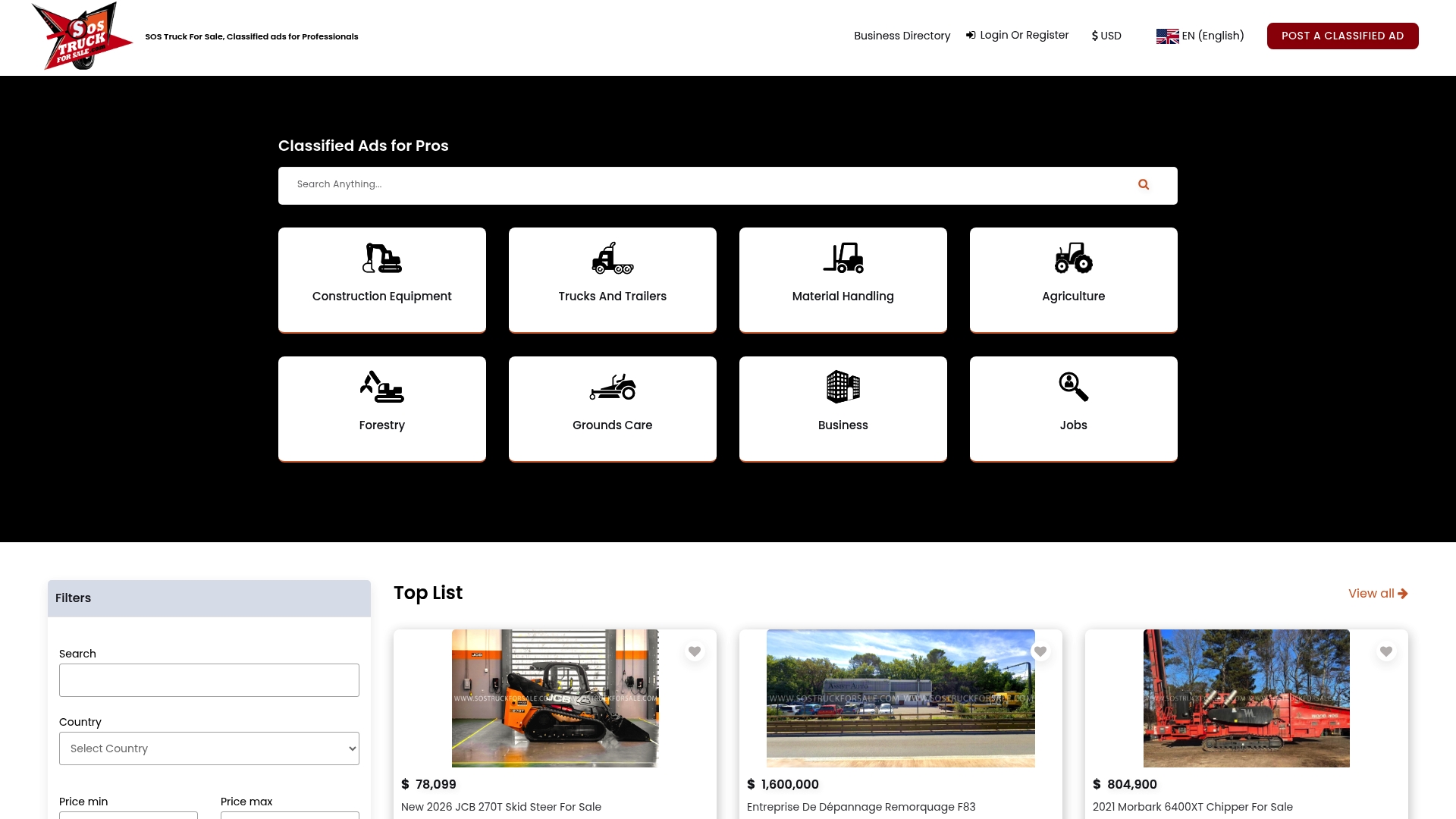
Whether you need a Class 8 dump truck, a refuse hauler, or a heavy-haul platform, Sostruckforsale connects buyers with verified inventory across multiple vocational categories. Each listing includes specifications so you can match the truck to your job site requirements before contacting a seller. Browse current vocational truck inventory and filter by configuration, axle setup, and application to find the right fit for your operation.
FAQ
What is the vocational truck definition in the trucking industry?
A vocational truck is a specialized commercial vehicle, typically Class 8, built for specific heavy-duty tasks like construction, waste management, or mining rather than general freight hauling. It features reinforced frames, PTO systems, and job-specific body configurations.
What are common examples of vocational trucks?
Common vocational truck examples include dump trucks, refuse haulers, concrete mixers, utility trucks with aerial lifts, and logging trucks. Each type is configured for a specific industry and operating environment.
How do vocational trucks differ from semi trucks?
Vocational trucks are built for low-speed, stop-and-go job site duty cycles with continuous hydraulic loads. Semi trucks are optimized for sustained highway speeds and fuel efficiency over long distances.
What is a PTO system on a vocational truck?
A Power Take-Off system draws engine power to operate auxiliary equipment like dump beds, cranes, or concrete drum drives. PTO capability is often more important than engine horsepower when selecting a vocational truck.
How often do vocational trucks need maintenance?
Vocational trucks require more frequent air filter replacements and hydraulic fluid service than highway trucks because job site conditions accelerate wear. Maintenance intervals are measured in operating hours rather than highway miles.