
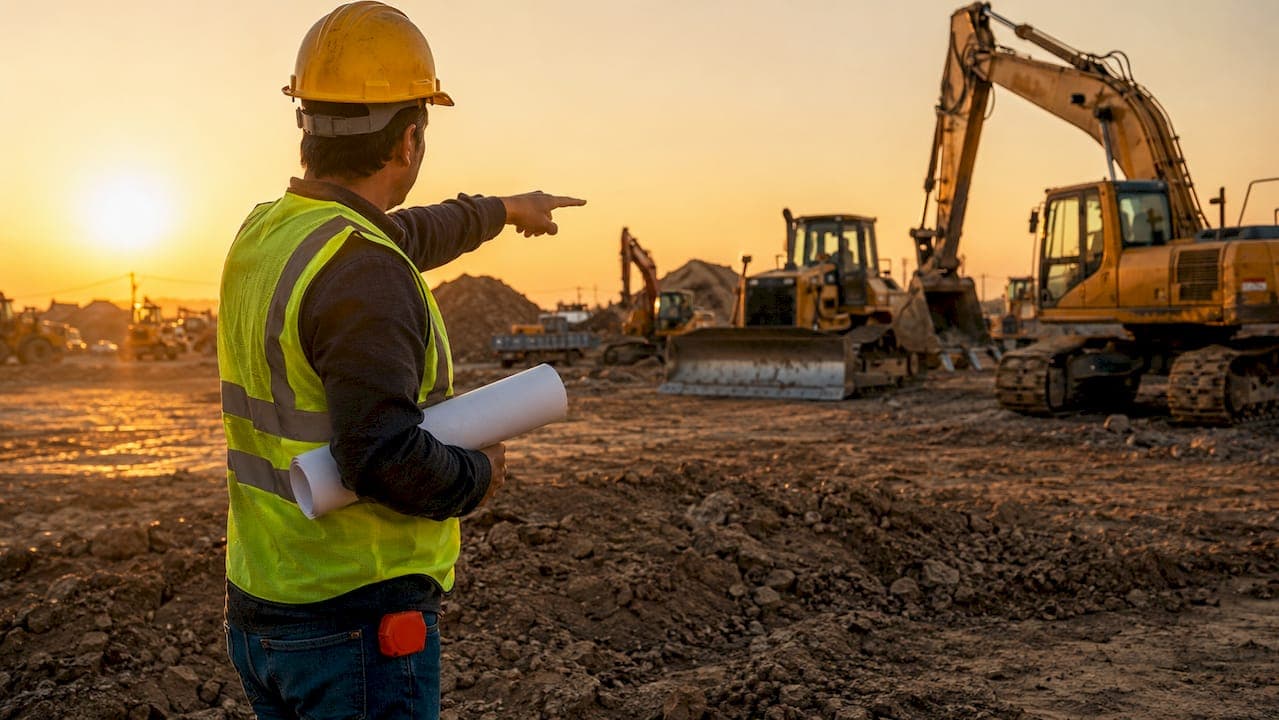
Heavy equipment is defined as heavy-duty machinery specially engineered to execute large-scale tasks that human labor alone cannot perform efficiently or safely. The term covers a wide range of machines used across construction, agriculture, forestry, mining, and industrial operations. These machines share a common structure built around five core systems: implement, traction, structure, power train, and control/information. Understanding what heavy equipment is, how it is classified, and where it is applied gives buyers, operators, and researchers a reliable foundation for making informed decisions.
What is heavy equipment and how is it defined?
Heavy equipment is not simply about size. Capability defines the category, meaning a machine qualifies as heavy equipment when it performs demanding, heavy-duty operations efficiently and safely at scale. A compact track loader used in tight urban excavation sites qualifies just as much as a 100-ton mining haul truck. Both are engineered to multiply human effort through mechanical systems that no hand tool can replicate.
The five systems that characterize heavy equipment are the implement (the working attachment), traction (wheels or tracks), structure (the frame), power train (engine and drivetrain), and control/information systems (operator interface and sensors). Each system works together to convert engine power into precise, repeatable work. This integrated design is what separates heavy machinery from standard commercial vehicles.
Industries that rely on heavy equipment include construction, agriculture, forestry, mining, and large-scale industrial operations. A road-building crew uses motor graders and asphalt pavers. A logging operation uses feller bunchers and skidders. A mining site uses excavators and haul trucks. The machine changes, but the principle stays the same: replace manual effort with engineered force.
What are the main types of heavy equipment?
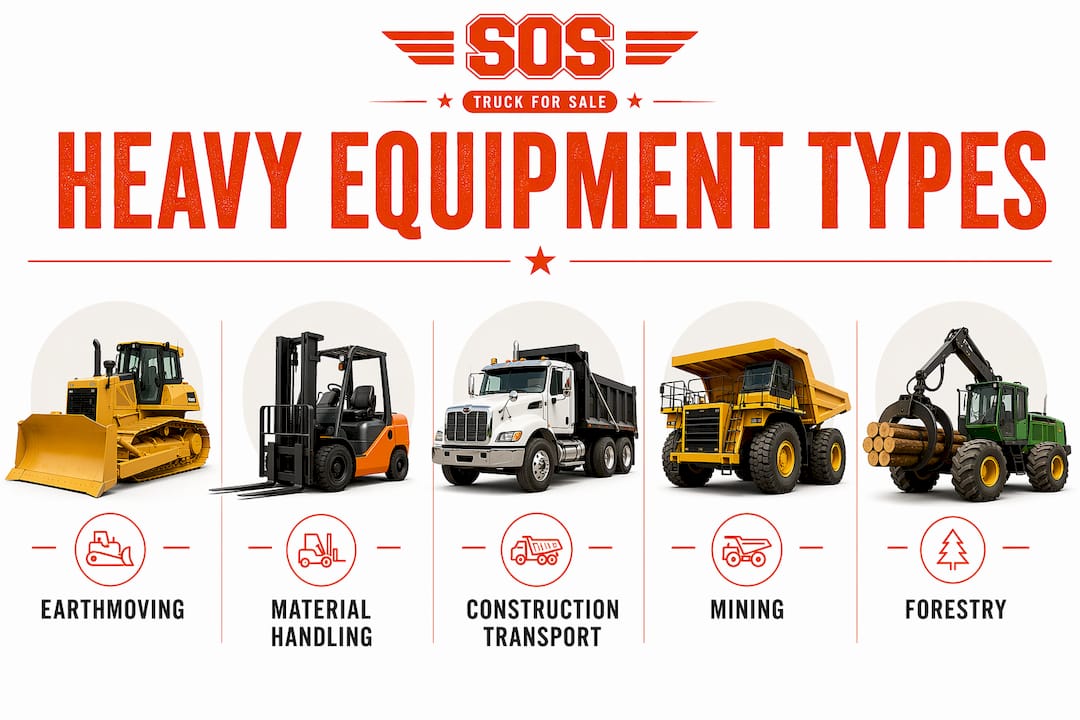
Construction equipment types are grouped by jobsite function, which helps fleet managers and project planners assign the right machine to each phase of work. The four primary categories are earthmoving equipment, material handling and lifting equipment, construction transport equipment, and roadwork equipment.
| Category | Primary Function | Common Examples |
|---|---|---|
| Earthmoving | Digging, grading, and moving soil or rock | Excavators, bulldozers, motor graders, scrapers |
| Material handling and lifting | Moving, placing, and lifting loads at height | Cranes, forklifts, telehandlers, aerial work platforms |
| Construction transport | Hauling materials across or off the jobsite | Dump trucks, articulated haulers, semi trucks |
| Roadwork | Building and finishing road surfaces | Asphalt pavers, compactors, road rollers, milling machines |
Earthmoving equipment handles the first and most labor-intensive phase of most projects. Excavators dig foundations and trenches. Bulldozers push large volumes of material across a site. Motor graders shape and level surfaces before paving begins. These machines define the early stages of construction and mining work.
Material handling equipment takes over once the site is prepared. Cranes lift structural steel into place on high-rise buildings. Telehandlers move pallets of materials across uneven terrain. Forklifts load and unload trucks in warehouse and industrial settings. Without this category, large-scale assembly and logistics would stall.
Construction transport equipment keeps the supply chain moving on and off site. Dump trucks haul excavated material to disposal sites. Articulated haulers navigate rough terrain where standard trucks cannot operate. Semi trucks deliver prefabricated components and heavy materials from suppliers to the jobsite.
How is heavy equipment engineered for efficiency and safety?
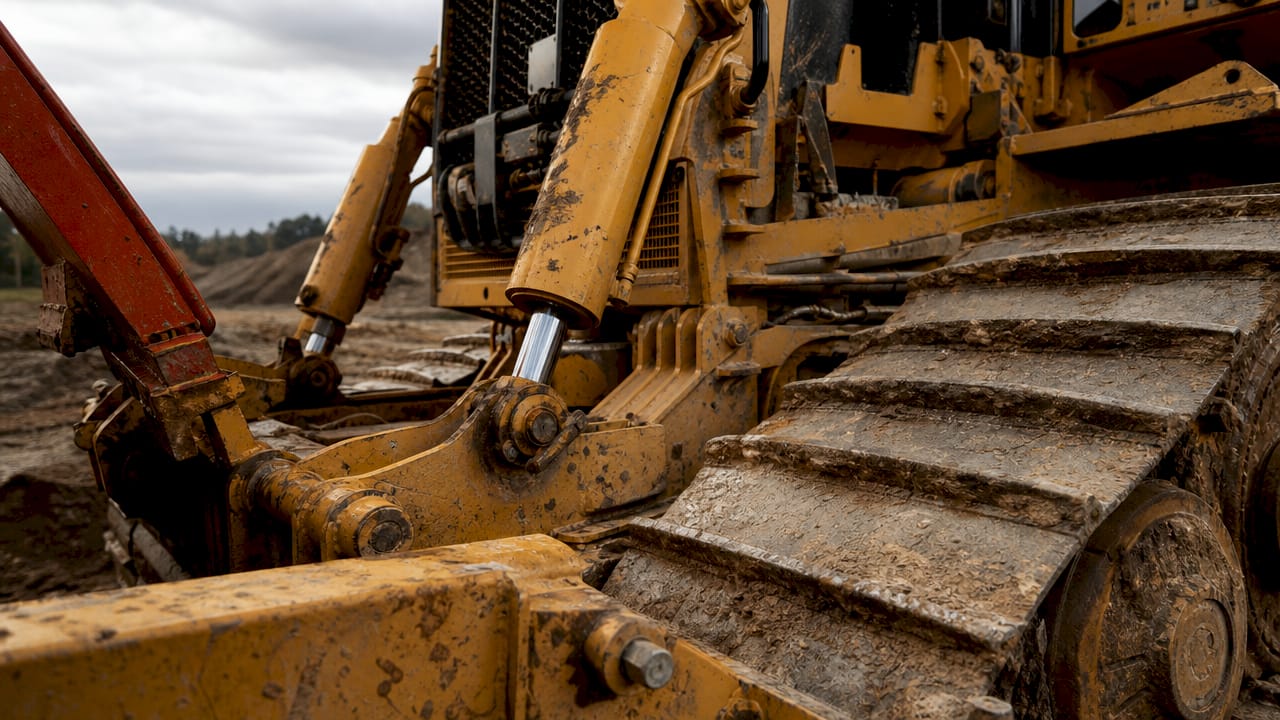
Hydraulics and control systems are the core engineering features that give heavy equipment its mechanical advantage. Hydraulic cylinders convert fluid pressure into linear force, allowing a relatively small engine to move thousands of pounds of material with precision. This is why an excavator arm can hold a loaded bucket steady mid-air without drifting.
Control and information systems have advanced significantly. Modern machines use electronic joysticks, load management sensors, and grade control technology to give operators real-time feedback. The operator interface is no longer just levers and pedals. It is a calibrated system that translates small inputs into large, controlled movements. This precision reduces material waste and lowers the risk of structural damage on sensitive sites.
Key engineering features that support both efficiency and safety include:
- Hydraulic systems that provide force multiplication without requiring oversized engines
- Operator cabs with ROPS (rollover protective structures) and FOPS (falling object protective structures)
- Backup alarms and cameras that alert ground workers to machine movement
- Load moment indicators on cranes that prevent overloading and tip-over events
- Grade control systems on motor graders and dozers that automate surface accuracy
Pro Tip: Before operating any machine, confirm that the attachment is rated for the host machine's hydraulic flow and pressure. Mismatched attachments reduce efficiency and can cause hydraulic failures mid-operation.
What are common industry applications and uses of heavy equipment?
Heavy equipment uses span every phase of major infrastructure and resource projects. The machine type matches the task, and the task matches the industry. Understanding this pairing is the fastest way to recognize why specific machines appear on specific jobsites.
Construction is the most visible application. Excavators dig utility trenches and building foundations. Bulldozers clear and grade raw land. Concrete pump trucks place concrete at height or distance. Cranes erect steel frames on commercial buildings. Road crews use asphalt pavers and compactors to lay and finish driving surfaces.
Agriculture uses heavy equipment for land preparation and harvest logistics. Tractors with loader attachments move grain and silage. Land planes grade fields for irrigation. Large-scale farms use GPS-guided equipment to till, plant, and harvest with minimal operator input.
Mining operations depend on the largest machines in the heavy equipment category. Haul trucks with payloads exceeding 300 tons move ore from pit to processing plant. Hydraulic shovels load those trucks in minutes. Continuous miners cut through coal seams underground. The scale of mining equipment reflects the volume of material that must move daily.
Common equipment and use-case pairings across industries include:
- Excavator paired with foundation digging, utility trenching, and demolition
- Bulldozer paired with land clearing, grading, and pushing stockpiles
- Crane paired with structural steel erection and heavy lift operations
- Dump truck paired with hauling excavated material and delivering aggregate
- Motor grader paired with road base preparation and surface finishing
- Forklift paired with warehouse loading, unloading, and material staging
- Asphalt paver paired with road construction and parking lot installation
Pro Tip: Match the machine to the underfoot conditions first. A wheeled excavator works well on firm, flat ground. A tracked excavator handles soft or uneven terrain far better. Choosing the wrong undercarriage type increases fuel consumption and machine wear.
What training and safety practices are required for operators?
Heavy equipment operation is a safety-critical activity that requires certified training combining classroom instruction with extensive hands-on field exercises. Operators learn machine controls, pre-operation inspection procedures, load calculations, and site communication protocols before they ever run a machine unsupervised. Institutions like TEEX provide structured programs covering equipment operation safety skills and industry-specific knowledge including work zone safety and excavation safety.
OSHA regulations require trained spotters for any vehicle with an obstructed rear view. Employers must train workers on hazard recognition, standard hand signals, and signaling procedures. When communication between a spotter and an operator breaks down, OSHA mandates that the operator stop immediately. That single rule prevents a large percentage of struck-by fatalities on active jobsites.
Core safety practices every operator and site supervisor must follow include:
- Pre-operation inspection of fluid levels, tires or tracks, lights, and safety devices before each shift
- Spotter communication using standardized hand signals on all sites with pedestrian traffic near moving equipment
- Exclusion zones that keep unauthorized workers out of the machine's swing radius and travel path
- Backup alarm verification before moving any machine in reverse, especially in congested areas
- Stop rule enforcement requiring operators to halt all movement when spotter contact is lost
Pro Tip: New operators most often make errors during machine startup and shutdown sequences, not during active operation. Training programs that drill pre-operation and post-operation procedures reduce incidents caused by unsecured attachments, engaged parking brakes left off, and missed fluid checks.
Key Takeaways
Heavy equipment is defined by its capability to perform demanding, large-scale tasks through integrated mechanical systems, not by size alone.
| Point | Details |
|---|---|
| Capability defines the category | A machine qualifies as heavy equipment based on its ability to perform heavy-duty tasks efficiently and safely. |
| Four functional categories | Earthmoving, material handling, construction transport, and roadwork cover the full range of heavy machinery types. |
| Hydraulics drive precision | Hydraulic systems combined with control interfaces give operators repeatable, force-multiplied movements at scale. |
| Training is mandatory | Certified operator training combining classroom and field exercises is required before unsupervised machine operation. |
| OSHA governs site safety | Spotters, backup alarms, and stop rules are regulatory requirements, not optional best practices. |
Why machine selection matters more than most people realize
Most people learning about heavy equipment focus on the machines themselves. The more useful frame is understanding the constraints that drive machine selection. Terrain type, attachment compatibility, project phase, and site access all determine which machine belongs on a given job. A machine that performs well on a dry, compacted site can become a liability on saturated clay. That is not a failure of the machine. It is a failure of selection.
What I find most underappreciated is how much hydraulics and control systems have changed the skill ceiling for operators. Older machines required physical strength and mechanical intuition. Modern machines require calibrated inputs and an understanding of load dynamics. An operator who understands how hydraulic pressure responds to attachment weight will consistently outperform one who treats the controls like a video game.
Safety communication is the other area where I see the biggest gap between training and practice. Standardized hand signals exist for a reason. When a spotter and operator are not using the same signals, the stop rule is the only backstop between a near miss and a fatality. That rule needs to be non-negotiable on every site, regardless of schedule pressure.
For anyone learning this field, spend as much time understanding attachments and undercarriage options as you do learning machine categories. The category tells you what a machine does in general. The attachment and undercarriage tell you what it can do on your specific job.
— Dave
Finding the right heavy equipment for your next project
Knowing the types and uses of heavy machinery is the first step. The next step is finding the right machine at the right price from a source you can trust.
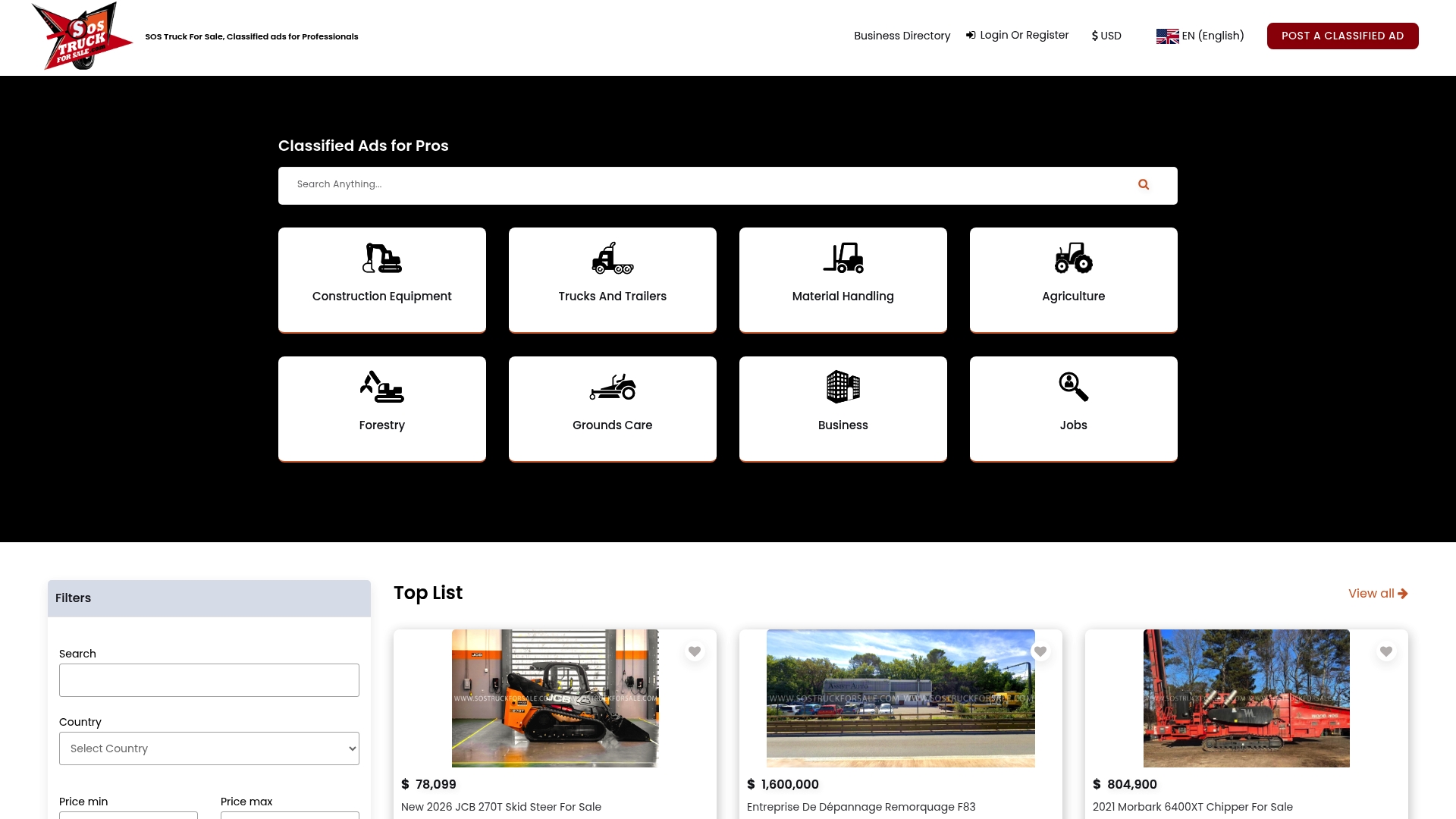
Sostruckforsale is a specialized marketplace for commercial and industrial heavy equipment, including excavators, semi trucks, and heavy duty trucks. The platform lists machines across categories so you can filter by type, condition, and application rather than sorting through general auction sites. Whether you need earthmoving equipment for a construction project or transport equipment for a logistics operation, browse available listings on Sostruckforsale to find machines matched to real jobsite needs.
FAQ
What is the heavy machinery definition used in industry?
Heavy machinery refers to equipment capable of performing heavy-duty tasks in industries like construction, agriculture, forestry, and mining. The defining factor is operational capability, not physical size alone.
What are the main types of heavy equipment?
The four main categories are earthmoving equipment, material handling and lifting equipment, construction transport equipment, and roadwork equipment. Examples include excavators, cranes, dump trucks, and asphalt pavers.
What are the most common heavy equipment uses in construction?
Construction sites use heavy equipment for excavation, grading, lifting structural components, hauling materials, and finishing road surfaces. Each project phase relies on a different machine category.
How do you learn to operate heavy equipment?
Operator training requires both classroom instruction and hands-on field exercises through certified programs. Institutions like TEEX offer structured courses covering equipment controls, safety protocols, and industry-specific hazard awareness.
What safety rules apply to heavy equipment on job sites?
OSHA requires trained spotters for vehicles with obstructed rear views and mandates that operators stop immediately when communication with a spotter is lost. Employers must also train workers on hazard recognition and standardized hand signals.