

Truck listing quality is defined as the completeness, accuracy, and visual presentation of a commercial vehicle's online listing, and it directly determines how fast that unit sells and at what price. Dealers and operational managers who treat listings as a secondary task consistently lose ground to competitors who treat them as a sales tool. The commercial trucking market in 2026 rewards precision: buyers are comparing specs, photos, and condition reports across multiple platforms before making a single phone call. Understanding why truck listing quality matters is the first step toward improving inventory turnover, protecting price points, and building lasting buyer trust.
Why truck listing quality matters for sales outcomes
A high-quality truck listing is not just a description. It is the first qualification filter between your inventory and a serious buyer. Filling out every searchable field remains the single most reliable way to improve search ranking and conversion rates on commercial marketplaces. That means cab style, bed length, drivetrain, tow package, axle configuration, and gross vehicle weight rating. Every missing field is a reason for a procurement manager to move to the next listing.
Buyer psychology in commercial trucking is driven by risk aversion. A fleet manager sourcing a Class 8 semi truck is not browsing casually. That buyer needs to justify the purchase internally, often to a CFO or operations director. Buyers won't tolerate listings missing hours, serial numbers, and transport readiness in the first screen. When that information is absent, the buyer does not call to ask. They leave.

Professional buyers also read listing quality as a proxy for how the seller operates. Sloppy listings signal poor maintenance; polished listings show operational discipline. A dealer who posts 30 clear photos, fills every spec field, and includes a recent inspection report is communicating something beyond the truck itself. They are communicating that their business is organized and trustworthy.
Pro Tip: Build a standard photo checklist for every unit: front three-quarter, rear three-quarter, driver side, passenger side, engine bay, interior cab, odometer, tires, and any visible damage. Consistency across all listings builds brand credibility on any marketplace.
Key listing elements that define quality:
- Specifications: Cab style, bed length, drivetrain, axle ratio, tow package, engine make and model, transmission type
- Condition data: Odometer reading, hours if applicable, tire condition, frame condition, any known repairs
- Documentation: Serial number (VIN), maintenance history, inspection reports, warranty letters
- Photography: Minimum 20–30 images covering all angles, interior, engine bay, and any damage
- Transport readiness: Whether the unit is ready to drive away or requires delivery coordination
How listing quality drives inventory turnover and pricing
The connection between listing quality and sales speed is measurable. Vehicles not moving within the first 14 days often become 80+ day inventory units. That statistic carries serious financial weight. A truck sitting on the lot for 80 days accumulates floor plan interest, insurance costs, and opportunity cost. A listing that fails to generate qualified inquiries in the first two weeks is almost certainly missing critical information.
Pricing is equally affected. High-converting listings justify higher price points by filtering out unqualified buyers and attracting buyers who have already validated the unit against their requirements. A buyer who arrives at a phone call having reviewed 30 photos, a full spec sheet, and an inspection report is not going to negotiate from a position of uncertainty. They negotiate from a position of confidence, and that confidence supports your asking price.
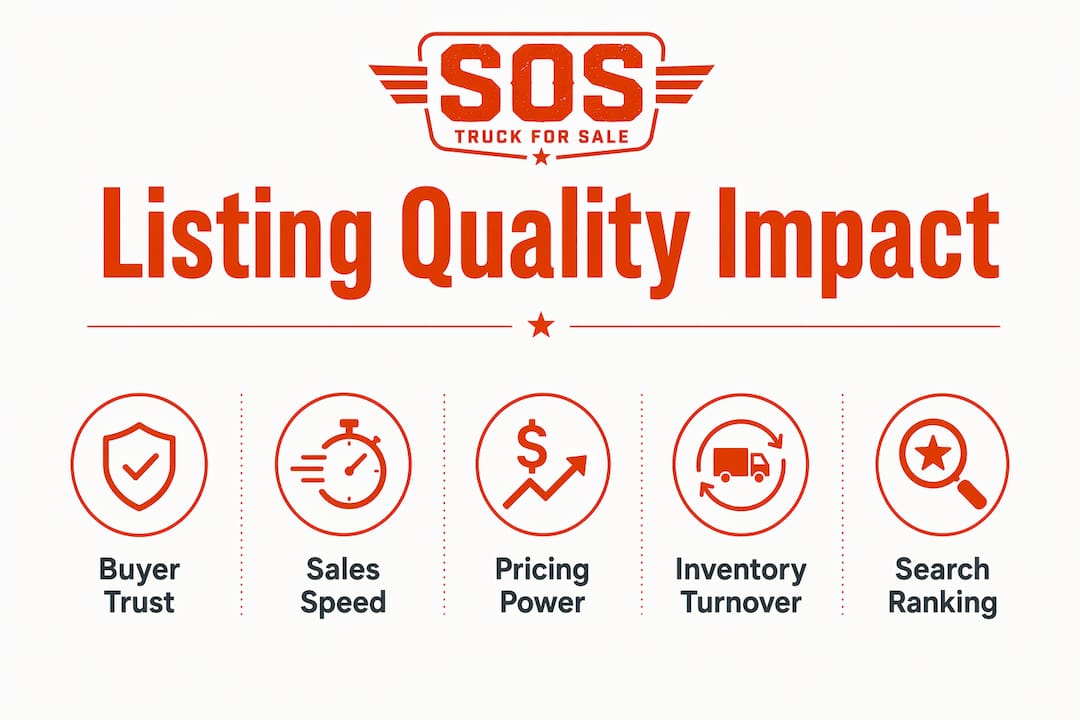
The table below shows how listing completeness affects key performance metrics across commercial truck sales:
| Listing element | Impact on performance |
|---|---|
| Full spec fields completed | Higher search ranking, more qualified inquiries |
| 20–30 professional photos | Faster buyer decision, fewer "can you send more photos" delays |
| Inspection report attached | Reduced price negotiation, higher buyer confidence |
| Serial number and VIN visible | Filters serious buyers, reduces fraud risk |
| Transport readiness stated | Eliminates logistical uncertainty for remote buyers |
Listings with 30 photos, filled specs, and pricing rank higher than sparse listings due to algorithmic ranking on major commercial marketplaces. That ranking advantage compounds over time. Dealers who consistently post complete listings build domain authority on platforms, which means their new inventory surfaces faster and to more buyers.
Commercial vs. private truck sales: how listing standards differ
The importance of truck listing quality shifts depending on who is buying. Commercial buyers, including fleet operators, logistics companies, and construction firms, are data-driven and risk-averse. Private buyers are more price-sensitive and often more willing to accept incomplete information in exchange for a lower price. These two buyer profiles require different listing strategies.
| Factor | Commercial buyer | Private buyer |
|---|---|---|
| Primary concern | Operational fit, reliability, documentation | Purchase price, condition |
| Tolerance for missing data | Very low | Moderate |
| Decision timeline | Longer, involves multiple stakeholders | Shorter, individual decision |
| Listing channel preference | Dedicated commercial marketplaces | General classifieds, forums |
| Response to inspection reports | Strong positive signal | Nice to have, not required |
Commercial buyers treat a listing the way an auditor treats a financial statement. Every gap is a red flag. Private buyers may overlook a missing spec field if the price is right. This distinction matters for dealers who list the same unit across multiple channels. The listing built for a commercial marketplace should include every field, every document, and every photo. A stripped-down version for a general classified site may perform adequately for private buyers but will fail with commercial procurement managers.
Configuration details also affect search ranking differently across channels. On dedicated commercial truck platforms like Sostruckforsale, algorithmic ranking rewards completeness. On general classified sites, price and location dominate. Dealers who understand this dynamic allocate their listing effort where it produces the highest return.
Operational workflow issues that hurt listing data quality
Listing quality is not just a marketing problem. It is an operational problem. Stalled vehicles in reconditioning create invisible inventory debt that affects the digital customer experience. A truck that is physically on the lot but not yet listed, or listed with placeholder data, is generating zero revenue while accumulating costs. This is a workflow failure, not a listing failure.
The root causes of poor listing data quality in commercial dealerships typically include:
- No intake audit process: Units arrive from wholesalers or trade-ins without verification of odometer, condition, or documentation against the seller's representations
- Reconditioning bottlenecks: Units stuck in service bays are either not listed or listed with inaccurate condition data
- No status visibility: Sales staff cannot see where a unit is in the reconditioning process, so listings go live with incomplete information
- Data entry errors: Manual entry of specs from paper documents introduces errors that damage buyer trust
- Photo delays: Photography happens after listing goes live, leaving the listing live with no images during its most critical early window
A single mispresented vehicle online negatively impacts Customer Satisfaction Index scores and erodes digital customer trust. One bad listing does not just lose one sale. It damages the dealership's reputation on the platform and with every buyer who encountered that listing. The cost of data feed failure in commercial vehicle listings has increased significantly as buyers rely more heavily on digital research before any in-person contact.
Pro Tip: Implement a mandatory intake checklist that must be completed before any unit enters your inventory management system. Require VIN verification, odometer confirmation, and a minimum of 10 photos before a listing goes live. This single process change eliminates most data quality failures at the source.
How to improve truck listings and boost buyer engagement
Improving truck listing performance requires a structured approach, not a one-time effort. The following steps give dealers and operational managers a repeatable process for maintaining listing quality across their entire inventory.
-
Build a photo protocol and enforce it. Assign one person or a rotating responsibility for photography. Require a minimum of 20 images per unit using a standardized shot list. Photos taken in consistent lighting with a neutral background perform better than ad-hoc shots taken in a crowded lot.
-
Create a specification checklist for every unit class. A Class 8 semi truck checklist differs from a medium-duty flatbed checklist. Build class-specific templates that cover every searchable field on your primary listing platforms. Require 100% completion before a listing goes live.
-
Upload supporting documentation. Inspection reports, warranty letters, and service logs attached to a listing significantly increase buyer confidence in commercial equipment sales. Buyers who can download a recent inspection report before calling are better qualified and more likely to close.
-
Audit listings weekly for accuracy. Prices change, units move through reconditioning, and conditions are updated. A listing that was accurate on day one may be misleading by day 14. Assign a weekly audit responsibility to catch and correct stale data before it damages buyer trust.
-
State transport readiness explicitly. Remote buyers, particularly those purchasing semi trucks or heavy equipment across state lines, need to know whether a unit is ready to drive away, requires a transport carrier, or needs pre-delivery service. Stating this upfront eliminates a common friction point in the inquiry process.
-
Use market feedback to refine listings. Track which listings generate inquiries and which do not. If a unit has been live for 10 days with no contact, review the listing against your checklist. Missing photos or incomplete specs are the most common causes of low engagement on otherwise competitively priced inventory.
Key Takeaways
High-quality truck listings directly reduce time on lot, protect asking prices, and build the buyer trust that drives repeat commercial relationships.
| Point | Details |
|---|---|
| Listing quality drives sales speed | Trucks without qualified inquiries in 14 days typically become 80+ day inventory units. |
| Complete specs improve search ranking | Filling every searchable field increases visibility and conversion rates on commercial marketplaces. |
| Documentation supports price integrity | Inspection reports and service logs reduce price negotiation by reducing buyer uncertainty. |
| Workflow failures create listing failures | Reconditioning bottlenecks and intake gaps produce inaccurate listings that damage buyer trust. |
| Commercial buyers demand data upfront | Procurement managers abandon listings missing serial numbers, hours, and transport readiness. |
What I've learned after years of watching listings succeed and fail
I have watched dealers invest in new inventory, competitive pricing, and strong service departments, then lose deals because their listings looked like they were typed in five minutes. The truck was right. The price was right. The listing was not.
The dealers who consistently move inventory faster are not always the ones with the best trucks. They are the ones who treat every listing as a sales document. They photograph every unit the same day it clears reconditioning. They fill every field. They attach the inspection report. They state the transport readiness. And then they audit the listing a week later to make sure nothing has changed.
The uncomfortable truth is that buyers want listings that act like a filter, not a puzzle. When a procurement manager has to call to ask for the VIN, the axle ratio, or whether the truck is ready to ship, you have already lost ground to the dealer who put that information in the listing. The call that should be about closing the deal becomes a call about gathering basic facts.
I have also seen the operational side of this problem. Dealers who struggle with listing quality almost always have a workflow visibility problem underneath it. The listing is the symptom. The cause is that nobody knows where the truck is in the reconditioning process, so the listing goes live before it is ready. Fix the workflow, and the listing quality follows.
— Dave
List your commercial trucks where buyers are already looking
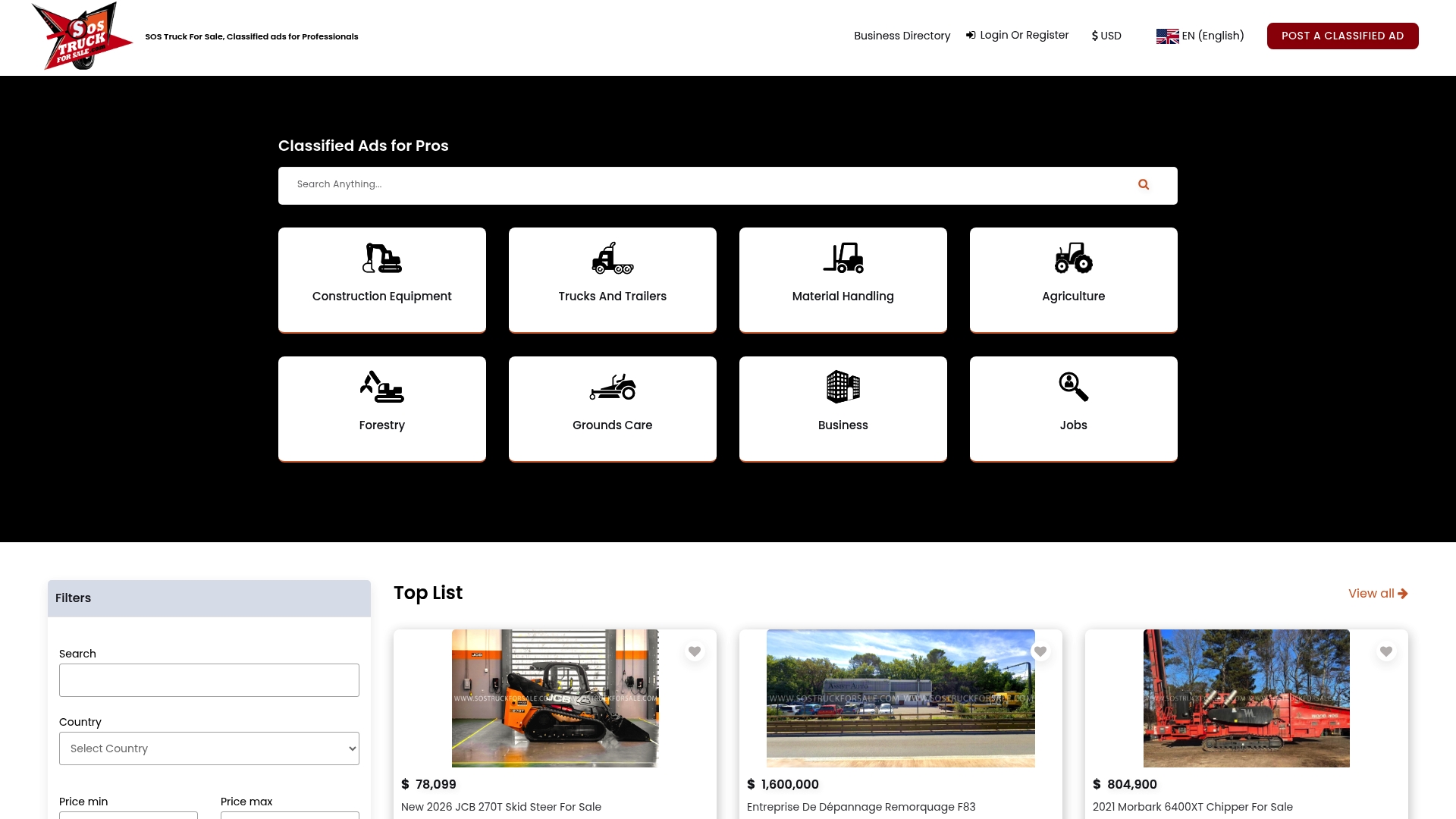
Sostruckforsale is a dedicated marketplace for commercial and industrial heavy equipment, including semi trucks for sale, heavy duty trucks for sale, and excavators for sale. Dealers who list on Sostruckforsale reach procurement managers and fleet operators who are actively searching for verified, detailed inventory. The platform is built for commercial listings, which means your spec fields, photos, and documentation get in front of buyers who know exactly what they need. If you are ready to put your inventory in front of serious commercial buyers, list your trucks on Sostruckforsale today.
FAQ
Why does truck listing quality affect how fast a unit sells?
Trucks with complete specs, professional photos, and attached documentation generate qualified inquiries faster. Vehicles that fail to attract buyer contact within 14 days frequently remain unsold past 80 days.
What information must a commercial truck listing include?
A commercial truck listing must include the VIN, odometer reading, cab style, drivetrain, axle configuration, engine make, transmission type, tire condition, and transport readiness. Inspection reports and service logs increase buyer confidence significantly.
How do photos affect truck listing performance?
Listings with 20–30 professional photos rank higher on commercial marketplaces and reduce the back-and-forth that delays deals. Buyers who can fully assess a unit visually are better qualified when they make contact.
Does listing quality affect the final sale price?
Complete, transparent listings support higher asking prices by attracting buyers who have already validated the unit against their requirements. Buyers with full information negotiate from confidence, not uncertainty.
What internal process causes the most listing quality problems?
Reconditioning bottlenecks are the most common cause. When units stall in service without status visibility, listings go live with inaccurate or incomplete data, which damages buyer trust and slows inventory turnover.