
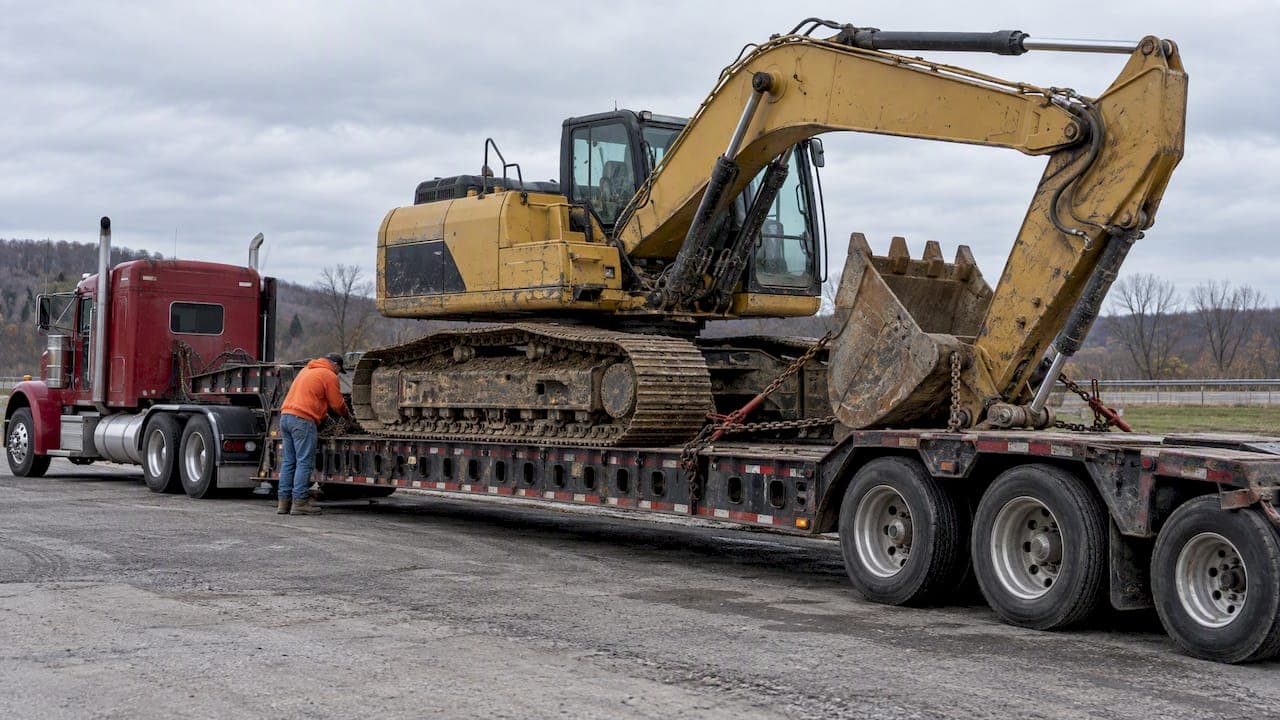
Shipping heavy equipment typically runs $2 to $10 per mile depending on size, distance, and permit needs, with a local move for a compact machine often costing a few hundred dollars and a cross-country oversize haul can cost several thousand dollars. Weight and dimensions, permit and escort requirements, and route restrictions drive most of that variation. To get a real number instead of a range, we need the equipment's dimensions, weight, and whether it runs under its own power.
TL;DR:
- Legal size machinery on a standard lowboy often costs $2 to $4 per mile, while permits, escorts, and loading can raise oversize totals sharply.
- A simple permit can cost under $50, while multistate permits may reach several hundred dollars; each pilot vehicle adds $2 to $3 per mile.
- Standard shipments can move within 48 to 72 hours, but oversize loads usually need 5 to 10 business days for booking and permits.
- Send carriers exact dimensions, weight, operability, route addresses, and dates, then request separate prices for permits, escorts, loading, rigging, and insurance.
- Short hauls often cost more per mile because loading, permits, and driver time are spread across fewer miles; operable machines avoid crane or rigging charges.
Table of Contents
- 1. Typical cost estimates and worked examples
- 2. Primary factors that influence price
- 3. Common trailer types and when to use each
- 4. Permits, regulations, and cargo securement basics
- 5. Typical timeline and the shipping process
- How to get accurate quotes: a copy-paste checklist
- Marketplace and author expertise that support this guidance
- Logistics coordination for multi-modal shipping options
- Preparation and packaging requirements to protect heavy equipment during transport
- Regulations and certifications for international shipping if applicable
- Steps to verify carriers' credentials and reliability specifically for heavy equipment
- Cost-saving tips and strategies for shipping heavy equipment
- Practical closing perspective
- How Sostruckforsale helps make listings shipping-ready
- FAQ
- Sources
1. Typical cost estimates and worked examples
Per-mile pricing depends heavily on load classification. A legal-size machine on a standard lowboy that stays within federal weight and dimension limits often moves for $2 to $4 per mile. Oversize heavy-haul loads that need permits typically run several dollars per loaded mile, and superloads, those exceeding standard oversize thresholds in multiple dimensions, can push well past that band once permits and escorts are priced in.
A few worked examples show how the math plays out:
- A small skid steer moving locally, with no permits required, often costs several hundred dollars total.
- A mid-size excavator moving regionally on a lowboy, with a single oversize permit, often costs a few thousand dollars.
- A large dozer moving cross-country as an oversize load, requiring multiple state permits and one or two pilot escorts, commonly costs several thousand to over ten thousand dollars.
These figures assume a single pickup and drop-off with no teardown. Add-ons change the total fast. Permits generally run from under $50 for a simple single-state pass to several hundred dollars when multiple states and axle configurations are involved. Pilot car escorts, needed when a load exceeds certain width or height thresholds, typically add $2 to $3 per mile per escort vehicle. Crane or rigging work for loading an inoperable machine can add several hundred to a few thousand dollars, and cargo insurance riders for high-value equipment usually add a modest percentage of the declared value. None of these are guaranteed figures until a carrier quotes your specific load, but they set realistic expectations before you start calling.
2. Primary factors that influence price
Every quote starts with the same handful of variables, and understanding how they interact helps explain why two seemingly similar moves can carry very different price tags.
- Dimensions and weight determine which trailer a carrier can use and whether a permit is required at all; crossing a state's legal width, height, or weight threshold moves you from a standard flatbed rate into oversize territory.
- Distance affects price in a counterintuitive way: short hauls often carry a higher per-mile rate because fixed costs like loading, permits, and driver time get spread over fewer miles.
- Route constraints, including low bridges, narrow lanes, and seasonal load restrictions in colder states, can force a longer detour that adds both miles and permit complexity.
- Operational condition matters too. A machine that runs and can be driven onto a trailer under its own power is cheaper to load than one that needs a crane, rigging, or partial disassembly.
Pro Tip: Ask the carrier early whether your load's width or height crosses a state oversize threshold, since that single detail changes the permit, escort, and trailer requirements all at once.
3. Common trailer types and when to use each
Trailer choice shapes both legality and cost, so naming the right one in your quote request avoids a mismatch later.
- Lowboys and double-drops sit low to the ground, making them the standard choice for tall equipment like excavators and loaders, and they often avoid height permits that taller trailers would trigger.
- Step decks and flatbeds work well for shorter, wider items such as skid steers or small compactors, but they have height limits that rule out taller machines.
- Extendable and multi-axle trailers handle unusually long or heavy items, such as large dozers or crane components, by spreading weight across more axles to stay within legal per-axle limits.
Our guide to drop deck trailer specs breaks down these configurations in more detail, which is worth a look before you request quotes, since the wrong trailer request can send your quote back to square one.
4. Permits, regulations, and cargo securement basics
Federal law sets a baseline gross weight limit of 80,000 pounds on the Interstate System, and the FAST Act gives individual states permit authority to allow non-divisible loads, like most heavy equipment, to exceed that limit under a permit. Each state sets its own permit fees and escort rules, so a cross-country move often means stacking permits from every state on the route.
Permits and escorts can add a meaningful share of an oversize move's total cost, and state rules on fees and escort requirements vary widely, so budgeting for them early avoids sticker shock at pickup.
Securement is the other piece carriers check before they accept a load. FMCSA cargo securement guidance under §393.130 allows certain accessories, like a bucket or boom, to stay raised during transport if they are designed for it, but they must be locked in place. Confirm permits and route approvals before you accept a carrier's rate, since a rate quoted without permit confirmation can change once the paperwork is filed.
5. Typical timeline and the shipping process
Routine, legal-size moves can often be booked within a few days, while oversize or superload shipments need more lead time because permits take longer to process and some states batch approvals on set schedules.
- Booking: Standard loads can move within 48 to 72 hours; oversize loads often need 5 to 10 business days of lead time.
- Permitting: Processing windows vary by state and season, and backlogs are common during peak construction months.
- Loading and staging: Plan for a dedicated day with clear site access, since cranes and rigging crews work on their own schedules.
- Weather and route changes: Storms, bridge postings, and last-minute detours can push delivery dates and sometimes require a new permit altogether.
How to get accurate quotes: a copy-paste checklist
A quote is only as good as the information behind it, and vague requests get vague numbers back. Use this checklist when you contact carriers so every quote you receive is comparable.
- Make and model, transport weight, and empty weight.
- Transport dimensions: length, width, and height, plus the machine's footprint.
- Attachments or accessories, and whether they can be removed or must be secured in place.
- Operable or inoperable status, since inoperable machines usually require a crane or winch.
- Exact pickup and drop-off addresses, including gate clearance, approach angle, and staging space.
- Required pickup and delivery dates, with any flexibility noted.
Ask each carrier to itemize permits, escorts, loading, rigging, and insurance separately rather than bundling them into one number. Our seller's checklist for shipping sold equipment walks through the same measurements from a seller's point of view, which pairs well with this list if you are coordinating a sale and a shipment at once.
| Quote source | What it gives you | What it leaves out |
|---|---|---|
| Online estimator | A fast ballpark range for budgeting | Permit fees, escort costs, exact route constraints |
| Broker or carrier quote | A binding or near-binding number tied to your specs | Speed, since it takes longer to generate |
Marketplace and author expertise that support this guidance
We run Sostruckforsale as a listing marketplace for commercial and industrial heavy equipment, where sellers regularly post dimensions and weights alongside their listings. That habit of publishing full specs upfront is what makes a shipping quote fast and accurate instead of a guessing game.
Logistics coordination for multi-modal shipping options
Not every heavy equipment move happens entirely on a highway. For long distances or international routes, carriers sometimes combine truck transport with rail or ocean freight to cut cost or reach a destination that trucks alone cannot serve efficiently.
Rail works best for very long domestic distances where time is flexible, since equipment gets loaded onto a flatcar at an origin terminal and trucked only for the first and last legs. This combination, often called drayage on each end, can lower per-mile cost on the middle stretch but adds coordination complexity and terminal handling fees.
Ocean freight becomes relevant for equipment heading overseas or between coasts when trucking the full distance would cost more than a combined route. Heavy equipment typically ships via roll-on/roll-off vessels when it can be driven aboard, or via flat-rack containers when it cannot. Each mode change means another loading and securement step, and another point where damage or delay can occur if handoffs aren't planned carefully.
The practical takeaway is that multi-modal moves need a single point of coordination, whether that's a broker or a freight forwarder who manages each leg. Ask upfront whether your quote covers door-to-door service or only one segment, since a low rail or ocean rate can hide the cost of trucking on either end.
Preparation and packaging requirements to protect heavy equipment during transport
Equipment that arrives damaged costs more in disputes and repairs than almost any permit fee, so preparation matters as much as the trailer choice. Start by draining or securing fluids according to the manufacturer's transport guidance, since leaking hydraulic fluid or fuel creates both a safety hazard and a cleanup cost.
Fold in or remove protruding attachments where possible, and secure anything that cannot be removed, like a boom or bucket, according to FMCSA's accessory securement guidance. Batteries should be disconnected or secured to prevent movement, and loose parts like mirrors, steps, or lights should be padded or removed and shipped separately if they're likely to shift.
Photograph the equipment from multiple angles before pickup, noting existing dents, scratches, or wear. This step protects both the shipper and the carrier if a damage claim comes up later, and most experienced carriers expect it as standard practice. Finally, confirm tie-down points with the carrier in advance. Heavy equipment often has manufacturer-specified lift and tie-down points, and using the wrong point can damage the frame or void a warranty.

Regulations and certifications for international shipping if applicable
International moves add a layer of paperwork that domestic shipments don't require. Export documentation, including a bill of lading, commercial invoice, and sometimes an export license depending on the equipment type and destination country, needs to be filed before the load reaches a port.
Many destination countries also require emissions certification or compliance with their own import standards, which can affect older or modified machines more than newer ones. Equipment crossing borders by truck, such as moves between neighboring countries, may also need customs bonds or temporary import permits if the machine will return afterward.
Because import rules vary significantly by country and change periodically, we recommend confirming current requirements with a customs broker or the destination country's own transport authority rather than relying on a general estimate. A domestic quote checklist still applies for the trucking portion of an international move, but the customs and certification steps need their own dedicated planning window, often several weeks ahead of the shipping date.
Steps to verify carriers' credentials and reliability specifically for heavy equipment
Heavy equipment carriers need more than a standard trucking authority, since moving a 40,000-pound excavator safely requires specific trailer equipment and securement experience that not every general freight carrier has.
Start by confirming the carrier's FMCSA operating authority and safety rating are active and in good standing, which is public information available through FMCSA's own lookup tools. Ask specifically about their experience with your equipment type, since a carrier who regularly hauls flatbed freight may not have the lowboys or rigging equipment needed for a tall excavator.
Request proof of cargo insurance that covers the declared value of your machine, not just a generic liability minimum, and confirm the policy applies to heavy equipment specifically. Ask how they plan to secure your load's accessories, since a carrier who can't answer a securement question clearly is a warning sign regardless of their price.
Finally, ask for references from recent heavy equipment moves, not general freight. A carrier who moves machinery regularly should be able to describe how they handled a similar load's dimensions and weight without hesitation.

Cost-saving tips and strategies for shipping heavy equipment
A few practical habits consistently lower the total cost of a heavy equipment move without cutting corners on safety.
Book early when your dates allow it. Last-minute oversize permits sometimes cost more and limit which carriers are available, since the best-equipped haulers get booked out during busy seasons. Consolidating multiple pieces of equipment onto one trailer, when dimensions allow it, spreads the fixed costs of permits and escorts across more cargo.
Keeping equipment operable, when safely possible, avoids crane and rigging charges that can add thousands to a quote. If a machine is only inoperable because of a minor fixable issue, a quick repair before pickup can pay for itself in loading savings.
Flexible pickup and delivery windows also help. Carriers often offer better rates when they can fit your load into a route they're already running rather than making a dedicated trip. For safety and compliance tracking on the carrier side, tools like My Safety Solution help trucking companies document securement checks and training, which is the kind of operational discipline that correlates with fewer delays and disputes on a shipment.
Practical closing perspective
Quotes are only as accurate as the specs behind them. Measure first, confirm permits early, and only consider teardown when it clearly beats the teardown cost itself.
— Dave
How Sostruckforsale helps make listings shipping-ready
We built Sostruckforsale as a marketplace where listing complete dimensions, weight, and operability upfront gets you faster, more accurate shipping quotes the moment a buyer is ready to move equipment. Browsing or posting construction equipment, trucks and trailers, material handling gear, agricultural machinery, forestry equipment, or grounds care machinery works the same way: the more spec detail in the listing, the smoother the shipping conversation later.
Search current listings or post your own equipment with full shipping specs at Sostruckforsale today.
FAQ
How much does it cost to ship an excavator?
A mid-size excavator moving regionally on a lowboy, with a single oversize permit, often costs a few thousand dollars. Larger excavators moving cross-country with multiple state permits and escorts often cost significantly more, so exact pricing depends on weight, dimensions, and route.
How much to ship a 50 lb item?
Standard parcel or small freight shipping for an item that light typically costs far less than heavy equipment moves and is handled by different carriers, not heavy-haul services. Heavy equipment carriers generally don't handle loads this small, since their trailers and permits are built for machinery weighing thousands of pounds.
How much does it cost to ship a ton?
There's no single flat rate per ton, since heavy equipment pricing depends on total dimensions, distance, and permit requirements rather than weight alone. Machines with similar weights can cost different amounts to ship if their footprints or heights differ enough to change the trailer or permit needed.
What is the average cost to ship a tractor?
A farm tractor moving within a legal size and weight range often costs $2 to $4 per mile on a standard lowboy, similar to other legal-size equipment. Larger tractors with wide attachments like dual wheels or loaders may cross into oversize territory, which adds permit and escort costs on top of the base mileage rate.
Sources
- How should I secure accessories for an item of construction equipment? | FMCSA
- Fixing America's Surface Transportation Act (FAST Act) Truck Size and Weight Provisions - FHWA Freight Management and Operations