
The canonical equipment listing title follows one format: Year + Make + Model + Equipment Type + Key Spec/Condition. A listing for a used excavator might read "2015 Caterpillar 336F L Excavator, 4,500 Hours, Aux Hydraulics, Tier 4 Final." Keep the full title within the recommended character range, and put the most important details first, since that order decides whether buyers click.
TL;DR:
- Use the four-digit year and include the manufacturer name exactly as listed, since inconsistent formatting reduces search visibility.
- Round hours or mileage to the nearest hundred and prioritize key specs like attachment type early in the title within the first 70 characters.
- Avoid including prices, contact details, or promotional language in the title, moving such information to designated fields for better search matching.
- Confirm that the equipment type and category match in the listing to ensure it appears in relevant filtered searches.
- Follow a structured title format that front-loads critical details to maximize clarity and relevance in search results.
Table of Contents
- Breaking down the formula with real examples
- Quick publish checklist before you post the listing
- Formatting each field correctly: year, make, model, hours, and location
- What Google's title and structured-data guidance means for sellers
- Common title mistakes and how to fix them
- What a sosTruckforsale listing template taught us about title quality
- Post your next listing with sosTruckforsale's template and tools
- FAQ
- Sources
Breaking down the formula with real examples
Each part of the formula does a specific job. The year tells a buyer the equipment's age at a glance. The make and model narrow the search to a specific product line, which matters because buyers searching for "Komatsu" rarely want a "Case" result. The equipment type (excavator, loader, tractor) confirms the category instantly, and the key spec or condition, whether that is hours, attachments, or a drivetrain detail, is what separates a serious inquiry from a wasted one.

Order matters as much as content. Google's own guidance on product titles notes that shoppers often see only the first 70 characters or fewer, depending on their screen. A title that buries the model number or hour count at the end loses that information before a buyer ever reads it. Front-load the facts that filter buyers in or out.
Here are six title formats we see work across common categories:
- Excavator: "2015 Caterpillar 336F L Excavator, 4,500 Hours, Aux Hydraulics, Tier 4 Final" states age, model, and the attachment detail buyers search for first.
- Semi truck: "2018 Freightliner Cascadia Sleeper Truck, 450,000 Miles, DD15, 10-Speed" leads with the drivetrain facts a fleet buyer checks before anything else.
- Wheel loader: "2017 John Deere 544L Wheel Loader, 3,200 Hours, Bucket & Forks" signals the attachment package in six words.
- Backhoe: "2014 Case 580N Backhoe Loader, 4-in-1 Bucket, Extendahoe, 5,800 Hours" fits three selling points without clutter.
- Skid steer: "2019 Bobcat S650 Skid Steer, Cab w/AC, 1,900 Hours, Quick Attach" separates the cab detail many buyers filter on.
- Tractor: "2016 Kubota M7-171 Tractor, Cab, 4WD, 2,100 Hours" keeps drivetrain and hours together for fast scanning.
Quick publish checklist before you post the listing
A title that looks right on screen can still fail on search or confuse a buyer. Run through this sequence before publishing:
- Count your characters and confirm the title sits within the 1 to 150 character range, with the equipment type and key spec inside the first 70 characters.
- Scan for promotional language, exclamation points, prices, or phone numbers, and remove anything that is not a factual descriptor.
- Standardize abbreviations (hrs, w/, 4WD) so the title matches how buyers actually search.
- Double check that attachment and hour details in the title match what you entered in the listing's spec fields.
- Confirm the title's category and equipment type match the subcategory you selected, so the listing surfaces correctly in filtered searches.
Pro Tip: Read your title out loud as if you were a buyer skimming ten listings in ten seconds. If it does not tell you year, make, and one selling point in that time, shorten it.
A title that passes every step here also tends to match the structured attributes you fill in elsewhere on the listing, which keeps your ad consistent across search results and category pages.

Formatting each field correctly: year, make, model, hours, and location
Getting the formula right in theory is one thing. Getting each field formatted consistently is what actually makes titles scannable and searchable.
- Year: Use the four-digit model year numerically ("2017," never "17" or "seventeen"). Omit the year only when it is genuinely unknown, and say so in the listing body rather than guessing.
- Make and model: Always include the manufacturer name when it differentiates the listing, and use the model code exactly as the manufacturer prints it (336F L, not "336 FL" or "336-F-L"). Inconsistent model formatting is one of the fastest ways to lose a buyer's search match.
- Hours or mileage: Round to the nearest hundred and format consistently, for example "4,500 hrs" or "450,000 miles." Avoid listing hours to the exact digit; it reads as noise rather than a selling point.
- Attachments and specs: Include the one or two details that distinguish this unit, such as "aux hydraulics," "thumb," or "forks," using short standard abbreviations instead of full sentences.
- Location: Keep city, state, or region out of the title entirely. That information belongs in the listing's location field, where it powers location-based search and filtering far more reliably than text buried in a headline.
Treating the title as a factual label, not a sales pitch, keeps it short enough to scan and specific enough to match a buyer's search terms.
What Google's title and structured-data guidance means for sellers
Search platforms and marketplace feeds read equipment titles the same way buyers do: left to right, with the first few words carrying the most weight. Google Merchant Center's title guidance sets a working range of 1 to 150 characters and recommends front-loading the details that matter most, which lines up exactly with the Year + Make + Model + Type + Spec formula.
Most shoppers only read the first 70 characters or fewer of a product title before moving on, according to Google's own guidance for merchants, which is why the model and key spec need to appear early rather than at the end of a long sentence.
A few technical notes matter for anyone managing listings at scale:
- If titles are generated by AI tools, Google requires they be submitted through the structured_title attribute with digital_source_type set to "trained_algorithmic_media."
- Adding brand, model, and GTIN data to a feed or page improves eligibility for richer product features, beyond what the title text alone can convey.
- Using the most specific applicable schema.org type, with required and recommended properties filled in, raises a listing's eligibility for structured-data features in search results.
For marketplace administrators, adding Product and Offer schema alongside complete merchant attributes gives listings a better shot at image annotations and rich results, on top of whatever the title itself accomplishes.
Common title mistakes and how to fix them
Most weak titles share the same handful of problems, and each one has a quick fix:
- Promotional language: "MUST SELL!! Cat Excavator Cheap" tells a buyer nothing concrete. Rewrite as "2015 Caterpillar 336F L Excavator, 4,500 Hours."
- Inconsistent abbreviations: Mixing "HRS," "Hours," and "hrs" across listings weakens search matching. Pick one, lowercase, and use it everywhere.
- Price or contact info in the title: "2018 Freightliner $45,000 Call Mike" buries the equipment details. Move the price and contact number to their own fields and let the title stay factual.
- Missing attachment details: A skid steer title with no mention of "quick attach" or "forks" draws inquiries from buyers who need something else. Add the one or two specs that actually distinguish the unit.
What a sosTruckforsale listing template taught us about title quality
Sellers who follow a consistent title structure tend to field more relevant inquiries and fewer back-and-forth messages asking for basic specs that should have been in the headline. That pattern holds across equipment types, from excavators to tractors, and it is the reason we built a standing equipment listing template with an 8-photo checklist: a consistent title paired with consistent photos does more for a listing than either one alone.
— Dave
Post your next listing with sosTruckforsale's template and tools
We offer an equipment listing template that helps sellers apply the Year + Make + Model + Type + Spec format efficiently. The marketplace allows searching construction equipment, trucks and trailers, material handling, agriculture, forestry, and grounds care listings by category, subcategory, and price.
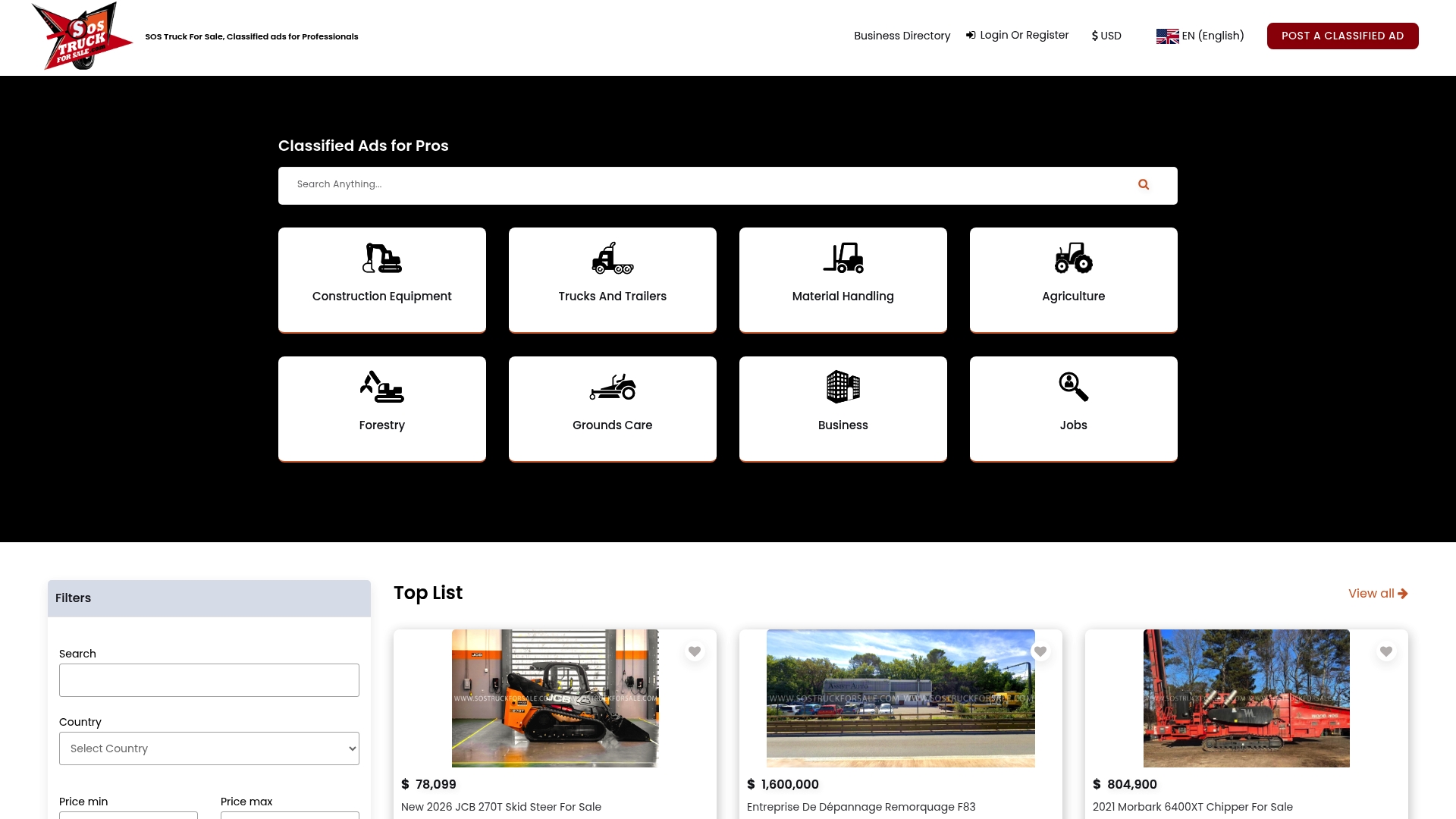
- The listing flow guides you through title, specs, and photos in one pass, helping ensure completeness before publishing.
- Using a clear title combined with an 8-photo checklist helps buyers get a full picture before making contact.
Dealers running multiple listings a month can also benefit from reviewing how local search visibility works outside our marketplace. Local SEO guidance for contractors covers how geographic search terms affect visibility, which pairs well with getting your core title format right first.
Ready to list? Post your equipment on sosTruckforsale and put a correctly formatted title to work today.
FAQ
What is the ideal length for an equipment listing title?
Keep titles between 1 and 150 characters, with the most important details, model and key spec, inside the first 70 characters since that is what most buyers actually see.
Should I include the price in my equipment title?
No. Price belongs in the listing's dedicated price field, not the title, since mixing facts and promotional details like pricing makes titles harder to scan and match in search.
How do I format equipment hours in a title?
Round to the nearest hundred and use a consistent abbreviation, such as "4,500 hrs," rather than spelling out "hours" or listing an exact hour count down to the digit.
Do I need to include my location in the title?
No. Location belongs in the listing's location field, where it powers location-based search filtering, rather than in the title text itself.
What happens if my title doesn't match my listing's category?
A mismatched title and category can keep your listing from surfacing in filtered searches, so confirm the equipment type in your title matches the subcategory you selected when posting.
Sources
- Title title and structured title structured_title - Google Merchant Center Help
- General Structured Data Guidelines | Google Search Central