
Fix six fields before touching anything else: the title, the hero photo, the price, the condition disclosure, the keywords, and the call to action. These are the elements buyers scan first, and they decide whether a listing earns a click or gets scrolled past. SoS Truck For Sale and Federal Trade Commission disclosure guidance both point to the same conclusion: clarity and completeness sell equipment faster than length or polish. The checklist below turns that into a 20-minute overhaul.
TL;DR:
- Using a clear, detailed title with year, make, model, and key identifiers improves search visibility and attracts more clicks.
- Listing a specific price or price range outperforms hiding it, especially when targeting serious buyers ready to transact.
- Authentic multiple-angle photos, including worksite shots and serial number displays, increase buyer trust and listing quality.
- Placing condition disclosures and repairs near the price, with detailed documentation, ensures legal compliance and builds buyer confidence.
- Regularly refreshing listings and using targeted promotion reduces time on market and maximizes exposure.
Table of Contents
- Priority checklist for optimizing your listing
- Photo and media checklist buyers actually trust
- Pricing strategy and keyword tactics that convert
- Legal disclosures and trust signals your listing needs
- Publishing and promotion for quicker exposure
- Measuring results and following up on leads
- Why listing discipline matters for dealer operations
- Post your next listing on SoS Truck For Sale
- Sources
- FAQ
Priority checklist for optimizing your listing
Start with the title. The strongest format leads with year, make, model, and equipment type, followed by a key identifier such as hours or configuration, for example "2018 John Deere 350G LC Crawler Excavator, 2,400 Hours." This structure matches how buyers actually search, and titles built this way outperform generic listings in discoverability.
Price comes next. Units listed with a price or price range generate higher click-through and conversion rates than listings that withhold pricing, since buyers filter out ads requiring a phone call just to learn the number.
After price, work through category, description, keywords, and the call to action in order:
- Category and subcategory: place the unit under its correct equipment class first, then the narrowest subcategory available, since misfiled listings never surface in filtered buyer searches.
- Description structure: open with a one-line summary of the machine and its best selling point, follow with bullet specs, then a plain-language condition statement, then maintenance history.
- Keyword placement: put the primary term in the title, repeat natural variations in the first two bullets, and stop there, since stuffing keywords into every line reads as spam to both buyers and search algorithms.
- Call to action and lead handling: name the exact next step, whether that is "Call for financing options" or "Request a free inspection report," and list a phone number and email so buyers pick their preferred channel.
Every field here reinforces the next. A precise title earns the click, a clear price and photo keep the buyer reading, and a direct call to action turns interest into a lead before the buyer moves on to the next tab.
Photo and media checklist buyers actually trust
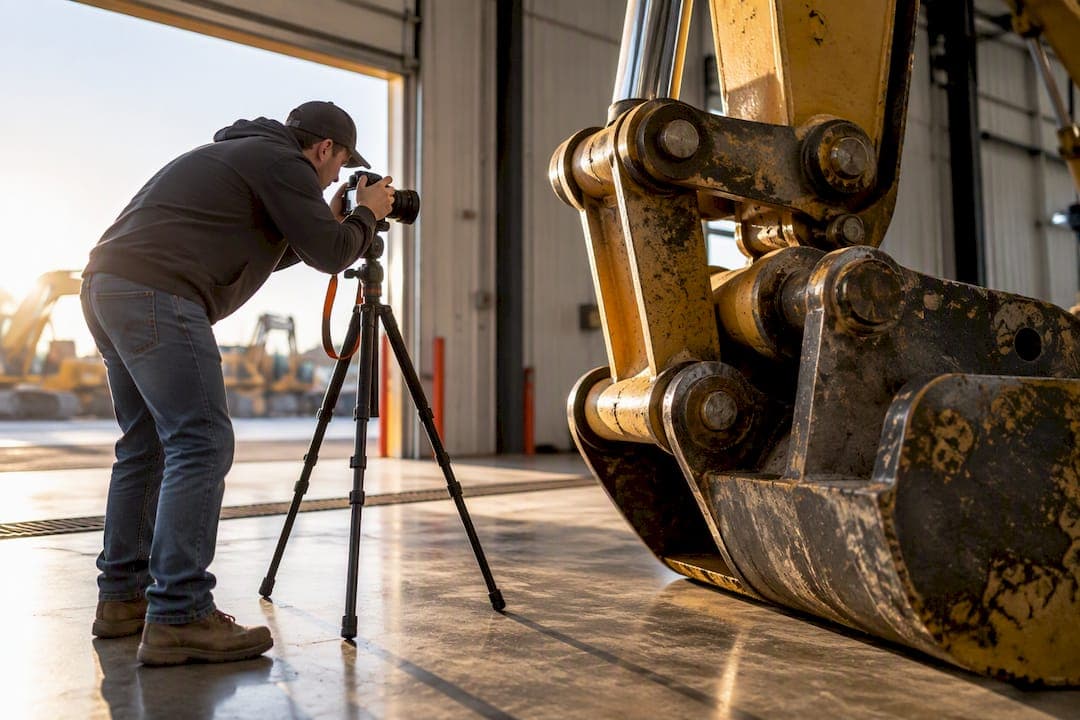
The hero shot sets the tone for the entire listing. Shoot the machine from a three-quarter front angle in daylight, against a clean background with no other equipment, tools, or clutter competing for attention.
Beyond the hero image, work through a consistent shot list every time:
- Four corner shots showing the full machine from each angle.
- A cab interior shot showing the seat, controls, and gauges.
- An engine bay shot with the hood or panel open.
- Undercarriage or tire close-ups showing wear.
- Attachment shots for buckets, forks, or other tooling included in the sale.
- A close-up of the meter reading and the serial number plate.
Marketplace guidance consistently points to authentic multi-angle photos over stock imagery as one of the top factors buyers weigh when judging listing quality. Save images at a resolution that holds up when a buyer zooms in, name files descriptively rather than with camera-generated codes, and write alt text that names the machine and the shot, such as "2018 John Deere 350G undercarriage." A short walk-around video or a PDF service record adds real weight once the photo set is complete, and pairs well with a copy-paste listing template built for exactly this shot sequence.
Pro Tip: Shoot all photos in one session with the same light and background so the listing looks like one coherent set, not a patchwork of phone snapshots taken over weeks.

Pricing strategy and keyword tactics that convert
Comparable sales research sets the range before you commit to a number. Pull recent sold prices for similar year, make, model, and hours, then decide whether a firm price or a range fits the unit's condition and how quickly you need it gone. A comp-based pricing checklist makes this step faster for dealers running multiple units at once.
A firm price tends to draw serious buyers who are ready to move, while a range works better on units with negotiable terms or financing options attached. Either way, showing a number outperforms hiding one behind "call for price."
Keyword tactics follow the same logic as pricing: match buyer language instead of guessing at it.
- Use long-tail phrases buyers actually type, such as "low hour compact track loader for sale" or "reconditioned dump truck with new tires."
- Place the primary keyword in the title, then let natural variations appear once each in the description bullets.
- Skip repeating the same term across every bullet point, since that reads as filler rather than information.
- Mirror the language buyers use in search, not internal dealer shorthand or model codes only insiders recognize.
Legal disclosures and trust signals your listing needs
Federal Trade Commission guides require clear, conspicuous disclosure whenever equipment or parts are not new, and they prohibit deceptive claims about condition. The Guides and Trade Practice Rules under 16 CFR Part 20 spell out acceptable descriptors such as "Used," "Rebuilt," and "Reconditioned," and misrepresenting any of these can count as deceptive under Section 5 of the FTC Act.
Listings that place condition disclosures inline near the price, rather than behind a hidden link, give buyers the clearest read on what they are actually purchasing.
Build trust signals into the same section as the disclosure itself:
- State the condition descriptor plainly, right next to the price, not buried in a paragraph below.
- Document repairs and service history with dates and part descriptions rather than vague claims like "well maintained."
- List the VIN or serial number so buyers can verify the unit independently.
- Attach an inspection report when one exists, since it answers questions before a buyer has to ask them.
Reconditioned units carry their own disclosure considerations worth reading in full before listing one, covered in detail in this reconditioning guide.
Publishing and promotion for quicker exposure
Timing and cadence matter almost as much as the listing content itself. Refresh a stale listing every few weeks rather than letting it sit untouched, since a refreshed post often regains visibility in sort-by-date searches. Promoted or featured ad placements can accelerate exposure and shorten time-to-sale when inventory is moving slowly or competition in a category is heavy.
A few habits keep promotion effective without wasting budget:
- Cross-post across relevant marketplaces, but avoid posting identical duplicate listings on the same platform, since that can trigger a penalty.
- Reserve promoted placements for units that have sat longest or carry the highest margin.
- Tag listings with every accurate attribute field available, such as drive type, cab configuration, or hour range, since buyers filter by these before they ever read a description.
- Match the equipment category and subcategory precisely, since a mismatch removes the listing from filtered search results entirely.
Measuring results and following up on leads
Track five numbers on every listing: views, click-through rate, inquiries per view, time to first inquiry, and total days to sale. These figures show which fields are working and which need another pass.
- Test one variable at a time: swap the title, then wait a week before changing anything else.
- Swap the hero photo next and compare view counts over a similar window.
- Test a firm price against a price range on similar units to see which draws more serious inquiries.
Respond to inquiries within a few hours whenever possible. A short, direct reply, confirming availability and offering a call time, converts far more interest than a delayed or generic response.
Why listing discipline matters for dealer operations
Every day a listing sits without an inquiry adds to holding costs, and a weak title or a missing price is usually the reason. I built the checklist and photo sequence above from years of watching which listing fields actually move buyers to call. Pick one listing today, run it through the template, and republish it before you do anything else.
— Dave
Post your next listing on SoS Truck For Sale
Once a listing is optimized, the fastest next step is putting it in front of buyers who are already searching by category. A properly titled and categorized listing reaches buyers filtering for exactly that unit.
A few resources make the setup faster:
- Confirm your category and subcategory against these six listing category examples before you publish.
- Review the full selling workflow guide for pricing and follow-up tactics that pair with the checklist above.
Post the refreshed listing on the SoS Truck For Sale marketplace today and start collecting inquiries against a listing built to convert.
Sources
- Maximizing Your Equipment Sales on Equipment Trader: Tips for Dealers - Equipment Media Kit
- SUBCHAPTER B—GUIDES AND TRADE PRACTICE RULES (16 CFR Part 20)
FAQ
What should the title of an equipment listing include?
Lead with the year, make, and model, followed by the equipment type and a key identifier like hours or configuration. This format matches how buyers search and helps listings surface more easily in marketplace results.
Should I list a firm price or a price range?
Either works better than hiding the price entirely, since listings with a stated price see higher click-through and conversion than listings without one. A firm price suits buyers ready to move, while a range fits units with room to negotiate.
What condition disclosures are legally required?
Federal Trade Commission guides require clear disclosure when equipment or parts are used, rebuilt, or reconditioned, and misrepresenting condition can be deceptive under the FTC's trade practice rules. Place this disclosure near the price and condition statement rather than behind a hidden link.
How many photos should an equipment listing have?
Include a full shot set: four corner angles, cab interior, engine bay, undercarriage, attachments, and a close-up of the meter and serial number. Authentic multi-angle photos are one of the top factors buyers use to judge listing quality.
Where can I find a ready-to-use listing template?
SoS Truck For Sale offers a copy-paste listing template with an eight-photo checklist that covers title format, bullet structure, and shot sequencing in one document.