
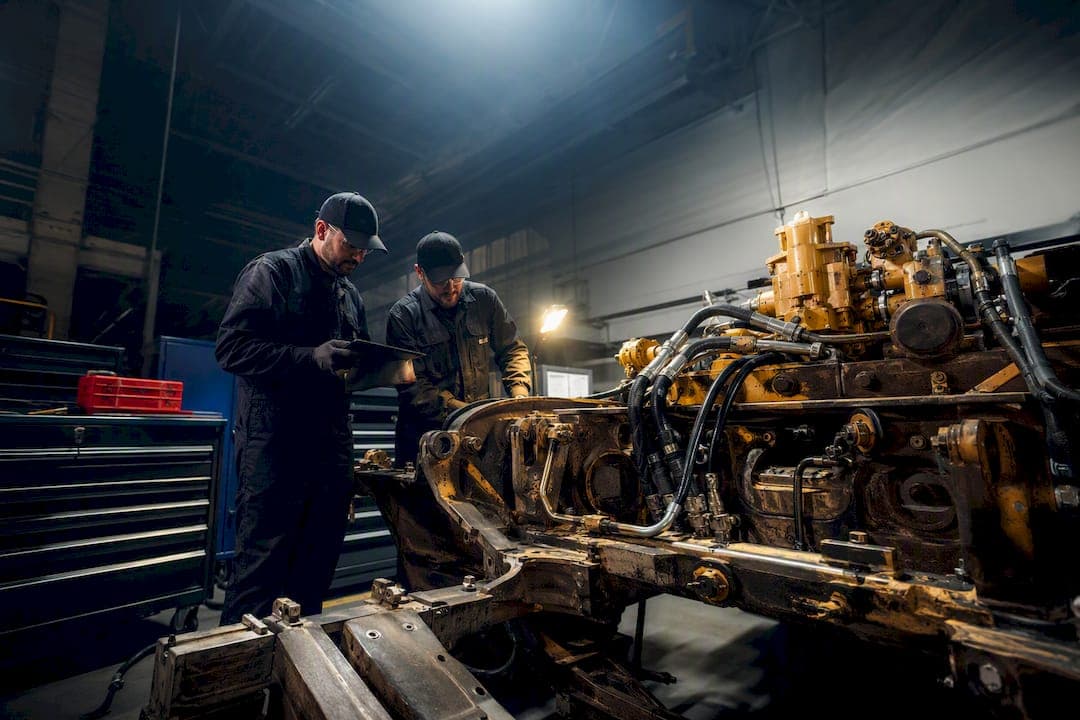
Reconditioning used equipment makes financial sense when the frame is structurally sound, a maintenance history exists, and the machine has enough remaining service life to justify the rebuild cost. It typically cuts capital outlay, shortens availability windows, and extends service life compared to ordering new, though structural damage or an outdated platform tips the math toward replacement. The next move is simple: schedule a scoped inspection and pull the maintenance logs before you commit either way.
TL;DR:
- Reconditioning is most financially sensible when the equipment's frame is intact, maintenance history is available, and sufficient remaining service life justifies the rebuild cost.
- The process involves a thorough teardown, inspection, rebuild or replacement of parts, surface prep, painting, and final testing, typically taking about 11 days for boom lifts.
- Cost savings can reach up to 60% on engine and power-module work, but extended downtime due to parts scarcity or structural repairs can erode financial benefits.
- Proper documentation, including detailed test results and logbooks, is essential for ensuring safety, compliance, and resale value of reconditioned equipment.
- Machines such as boom lifts, excavators, and forklifts are the best candidates for reconditioning due to their standardized designs and active parts supply chains.
Table of Contents
- What Reconditioning Used Equipment Actually Involves
- Is Your Machine Worth Reconditioning? A Practical Checklist
- How Long Does Reconditioning Take, and What Does It Cost?
- Does Reconditioning Actually Improve Fleet ROI?
- What Documentation and Testing Should You Demand?
- Cleaning, Detailing, and Listing Prep Before Resale
- Environmental and Regulatory Rules Shape the Rebuild
- How Technology Upgrades Change the Rebuild Scope
- Safety Compliance During and After the Rebuild
- Which Equipment Types Get Reconditioned Most
- Field Perspective: How Fleet Size Changes the Calculus
- Find Reconditioned and Certified Pre-Owned Listings on Sostruckforsale
- Sources
- FAQ
What Reconditioning Used Equipment Actually Involves
Reconditioning is not a paint job with new decals. It is a staged rebuild that touches nearly every system on the machine, and skipping a stage is how buyers end up with a unit that looks refurbished but fails within months.
A factory-level program, like the kind JLG runs on its own boom lifts, generally follows this sequence:
- Intake inspection and tiering — the machine gets scored against a checklist that determines whether it qualifies for full reconditioning, a limited refurbish, or rejection.
- Full teardown — engines, hydraulics, transmissions, electrical systems, and structural components come apart for individual inspection.
- Rebuild or replace decisions — worn components get rebuilt where possible; anything beyond tolerance gets swapped, often triggering the OEM-versus-aftermarket parts question that affects both cost and warranty eligibility.
- Surface prep and painting — corrosion treatment, media blasting, and a fresh coat that matches OEM specifications.
- Reassembly and final audit — functional testing, safety verification, and documentation before the unit ships.
JLG's factory reconditioning process runs this full sequence on boom lifts in roughly 11 days on average, which gives fleet managers a real benchmark for what a disciplined, standardized program can achieve on a single platform type.
Is Your Machine Worth Reconditioning? A Practical Checklist
Structural integrity is the gate you check first. If the frame is cracked, twisted, or corroded beyond repair, nothing downstream matters. Everything else on this list only applies once the frame passes.
- Age and hours, viewed as ranges, not hard cutoffs — a forklift at 8,000 hours behaves differently than an excavator at 8,000 hours; use type-specific benchmarks rather than one universal number.
- Parts availability — a machine with a discontinued engine or unsupported control module can turn a two-week rebuild into a three-month parts hunt.
- Labor intensity — get a rough hours estimate before committing; hydraulic and electrical work eats budget faster than sheet metal work.
- Maintenance history — a documented service record shortens diagnosis time and, according to DOT fleet maintenance research, correlates with lower unplanned downtime across a fleet's service life.
- Resale and insurance implications — undocumented units are harder to insure at favorable rates and harder to resell at a fair price.
Run those five checks and you land on one of three outcomes: full recondition, limited refurbish, or replace.
Pro Tip: Photograph the frame and undercarriage before teardown begins. If a dispute over pre-existing damage comes up later, that photo record settles it faster than any verbal account.
How Long Does Reconditioning Take, and What Does It Cost?
Timelines vary by platform, but the benchmarks are useful for planning downtime. JLG's factory process for boom lifts runs about 11 days on average. Larger or more mechanically complex machines, like excavators or cranes with hydraulic systems and multiple control modules, commonly take several weeks to a few months depending on parts sourcing.
Cost savings versus new equipment vary by component and platform, but specialist rebuild shops report meaningful reductions on certain jobs. APASOF notes rebuild savings of up to roughly 60% on engine and power-module work compared with buying new, driven partly by advanced cleaning methods like laser and dry ice ablation that improve rebuild precision without chemical exposure.
Several variables push timelines and costs upward:
- Structural repair beyond simple patching
- Scarce or discontinued parts for older platforms
- Emissions or electronics upgrades required for compliance
- Extensive corrosion hidden under paint or undercarriage debris
When you build a comparison against buying new, factor in downtime cost, transport, and financing terms, not just the rebuild invoice. A cheaper reconditioning quote that keeps a machine off the job site for three extra weeks can cost more than the number on the estimate. Our heavy equipment pricing guide walks through building that apples-to-apples model with auction comps.
Does Reconditioning Actually Improve Fleet ROI?
The return depends on what you're comparing it against, and the honest answer is: it usually wins on total cost of ownership, but not always.
- Lower upfront capital cost frees budget for other fleet priorities, and a rebuilt unit with fresh components often carries more predictable near-term maintenance costs than an aging original.
- Resale value rises when the rebuild uses OEM parts and comes with a documented logbook. Buyers pay a premium for traceability, even when the mechanical outcome is identical to an undocumented rebuild.
- Lead-time advantage matters most for specialized or out-of-production models where a new equivalent simply doesn't exist on the market.
- Replacement wins when the platform is becoming obsolete, when emissions or safety regulations are about to force a redesign anyway, or when parts scarcity makes future repairs unpredictable.
What Documentation and Testing Should You Demand?
A reconditioned machine without paperwork is a gamble dressed up as a bargain. Insist on these before final payment:
- Functional testing results covering hydraulics, electrical systems, and drivetrain under load.
- Leak checks on all fluid systems, documented in writing, not just verbally confirmed.
- Safety feature verification — interlocks, alarms, and operator protections tested and signed off.
- A complete logbook listing sub-assembly serial numbers, parts replaced, and test outcomes, which JLG's process treats as central to buyer confidence.
Certified tiers give you a shortcut for comparing vendor commitments. Tennant's certified pre-owned reconditioning tiers illustrate how manufacturers structure warranty coverage by tier, some with parts coverage running several months and labor coverage running shorter windows, which lets buyers weigh price against protection.
Pro Tip: Get the acceptance criteria in writing before the deposit changes hands. "Functional testing performed" means nothing without a checklist attached showing what passed and what the pass threshold was.
Cleaning, Detailing, and Listing Prep Before Resale
Grime hides damage, and hidden damage costs you twice: once during teardown when it surprises the rebuild team, and again at resale when a buyer's inspector finds it first. Cleaning heavy equipment properly before teardown or listing isn't cosmetic work. It's diagnostic work.
- Start with a water cannon to knock off heavy debris, then follow with a pressure washer for finer contaminants, a sequence Caterpillar recommends specifically because it reduces the risk of forcing water into sensitive components.
- Clean the cab interior separately, checking switches, gauges, and upholstery, since cab condition heavily influences a buyer's first impression.
- Photograph every angle, including undercarriage and engine bay, before and after cleaning, for your listing and for your own dispute record.
- Compile service history, inspection notes, and logbook entries into one document buyers can review before they ask.
Listings on marketplaces that include full photo sets and service documentation tend to build buyer trust faster than bare-bones listings, mirroring exactly what a strong reconditioning logbook does for resale confidence.
Environmental and Regulatory Rules Shape the Rebuild
Reconditioning used equipment isn't purely a mechanical decision. Emissions standards, disposal rules, and workplace regulations all attach conditions to the process, and skipping them creates liability that outlasts the warranty.
Older diesel engines being rebuilt often have to meet current emissions requirements before they can return to active service, particularly for equipment operating in states with stricter tailpipe standards. That can mean retrofitting emissions control components during the rebuild rather than simply restoring the original configuration, which adds cost but avoids a machine that's legally restricted from certain job sites.
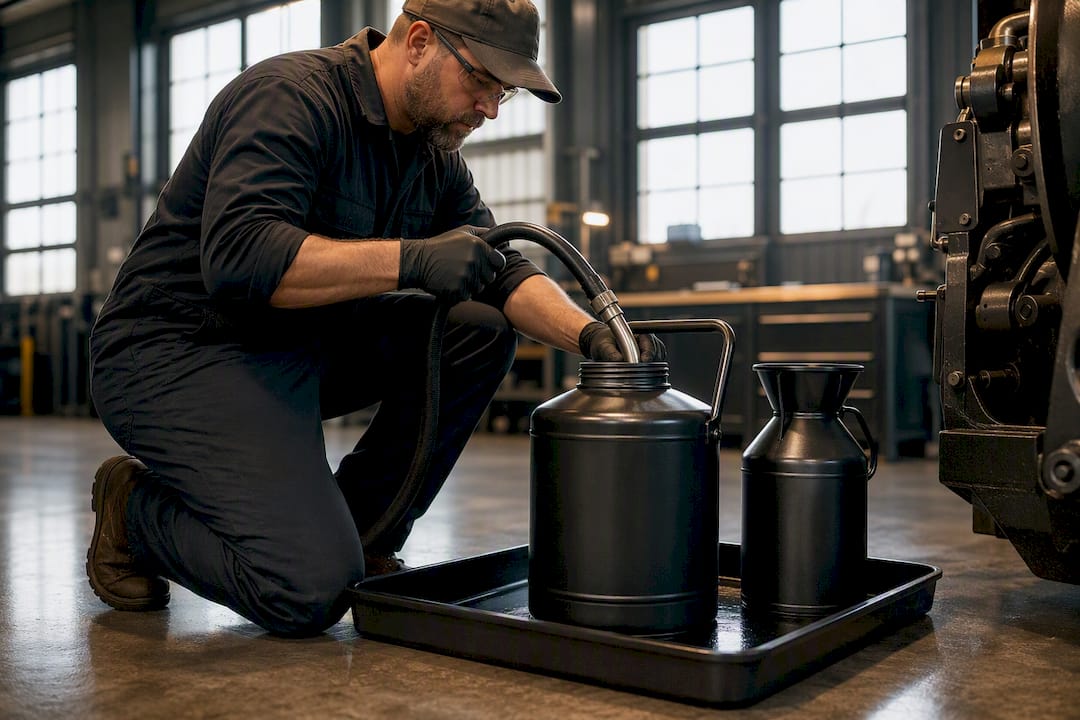
Fluid disposal, used oil, hydraulic fluid, coolant, and solvent runoff from cleaning, falls under hazardous waste handling rules in most states. A reputable rebuild shop documents disposal chain of custody, and that paperwork matters if a regulator ever asks who handled the waste stream. Cleaning method choice plays into this too: the laser and dry ice ablation techniques some specialist rebuilders use, as APASOF notes in its rebuild process, avoid chemical solvents entirely, which sidesteps a category of disposal paperwork altogether.
Corrosion treatment and paint stripping raise their own concerns, since older equipment can carry lead-based paint that requires containment during removal. Any rebuild shop working on equipment manufactured before the 1990s should confirm its stripping process accounts for that possibility rather than treating every unit the same way.
How Technology Upgrades Change the Rebuild Scope
A rebuilt machine running on 15-year-old electronics is a rebuilt machine with a shortened relevant lifespan. Reconditioning programs increasingly fold in modernization work alongside the mechanical rebuild, and that shift changes both the cost and the value proposition.
Telematics retrofits are the most common addition. Adding GPS tracking, engine diagnostics reporting, and usage monitoring to a reconditioned unit lets fleet managers integrate it into the same monitoring systems running their newer equipment, closing a visibility gap that used to be the main argument for buying new instead of rebuilding old.
Control system upgrades matter just as much on hydraulic and lift equipment. Replacing analog controls with digital load-sensing systems during a rebuild can improve precision and reduce operator error, effectively giving an older platform capabilities it never shipped with originally.
The tradeoff is straightforward: every technology upgrade added to a reconditioning scope extends the timeline and raises the invoice. Fleet managers need to decide upfront whether they're rebuilding to original specification or rebuilding to a modernized specification, because mixing the two mid-project is where budgets blow out. For fleets weighing full electrification against reconditioning older combustion equipment, our guide to electric heavy equipment walks through where that line usually falls.
Safety Compliance During and After the Rebuild
A reconditioned machine has to meet the same safety standards as a new one, and in some respects it faces more scrutiny because inspectors know rebuilt units carry a higher risk of overlooked defects.
During the rebuild, every safety-critical system, interlocks, emergency stops, alarms, guardrails, and load limit sensors, needs individual functional verification, not just a visual check. This is where a thorough final audit earns its place in the process rather than being treated as paperwork formality. Skipping functional verification on a safety interlock to save an afternoon of labor is the kind of shortcut that surfaces during an OSHA inspection months later.
After the rebuild, documentation needs to travel with the machine. Anyone operating aerial platforms, cranes, or other lift equipment needs access to updated inspection records showing the unit passed current safety standards, not just the standards in place when it was manufactured. Our mobile crane inspection guide covers the kind of documentation gaps that trigger the largest fines, and those same gaps apply directly to reconditioned lifting equipment returning to service.
Operator training is the piece fleets most often skip. A reconditioned machine with upgraded controls or modified safety systems needs an operator refresher, even for experienced staff, because muscle memory built on the old configuration can work against the new one.
Which Equipment Types Get Reconditioned Most
Not every machine category lends itself equally well to reconditioning, and the platforms that dominate the market share a few traits: standardized designs, strong parts availability, and enough unit volume to justify a dedicated rebuild program.
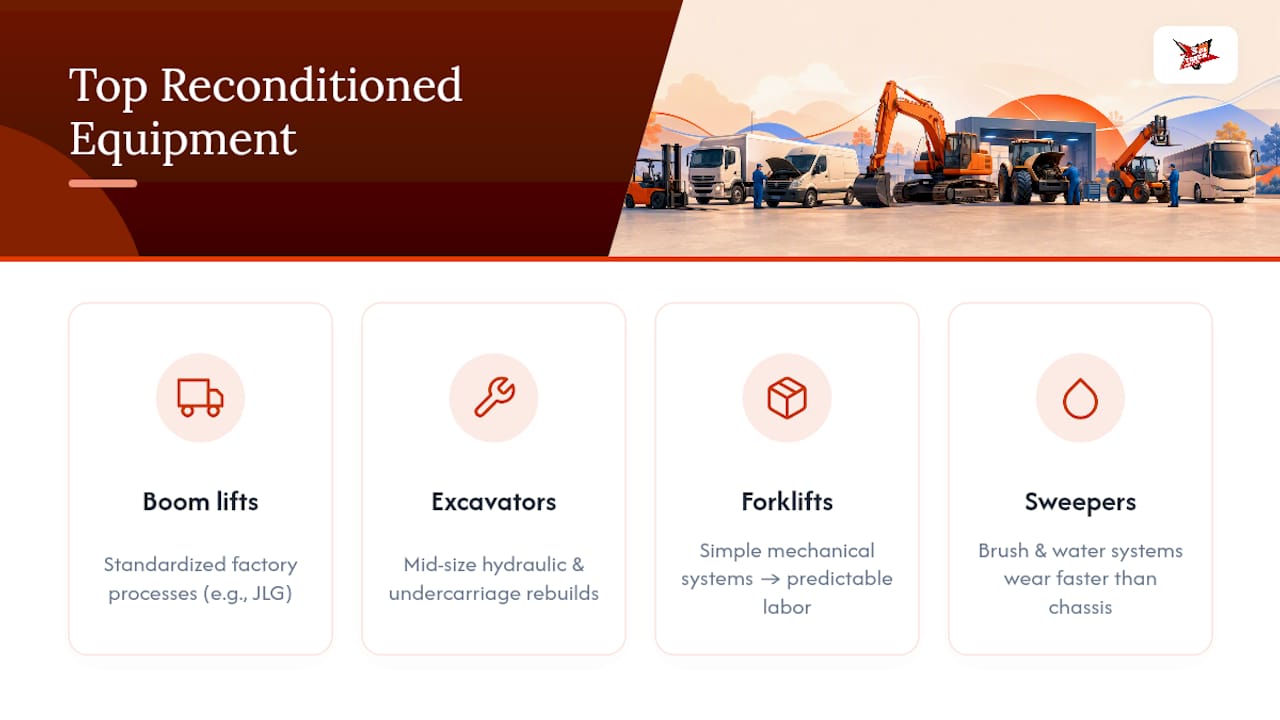
Boom lifts are the clearest example, given the standardized factory process manufacturers like JLG run on them. Excavators follow close behind, particularly mid-size units where hydraulic and undercarriage rebuilds are well understood and parts remain widely available even on older models. Forklifts recondition well because their mechanical systems are relatively simple compared to larger equipment, which keeps labor hours predictable. Sweepers, both industrial and municipal, see heavy reconditioning activity because their brush and water systems wear out faster than their chassis, making component-level rebuilds more economical than full replacement.
Cranes and specialized lifting equipment get reconditioned less frequently in bulk programs, but they see some of the highest per-unit savings when they do, since a new crane's price tag makes even an expensive rebuild look modest by comparison. The common thread across all these categories: the equipment types that recondition best are the ones where parts supply chains stayed active and mechanical designs didn't change dramatically across model years.
Field Perspective: How Fleet Size Changes the Calculus
Smaller operations usually do better buying certified pre-owned or limiting reconditioning scope, since a multi-week rebuild can strand a disproportionate share of total capacity. Larger fleets get more value from standardized, factory-level programs with documented processes and warranty backing, because scale absorbs the downtime and rewards consistency. The practical rule: centralize reconditioning when volume justifies a dedicated program, and lean on local shops when you're solving a one-off problem.
— Dave
Find Reconditioned and Certified Pre-Owned Listings on Sostruckforsale
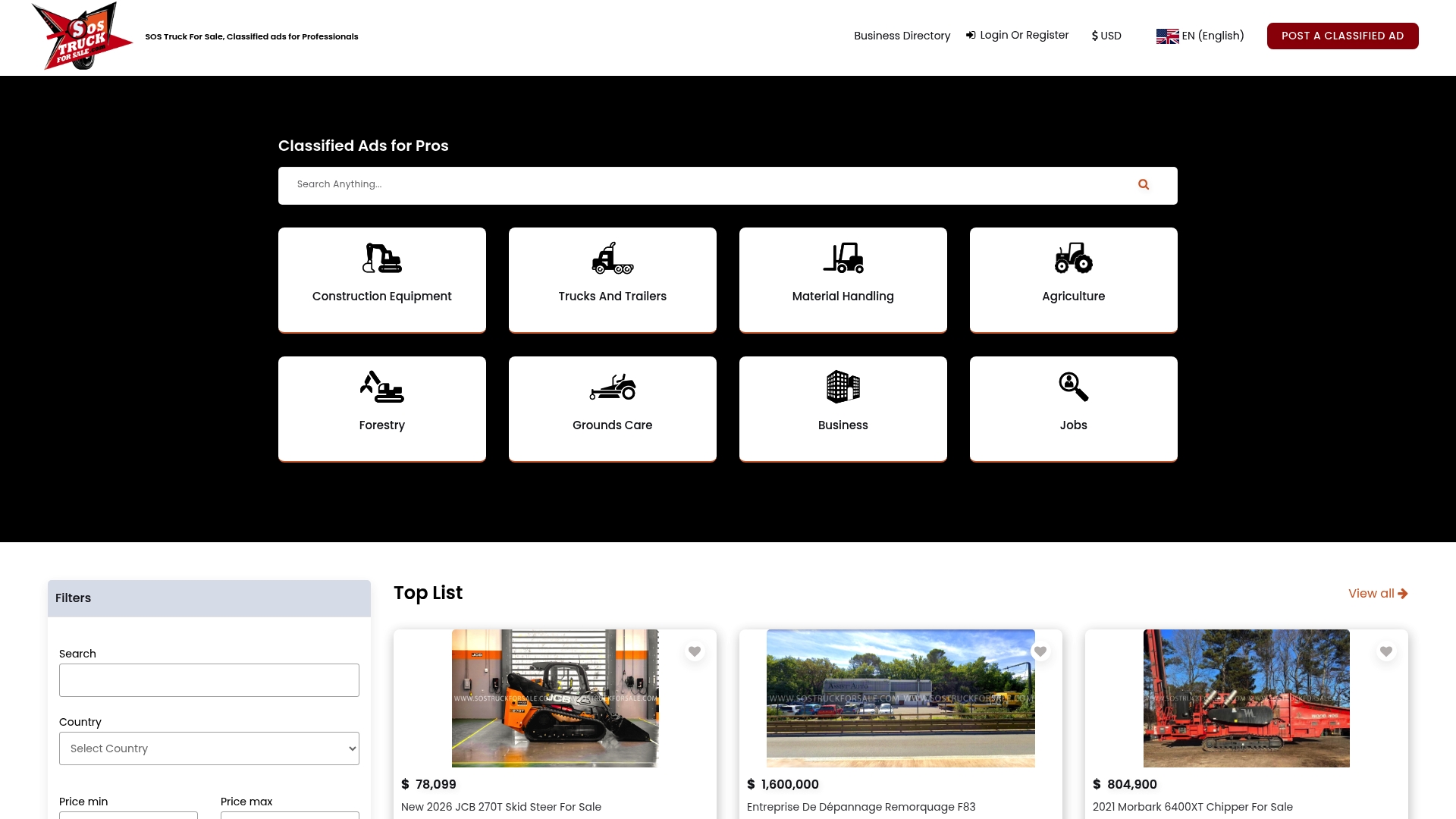
If managing a rebuild internally isn't the right fit for your team right now, buying already-reconditioned or certified pre-owned equipment is the faster route to the same outcome. Some equipment listing sites provide filters by category, price, and country, which can help narrow results down to reconditioned excavators, boom lifts, or forklifts without wading through unrelated inventory.
When you're reviewing listings, treat documentation the same way you would treat a vendor quote. Look for service history, clear photo sets covering the frame and undercarriage, and any mention of a logbook tracking sub-assembly work, the same traceability signals that make a factory-reconditioned machine worth its price. A listing missing that documentation isn't automatically a bad deal, but it means you should ask more questions before making an offer.
Sellers preparing their own equipment for listing can pull guidance from our semi truck inspection checklist to build the kind of detailed record buyers respond to. Start browsing equipment listings on Sostruckforsale to compare reconditioned units against new equipment pricing before you commit either way.
Sources
- Our Process | Reconditioning | JLG Used Equipment
- Pre-Owned Equipment Reconditioning | Tennant Company
- How to clean heavy equipment | Caterpillar blog
- Used Equipment Rebuild | APASOF
FAQ
What Is the Difference Between Refurbishment and Reconditioning?
Refurbishment usually means cosmetic and light mechanical work, while reconditioning involves a full teardown, component rebuild or replacement, and functional testing before the machine returns to service.
Is Reconditioned the Same as Used?
No. Used equipment may have received no dedicated rebuild work, while reconditioned equipment has gone through a structured process, teardown, repair, testing, and documentation, aimed at restoring near-original performance.
Is It Okay to Use Damaged Equipment?
Equipment with structural or safety-critical damage should not return to service until it passes a full inspection and any required repairs; running damaged equipment risks both safety incidents and regulatory penalties.
What Does "Reconditioning" Mean for Heavy Equipment?
Reconditioning means restoring a used machine to a defined performance and safety standard through teardown, component rebuild or replacement, painting, reassembly, and final functional testing, often backed by a documented logbook and warranty.
How Do I Find Reconditioned Equipment for Sale?
Marketplaces like Sostruckforsale let buyers filter listings by category and price to find reconditioned or certified pre-owned units, and checking each listing for service history and photo documentation helps confirm the rebuild quality before purchase.