
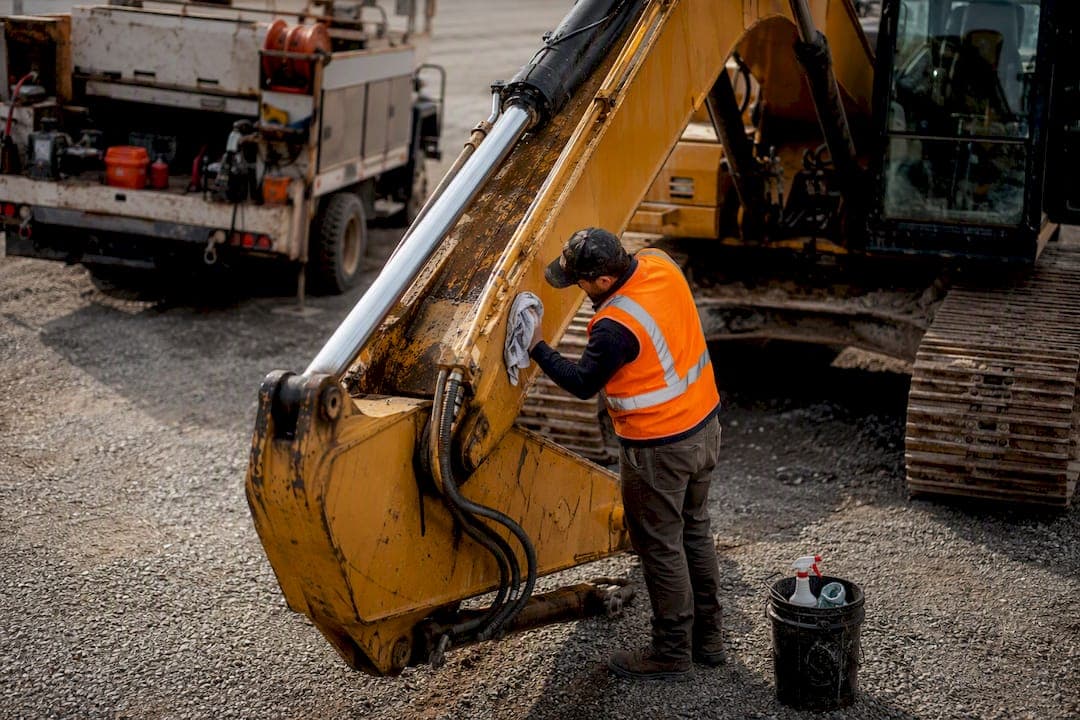
The fastest reliable path to a sale is a complete listing package. Gather your documents, clean the machine, shoot real photos and a walkaround video, price it against actual comparables, and post it on a specialized marketplace. If you need cash now instead of top dollar, an auction gets you there faster at a lower final price. Expect a tradeoff: speed costs margin, and margin costs time.
Start with these three items before you write a single word of your listing:
- Pull the title, service records, and serial or VIN number
- Wash the machine and take daylight photos of every angle
- Run three comparable listings to sanity check your price
Key Takeaways
Selling heavy equipment fast and at fair value comes down to a complete documentation package, comparable-based pricing, and matching your channel to your actual timeline.
| Point | Details |
|---|---|
| Documents come first | Gather title, service records, and serial number before writing any listing copy. |
| Photos and video build trust | Include the hour meter, serial plate, and wear points; add a short walkaround video. |
| Price from comparables | Pull five to eight similar listings, then price above your walk-away number. |
| Match channel to goal | Choose auctions for speed, marketplaces for reach, and direct sales for the best net price. |
| List where buyers already look | Sostruckforsale offers category-specific listings for trucks and heavy equipment with tools built for this exact sale. |
Table of Contents
- How to Sell Heavy Equipment: Prepare the Machine and Paperwork First
- What Should You Charge? Pricing and Calculating Your Net
- Where Should You List It? Comparing Sales Channels
- How Do You Close the Sale Safely?
- Templates and Resources That Make Listing Faster
- What Actually Moves the Needle When You Sell
- List Your Equipment Where Serious Buyers Already Look
- Sources
How to Sell Heavy Equipment: Prepare the Machine and Paperwork First
Buyers researching how to sell heavy equipment online usually start in the wrong place: the price. Price means nothing without proof. A complete document and media package is what turns a browser into a serious inquiry, because it answers the questions a buyer would otherwise ask by phone, email, or not at all before walking away.
Here's the paperwork to gather before you draft anything:
- Title or ownership documents, plus lien release paperwork if the machine was financed.
- Full service history, including recent repairs, fluid changes, and any warranty documents still active.
- Serial or VIN plate photo, matched against your title to head off buyer suspicion.
- Hour meter reading, photographed at the time of listing, not estimated from memory.
- Inspection or appraisal report, if you've had one done, even an informal one.
Photos and video do the heavy lifting from there. A short walkaround video that shows the machine starting up and running through its motions reduces buyer questions and speeds negotiation more effectively than paragraphs of text ever will. Cover the front, rear, both sides, the operator station, hour meter, serial plate, engine bay, undercarriage, and any visible wear points. Skip the flattering angles. Buyers trust sellers who show the dents.
Write condition notes in plain language: "hydraulic hose replaced March 2025," not "runs great." Vague language reads as a hedge, and experienced buyers know it.
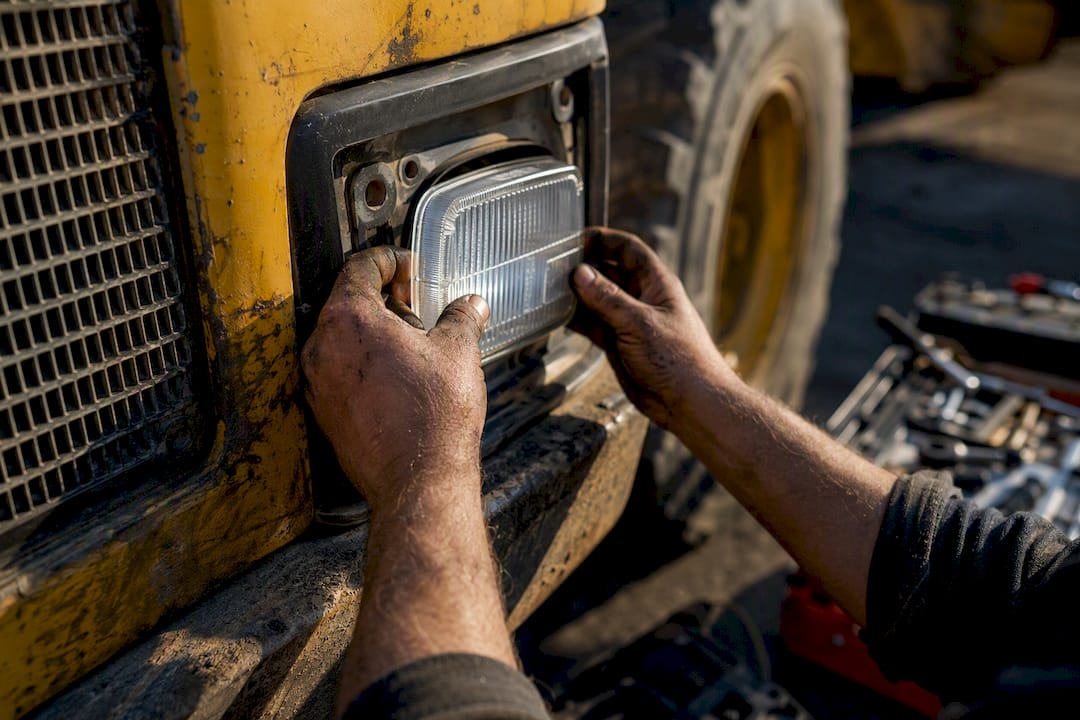
Pro Tip: Washing off accumulated grease and swapping a cracked light lens or peeling decal costs almost nothing but signals maintenance discipline. Buyers read cosmetic care as a proxy for mechanical care, even when the two aren't related.
Store your photos, video, and documents in one shared folder you can send with a single link. Speed of response often decides who gets the sale when multiple buyers inquire the same week.
What Should You Charge? Pricing and Calculating Your Net
Set your asking price from real comparables, not from what you paid or what you hope to get. Pull five to eight active or recently sold listings for the same make, model, and roughly the same hour range, then adjust up or down for attachments, tires or tracks, and any deferred maintenance.
Your real target number isn't the asking price. It's your expected net:
- Sale price
- Minus prep costs (cleaning, minor repairs, photography)
- Minus listing or transaction fees
- Minus transport to the buyer
- Minus holding costs (storage, insurance, depreciation while it sits)
That final figure is your walk-away number, the lowest offer you'll accept. Price your listing above it to leave room to negotiate without eating into your margin on the first offer.
Weak listings tend to share the same three flaws: missing serial details, thin photo sets, and pricing disconnected from actual comparables rather than wishful thinking. If your machine sits for some time with no serious inquiries, that's your signal. Drop the price moderately, refresh your primary photo, and repost rather than letting a stale listing quietly die on page three of search results. For high-value equipment, a formal appraisal can settle pricing disputes before they start and gives skeptical buyers a third-party number to anchor to.
Where Should You List It? Comparing Sales Channels
Every seller eventually asks the same question: marketplace, auction, or a direct sale to someone in your network? Each channel trades reach for speed differently.
Specialized online marketplaces deliver the widest pool of pre-qualified buyers, often with built-in buyer verification, financing support, and logistics coordination baked into the platform. This is usually the right first move for anyone selling construction machinery, semi trucks, or trailers who wants a fair price without giving up too much time.
Auctions move equipment fastest when you need liquidation now, but bidders expect a discount for that speed, and you have far less control over the final number.
Direct sales through your own network or word of mouth can produce the best net price with zero platform fees, but they take longer and depend on who you already know.
Before committing to any platform, run through this checklist:
- Does it verify buyer identity or business credentials?
- Does it offer financing or escrow support for large-ticket transactions?
- Can you promote or boost a listing during slow periods?
- Does it help coordinate transport, or is that entirely on you?
- Can you cross-post to multiple categories without duplicate-listing penalties?
A few tactical notes: cross-post the same listing across relevant subcategories rather than creating five near-duplicate posts, refresh your listing every two weeks to stay near the top of search results, and be wary of any "agent" who wants an upfront fee before producing a single verified buyer. That's a red flag worth walking away from.
How Do You Close the Sale Safely?
Screening buyers matters as much as screening the machine. Ask for proof of funds before you take a listing offline, verify any business buyer through their registered name and address, and treat unsolicited overseas wire requests with real suspicion.
Once you have a serious buyer, secure the transaction with these steps:
- Confirm funds have fully cleared, not just initiated, before releasing keys or title
- Use escrow for six-figure transactions when the platform supports it
- Vet any transport carrier for insurance and licensing before loading
- Photograph the machine at loading, with time and location stamps
- Prepare a bill of sale listing serial number, hour meter, sale price, and any as-is disclosures
- Handle lien releases and title transfer paperwork before the truck leaves your yard
Pro Tip: Never release equipment on a "funds are on the way" promise. A cleared, verified deposit in your account is the only signal that means the sale is actually done.
Following a repeatable close process is part of what separates one-off sellers from dealers who build predictable pipelines deal after deal. Once the machine ships, a short follow-up call to confirm safe delivery costs you five minutes and often earns a referral for the next sale.
Templates and Resources That Make Listing Faster
Sostruckforsale is a listing marketplace built specifically around commercial and industrial heavy equipment, from excavators to semi trucks to material handling machinery, which means the seller tools are built for this category rather than adapted from general classifieds.
Two templates worth copying directly:
- Listing title format: Year, Make, Model, Hours, Key Feature (example: "2021 CAT 320 Excavator, 2,100 Hours, Quick Coupler")
- Six-photo minimum: front three-quarter, rear, operator station, hour meter, serial plate, and one close-up of any known wear
Listings that skip the serial plate photo or hour meter shot generate noticeably more "is this still available and what are the hours" messages, the exact questions a complete listing should have already answered.
For deeper how-to material, Dave's posts on screening commercial truck buyers and transferring excavator ownership paperwork cover the transaction mechanics in more detail than fits here.
What Actually Moves the Needle When You Sell
Most advice on selling heavy equipment obsesses over which platform to pick, as if the marketplace itself closes the deal. It doesn't. The research behind this article points somewhere less exciting and more useful: the listing quality determines the outcome long before channel choice matters at all.
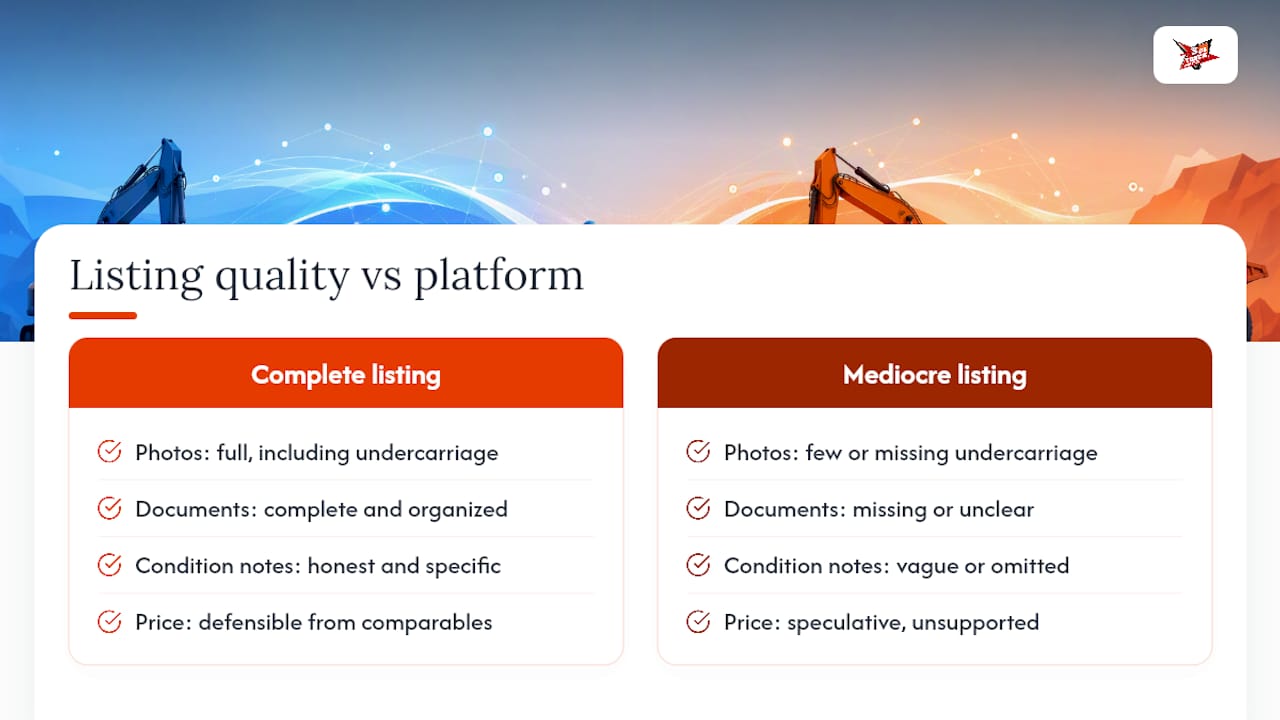
A mediocre listing on the best marketplace still underperforms a complete listing on a decent one. That's the part conventional advice glosses over, because "pick the right platform" makes a cleaner headline than "photograph your undercarriage and disclose the cracked hose."
If you take one thing from this article, prioritize the pre-list checklist over the channel debate. Nail the documents, the photos, the honest condition notes, and a defensible price built from real comparables. Do that work first, and almost any reputable channel will produce a fair result. Skip it, and no platform, auction house, or agent can fully compensate for a listing that raises more questions than it answers.
— Dave
List Your Equipment Where Serious Buyers Already Look
Sostruckforsale gives sellers a category-built alternative to generic classifieds: your excavator, semi truck, or crane lands in front of buyers already searching for that exact equipment type, filtered by category, price, and location, instead of buried in a general marketplace full of unrelated inventory.
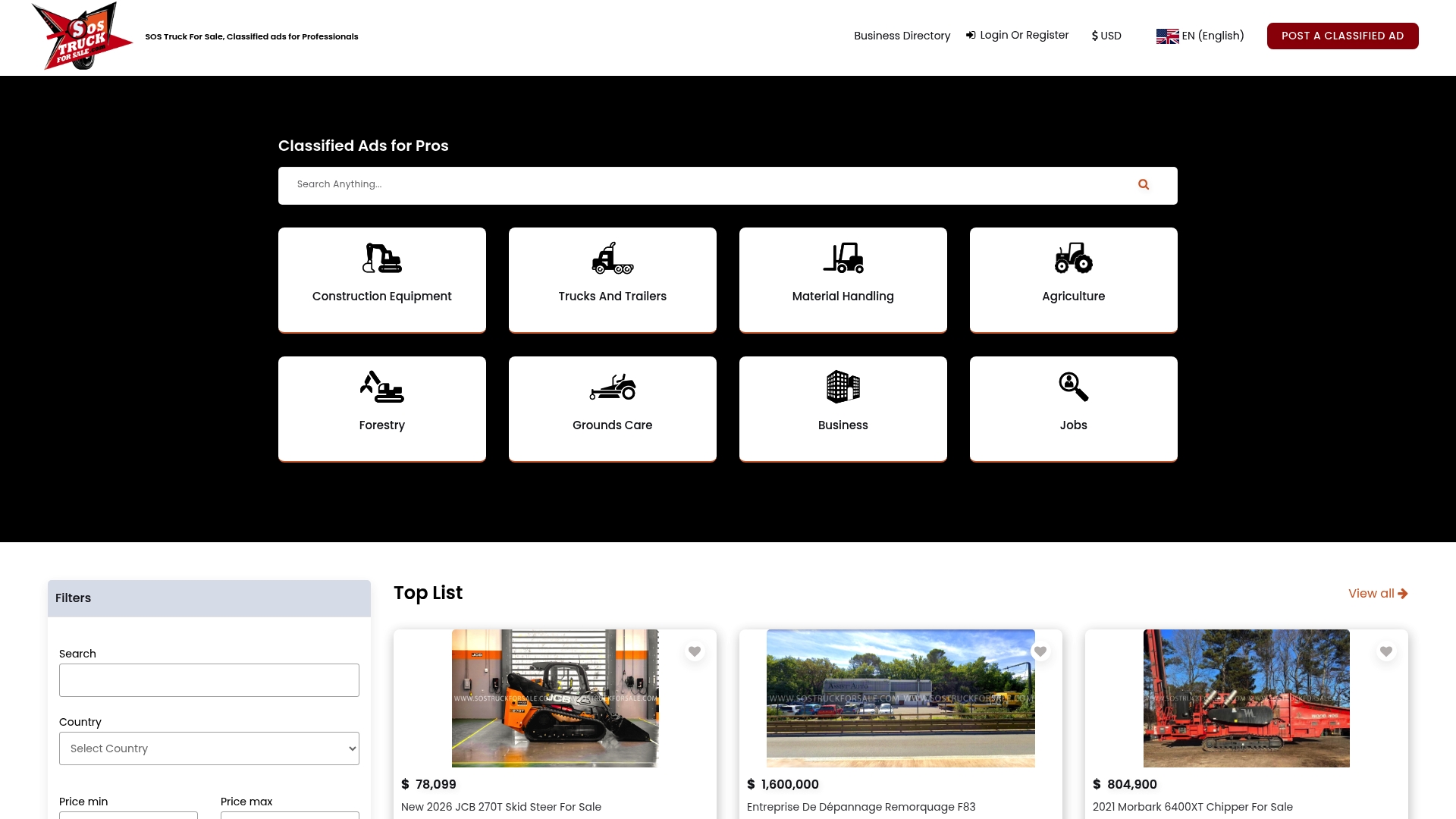
That specificity matters after everything covered above. You've built your documentation, priced against real comparables, and prepared your photos and video. The remaining variable is getting that listing in front of buyers who are actually shopping for heavy equipment rather than scrolling past it. Sostruckforsale's listing filters and dealer directory put your machine in that exact search path, whether you're moving a single trailer or managing a fleet of construction equipment as a dealer.
Post your listing on Sostruckforsale today and get your prepared package in front of buyers who already know what they're looking for.