
For speed, a direct cash buyout gets equipment off your floor and money in your account within days. For maximum return, consignment, auction, or a broker listing gives the market time to find the right buyer at the right price. Everything below walks through preparation, valuation, logistics, and a decision checklist so you can match the path to your priorities.
TL;DR:
- Cash buyouts provide quick payment within days but often for a lower price than market value, making them ideal for urgent cash needs.
- Reserve auctions and broker listings generally yield higher prices for specialized equipment but require 1 to 3 months for completion.
- Preparing equipment with detailed documentation, photos, and disclosing condition risks can increase its sale value and attract better offers.
- Evaluating offers should consider not only the offer amount but also timing, shipping responsibilities, liability, and payment methods to optimize your returns.
- Listing on niche marketplaces with complete specs and qualified buyer pools accelerates sales and improves chances of achieving market-appropriate prices.
Table of Contents
- Which selling path fits your surplus equipment?
- When should you use each selling path?
- How do you prepare equipment to sell for more?
- How do buyers and sellers set a fair price?
- What's the step-by-step process from listing to payout?
- Who handles shipping, rigging, and payment?
- How do you choose between competing offers?
- How does listing on a specialized marketplace help you sell faster?
- What taxes apply when you sell surplus equipment?
- Our take: prioritize the offer that matches your timeline
- List your surplus equipment where buyers are already looking
- Sources
Which selling path fits your surplus equipment?
Five paths dominate the surplus equipment market, and Cat's own breakdown of selling used equipment confirms the same five options most sellers weigh: direct cash buyout, unreserved auction, reserve auction, consignment, and broker or private sale. Each trades speed against price in a different way.
- Cash buyout: A buyer inspects the asset and pays outright quickly, often within a few days. You lose some upside on price, but you avoid marketing, negotiation, and removal logistics entirely.
- Unreserved auction: No minimum bid, which draws more bidders and often closes in one to three weeks. Final price can undershoot expectations if turnout is thin.
- Reserve auction: You set a floor price, protecting downside but sometimes scaring off bidders who assume the reserve is unrealistic.
- Consignment: A dealer lists and sells on your behalf, typically over 30 to 90 days, for a commission of 10% to 20%. You get retail-level exposure without doing the selling yourself.
- Broker or private sale: A broker markets the asset to their network, or you sell directly to a known buyer. Timelines vary wildly, from a week to several months, and fees depend entirely on the arrangement.
When should you use each selling path?
Match the path to the situation, not the other way around.
- Need cash fast to cover payroll or a lease payment? Take the cash buyout. Waiting for the "perfect" offer costs more in carrying costs than the price gap usually saves.
- Selling one expensive, well-known machine (a crane, a late-model excavator)? A reserve auction or broker listing usually beats a quick sale, because specialized buyers will pay a premium for a documented, well-maintained unit.
- Liquidating an entire plant? Consignment or an unreserved auction house handles volume better than you can alone, since they already have buyer lists for bulk equipment.
- Sitting on high-demand parts inventory? Private sale to a known buyer or a parts broker often nets more than lumping parts into a general auction lot.
Watch for red flags: any buyer asking for an upfront "processing fee" before an offer, or a private buyer who won't provide a business name or reference, is a strong signal to walk away.
Pro Tip: If you're not sure which path fits, get one cash offer and one consignment or broker estimate before deciding. Comparing the two numbers side by side tells you more than any calculator.
How do you prepare equipment to sell for more?
Buyers pay for confidence, not just condition. A detailed asset catalog and clean documentation package consistently pushes offers higher because it removes the guesswork a buyer would otherwise price into their bid.
- List make, model, serial number, run-hours, and full maintenance history for every unit.
- Gather any spare parts, manuals, and warranty documents that transfer with the sale.
- Shoot photos in daylight from multiple angles, including close-ups of wear points, gauges, and the serial plate, since buyer-focused photo checklists show these are the shots serious buyers ask for first.
- Wash and de-clutter the machine before photographing it. Dirt reads as neglect even when the mechanics are fine.
Skip repairs that cost more than they'll return. A $3,000 hydraulic fix on a machine that will sell for $15,000 either way isn't worth it. Selling as-is with a clear disclosure of the issue is often the smarter move, and an organized inventory management approach makes it easier to track which units need what before you list.
How do buyers and sellers set a fair price?
Depreciation sets the ceiling on any offer. Investopedia's depreciation framework explains that industrial assets lose book value on a predictable schedule, and buyers use that curve as their starting point before adjusting for condition, run-hours, and brand reputation.
Demand does the rest of the work. A well-known brand with strong parts availability will command a premium even at higher hours, while an obscure or discontinued model can sit unsold at almost any price.
Comparable listings and recent sale prices in your equipment category, cross-checked against auction results, typically give you a realistic range within an hour of research, since tracking market demand before you price an asset is one of the fastest ways to avoid underselling or overpricing it.
Get a broker's informal estimate too. It costs nothing and gives you a third data point beyond the listings and auction comps you've already gathered.
What's the step-by-step process from listing to payout?
- Catalog and document the equipment, including specs, photos, and maintenance records.
- List or contact buyers through your chosen path, whether that's a marketplace listing, an auction house, or a direct call to a broker.
- Field offers and inspections. Buyers or their agents will typically want to see the equipment in person or request a video walkthrough.
- Accept an offer and sign a bill of sale that includes proof of ownership and confirms no outstanding liens.
- Coordinate pickup or shipping, then release the equipment once payment clears.
Cash buyouts move through this sequence in days. Auctions and consignment stretch it to weeks or months, mostly because step 3 depends on buyer traffic you can't control. Don't skip the lien check. A buyer's lender will, and a title problem discovered late kills deals that were otherwise ready to close.
Who handles shipping, rigging, and payment?
Rigging and transport costs usually fall on the buyer for cash purchases, since the price already reflects pickup responsibility. In auction and consignment deals, sellers often negotiate who pays, so get it in writing before you accept an offer.
- Ask any rigger or mover for proof of insurance before they touch the equipment.
- Put acceptance criteria in writing: what condition the equipment must be in at delivery, and who's liable if it's damaged in transit.
- Confirm payment method before scheduling removal. Verified bank transfer or an escrow arrangement protects both sides better than a check that could bounce after the equipment leaves your yard.
Pro Tip: Never release equipment before funds clear, even for a buyer who seems reliable. A cleared bank transfer takes a day; a bounced check can take weeks to sort out. A shipping and rigging checklist built for sellers covers the contract language worth adding before a mover shows up.
How do you choose between competing offers?
Rank offers against your actual priorities, not just the top-line number.
- Speed: How many days from acceptance to payment?
- Net proceeds: What's left after commission, rigging, and transport costs?
- Liability during removal: Who's responsible if something breaks during pickup?
- Payment timing: Full payment upfront, or staged across delivery milestones?
Ask every buyer or broker directly: Who arranges and pays for rigging? What's your typical payment timeline once we sign? Can you provide two references from recent sellers? Vague answers to any of these are your cue to negotiate harder or move to the next offer, and a staged payment with a holdback until any lien question resolves protects you if paperwork surfaces late.
How does listing on a specialized marketplace help you sell faster?
Niche exposure matters more than general reach. A listing seen by buyers already searching for excavators, semi trucks, or cranes converts faster than the same listing lost in a general classifieds feed, because the audience arrives pre-qualified.
- Optimized listings with complete specs and clear photos generate more qualified inquiries, following the same listing optimization tactics that dealers use to shorten time-to-sale.
- A dealer directory and category filtering help buyers self-select before they ever contact you, cutting down on tire-kicker inquiries.
What taxes apply when you sell surplus equipment?
Selling surplus equipment almost always triggers a tax event, and the type depends on how the asset was used and depreciated. If you claimed depreciation deductions on the equipment while it was in service, selling it above its depreciated book value typically creates a taxable gain, often taxed as ordinary income up to the amount of depreciation you previously deducted. This is generally referred to as depreciation recapture, and it applies whether you sell through a direct buyout, an auction, or consignment.
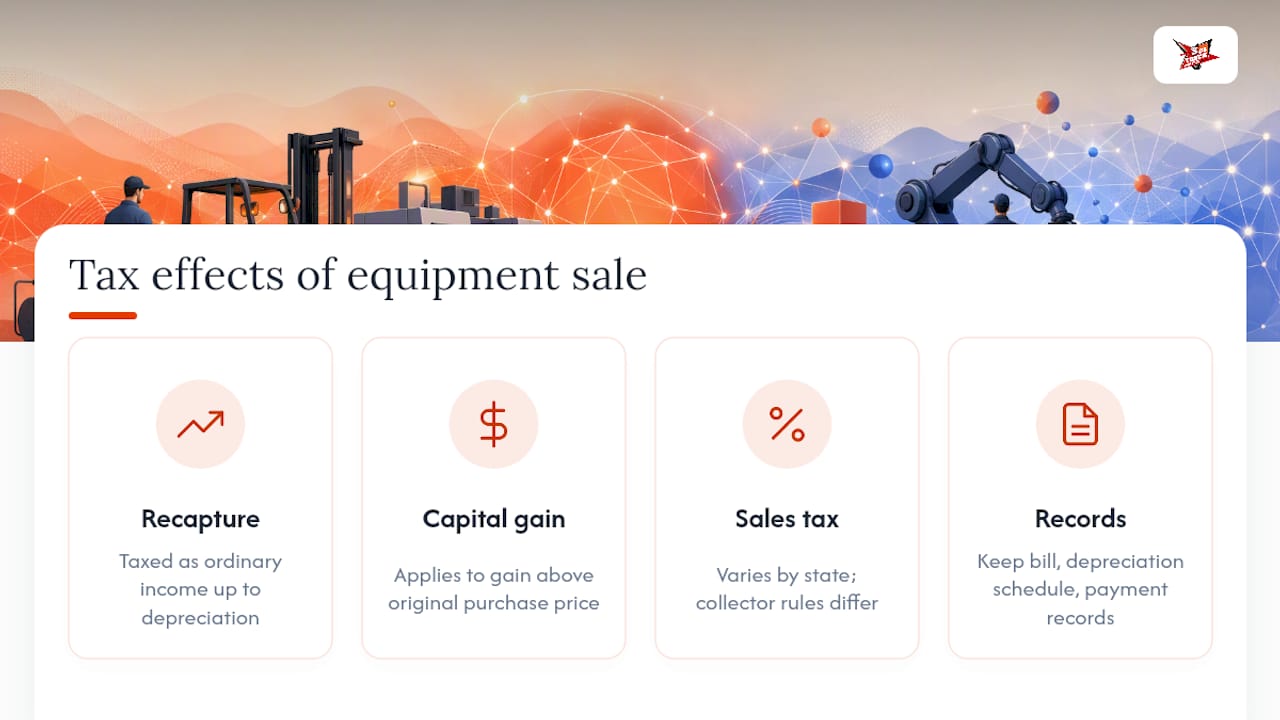
Any gain above the original purchase price beyond that recaptured amount is usually treated as a capital gain. Sale proceeds also typically need to be reported on your business's income tax return for the year the sale closes, regardless of when payment fully clears if the sale is structured with installments.
Some states apply sales tax to used equipment transactions, and the rules on who collects it (buyer or seller) vary by state and by whether the buyer is a reseller with a resale certificate. Keep every bill of sale, depreciation schedule, and payment record from the transaction. A tax professional familiar with your state's equipment sales rules should review the specifics before you file, since the recapture math depends on your exact depreciation history and entity structure.
Our take: prioritize the offer that matches your timeline
Speed beats a slightly better price when idle equipment is costing you storage or insurance every week it sits. Catalog your asset, get two offers, and schedule pickup once terms are clear. The trade-off is real, but indecision costs more than most sellers expect.
— Dave
List your surplus equipment where buyers are already looking
Sostruckforsale gives sellers direct access to buyers already searching by category, so a crane or excavator listing reaches people who want exactly that machine, not a general classifieds audience scrolling past it.
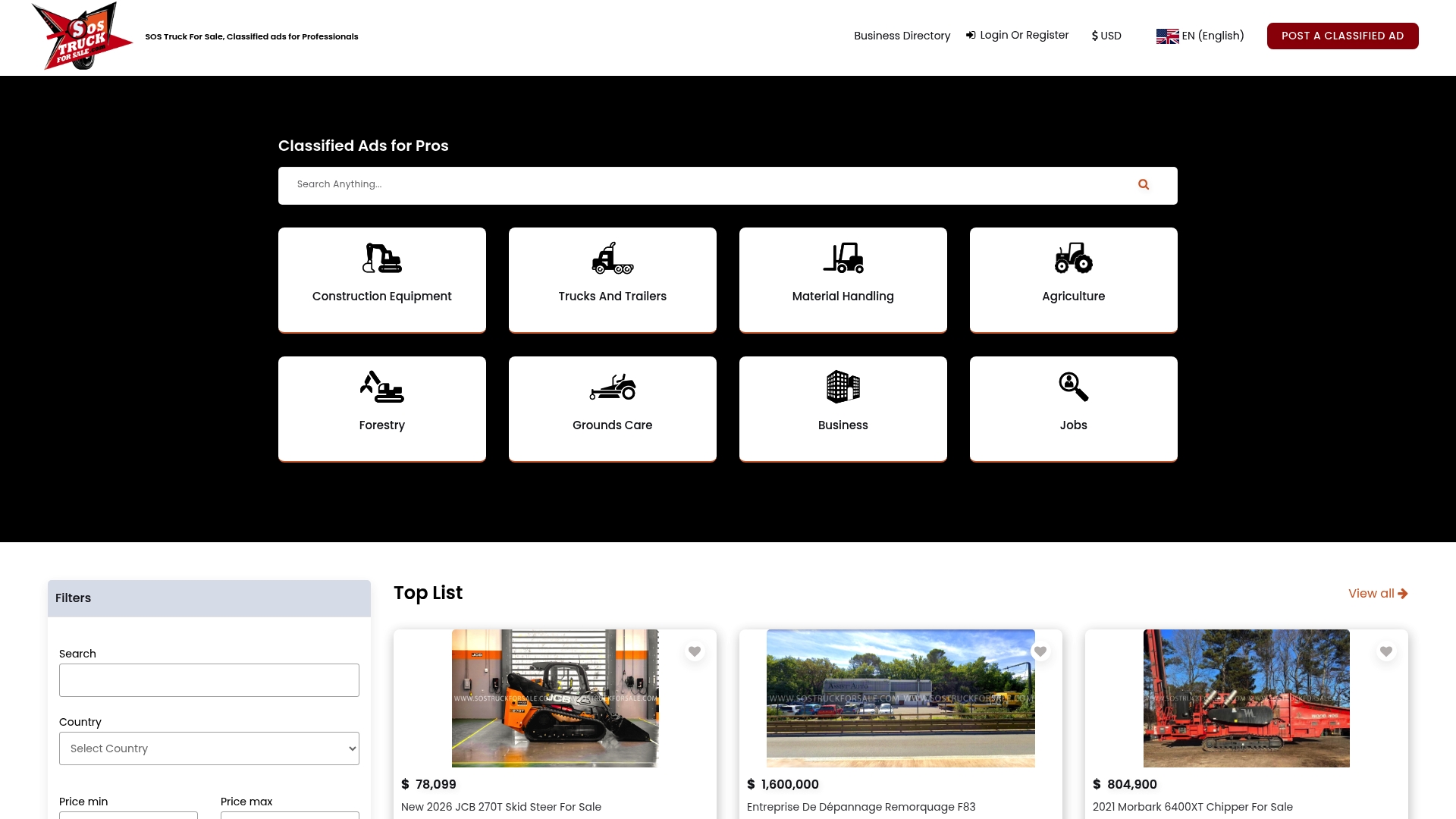
Getting listed takes three steps: gather your specs and photos, choose your listing options, and add your shipping or rigging preferences so buyers know what to expect before they call. Once live, most sellers start fielding inquiries within days, with serious buyers requesting inspection details or a video walkthrough before making an offer. From there, negotiation runs the same as any private sale, except you're working from a pool of buyers who searched for your equipment specifically. Start your listing on Sostruckforsale and get in front of buyers looking for exactly what you're selling.
Sources
- Maximizing Returns: Tips for Selling Your Surplus Equipment Efficiently
- Depreciation Definition (Investopedia)
- 6 Tips for Selling Surplus Industrial Equipment (Medium)