
Compact excavators run $80,000 to $200,000 new, standard 20 to 30 ton excavators $200,000 to $600,000, and used machines typically sell for 40 to 60 percent less depending on hours and condition. Renting beats buying for jobs under three months; owning wins beyond that. Before you commit to either, pull auction comps and, for anything over $100,000, order a certified appraisal.
TL;DR:
- Used equipment prices vary widely based on age, hours, and condition, with quality used machines often costing significantly less than new.
- Renting typically becomes more economical than owning for projects under eight to ten weeks, once fuel, maintenance, and insurance costs are included.
- Auction comps and local dealer listings provide the most accurate estimates of a machine’s fair market value, especially for unreserved sales.
- The rising costs of steel and supply chain disruptions are pushing new equipment prices higher, which increases demand for used machinery and lifts resale values.
- Depreciation and financing terms heavily influence the total cost of ownership, with most machines losing 20 to 30 percent of their value in the first three years.
Table of Contents
- Heavy Equipment Pricing By Category: New Vs Used Benchmarks
- What Does Owning Or Renting Equipment Actually Cost?
- How Do You Determine A Machine's Fair Market Value?
- What's Driving Equipment Prices Higher In 2026?
- Financing And Resale: What Should Your Cost Model Include?
- Your Step-By-Step Pricing And Buying Checklist
- What Marketplace Data Teaches You About Buyer Mistakes
- Find And Compare Heavy Equipment Pricing On Sostruckforsale
- Sources
Heavy Equipment Pricing By Category: New Vs Used Benchmarks
Prices swing hard by category, and the gap between new and used is often the biggest lever a buyer has. Compact excavators list new for $80,000 to $200,000, while standard 20- to 30-ton excavators run $200,000 to $600,000 depending on reach and attachments. Large crawler cranes sit in a different universe entirely, often priced between $2 million and $5 million new, with almost no meaningful used market because so few exist and buyers hold them for decades.
Here's how the rest of the field typically breaks down:
- Dozers: Small to mid-size units run $150,000 to $400,000 new; used models with 3,000 to 6,000 hours often sell for $60,000 to $180,000.
- Wheel loaders: New pricing spans $120,000 to $350,000; used units with moderate wear land between $50,000 and $150,000.
- Skid steers: New units run $35,000 to $80,000; well-maintained used skid steers often sell for $18,000 to $45,000.
- Backhoes: New pricing falls between $70,000 and $130,000; used ones with under 4,000 hours typically bring $30,000 to $70,000.
- Telehandlers: New units span $60,000 to $150,000; used telehandlers commonly sell for $25,000 to $80,000.
Hours and model year move a machine between brackets faster than almost anything else. A five-year-old excavator with 2,500 hours and a hydraulic thumb attachment can outprice a seven-year-old unit with 6,000 hours by tens of thousands of dollars, even if both look similar in photos. Buying used usually makes sense when you need a workhorse machine for routine grading, digging, or material handling and don't need the latest emissions tier or telematics package. New is worth the premium when downtime costs more than the sticker price difference, or when a job requires specific attachments and warranty coverage a used unit won't offer.
What Does Owning Or Renting Equipment Actually Cost?
Sticker price is the smallest number in the equation once fuel, maintenance, and insurance enter the picture. A mid-size excavator or dozer typically burns $600 to $1,500 a week in fuel depending on job intensity, and a full-time operator adds $1,000 to $2,000 a week on top of that in most regions.
Machines with higher operating hours typically incur substantially higher annual maintenance costs than those with lower hours, reflecting accelerated wear on key components. Budget $3,000 to $10,000 a year in routine parts and service for an actively used machine, more if you're running tracks instead of tires. EquipmentWatch and similar data providers track these ownership costs alongside rental-rate benchmarks, which fleets and lenders use to sanity-check their own numbers.
Insurance runs roughly 1 to 3 percent of the machine's value annually, and storage or transport between job sites adds its own line item, especially for tracked equipment that needs a lowboy trailer.
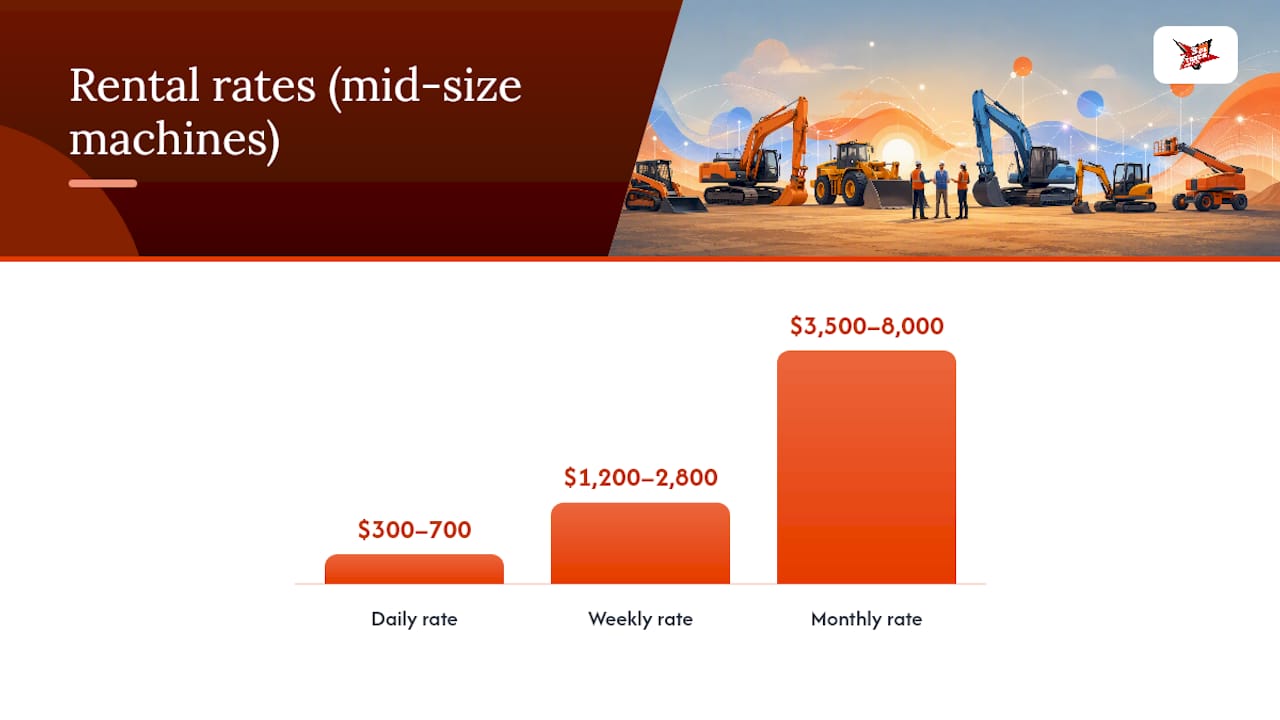
Rental rates give you a cleaner comparison point:
- Daily rates for mid-size excavators or loaders: $300 to $700.
- Weekly rates: $1,200 to $2,800.
- Monthly rates: $3,500 to $8,000, depending on category and region.
The rule of thumb: if a job runs less than 8 to 10 weeks a year, renting almost always beats owning once you account for depreciation, insurance, and storage.
How Do You Determine A Machine's Fair Market Value?
Unreserved auction results are the closest thing to a true market price you'll find, since there's no reserve floor propping up the number. Ritchie Bros. gives free access to more than 1 million past unreserved auction results from the past 24 months, and pairing those comps with local dealer listings gives you a realistic price range instead of a guess.
A defensible valuation usually follows this sequence:
- Pull auction comps for the same model, similar hours, and comparable attachments.
- Run a market-data tool like EquipBook, which reports instant trade-in, dealer retail, and cash-offer estimates across more than 1,000 models.
- Check manufacturer price pages for exact new-equipment MSRP when you need a baseline, such as Gradall's published pricing for specific excavator models.
- Order a certified appraisal if the deal involves financing, litigation, or insurance claims.
Blue-book style estimates from tools like EquipBook are fast and free, but they're statistical averages, not inspections. A certified appraisal distinguishes between Fair Market Value, Orderly Liquidation Value, and Forced Liquidation Value and carries legal weight a software estimate doesn't. Desktop appraisals typically cost around $395 and take 7 to 10 business days, with rush options available for higher fees.
Pro Tip: Order the right value type before you pay for an appraisal. Lenders financing a purchase almost always want OLV, not FMV, and asking for the wrong one means paying for a second report.
What's Driving Equipment Prices Higher In 2026?
Tariffs and supply-chain pressure have pushed steel and component costs up across nearly every category, and that pressure shows up directly in new-equipment MSRP. When new machines get more expensive or lead times stretch, buyers shift toward used inventory, which tightens that supply and pushes used prices up right behind it.
A few forces worth tracking before you buy:
- Tariff and material costs continue pushing new-equipment prices higher through 2026, according to industry cost tracking.
- Scarcity in popular size classes (mid-size excavators, skid steers) keeps used prices firmer than older models would predict.
- Technology add-ons like 3D grade guidance can add $15,000 to $45,000 to a machine's price, though the payback often comes through reduced job time and fuel use.
- Regional and seasonal demand spikes before spring construction season, often lifting rental rates 10 to 20 percent in high-demand markets.
Machines with telematics and guidance systems already installed hold resale value better than base models, since retrofitting that technology later costs more than buying it factory-installed.
Financing And Resale: What Should Your Cost Model Include?
Depreciation eats more of a heavy machine's value than almost any other single factor, and most equipment loses 20 to 30 percent of its value in the first three years alone. Budgeting for resale means modeling that curve honestly instead of assuming the machine will hold sticker value.
Build your cost model around these line items:
- Depreciation schedule based on hours of use, not just calendar age, since a lightly used older machine often holds value better than a heavily used newer one.
- Loan-to-value ratio, which lenders typically base on Orderly Liquidation Value rather than Fair Market Value, meaning your borrowing power is lower than the machine's retail price suggests.
- Appraisal and documentation costs, especially if the lender requires a certified report before closing.
- Total operating costs including fuel, parts, insurance, and transport, which can add 15 to 25 percent to the true annual cost of ownership beyond the purchase price.
Reviewing how equipment depreciation actually gets calculated before you finance a purchase helps you avoid overestimating resale value later.
Your Step-By-Step Pricing And Buying Checklist
Work through this sequence before signing anything:
- Search auction comps for the exact model, similar hours, and comparable attachments.
- Verify machine specifics against the seller's listing, including serial number and service history.
- Run a valuation tool to cross-check the asking price against market averages.
- Inspect or test the machine in person, checking hydraulics, undercarriage wear, and hour meter consistency.
- Get transport and insurance quotes before finalizing your budget.
- Finalize financing or payment, requesting the correct appraisal value type if a lender is involved.
Red flags worth walking away from include mismatched hour meters, missing maintenance records, and sellers unwilling to allow a pre-purchase inspection. If you're selling instead of buying, clear photos, a documented maintenance log, and a full attachments list consistently bring faster offers closer to asking price.
Pro Tip: Never skip the test run, even on a machine that looks pristine in photos. Hydraulic leaks and worn pins often only show up under load.
What Marketplace Data Teaches You About Buyer Mistakes
Listings and sale patterns keep teaching the same three lessons: buyers who skip auction comps overpay by thousands, sellers who omit hour logs get lowball offers, and machines with attachment lists photographed clearly sell faster at better prices. The biggest mistake isn't underpricing or overpricing. It's negotiating without comps in hand. Transparent listings with real documentation save both sides time and money, because nobody has to guess.
— Dave
Find And Compare Heavy Equipment Pricing On Sostruckforsale
Auction comps and appraisals tell you what a machine should sell for. Sostruckforsale shows you what's actually listed right now, so you can compare real asking prices across categories instead of estimating in a vacuum.
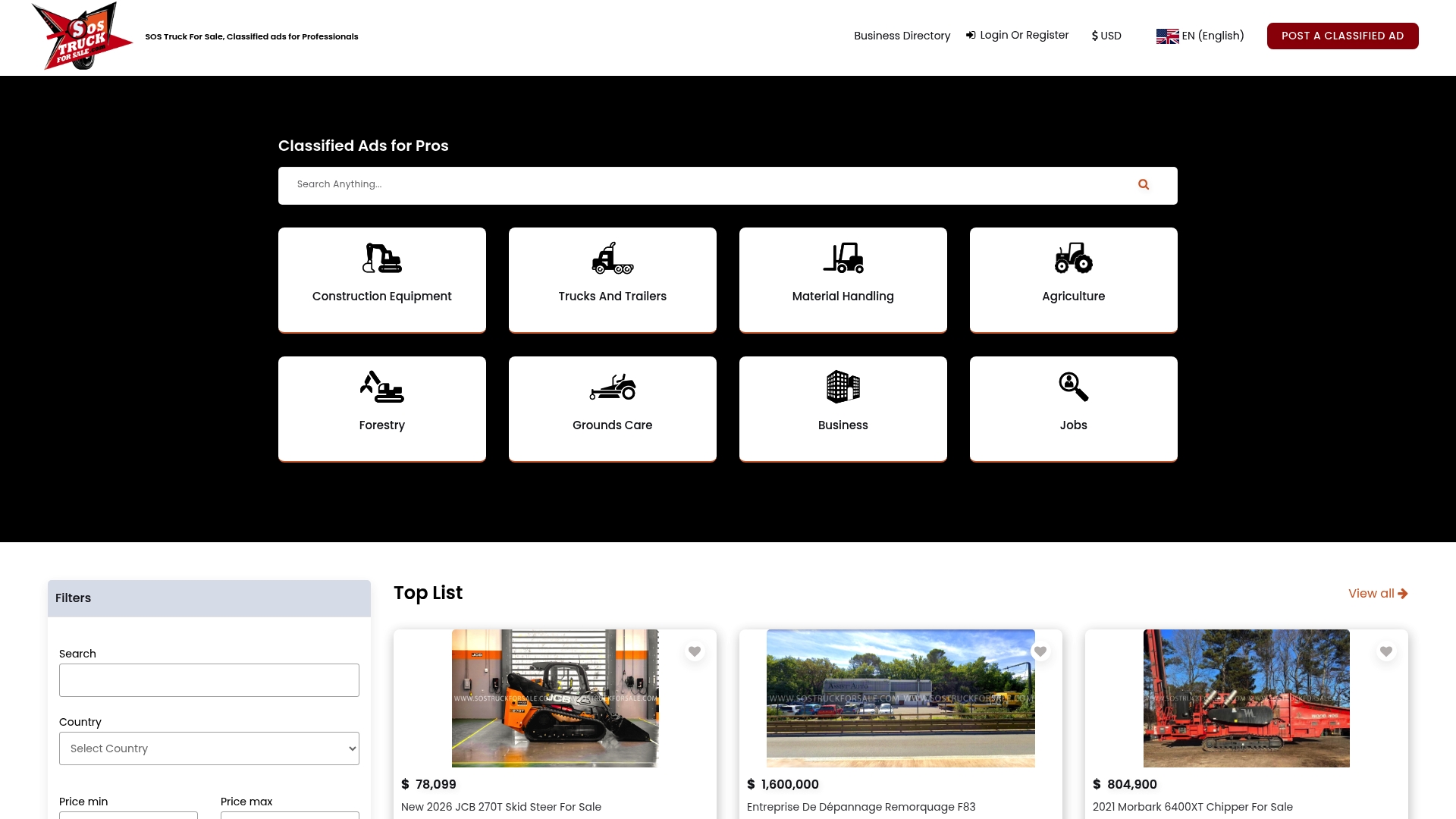
The marketplace lets you filter listings by category, subcategory, price, and country, so you can line up several comparable excavators, dozers, or loaders side by side before you make an offer. That kind of direct comparison complements auction comps and valuation tools like EquipBook rather than replacing them. It shows you the live inventory sellers are pricing today, not just historical averages. Whether you're budgeting for a used skid steer or listing a dozer you no longer need, browse current listings on Sostruckforsale and see how your numbers stack up against what's on the market right now.
Sources
- Heavy Equipment Valuation Guide 2026 | Free Auction Price Results - Ritchie Hub
- Heavy Equipment Appraisal | Get a Quote Today – Since 2009
- Construction Equipment Prices in 2026: How Much Does Equipment Cost?
- EquipBook | Heavy Equipment Valuations