

A sale-ready heavy-equipment listing needs these exact fields: a Year, Brand, Model title with a key spec, VIN or serial plate documentation, hours, full specifications, a complete photo and video set, a clear price, supporting documents, and pickup logistics. This equipment listing template applies to for-sale classifieds, not asset-tracking spreadsheets. Skip any of these fields and buyers stall, ask redundant questions, or scroll past the listing entirely.
TL;DR:
- Using a clear and detailed title with year, brand, model, key specs, and hours helps attract serious buyers quickly.
- Including a close-up photo of the VIN or serial number along with full specifications ensures transparency and builds trust.
- Providing a comprehensive media set, especially a short operation video, significantly increases listing credibility and buyer engagement.
- Attaching essential documents like service records, titles, and inspection reports accelerates the sale process by reducing buyer uncertainty.
- Listing on specialized online marketplaces with accurate categories and complete fields yields higher-quality inquiries from motivated buyers.
Table of Contents
- What Fields Belong in an Equipment Listing Description Template?
- What Photos and Video Does an Equipment Listing Need?
- What Documents and Trust Signals Should a Listing Include?
- How Do You Build a Listing From Scratch, Step by Step?
- Copy-Paste Equipment Catalog Template You Can Use Today
- Why Standardized Listings Outperform Freeform Ones
- List Your Equipment Where Serious Buyers Are Looking
- Sources
- FAQ
What Fields Belong in an Equipment Listing Description Template?
Every field in an equipment listing description template exists to answer a buyer question before they ask it. Skip one, and you get a phone call instead of a sale. Fill it out right, and the listing does the qualifying work for you.
Start with the title. The formula that consistently performs is Year plus Brand plus Model plus one key configuration detail, plus hours where relevant. "2019 Caterpillar 336 Hydraulic Excavator, 4,200 Hours" tells a buyer everything they need to click. A factual, standardized title beats a vague or hype-driven headline like "Great Deal, Must See" because it matches how buyers actually search.
Next comes identification. Photograph the VIN or serial plate directly, in focus, with no glare. Buyers and lenders use this number to pull service history and confirm the machine matches the listing. A missing serial photo is one of the fastest ways to lose a serious buyer's trust.
Specifications change by equipment class, but plan to cover:
- Engine horsepower, fuel type, and EPA emissions tier if applicable
- Transmission type and drive configuration (2WD, 4WD, tracked)
- Hydraulic flow rate and rated lift or load capacity
- Tire or track condition, including remaining tread or wear percentage
Record hours or mileage exactly as the meter reads, and note if the meter was ever replaced or reset. Round only when the source data genuinely lacks precision, and say so.
Condition notes are where most listings fail. "Runs good" tells a buyer nothing. "A/C inoperative, minor weeping on main lift cylinder, no leaks under load" tells them exactly what they're buying and signals you have nothing to hide.

What Photos and Video Does an Equipment Listing Need?
A complete photo and video set is the single biggest trust builder in an equipment listing package, and it separates serious sellers from tire kickers within seconds of a buyer landing on the page.
Shoot these images, in this order:
- Front, rear, and both side walkaround shots
- Both front corner angles, showing the whole machine in frame
- Cab interior with a clear shot of the hour meter
- Engine bay, fully open, no covers blocking components
- Undercarriage and known wear points (tracks, bushings, pins)
- VIN or serial data plate, close and legible
- Any included attachments, buckets, or implements
- Close-ups of every disclosed defect or repair
Shoot in daylight against a neutral background, hold the camera steady, and never edit or filter the images. Name files consistently, something like "2019 CAT 336 excavator front left," since descriptive file names and alt text help the listing surface in search results.
Video closes the gap photos can't. A 30 to 60 second clip showing a cold start, idle, and hydraulic cycle demonstrates function in a way no written description can match, and it remains one of the most persuasive elements in a heavy equipment listing.
Pro Tip: Record the VIN plate, the hour meter, and the cold start in one continuous, unedited clip. A single uncut take is far more convincing to a buyer than three separate polished videos.
What Documents and Trust Signals Should a Listing Include?
Buyers commit faster when the paperwork is visible before they ask for it. A complete listing package that pairs specs and media with documentation shortens the sale cycle because it removes the guesswork that stalls negotiations.
Gather and reference these documents directly in the listing:
- Title or bill of sale, ready to transfer
- Service and maintenance records, scanned or photographed
- Recent inspection reports, if available
- Emissions or compliance paperwork where the equipment class requires it
- Operator manuals, if you still have them
Pricing presentation matters as much as the number itself. A fixed price works best for clean, well-documented machines that are ready to move. A price range fits equipment with room to negotiate based on inspection results. "Contact for price" only makes sense for high-value custom rigs or fleet lots where pricing depends on buyer volume. Whichever you choose, state clearly whether transport and shipping costs are included or handled separately.
Display your trust signals prominently: the VIN photo, scanned service records, the operating video, and a verified seller profile. Then spell out your logistics. State your deposit requirement, your inspection appointment window, accepted payment methods, and whether you or the buyer arranges transport. Ambiguity here is what turns a five-minute call into a three-day back-and-forth.
How Do You Build a Listing From Scratch, Step by Step?
Assembling a heavy equipment listing description is a sequence, not a single sitting. Treat it like prepping a machine for auction: everything gets staged before it goes live.
- Build your pre-list pack. Wash the machine, photograph the VIN and hour meter, pull service records, and record your cold-start and operation video. A partner service like Apache X's drone cleaning can handle large equipment washdowns without scaffolding, which matters when you're prepping tall cranes or lifts for photos.
- Draft the listing. Apply the title formula, paste your specifications, upload the full photo and video set, attach documents, set your price, and define inspection terms.
- Run the publish checklist. Confirm every mandatory field is filled, preview the listing as a buyer would see it, and make sure your strongest whole-machine photo leads the gallery.
- Manage the leads. Use a response template for common questions, ask qualifying questions before scheduling an inspection, and verify payment method before handing over keys.
Copy-Paste Equipment Catalog Template You Can Use Today
Here's the master field list, in the order most listing platforms expect them. Copy this structure directly into your posting form.
- Title: Year + Brand + Model + key spec + hours
- Price: fixed, range, or contact for price
- Location: city and state or region
- Make / Model / Year
- VIN / Serial Number
- Hours or Mileage
- Engine: horsepower, fuel type, emissions tier
- Transmission and drive
- Hydraulics: flow rate, function condition
- Capacity: rated load or lift
- Attachments included
- Condition notes: specific, documented disclosures
- Photo set: confirm full checklist complete
- Video link: cold start and operation clip
- Documents attached: title, service records, inspection
- Inspection and pickup terms
- Contact information
For an excavator, that title might read "2018 John Deere 350G LC Excavator, Long Reach Boom, 5,100 Hours," priced as a fixed $89,500 with a scanned title and service log attached. For a semi truck, it might read "2020 Freightliner Cascadia, Detroit DD15, 410,000 Miles," listed with a price range and a note that transport is arranged separately.
| Media Item | Minimum Count | Suggested Filename |
|---|---|---|
| Walkaround exterior | 4 | model-front, model-rear, model-left, model-right |
| Cab interior with hour meter | 1 | model-cab-hourmeter |
| Engine bay | 1 | model-engine-bay |
| VIN/serial plate | 1 | model-serial-plate |
| Operating video | 1 clip | model-coldstart-operation |
For platform-specific naming conventions on trucks and construction equipment, the equipment listing categories guide breaks down structure by machine type.
Why Standardized Listings Outperform Freeform Ones
A listing has roughly 15 seconds to earn a buyer's trust before they click away, and that window is almost entirely controlled by the title and the first photo. Standardized fields aren't a bureaucratic exercise. They're what let a buyer scan ten listings in two minutes and call back on the three that actually answered their questions.

Sellers underestimate how much friction a vague listing creates. Every missing spec, every blurry serial photo, every "runs great" without a hint of what "great" means, forces the buyer to pick up the phone and ask you to do the work the listing should have done. Standardized titles, complete specs, and honest media do that work automatically, and they tend to attract buyers who are further along in their decision, not just curious browsers.
The dealer playbook on generating leads breaks down how first impressions on a listing page translate directly into inquiry quality, not just inquiry volume.
— Dave
List Your Equipment Where Serious Buyers Are Looking
There are online marketplaces built specifically for commercial vehicles and industrial equipment, offering classified listings, searchable dealer directories, and filtering by category, price, and country to help your machine reach buyers who are already looking for what you're selling.
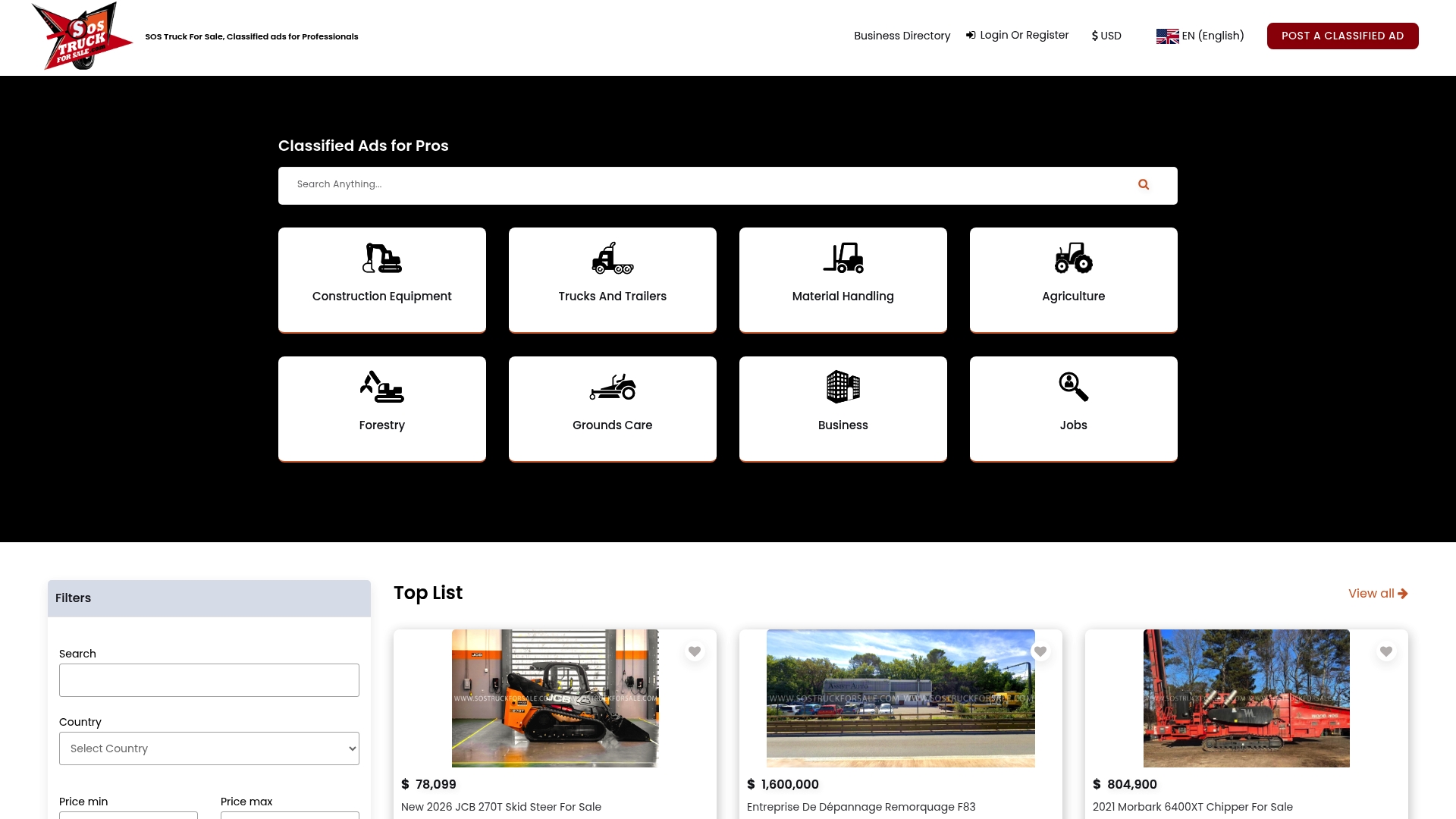
Whether you're posting a single excavator or managing a dealer inventory of trucks and trailers, the fields in this template map directly onto what a Sostruckforsale listing asks for: title, specs, hours, photos, video, documents, and price. If you want the deeper workflow behind lead response and inspection scheduling, the dealer playbook walks through it. Ready to post? Head to Sostruckforsale and get your listing live today.
Sources
The checklist approach in this article draws on practical seller guides, including how to sell used heavy equipment, proven online selling steps for dealers, and guidance on standardized listing titles. For vehicle-specific templates, see the flatbed truck listing guide and the full heavy equipment selling checklist.
- High-Converting Heavy Equipment Listings: Seller Guide to Online Sales
- How to Sell Used Heavy Equipment: Documents, Photos, Pricing, and Timing
- How to Sell Heavy Equipment Online: 10 Proven Steps for Dealers
FAQ
What Fields Should an Equipment Listing Template Always Include?
At minimum, include a Year Brand Model title with key spec and hours, VIN or serial photos, full specifications, a complete photo and video set, price, documents, and pickup logistics.
How Many Photos Should a Heavy Equipment Listing Have?
Plan for at least eight to ten images covering all four exterior angles, the cab interior with the hour meter, the engine bay, undercarriage, serial plate, attachments, and any disclosed defects.
Should I List a Fixed Price or a Price Range?
Use a fixed price for clean, well-documented machines ready to move, and a price range when you expect negotiation based on inspection results.
Is Video Really Necessary for an Equipment Listing?
Yes. A short cold-start and operation clip is one of the most persuasive elements a listing can include, since it proves function in a way photos cannot.
Where Should I Post My Equipment Listing?
Some online platforms let dealers and private sellers post classified listings for trucks and heavy equipment with category, price, and country filtering to reach qualified buyers.