
Offer wire transfers or ACH for large closes, application-only loans and leases for most buyers, and vendor or in-house financing for borderline credit. This mix reduces sticker shock, keeps monthly payments predictable, and keeps the transaction under your control instead of losing the buyer to a competing lot with easier terms.
TL;DR:
- Wire transfers remain the most secure and fastest method for high-value deals, with funds clearing the same day and no chargeback risk.
- Choosing between a capital lease and an FMV lease should depend on whether the buyer wants ownership benefits or lower monthly payments.
- Vendor financing models, especially dealer-carry, allow dealers to control the credit process but tie up capital and add credit risk, which can be mitigated by selling the notes later.
- Payment structures like seasonal, deferred, or progress payments can better match a buyer's cash flow, increasing the likelihood of closing.
- Present financing options within the sales conversation itself, ideally showing monthly payments before the sticker price to influence buyer perception and decision-making.
Table of Contents
- Standard Equipment Sales Payment Methods and What They Cost You
- Should You Recommend a Loan or a Lease?
- How Does Vendor Financing Work at the Point of Sale?
- Building Payment Schedules Around the Buyer's Cash Flow
- What Should You Tell Buyers About Taxes?
- A Step-by-Step Checklist for Rolling Out Financing Options
- Where to Go Next for Dealer-Level Financing Guidance
- Financing Is a Sales Tool, Not a Back-Office Task
- List Your Equipment Where Financed Buyers Are Already Looking
- Sources
Standard Equipment Sales Payment Methods and What They Cost You
Every dealer eventually asks the same question: which payment method actually clears fastest with the least risk? Wire transfer remains the standard for high-value transactions because funds clear same-day and there's no chargeback exposure once the money lands. ACH/EFT works well for recurring payments or smaller transactions where the lower processing fee matters more than instant clearing.
Credit cards close deals fast, but the 2.5% to 3.5% processing fee adds up quickly on six-figure equipment. Most dealers cap card payments at a few thousand dollars or add a surcharge to offset the cost. Company checks still show up for smaller private-party deals, though they carry float risk until they clear. Cash works for local sales under a few thousand dollars, and P2P apps like Zelle or Venmo occasionally cover the gap for used attachments or parts.
- Wire transfer: best for six-figure closes, clears same-day, no reversal risk
- ACH/EFT: lower fees, ideal for recurring or installment collection
- Credit card: fast but expensive, cap it or pass along the surcharge
- Company check: fine for smaller deals, hold title transfer until it clears
- P2P apps: only for small, low-risk, local transactions
Pro Tip: Never release a title or keys on an uncleared check. Require wire confirmation or a cashier's check for anything over $10,000, and verify the cashier's check directly with the issuing bank before you sign anything.
Should You Recommend a Loan or a Lease?
The right structure depends on what the buyer actually wants: equity in the machine or the lowest possible monthly payment. A capital lease, often called a $1 buyout lease, functions like a loan. The buyer owns the equipment at the end of the term for a nominal fee, and it makes sense for someone planning to run the equipment for its full useful life. A fair market value lease, or True Lease, keeps ownership with the lessor and gives the buyer lower payments plus the option to upgrade equipment every few years.
Term lengths for heavy equipment typically run five to seven years, and lenders often finance new equipment up to 100% of value. Used equipment usually requires a down payment or lands at 80% to 90% loan to value depending on age and condition. Some lenders offer application-only approvals for amounts up to $250,000, which speeds up the entire process.
- Choose capital/$1 buyout leases for buyers who want ownership and depreciation benefits
- Choose FMV leases for buyers who value lower payments and equipment turnover
- Expect 80% to 90% LTV on used equipment, up to 100% on new
- Push application-only financing for deals under $250,000 to shorten approval time
Ownership intent should drive the conversation more than the numbers on the quote sheet. A buyer growing a fleet wants equity. A buyer testing a new service line wants flexibility and a lower monthly number. Ask the question directly instead of assuming.
How Does Vendor Financing Work at the Point of Sale?
Vendor financing puts you, the dealer, in the driver's seat instead of routing every buyer through a bank that might take two weeks to say no. There are two basic models. In a referral model, you connect the buyer to a financing partner who underwrites and funds the deal, and you collect a referral fee or a cleaner close. In a dealer-carry model, you originate the note yourself and collect payments directly, which means you're acting as the lender.
Here's how the dealer-carry model typically runs:
- Buyer submits a credit application and provides financial statements or bank records
- Dealer or partner underwrites the deal and sets down payment, term, and rate
- Dealer files a UCC-1 lien against the equipment to secure the note
- Buyer signs the security agreement and takes delivery
- Dealer collects monthly payments and tracks the note on the books
Dealers who present financing alongside the equipment quote, rather than as an afterthought, close more deals and retain more control over the transaction. The tradeoff is real: carrying notes ties up capital and adds credit risk to your balance sheet. Most dealers manage that risk by seasoning the note for a few months of on-time payments, then selling the performing note on a secondary marketplace. That move frees up capital while you keep the customer relationship for parts, service, and the next upgrade.
Building Payment Schedules Around the Buyer's Cash Flow
A rigid monthly payment doesn't fit every business. Contractors, farmers, and seasonal operators often need the payment structure to match when money actually comes in, not a generic 30-day cycle. Seasonal payment schedules let a landscaping company or farm operation pay more during harvest or peak season and less, or nothing, in the off months.
Deferred start payments push the first payment out 60 to 90 days, giving a buyer time to put the equipment to work before cash starts going out the door. Step-up payments start low and increase over the term, useful for a startup operation expecting revenue to grow. Progress payments apply to custom-built or special-order equipment, releasing funds in stages tied to manufacturing milestones.
- Seasonal schedules: aligned with harvest, construction season, or peak revenue windows
- Deferred start: 60 to 90 day delay before the first payment is due
- Step-up payments: lower early payments that increase as revenue grows
- Progress payments: staged funding tied to build milestones on custom equipment
Show these scenarios in the quote itself, not as a verbal aside. A buyer comparing $4,200 a month against a $310,000 sticker price is far more likely to sign than one staring at the full number alone.
What Should You Tell Buyers About Taxes?
Financing structure changes what a buyer can deduct, and that detail often decides which option they pick. A buyer who finances through a loan typically owns the equipment and can claim depreciation, including Section 179 expensing in the year the equipment goes into service. A buyer using an FMV lease generally treats payments as an operating expense, which can mean a simpler deduction but no ownership equity at the end.
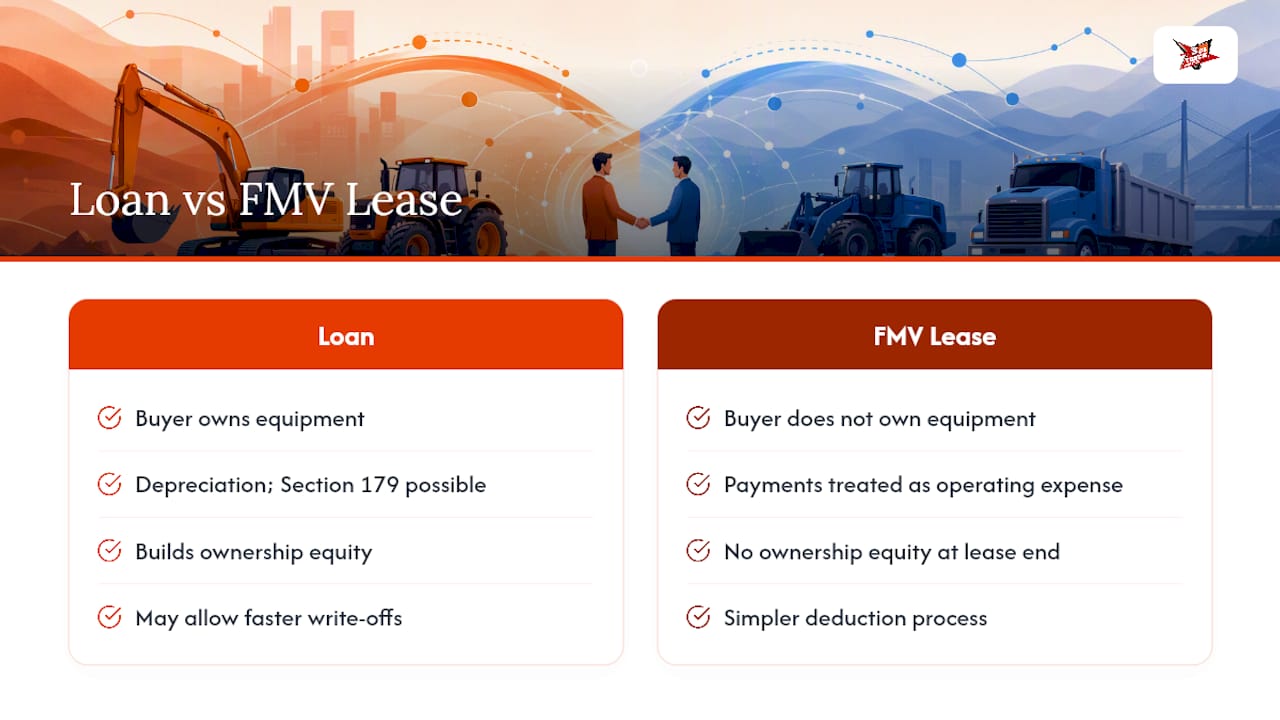
Frame it carefully. You can point out that loans build equity and may allow faster write offs, while leases usually mean lower monthly payments and less commitment. Never tell a buyer what they can deduct. Say something like, "Ask your tax advisor how Section 179 applies to your situation," and let them make the call with their own accountant.
A Step-by-Step Checklist for Rolling Out Financing Options
Adding financing to your sales process only works if your team treats it as part of the pitch, not paperwork bolted on after the handshake. Here's the sequence that gets it embedded correctly:
- Build a payment calculator into your quoting tool so every proposal shows a monthly number next to the sticker price
- Train sales reps with a simple script: present the cash price, then the financed payment, before asking for a decision
- Select a payment processor that handles wire, ACH, and capped card transactions without manual reconciliation
- Set up an application-only pathway for deals under $250,000 so buyers get same-day or next-day answers
- Standardize your documentation: credit application, security agreement, and UCC-1 filing template
- Vet finance partners on speed, point-of-sale integration, and whether they support secondary note sales
Pro Tip: Ask any potential finance partner how fast they can turn around an application-only approval. A partner sitting on decisions for a week will cost you sales to a competitor who quotes payment terms on the spot.
When you're choosing between financing partners, weigh flexibility as heavily as speed. Some major lenders run point-of-sale dealer programs with fast approvals and up to 100% financing on new equipment, which gives your reps a strong tool to close on the spot rather than waiting on a callback.
Where to Go Next for Dealer-Level Financing Guidance
Financing works as a sales tool only when it's built into your process from the first quote, not added after a buyer balks at the price. Dealers who treat payment structure as part of the pitch consistently see it convert hesitant shoppers into signed deals.
If you're setting up cash-flow support alongside customer financing, review dealer floorplan financing to understand how carrying inventory interacts with the payment programs you offer buyers. For dealers looking to move equipment faster once financing is in place, selling heavy equipment without leaving money on the table covers pricing and listing tactics that pair well with the payment structures outlined above. Broader operational guidance lives in commercial truck dealer best practices, which covers how sales and finance teams should coordinate.
Financing Is a Sales Tool, Not a Back-Office Task
Most dealers still treat financing as something the finance department handles after the sale is basically done. That's backward, and it costs deals. The research on vendor financing is consistent: presenting equipment and payment options together, in the same conversation, closes more business than quoting a price and letting the buyer go find their own bank.
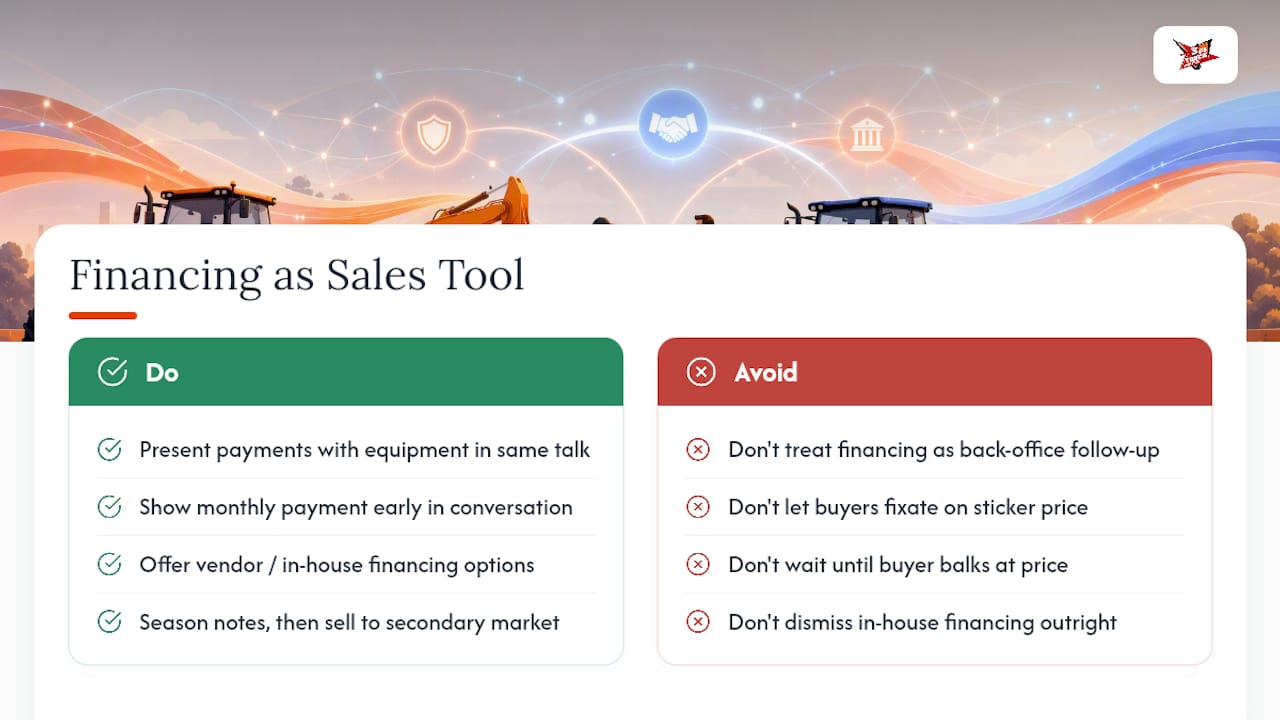
The conventional advice tells dealers to "offer financing options" without saying much about sequencing. What actually matters is where financing sits in the sales conversation. Show the monthly payment before the buyer has time to fixate on the sticker price, and you change the psychology of the entire negotiation. Wait until after they've balked at $310,000, and you're playing defense.
Where I'd push back hardest on common practice: too many dealers avoid in-house financing entirely because it feels like taking on a bank's job. That's overly cautious. Seasoning a note for a few months and selling it on a secondary marketplace lets you capture the close without carrying the risk indefinitely. Start there before you write off vendor financing as too much liability.
— Dave
List Your Equipment Where Financed Buyers Are Already Looking
Buyers ready to finance a purchase are still shopping around for the right machine before they ever talk to a lender, and visibility matters just as much as the payment terms you offer once they call. A listing on a specialized equipment marketplace puts your inventory in front of buyers who are actively comparing equipment across categories, price ranges, and locations, whether they're paying cash, financing through a bank, or looking for a dealer who offers in-house terms.
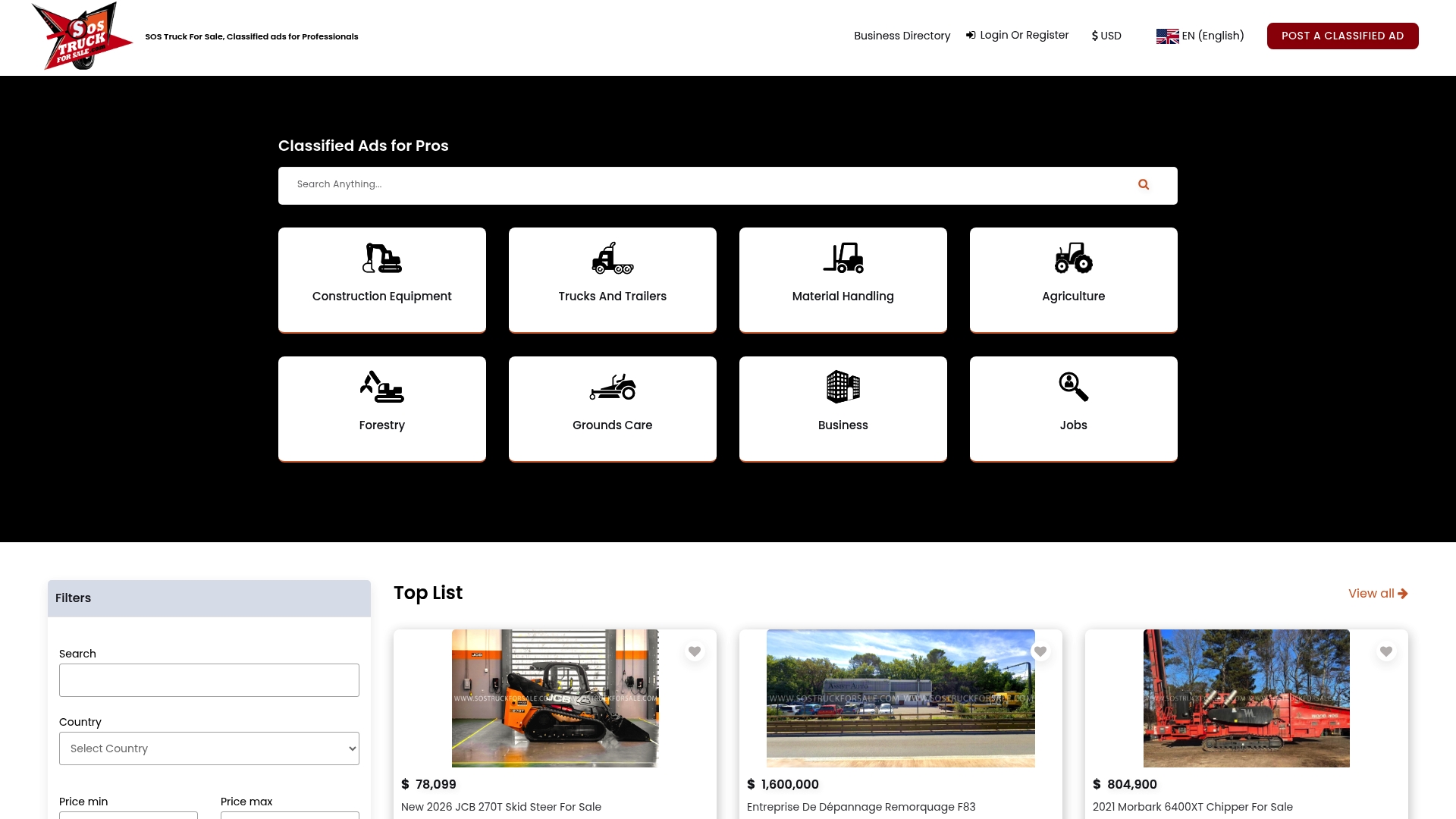
Such a marketplace can be the alternative to relying on foot traffic or a single regional buyer network: listings can reach equipment shoppers nationwide who are already filtering by category, price, and financing readiness before they pick up the phone. Pair that reach with the payment and financing options covered above, and you're not just getting more eyes on your inventory. You're getting buyers who show up pre-qualified to talk terms. List your equipment on Sostruckforsale and put your next sale in front of buyers who are already comparing options.
Sources
- A guide to alternative payment methods in the US | Primer
- Equipment leasing under $250K | Crest Capital
- Vendor Equipment Financing: Boost Dealer Sales in 2026 | Noreast Capital
- Equipment Seller Financing for Dealers — HonestDeed