
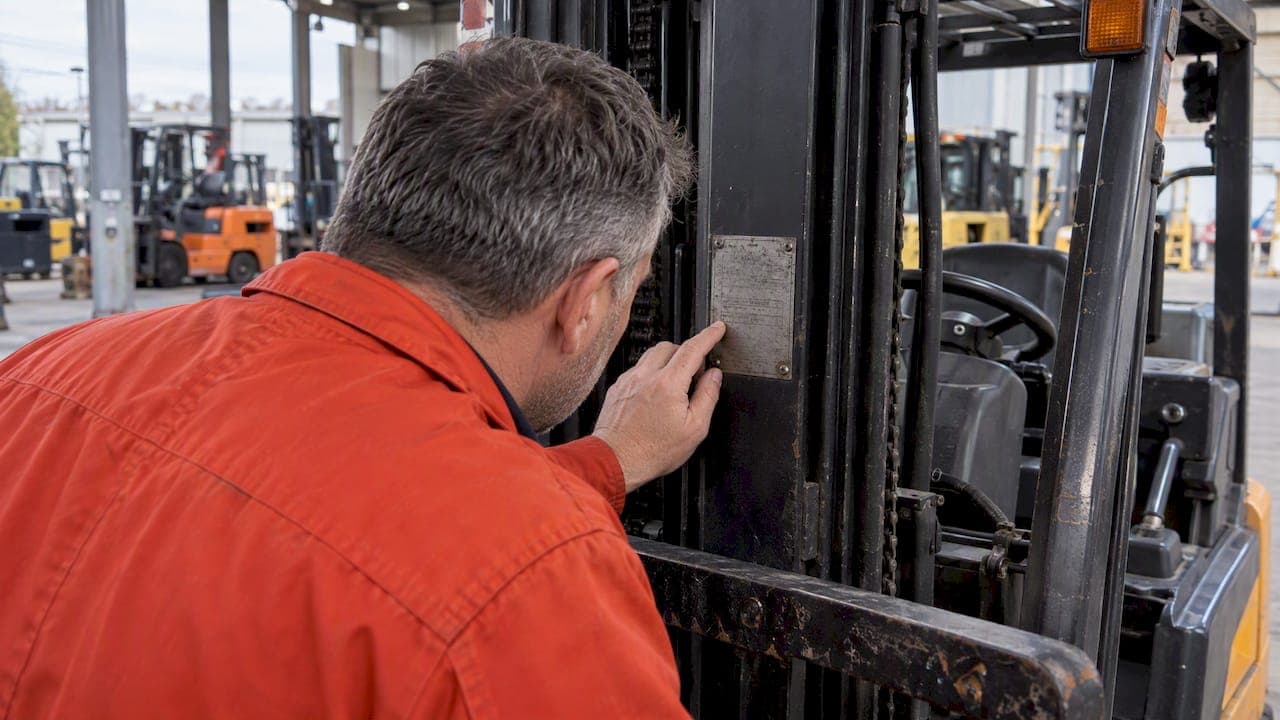
OSHA sorts powered industrial trucks into seven classes, Class I through Class VII, based on power source, tire type, and operator position, as laid out in the OSHA eTool classification. Classes I through III cover electric warehouse equipment, IV and V cover internal combustion trucks on cushion or pneumatic tires, and VI and VII cover tow tractors and rough-terrain units. Matching a class to a job starts with the nameplate.
TL;DR:
- Choose cushion tires for smooth indoor floors and pneumatic tires for gravel, dirt, or mixed indoor and outdoor work; changing tire types requires different wheel assemblies.
- Class II trucks suit narrow aisles, but buyers should measure aisle width and overhead clearance and confirm the truck’s capacity and aisle compatibility.
- Check the nameplate for capacity, load center distance, and approved attachments; reject verbal claims, and verify missing or illegible plates with the manufacturer before purchase.
- Class VII forklifts handle unpaved terrain, but operators must account for slopes and use rated capacity at full mast extension to reduce tipover risk.
- OSHA requires instruction for each truck and site, practical training, and evaluation; employers must retrain operators after class or site changes and reassess every three years.
Table of Contents
- A quick map of each forklift class and where it works
- Breaking down Class I through Class VII specifications
- How OSHA and ANSI/ASME standards define these classes
- What OSHA requires for operator training and certification
- A checklist for choosing the right forklift class
- Why getting the class right protects buyers and operators
- FAQ
- Sources
A quick map of each forklift class and where it works
Before digging into specs, it helps to see where each class fits. The groupings below follow the official OSHA classification system, which splits trucks by power source and tire type rather than by brand or size alone.
- Class I: Electric motor rider trucks built for smooth warehouse floors and frequent stop-and-go pallet work.
- Class II: Electric motor narrow-aisle trucks designed for tight racking and high-density storage.
- Class III: Electric motor hand or hand/rider trucks for light pallet jacks and walk-behind applications.
- Class IV: Internal combustion trucks on cushion tires for smooth indoor floors needing more power than electric units.
- Class V: Internal combustion trucks on pneumatic tires for mixed indoor-outdoor yards and uneven pavement.
- Class VI: Electric and internal combustion tractors used for towing carts and trailers rather than lifting.
- Class VII: Rough-terrain forklifts built for construction sites, lumber yards, and unpaved ground.
Classes I through III dominate warehouse floors, IV and V handle heavier mixed-duty work, and VI and VII serve towing and outdoor construction needs. Full technical definitions sit in the sections below.
Breaking down Class I through Class VII specifications
Each class carries its own combination of power source, tire type, and operator stance, and those differences dictate where a truck belongs on a job site.
- Class I: Electric motor rider trucks. These run on electric motors with riders seated or standing, typically on cushion or pneumatic tires depending on the model. We see them most in warehouses, distribution centers, and manufacturing floors where floors are flat and aisles are wide enough for a sit-down operator. Check the nameplate for rated capacity, mast height, and whether the unit is approved for any attachment such as a fork positioner.
- Class II: Electric motor narrow-aisle trucks. Built with a narrower frame and solid tires, these trucks work inside reach-truck or order-picker aisles where standard forklifts cannot maneuver. They suit high-density pallet racking in distribution centers. Operators often stand or sit in a swivel position, and the nameplate should confirm aisle-width compatibility alongside capacity.
- Class III: Electric motor hand or hand/rider trucks. These are walk-behind or hand/rider pallet trucks powered by electric motors, common in retail stockrooms and smaller warehouse operations. Capacity tends to run lower than rider classes, so verifying the nameplate rating against actual pallet weight matters before every shift.
- Class IV: Internal combustion engine trucks, cushion tires. Powered by gas, diesel, or LP engines on solid cushion tires, these trucks suit smooth indoor concrete floors where more lifting power is needed than batteries provide. Tire type limits them to paved or finished surfaces since cushion tires lack the tread for loose ground.
- Class V: Internal combustion engine trucks, pneumatic tires. Same engine options as Class IV, but pneumatic tires let these trucks handle gravel, packed dirt, and outdoor loading docks. They bridge indoor and outdoor work, making them common at lumber yards and building supply centers.
- Class VI: Electric and internal combustion tractors. These are tow tractors rather than lifting trucks, moving carts and trailers across airport tarmacs, large factory floors, and distribution hubs. Nameplate checks here focus on towing capacity and hitch type rather than fork rating.
- Class VII: Rough-terrain forklift trucks. Built with large pneumatic tires and higher ground clearance, these handle uneven or unpaved ground on construction sites and in forestry operations. Tipping hazards rise sharply on slopes, so operators need to respect the rated capacity at full extension, not just at the base.
Across every class, the nameplate carries the facts that matter most: rated capacity, approved attachments, and load center distance. Our forklift weight guide walks through how capacity figures relate to the truck's own operating weight, which is worth reviewing before buying or listing a unit.
Pro Tip: Never trust a verbal capacity claim on a used listing. Ask for a legible nameplate photo before you commit to a purchase.
Common hazards track closely with class and terrain: tipovers on uneven ground for Class VII, narrow-aisle collisions for Class II, and overloading on hand trucks in Class III when pallets exceed rated weight.
How OSHA and ANSI/ASME standards define these classes
The seven-class system comes directly from 29 CFR 1910.178, the OSHA standard covering powered industrial trucks, which sets general requirements, designations, and limitations for each type. OSHA's rule points to the ANSI/ASME B56 series of consensus standards for the technical detail behind each designation, including codes like E, ES, EX, G, and GS that describe electrical protection levels for hazardous locations. These codes tell a buyer whether a given electric truck is rated for use around flammable vapors or combustible dust, a detail that matters far more in some facilities than raw lift capacity.
Earth-moving equipment and over-the-road haulage trucks fall outside this classification system entirely, so a skid steer or a highway tractor will not carry one of these seven designations even though it moves material.

What OSHA requires for operator training and certification
Employer responsibility for operator competence sits in 29 CFR 1910.178(l), which requires formal instruction, practical hands-on training, and a documented workplace evaluation before an operator runs a powered industrial truck unaccompanied. Training has to be both truck-specific and site-specific: certification on a Class I rider truck in one warehouse does not automatically transfer to a Class V unit on a different site with different floor conditions.
- Evaluate each operator's performance at least once every three years, per the OSHA training standard.
- Trigger refresher training after a near-miss, an accident, or an observed unsafe operating habit.
- Retrain whenever an operator moves to a different truck class or a new work environment.
- Keep written records of initial training, evaluations, and refresher sessions for each operator.
OSHA certification is machine- and site-specific: an operator who switches from a Class III pallet truck to a Class VII rough-terrain unit needs new evaluation, not a signature carried over from the old assignment, under OSHA's training provisions.
A checklist for choosing the right forklift class
Matching equipment to a job site comes down to a handful of practical checks rather than guesswork.
- Confirm the surface: smooth concrete favors cushion tires, while gravel or dirt calls for pneumatic tires suited for mixed surfaces.
- Measure aisle width and overhead clearance before ruling a narrow-aisle Class II unit in or out.
- Check maximum lift height against your highest racking or stacking need.
- Weigh the heaviest load you expect to move and compare it against the nameplate capacity with margin to spare.
- Decide whether the truck needs to move between indoor and outdoor areas in the same shift.
- List any attachments you need, such as a fork positioner or clamp, and confirm manufacturer approval for that specific truck.
Pro Tip: A forged or missing nameplate on a used unit is a reason to walk away or request manufacturer verification before buying. Converting a cushion-tire truck to pneumatic tires is not a simple swap since hub and wheel assemblies differ, so treat tire type as a fixed part of the truck's identity when planning a purchase. Our electric heavy equipment guide covers battery and powertrain tradeoffs worth weighing for Class I through III purchases, and our ROPS safety guide explains operator protection structures relevant to rough-terrain Class VII units.
Why getting the class right protects buyers and operators
Getting the class right on a listing or a purchase order is not paperwork for its own sake. A truck running outside its intended terrain or beyond its rated capacity wears out faster and puts the operator at higher risk of a tipover, which OSHA and NIOSH data identify as a leading cause of forklift fatalities. Sellers who list the class, tire type, and nameplate capacity up front save buyers from guesswork and help close deals faster. We encourage anyone browsing listings to use class and specification filters to confirm a match before reaching out to a seller.
— Dave
FAQ
What is the difference between cushion and pneumatic forklift tires?
Cushion tires are solid rubber built for smooth indoor floors, found on Class IV trucks, while pneumatic tires are air-filled or solid-core with tread for outdoor and uneven surfaces, found on Class V and Class VII trucks. Converting between the two typically requires changing hub and wheel assemblies rather than just swapping tires.
How many types of forklift training does OSHA require?
OSHA requires both truck-specific and site-specific training under 29 CFR 1910.178(l), combining formal instruction, hands-on practice, and a workplace evaluation. Operators need new evaluation whenever they switch truck class or work location, not just when first hired.
How do I get forklift certified?
Certification requires completing employer-provided formal and practical training specific to the truck class and worksite, followed by a documented performance evaluation, as outlined in OSHA's training requirements. Employers must re-evaluate operators at least once every three years or sooner if problems arise.
Which forklift class is best for rough or unpaved terrain?
Class VII rough-terrain forklifts are built for construction sites and unpaved ground, using large pneumatic tires and higher ground clearance, per the OSHA classification list. Operators on these units should pay close attention to rated capacity at full mast extension, since slope and terrain raise tipover risk.
What should I check on a used forklift's nameplate before buying?
Confirm the rated capacity, load center distance, and any attachments listed as manufacturer-approved, since unauthorized modifications can void the truck's safe operating rating under federal regulations. A missing or illegible nameplate is a red flag worth resolving with the seller before purchase, and browsing our equipment marketplace lets you compare listings with full specifications side by side.