
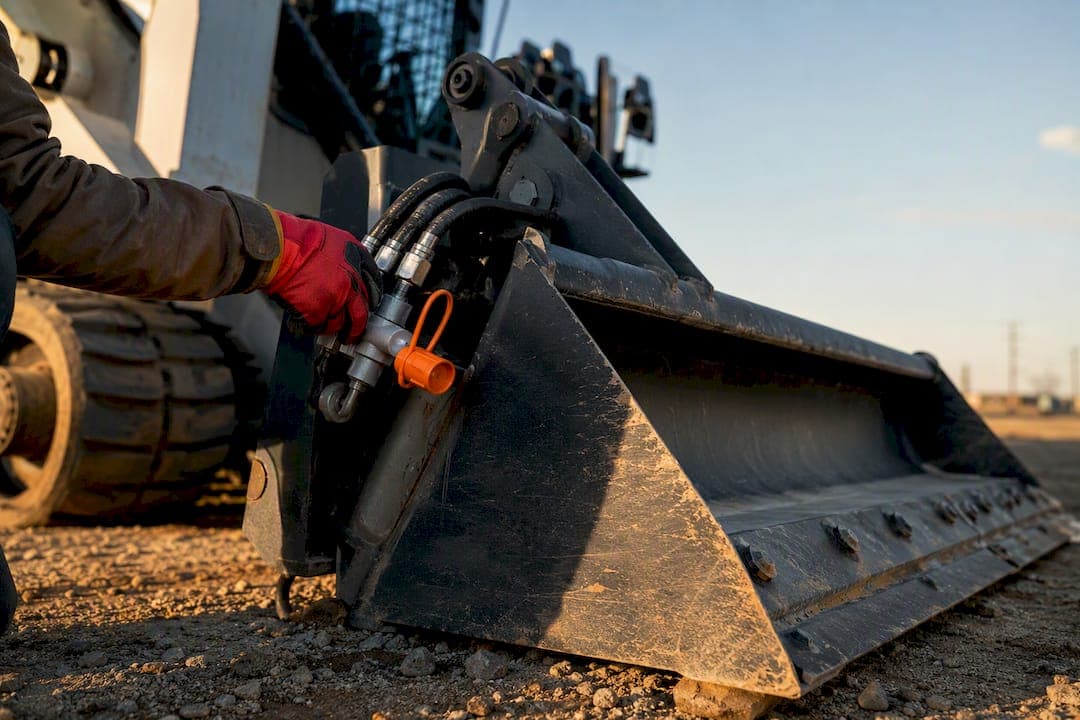
The core skid steer attachments every fleet needs are the bucket, pallet forks, auger, grapple, trencher, mulcher or brush cutter, and breaker or snow tool. The rule that decides whether any of them actually work on your machine matters more than brand or price: confirm rated operating capacity (ROC), hydraulic flow, coupler type, and case drain before you buy. Rent attachments for one-off jobs. Buy the ones you'll run every week.
TL;DR:
- Only purchase attachments that match your skid steer’s hydraulic flow, coupler type, and rated operating capacity to ensure compatibility and performance.
- Rent specialized tools like trenchers and stump grinders for infrequent use, and own core attachments such as buckets, forks, and grapples for daily tasks.
- Verify all technical specs on listings, including hydraulic flow and case-drain requirements, and test the attachment with a work cycle before finalizing a purchase.
- Match attachments to your specific terrain and job type, prioritizing chain trenchers for rocky ground and impact-ready breakers for demolition tasks.
- Maintain attachments regularly by inspecting hoses, pins, and teeth, and follow proper installation and disconnection procedures to extend their lifespan.
Table of Contents
- Skid Steer Attachment Types and Where Each One Earns Its Keep
- Compatibility Checklist: Hydraulics, ROC, Coupler, and Controls
- Building an Attachment Fleet: Buy, Rent, or Wait
- Maintenance and Safety Checks That Extend Attachment Life
- How Sostruckforsale Helps You Verify Before You Buy
- Matching Attachments to Job Requirements and Terrain
- Installing and Removing Attachments the Right Way
- Practices That Extend the Life of Every Attachment
- Specialized Attachments Changing What Skid Steers Can Do
- Field Perspective: The Same Two Mistakes, Over and Over
- Find the Right Machine and Attachments on Sostruckforsale
- Where to Verify the Technical Details
- Sources
- FAQ
Skid Steer Attachment Types and Where Each One Earns Its Keep
Buying the wrong attachment is rarely about buying a bad product. It's about buying the right product for the wrong job. Buyer guides that group attachments by use, whether earthmoving, demolition, material handling, forestry, or snow removal, recommend starting with a bucket and forks before adding anything specialized, and there's a reason that advice holds up: those two tools cover the majority of daily work on most jobsites.
Buckets do more than scoop dirt. A standard bucket handles general material moving, but the variants matter:
- Rock buckets have wide-spaced tines for sifting soil from stone on demolition and land-clearing sites.
- Skeleton buckets take that further, letting fines fall through while you retain larger debris, which speeds up cleanup on construction sites buried in mixed rubble.
- 4-in-1 buckets combine bucket, dozer blade, grapple, and clamshell functions in one tool, useful for contractors who need versatility over a single specialty.
Pallet forks move palletized material, block, and bagged goods. Fork spacing and tine length are the real decision points; longer tines handle bigger pallets but reduce visibility and add tip risk if the load isn't centered.
Augers drill fence posts, footings, and utility holes. Bit diameter is the variable that matters most: a 6-inch bit suits fence posts, while 12 to 18 inch bits handle footings and deck piers. Auger torque needs typically call for high-flow hydraulics once you move past small-diameter bits in hard or rocky soil.
Grapples handle brush, logs, scrap, and demolition debris where a standard bucket would let material spill out. Rotating grapples add a swivel function that's worth the extra cost if you're loading trucks from multiple angles without repositioning the machine.
Trenchers cut utility lines, irrigation channels, and drainage paths. Chain trenchers dig narrower, deeper trenches; wheel trenchers move faster in softer soil but struggle with rock and root-heavy ground.
Mulchers and brush cutters clear vegetation and small trees in land management and right-of-way work. These are almost always high-flow attachments; running one on a standard-flow machine leaves you underpowered and burning fuel for output you're not getting.
Breakers handle concrete demolition, rock breaking, and foundation removal. Impact frequency and blow energy scale with machine size, so a breaker sized for a compact track loader will underperform on stubborn reinforced concrete.
Sweepers and snow tools round out the seasonal and cleanup categories. A pickup broom collects debris into a hopper for disposal, while an angle broom simply pushes material aside, better suited to snow clearing and rough site cleanup than to debris that needs hauling away. Snow pushers and V-blades handle winter contracts, and many property managers rent these seasonally rather than owning them year-round.
On-site, the pattern repeats: fence contractors lean on augers, utility crews lean on trenchers, demolition crews live on grapples and breakers, and paving crews reach for planers when milling asphalt. Matching the tool to the recurring job, not the occasional one, is where fleet decisions actually get made.
Compatibility Checklist: Hydraulics, ROC, Coupler, and Controls
A universal quick-attach plate fits most North American skid steers, but plate fit alone does not guarantee compatibility. Hydraulics, controls, and weight all have to line up too, and skipping that check is the single most common way buyers end up with an attachment that won't run.
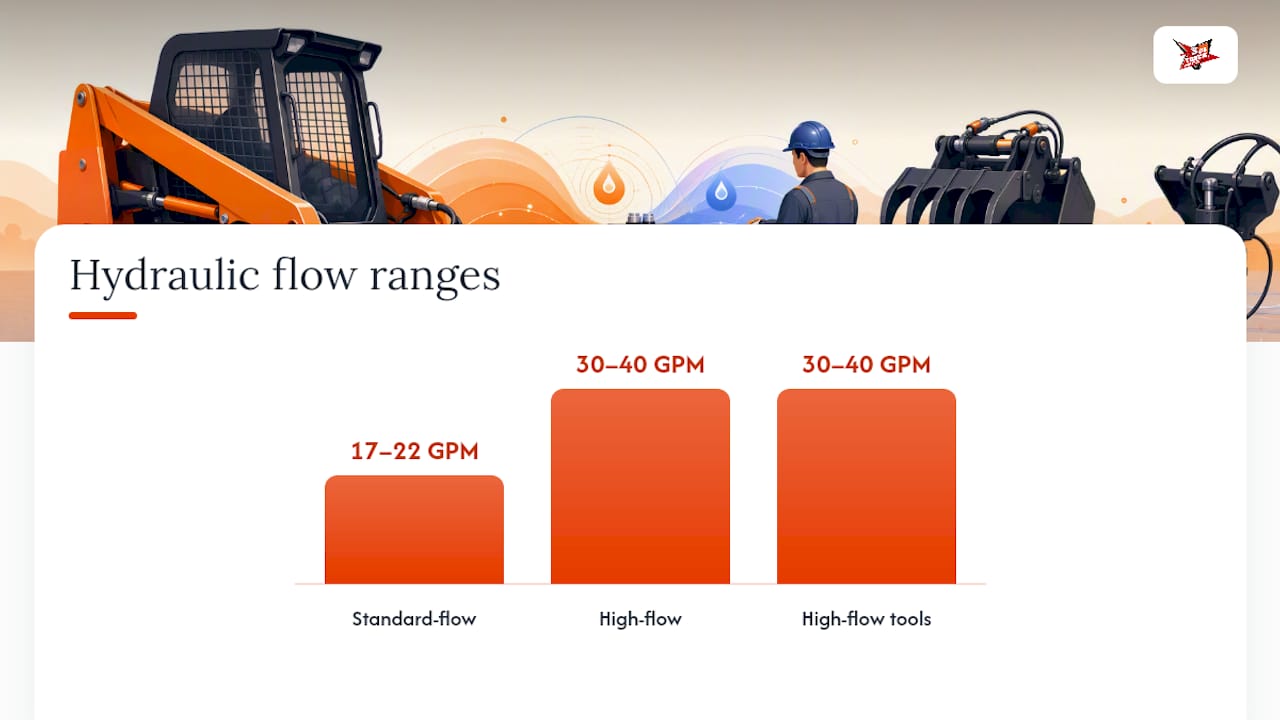
Standard-flow auxiliary hydraulic circuits on most North American skid steers deliver roughly 17 to 22 GPM, while high-flow systems reach about 30 to 40 GPM. Mulchers, cold planers, and most auger heads over 12 inches need high flow to run at rated speed. Force a high-flow attachment onto a standard-flow machine and you'll get sluggish performance at best, burned-out attachment motors at worst.
ROC math is simpler than it sounds. Take the attachment's own weight, add the heaviest load you'll carry in it, and compare that total against the machine's rated operating capacity, then build in a margin rather than running at the limit. A skid steer carrying a grapple and debris weighing close to its rated operating capacity is nearing the safe usage limit for daily operation
Before you commit to a purchase, work through this sequence, a structure echoed in field compatibility checklists built around flow, coupler, and job fit:
- Confirm coupler type matches your carrier (standard quick-attach vs. proprietary plates).
- Verify hydraulic flow rating against the attachment's stated requirement.
- Check for a dedicated case-drain connection if the attachment is motor-driven.
- Confirm 14-pin electrical pinout if the tool needs in-cab electronic controls.
- Calculate combined attachment and load weight against rated operating capacity.
- Check hose routing and visibility from the cab with the attachment mounted.
- Run one representative work cycle before finalizing the purchase.
Pro Tip: Case-drain routing trips up more buyers than any other spec. Motor-driven attachments often need a dedicated case-drain line rather than a standard return port, and forcing the wrong routing can destroy motor seals within hours of operation.
Building an Attachment Fleet: Buy, Rent, or Wait
Attachments should drive your machine specification, not the other way around. Field-tested advice from equipment buyers backs this up: list the attachments you need before you shop for the carrier, so the machine you land on can actually run everything on your list.
The decision framework is straightforward. Weigh recurring hours of use and the revenue that attachment generates against rental cost and downtime risk. If you'll use a trencher four times a year, rent it. If you're running a bucket and forks daily, own them.
A practical starter fleet, a core kit consistently recommended by equipment buyer guides, covers most contractor and property-management work:
- Standard or heavy-duty bucket for general material handling
- Pallet forks for block, bag goods, and palletized delivery
- Grapple or 4-in-1 combination bucket for debris and brush
- Auger for fence and footing work if that's recurring
- Broom or snow tool if seasonal cleanup is part of the contract
Before buying, run the numbers on total cost of ownership: purchase price, transport to the site, routine maintenance, replacement wear parts, and operator training time all factor in. A pricing checklist that accounts for auction comps helps set realistic expectations here. Used attachments can cut costs significantly, but inspect wear plates, teeth, hydraulic hoses, and pin bushings closely; a worn coupler plate is expensive to replace and easy to miss on a quick walk-around. For larger purchases, comparing financing terms across lenders before committing to a specific attachment or machine combination keeps monthly costs predictable.
Maintenance and Safety Checks That Extend Attachment Life
Daily habits matter more than any single repair. Build them into the start and end of every shift:
- Inspect hoses, pins, teeth, and fasteners before startup and after shutdown.
- Check hydraulic fluid cleanliness and watch for temperature spikes during operation.
- Verify relief valve settings match the attachment's rated pressure.
- Grease pivot points and wear surfaces on the schedule the manufacturer specifies.
- Confirm quick-attach locks are fully engaged before lifting any load.
- Keep loads low while traveling and maintain clear visibility over the attachment.
Pro Tip: A five-minute pre-shift walk-around catches loose pins and hairline hose cracks before they become a mid-job breakdown. Crews that skip this step lose far more time to unplanned repairs than the walk-around ever costs them.
Stay within ROC limits even when the load looks manageable, and always confirm quick-attach engagement with a visual check, not just the cab indicator. Worn teeth and cutting edges should be swapped before they affect performance, not after output visibly drops.
How Sostruckforsale Helps You Verify Before You Buy
Marketplace listings often include the machine specs needed for compatibility checks, such as hydraulic flow, ROC, and coupler type, before committing to a purchase. When you're comparing carriers, cross-reference the listing details against the attachment checklist above rather than assuming fit. The equipment financing resources and pricing guides on the site also help you plan a purchase around real cost of ownership, not just sticker price, so your next machine search starts with the right specs already in hand.
Matching Attachments to Job Requirements and Terrain
Terrain changes the calculus more than most buyers expect. Rocky or root-heavy ground favors chain trenchers over wheel trenchers, and it pushes auger torque requirements up regardless of hole diameter. Soft or wet sites call for wider tracks and lower ground pressure attachments, since a heavy grapple or breaker can sink a machine that would handle fine on compacted gravel.
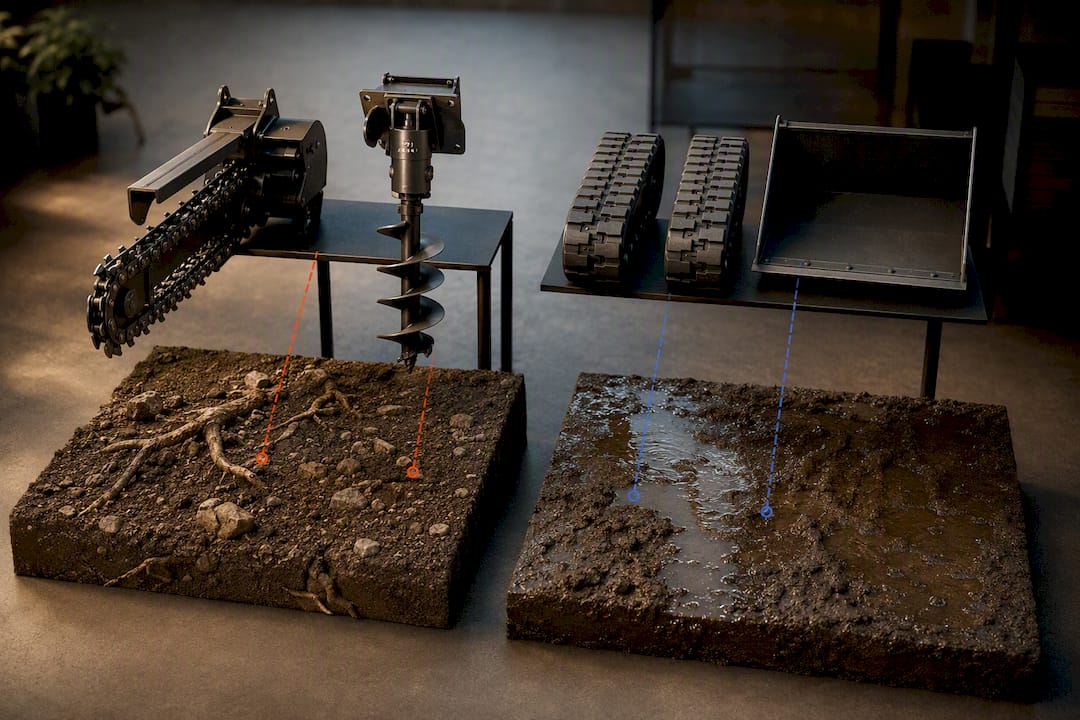
Job type narrows the list further. Demolition work wants breakers and grapples built for impact and debris handling, not finesse. Landscaping and property maintenance lean on brush cutters, mulchers, and box blades for grading. Utility work is trencher and auger territory, almost exclusively.
Match attachment weight to your specific machine's ROC on that terrain, since soft ground reduces effective lift capacity even when the spec sheet number stays the same. Cold climates add another layer, cold weather thickens hydraulic fluid and can affect flow-dependent attachments like mulchers until the system warms up.
The practical approach is to list your terrain conditions and job type first, then filter attachment options against that list, rather than picking an attachment you like and hoping it fits the site.
Installing and Removing Attachments the Right Way
Attaching and detaching a skid steer implement takes minutes once you know the sequence, but skipping steps is how pins get bent and hoses get torn.
To install:
- Position the skid steer squarely in front of the attachment, aligned with the mounting plate.
- Tilt the loader arms forward and slowly drive into the attachment until the plate engages.
- Curl the arms back to seat the attachment fully against the quick-attach frame.
- Engage the locking pins or wedges and visually confirm full engagement, not just a dashboard light.
- Connect hydraulic couplers, matching port to port, and check for a secure, leak-free seal.
- Connect the 14-pin electrical connector if the attachment requires in-cab controls.
To remove:
- Lower the attachment fully to the ground and relieve hydraulic pressure.
- Disconnect the electrical connector first, then the hydraulic couplers.
- Release the locking mechanism and back the machine away slowly.
- Store the attachment on stable ground or a rack, not leaning on its working edge.
Rushing hydraulic disconnection under pressure is the most common cause of fluid spray injuries during attachment changes, so always relieve pressure before disconnecting.
Practices That Extend the Life of Every Attachment
Attachment longevity comes down to a handful of habits repeated consistently, not one big maintenance event. Avoid running any tool at the edge of its rated capacity for extended periods; that constant strain wears hydraulic seals and structural welds faster than occasional peak loads.
Match ground speed to the attachment's working capacity instead of pushing through resistance. Forcing an auger or trencher through material it's fighting shortens bit and chain life fast. Clean attachments after use, especially anything that's handled concrete, manure, or corrosive debris, since residue left overnight accelerates rust on cutting edges and pivot points.
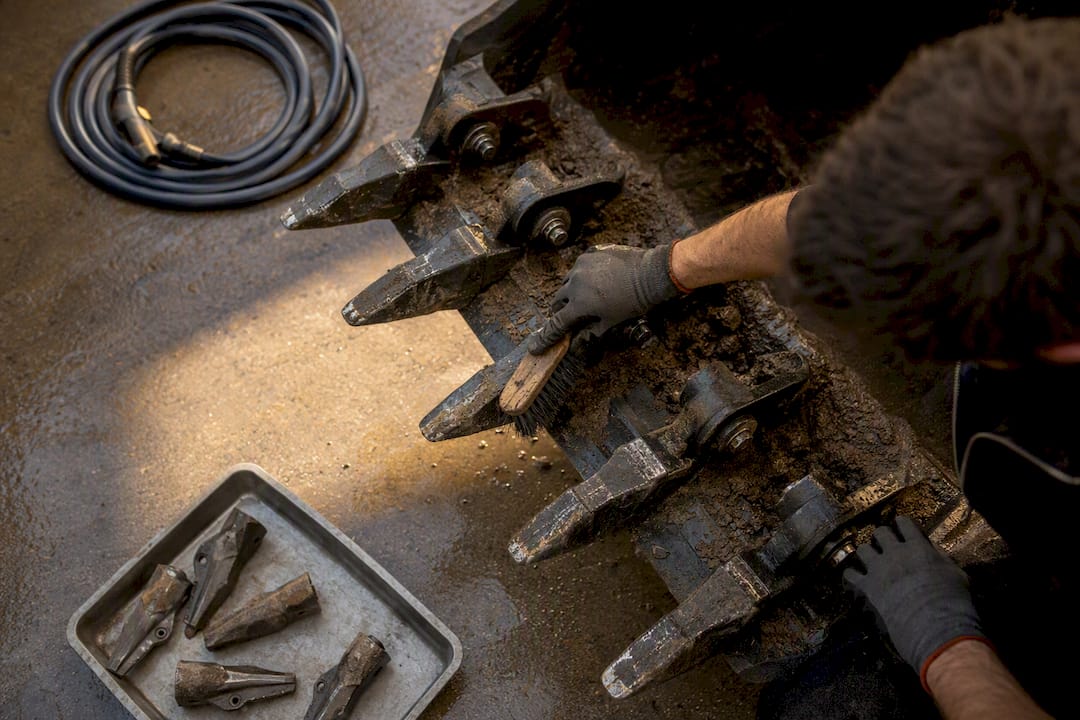
Store attachments off the ground when possible, and cover hydraulic quick-attach fittings to keep dirt and moisture out between jobs. Rotate wear parts, teeth, cutting edges, chain links, on a schedule rather than waiting for visible failure, since replacing a $40 tooth costs far less than repairing the damage a broken one causes downstream.
Specialized Attachments Changing What Skid Steers Can Do
Beyond the core lineup, a newer wave of attachments is expanding what a skid steer can handle without swapping to bigger machinery. Cold planers, once mostly excavator-mounted, now come in compact skid steer versions for asphalt patch work and utility cuts, letting smaller crews handle milling jobs that used to require a subcontractor.
Stump grinders and tree spades have moved from specialty forestry equipment into mainstream property management fleets, useful for land clearing without renting a dedicated forestry machine. Vibratory plate compactors mounted on skid steers now handle trench backfill compaction that used to need a separate walk-behind unit on site.
Rotary tillers and soil conditioners are seeing more use in agricultural and landscaping fleets for seedbed prep, cutting down on separate tractor implement needs for smaller operations. None of these replace the core categories — buckets, forks, and grapples still do the bulk of daily work, but they show how attachment innovation keeps pushing skid steers into jobs that once needed dedicated equipment.
Field Perspective: The Same Two Mistakes, Over and Over
Every recurring compatibility failure traces back to one habit: buying the carrier first and the attachment list second. The fix is simple, but crews skip it anyway, run one real work cycle before signing, not just a showroom demo.
— Dave
Find the Right Machine and Attachments on Sostruckforsale
Sostruckforsale is the alternative to guessing at compatibility from a spec sheet PDF: you can browse actual machine listings with ROC, hydraulic flow, and coupler details attached, then check what attachments are already paired with that carrier before you commit to a search.
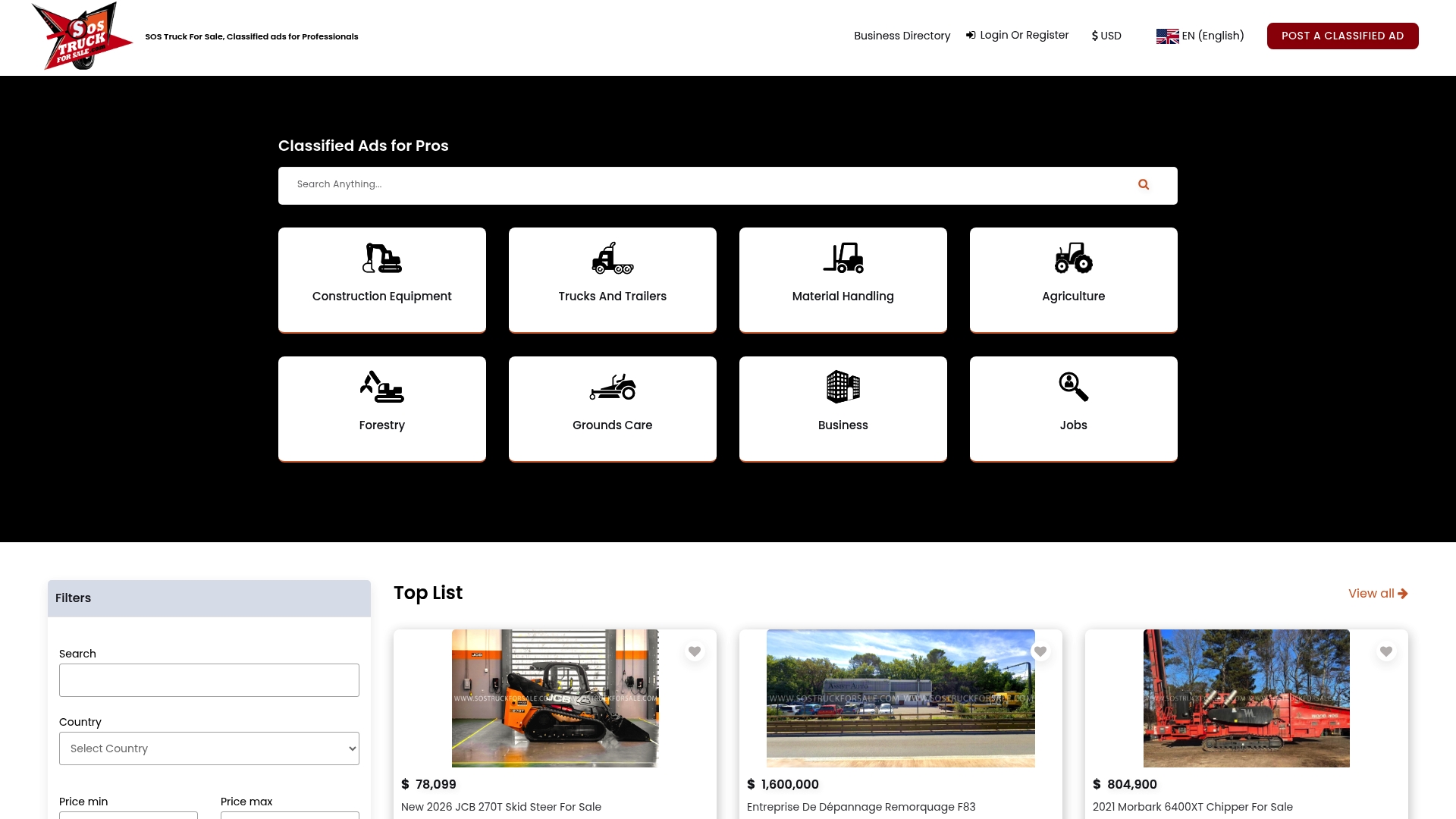
The marketplace covers construction equipment, trucks and trailers, material handling machinery, agriculture, forestry, and grounds care gear, filtered by category and price so you're not scrolling through machines that don't fit your job list. If you're planning a fleet purchase, pair that search with a look at current financing options or review equipment costing fundamentals from Subascent before you lock in a budget. Start by searching listings for the ROC and flow specs your attachment list requires, then narrow from there; consult sellers for detailed specs if needed.
Where to Verify the Technical Details
For manufacturer standards and hydraulic specifications, the Association of Equipment Manufacturers publishes technical guidance worth checking before a purchase. Compatibility checklists from equipment blogs cover coupler and flow verification in more depth than any single spec sheet.
Sources
- Skid Steer Attachment Selection: Matching tool to job site | Koenig Equipment
- Are skid steer attachments universal? Compatibility guide | IronworksInsider
- Skid Steer Attachment Compatibility: Flow, Coupler, ROC, and Job-Fit Checklist | SeekMach
- 17 Best Skid Steer Attachments & Their Uses | BigRentz
FAQ
What Is the 70/30 Rule for Skid Steer Attachments?
Definitions vary by crew and industry, so treat it as a planning heuristic rather than a fixed standard.
What Are the Most Useful Skid Steer Attachments?
A bucket, pallet forks, and a grapple or combination bucket form the most broadly useful baseline for contractors and property managers, covering material handling, debris removal, and general earthmoving.
What Is the Most Profitable Skid Steer Attachment?
Profitability depends on job mix, but pallet forks and buckets typically pay off fastest because they see daily use across nearly every job type, while specialty tools like mulchers earn more per hour but sit idle between contracts.
What Attachments Should I Rent Instead of Buy?
Rent attachments you'll use only a few times a year, trenchers, stump grinders, or cold planers for a one-off job, and reserve ownership for tools that run weekly, like buckets, forks, and grapples.
How Do I Check if an Attachment Fits My Skid Steer?
Confirm coupler type, hydraulic flow rating, case-drain availability, and combined weight against your machine's rated operating capacity before buying, and run one representative work cycle to catch problems a spec sheet won't show. Sostruckforsale listings include these specs directly so you can cross-check compatibility before contacting a seller.