
Consignment usually delivers the highest per-item return for higher-value used heavy equipment like excavators, cranes, and late-model trucks, but it comes with a real cost: a payout window that often stretches 60 to 120 days. If your machine has broad appeal and you can wait for cash, consignment is worth pursuing. If you need funds fast or you're moving a large fleet, a marketplace listing or buyout deserves a look first.
TL;DR:
- Consignment yields higher sales prices for high-value, unique equipment but can take 60 to 120 days to pay out, making speed and cash flow critical factors.
- Ensure the consignment contract clearly states commission splits, consignment period, final pricing authority, and policies on unsold inventory, markdowns, and insurance coverage.
- Below about 20 to 30 items per month, consignment or individual listings typically generate higher returns than bulk liquidation, which favors larger volumes for faster cash.
- Preparing your machine with complete paperwork, clear photos, and minimal repairs increases the sale value, especially if you plan to sell via consignment or direct marketplace listing.
- Marketplace listings give you control over pricing and timing, and are ideal when you prefer speed and direct negotiation over the longer, commission-based consignment process.
Table of Contents
- How Used Equipment Consignment Works for Heavy Machines
- Consignment vs. Buyout, Auction, and Self-Listing: What to Expect
- Checklist: How to Prepare Your Machine for Consignment
- How to Evaluate a Consignment Partner Before You Sign
- Publisher Perspective: Marketplace Control vs. Managed Consignment
- List Your Equipment on SoSTruckForSale
- Sources
- FAQ
How Used Equipment Consignment Works for Heavy Machines
In a consignment arrangement, the owner of the machine (the consignor) keeps legal ownership until it sells, while a dealer, broker, or specialized reseller (the consignee) handles the sale on their behalf in exchange for a commission or fee. You are not handing over the title. You are handing over the selling job.
The process generally runs through a predictable sequence:
- Intake and inspection: the consignee evaluates hours, condition, and documentation before accepting the unit
- Listing and pricing: photos, specs, and an asking price go live across the consignee's sales channels
- Marketing: the machine gets exposure through auctions, dealer networks, or online listings
- Sale negotiation: the consignee fields offers and, depending on the agreement, may need your sign off
- Pickup and transfer: the buyer arranges or pays for transport once terms are settled
- Payout: you receive your share after the consignee deducts commission
Before signing anything, confirm four contract items in writing: the commission split, the consignment period, who holds final pricing authority (including markdown schedules if the unit doesn't move), and what happens to unsold inventory when the term expires. A consignment agreement should spell out liability for transport damage and storage insurance too. Ambiguity on those points is where consignment relationships go sideways.
Consignment vs. Buyout, Auction, and Self-Listing: What to Expect
Your choice of selling channel comes down to one trade-off: how much you'll net versus how fast you need the cash.
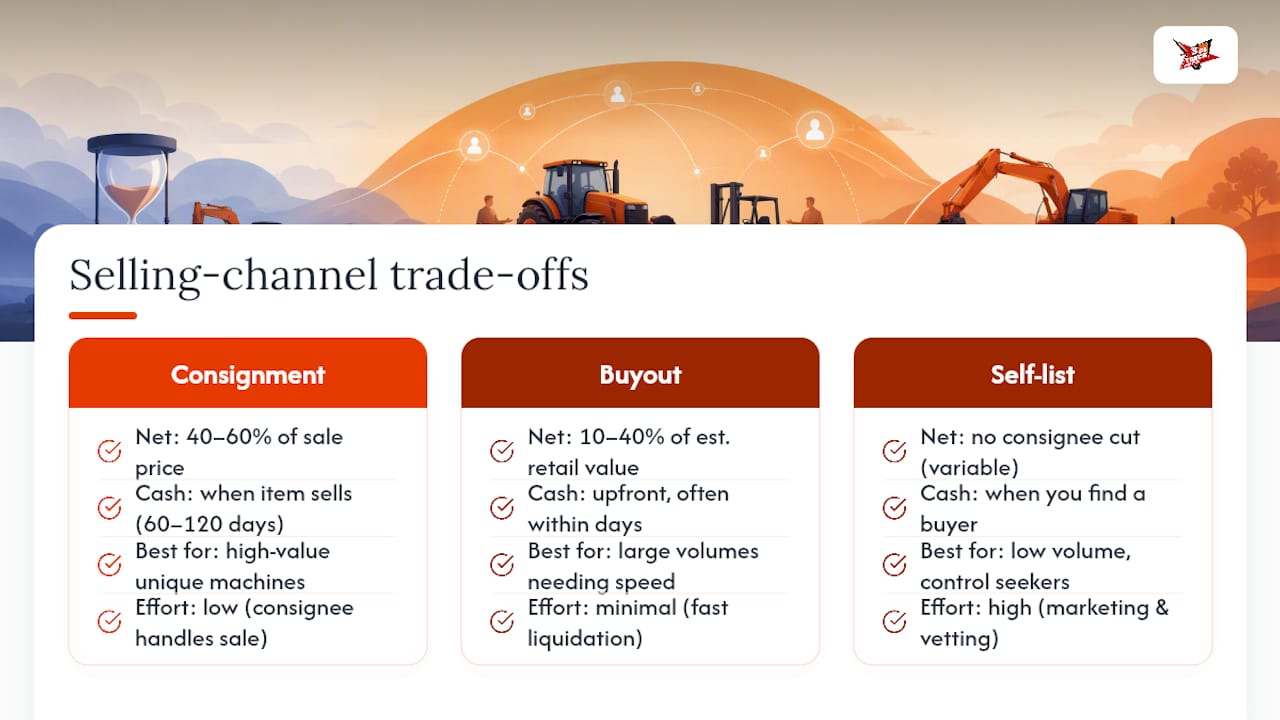
Liquidation buyouts pay 10% to 40% of estimated retail value upfront, often within days. Consignment nets a materially higher share, commonly 40% to 60% of the sale price to the consignor, but that money doesn't arrive until the machine sells, typically 60 to 120 days out. Self-listing on a marketplace can beat both on net proceeds since there's no consignee cut, but you take on all the marketing, negotiating, and buyer vetting yourself.
Statistic to know: industry guidance points to a practical volume threshold of roughly 20 to 30 items per month as the tipping point. Below that, consignment or individual listing usually wins on total dollars returned. Above it, liquidation's speed tends to outperform because the labor of managing dozens of individual sales eats into any per-unit premium.
Consignment tends to work best for higher-value, unique machines where holding out for the right buyer makes financial sense. A single well-maintained crawler crane is a consignment candidate. A yard of forty mixed-condition skid steers probably isn't; that volume points toward liquidation or a bulk marketplace push. If you're weighing that exact decision, a step-by-step comparison of consigning versus liquidating surplus equipment is worth reading before you commit to either path.
Checklist: How to Prepare Your Machine for Consignment
Buyers pay more for machines that come with clean paperwork and clear photos. Work through this order before you deliver the unit:
- Gather your documents. Title, bill of sale, maintenance logs, operator manuals, and any compliance or emissions paperwork should be in one folder, ready to hand off.
- Confirm the serial number and hour meter. Buyers request these first, and missing or mismatched records can truncate offers before negotiations even start.
- Shoot multi-angle photos. Cover the cab, undercarriage, attachments, and engine bay. List every option and attachment included in the sale.
- Handle minor repairs and a real cleaning. A pressure-washed machine with fresh service records reads as low-risk to a buyer evaluating it from photos alone.
- Plan the pickup. Confirm site access, any permits needed for oversized transport, and get a rough estimate on removal costs before the machine leaves your yard.
Pro Tip: Recent hydraulic and engine service records tend to matter more to buyers than a spotless paint job. Prioritize documentation over cosmetics if you're short on time.
For the logistics side, a seller's checklist for shipping sold heavy equipment covers what to confirm with a carrier before the truck ever shows up.
How to Evaluate a Consignment Partner Before You Sign
Not every consignee reaches the same buyers, and not every contract protects you the same way. Run any potential partner through five criteria before handing over your machine.
- Buyer reach. Does the consignee's audience actually include heavy-equipment buyers, or are they generalists who occasionally move machinery?
- Marketing and auction channels. Ask exactly where your listing will appear and how often it gets refreshed or promoted.
- Logistics capacity. Can they coordinate pickup and transport, or is that entirely on you?
- Insurance and storage. Confirm coverage while the unit sits on their lot awaiting a buyer.
- Fee structure and markdown schedule. Get the commission percentage and the exact schedule for price cuts on unsold units in writing.
Ask these questions directly: Who sets the final sale price, and can you veto a low offer? How fast do you pay once a sale closes? How are markdowns handled if the unit hasn't moved in 60 days? Who pays for transport, and what insurance covers the equipment while it's stored?
One detail that gets overlooked in commission negotiations: the markdown schedule, not the headline percentage, often decides what you actually take home. A machine that sits for four months and gets marked down twice can net you less than a lower commission with a faster sale.
If a consignee doesn't put the unsold-item policy and markdown terms in writing, treat that as a red flag worth walking away from. Verbal assurances don't hold up when a machine has been sitting for 90 days and you're wondering why the price dropped without your sign off.
Publisher Perspective: Marketplace Control vs. Managed Consignment
A managed consignment program works well when you want someone else handling the sale. But it means giving up pricing control for months at a time. A marketplace listing flips that: you set the price, you field the calls, and you can adjust or pull the listing whenever you want.
That control matters most when cash timing is tight or when you know your equipment's value better than a generalist consignee does. Specialized heavy-equipment marketplaces narrow the buyer pool to people already shopping for machinery like yours, which shortens the distance between listing and offer.
— Dave
List Your Equipment on SoSTruckForSale
A direct marketplace listing allows you to keep pricing control and skip the 60 to 120 day wait built into most consignment payout schedules. Instead of handing your excavator or truck to a consignee and waiting on their timeline, you list it yourself, set your own price, and negotiate directly with buyers already browsing a marketplace for commercial trucks and industrial machinery.
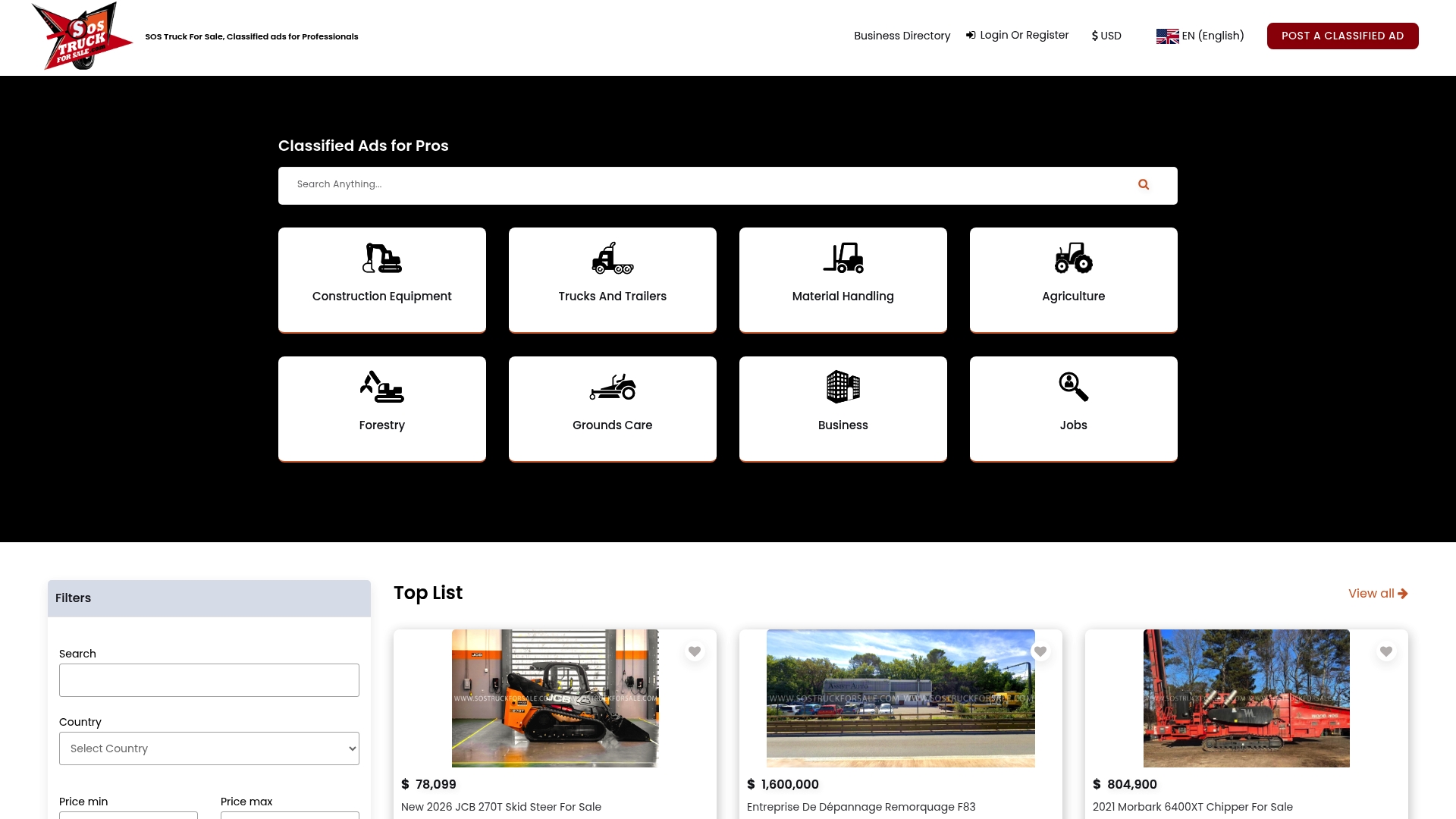
The marketplace organizes listings by category, subcategory, price, and country, alongside a dealer directory that puts your equipment in front of buyers who are already shopping specific niches, whether that's excavators, cranes, or material handling gear. That targeted reach matters more for heavy machines than for smaller resale categories, since buyer pools are narrower and transport costs more when a crane or dozer changes hands.
Choose a marketplace when you want speed and control. Choose a full-service consignment partner when you'd rather hand off the marketing and negotiating entirely. Either way, before you list, check current auction comps and pricing benchmarks so your asking price reflects what similar machines are actually selling for. Ready to move your equipment? Start your listing on SoSTruckForSale today.
Sources
- What Is Consignment: How It Works (2026) - Shopify
- What Does It Mean to Sell on Consignment? (2026 Guide) – CLOSO
- Consignment Explained: How It Works and Its Benefits – Investopedia
FAQ
Where Can I Sell My Used Equipment?
You can sell through a managed consignment program, a liquidation buyout, or a direct marketplace listing like SoSTruckForSale, which lets you list and negotiate without giving up pricing control.
What Is the Best Way to Sell Used Heavy Equipment?
The best method depends on your timeline: consignment nets a higher share (40% to 60%) but takes 60 to 120 days, while a direct marketplace listing or buyout moves faster if you need cash sooner.
Where Is the Best Place to Sell Used Farm Equipment?
Farm equipment sells well through specialized heavy-equipment marketplaces and dealer directories, since narrower buyer pools mean listings need to reach people already searching that category rather than a general resale audience.
What Piece of Heavy Equipment Makes the Most Money?
Higher-value machines with broad demand, such as excavators, cranes, and late-model semi trucks, typically return the most in dollar terms, especially when documentation and service records are complete and hours are clearly verified.
Is Consignment Worth It for a Single Machine?
Consignment is generally worth it for one higher-value, well-maintained machine where you can wait out the payout window; for multiple units or urgent cash needs, a buyout or direct listing usually serves you better.