

If you need cash fast, an industry buyer will pick up your truck in days and handle the paperwork; if you want top dollar, a private sale takes longer but pays more. Before either route, locate your title. A dealer trade-in usually offers a balance between price and speed. Whatever path you choose, start today by pulling your title, registration, and maintenance records together.
TL;DR:
- Having a clean title and comprehensive maintenance records increases your truck's value and broadens sale options, especially with newer emissions technology.
- Expect private sales to take around two to six weeks, while cash buyers and dealers can close within a few days, depending on paperwork readiness.
- Properly preparing your truck with thorough documentation, quality photos, and honest issue disclosures reduces buyer hesitation and expedites the sale.
- Listings on specialized truck marketplaces attract serious buyers, but clarity on specifications and upfront issue disclosure are critical to closing a fair deal.
Table of Contents
- How to Sell a Semi Truck: Matching Your Goal to the Right Channel
- Getting Your Semi Truck Ready to Sell
- What Determines a Semi Truck's Resale Value?
- Where Should You List a Semi Truck for Sale?
- How Do You Write a Semi Truck Listing That Attracts Real Buyers?
- How Do You Close the Sale and Transfer the Title?
- Do You Owe Taxes When You Sell a Semi Truck?
- Common Pitfalls and Scams When Selling a Semi Truck
- How to Negotiate the Best Price on a Semi Truck Sale
- How Long Does It Take to Sell a Semi Truck?
- Author Perspective: A Short Note on Choosing Speed vs. Price
- List Your Semi Truck Where Serious Buyers Are Already Looking
- Sources
How to Sell a Semi Truck: Matching Your Goal to the Right Channel
The route you pick should depend on how much cash you need and how fast you need it, not just where you've seen an ad perform well before. A truck with a clean title and solid maintenance records opens every door; one with missing paperwork or deleted emissions equipment narrows your options fast.
Here's how the main paths stack up against each other:
- Industry cash buyer: Fastest close, often 1 to 3 days from offer to pickup, but expect a lower number than private sale because the buyer is pricing in resale risk and their own margin.
- Private sale (classifieds, marketplaces): Highest realistic price, but plan on two to six weeks to find a serious buyer and screen out the tire-kickers.
- Dealer or wholesale trade: Fast and low-friction, usually a same-day or same-week transaction, at a discount similar to or steeper than a cash buyer.
- Auction: Unpredictable pricing, sometimes above market on desirable specs, sometimes well below, plus buyer's fees that eat into your proceeds.
Non-running trucks or units with rough emissions history generally do best with industry buyers or wholesale, since private buyers rarely want to inherit a repair project.
Getting Your Semi Truck Ready to Sell
Buyers pay more for trucks that look ready to work and less for anything that raises questions. Preparation is where you close the gap between a lowball offer and a fair one.
- Locate your title first. If it's lost, start the replacement process at your state DMV immediately. Replacing a lost title can take several weeks, and a missing title is the single most common reason a sale stalls at closing.
- Gather your paperwork. Pull registration, maintenance records, DOT inspection reports, and, if the truck is financed, get a lien payoff figure from your lender.
- Clean and detail the truck. Wash the cab, degrease the engine bay, and fix cheap, high-visibility items like lights and mirrors where the payoff is obvious.
- Document engine hours and fault codes. Pull ECM data if you can access it, and note anything currently throwing a code so a buyer's inspection doesn't surprise you.
- Shoot photos and a short video. Cover all four exterior sides, the interior, engine bay, odometer, and undercarriage, plus a brief clip of the engine running.
Buyers and resellers consistently value documented maintenance and honest engine-hour reporting over cosmetic polish. A truck with thin service records but a fresh wax job still reads as a risk to a buyer who's seen a hundred trucks before yours.
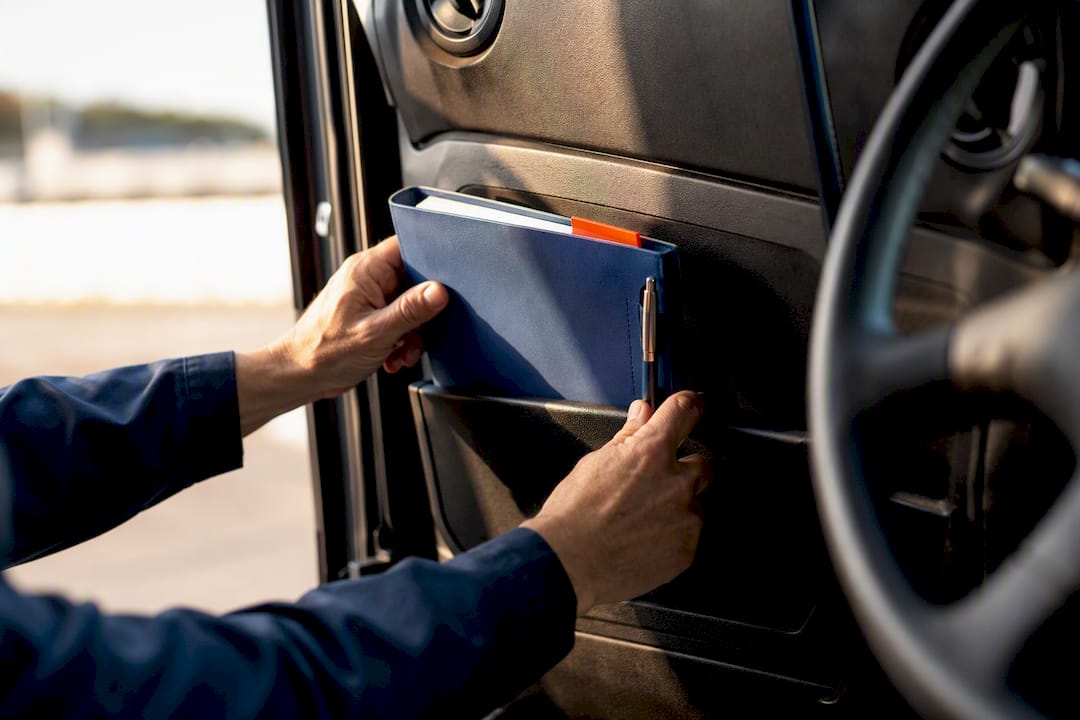
Pro Tip: Print your DOT inspection reports and maintenance logs and keep a physical folder in the cab. A buyer who can flip through paper documentation on the spot moves faster than one waiting on emailed PDFs.
If your title situation is anything but simple, our guide to transferring a semi truck title walks through the DMV steps before you list.
What Determines a Semi Truck's Resale Value?
Four things drive most of the number a buyer offers: engine and emissions year, engine hours relative to odometer, title condition, and drivetrain specs. Get these right in your head before you set an asking price, because guessing low costs you money and guessing high costs you time.
- Engine and emissions year: Newer emissions platforms (SCR, DEF, DPF systems) carry a premium. A deleted or non-compliant aftertreatment system can push a truck out of the regular on-road market entirely and into export or salvage territory, at a steep discount.
- Engine hours vs. odometer: High idle time from APU use or yard work adds wear the odometer doesn't show. Report both figures.
- Title condition: Clean and in hand beats "in process" beats missing, in that order, every time.
- Drivetrain and options: Axle ratio, transmission type, sleeper size, and APU presence all move the number up or down depending on buyer type.
Truck marketplaces and dealer pricing tools weigh engine year, drivetrain, and title status as the core inputs for generating an offer, which is worth knowing before you accept the first number you hear. Triangulate your price using two or three market comparables, one dealer quote, and a wholesale check. Then decide your strategy: price firm and wait for private-party value, or price a bit under market for a faster sale.
If your truck has significant mileage, our guide to selling high-mileage trucks covers how to frame hours and condition for skeptical buyers.
Where Should You List a Semi Truck for Sale?
Different channels attract different buyers, and matching the channel to your goal matters more than casting the widest possible net.
- Specialized truck marketplaces and classifieds: Reach serious, industry-savvy buyers who already know what they're looking at, which usually means fewer wasted conversations.
- Industry cash buyers: Typically make a written offer within a day or two and arrange pickup themselves, handling the paperwork on their end.
- Dealers and wholesale buyers: Offer convenience and a fast, low-drama transaction, but they price in resale margin, so expect a lower number.
- Auctions and brokers: Can move a truck quickly, though final price is genuinely unpredictable and buyer's fees reduce your net.
- Local forums and general social marketplaces: Generate volume, but a large share of inquiries come from people who aren't ready to buy. Owner-operator communities note that general marketplaces bring more casual traffic than specialized truck-focused sites, so screen harder there.
For sellers offloading multiple units from a commercial yard, coordinating pickup and site access sometimes overlaps with broader site work. If your lot needs clearing before buyers can access equipment, resources like commercial land clearing services can smooth that logistics step.
How Do You Write a Semi Truck Listing That Attracts Real Buyers?
A strong listing does two jobs at once: it filters out buyers who aren't serious and it gives serious buyers everything they need to make an offer without a dozen follow-up questions.
- Include every core spec. VIN, make and model, engine and transmission, axle ratio, engine hours, APU presence, sleeper size, and any known issues, stated plainly.
- Shoot a complete photo set. All four exterior sides, the interior, engine bay, odometer, undercarriage, and options like the APU or fifth wheel.
- Add a short engine-run video. A clip of the engine running along with a clear odometer shot is one of the fastest ways to move a buyer from "interested" to "ready to talk price," and it's something professional buyers ask for anyway.
- Disclose known issues upfront. A fault code or worn clutch disclosed in the listing doesn't scare off serious buyers, it just sets honest expectations and protects your position at the negotiating table.
- Screen callers before you schedule a showing. Ask what they'll use the truck for, whether they're paying cash or financing, and whether they've inspected a similar unit recently.
Complete specs and documentation uploaded with a listing generally reduce buyer hesitation and increase serious inquiries, which is exactly the outcome you're after.
Pro Tip: Meet buyers during daylight hours at a neutral, public location like a truck stop rather than your home address, and never hand over keys for a solo test drive before you've verified payment.
If you want a sense of what buyers scrutinize during inspection, the semi truck inspection checklist shows exactly what they're looking at.
How Do You Close the Sale and Transfer the Title?
Closing is where a good deal can fall apart if you skip a step, so treat the paperwork with the same care you gave the listing.
- Payment method: Cashier's check verified with the issuing bank, wire transfer confirmed as received, or an escrow service for larger deals. Avoid personal checks and never release the truck before funds clear.
- Documents to have at pickup: A signed bill of sale, the assigned title, valid ID from both parties, and a lien release or payoff letter if applicable.
- If there's a lien: Get an exact payoff figure from your lender before you finalize a price. Buyers commonly escrow the payoff amount until the lien release is recorded, which protects both sides.
- If the title is missing: Start the DMV replacement process the moment you decide to sell, since it can take weeks and will otherwise stall closing at the worst possible time.
- Pickup logistics: A running truck can usually be driven off by the buyer or their driver. A non-running unit needs transport arranged, and that cost is typically negotiated into the final price rather than assumed by either side automatically.
Do You Owe Taxes When You Sell a Semi Truck?
Selling a semi truck can trigger tax consequences on both the state and federal level, and the details depend heavily on how you owned and used the truck. If you sell for more than your adjusted basis (what you paid minus depreciation you've already claimed), that gain is generally taxable as ordinary income or capital gain, depending on how the truck was depreciated on your returns. Owner-operators who've written off depreciation through Section 179 or bonus depreciation often face what's called depreciation recapture, meaning some or all of the gain gets taxed as ordinary income rather than at a lower capital gains rate.
Sales tax treatment varies by state and by whether you're selling as a private individual or as a registered business. Some states exempt casual private-party vehicle sales from sales tax; others require the buyer to pay use tax at registration regardless of who sold it. If you sold the truck as part of a business, it typically needs to be reported on your business tax return for that year, and you should keep the bill of sale, prior purchase price, and depreciation schedule as documentation.
None of this is a substitute for advice specific to your situation. A CPA familiar with trucking or transportation businesses can tell you in ten minutes what would take hours to piece together from general guidance, and the cost of that call is small compared to guessing wrong on a truck-sized transaction.
Common Pitfalls and Scams When Selling a Semi Truck
Most bad outcomes in a truck sale trace back to the same handful of mistakes, and nearly all of them are avoidable with a little discipline.
Accepting a check before it clears. Cashier's checks can be forged convincingly enough to fool a teller at first glance. Verify directly with the issuing bank before you hand over keys or a signed title.
Wiring instructions that change mid-transaction. If a buyer's "bank" emails you new wire instructions right before closing, stop and call the buyer directly using a number you already had, not one in the email.
Overpayment scams. A buyer sends a check for more than the agreed price and asks you to refund the difference. The original check bounces after you've already sent real money back.
Buyers who won't meet in person or inspect the truck. A serious commercial buyer wants to see the truck, hear it run, and check the odometer. Reluctance to do any of that is a signal to walk away.
Skipping the lien check. Selling a truck with an unresolved lien can leave the buyer unable to register it, and leaves you exposed to the lender. Get the payoff figure before you agree to a price.
Vague or dishonest specs in the listing. Misstating engine hours or omitting a known issue doesn't just risk the deal falling apart at inspection, it can expose you to a dispute after the sale closes.
Slow down at any point where money and paperwork move in unusual order relative to a normal transaction. That's almost always where a scam shows itself first.
How to Negotiate the Best Price on a Semi Truck Sale
Negotiation on a used semi truck usually comes down to who has better information and more patience, not who talks the loudest. Set a firm floor price before you post the listing, based on your comparables and dealer quotes, and don't reveal it to buyers.
Let the first offer come from the buyer whenever possible. Buyers who open with a number tend to anchor higher than you'd expect, especially on specialized equipment where they've already decided they want it. If a buyer lowballs you, don't counter emotionally; ask them to explain their number against specific specs, then respond with your own comparables.
Bundle small concessions instead of giving them away for free. If a buyer asks for a lower price to cover a minor issue like worn tires, offer to split the cost rather than absorb it entirely, or throw in maintenance records and a spare part instead of cash off the top.
Watch for negotiation through delay. A buyer who keeps "checking with their partner" or asking for one more inspection round is sometimes testing whether you'll drop the price out of impatience. A firm, polite deadline ("this offer stands through Friday") often moves a stalled buyer to decide.
Finally, know your walk-away number and stick to it. A truck that doesn't sell this week can sell next week; a truck sold below its floor price is money you don't get back.
How Long Does It Take to Sell a Semi Truck?
Timelines vary sharply by channel, and setting realistic expectations up front saves you from panicking three days into a listing that's actually performing normally.
An industry cash buyer moves fastest: expect an offer within a day or two of contact and pickup within a week, sometimes within 48 to 72 hours once you accept. A dealer or wholesale trade-in typically closes in a similar window, often the same day you bring the truck in, though at a lower price.
Private sales run longer. Plan on two to six weeks from listing to a signed deal, depending on how competitively you've priced the truck and how complete your listing and photos are. A truck with clean paperwork, strong photos, and a fair asking price tends toward the shorter end of that range; anything with title complications or vague specs drifts toward the longer end or stalls entirely.
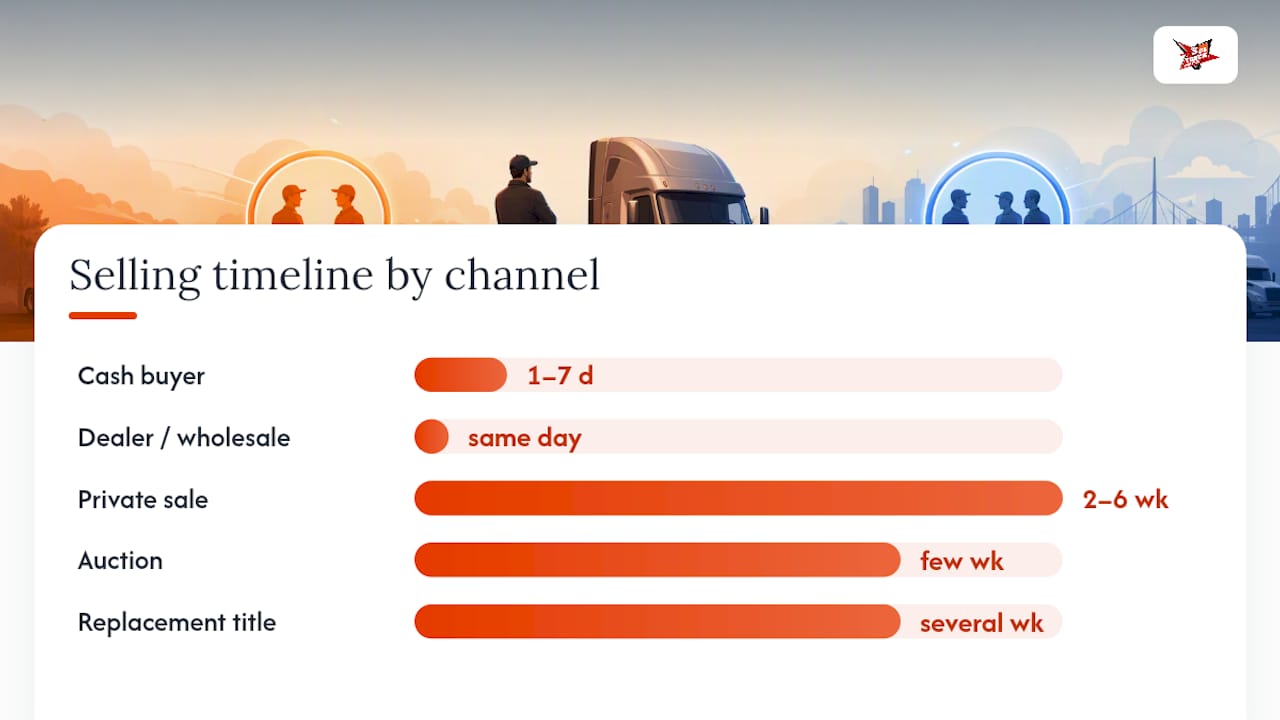
Auctions land somewhere in between on timeline, usually a fixed sale date within a few weeks, but the final price is the least predictable part of the equation.
Add buffer time for title issues. If you're waiting on a DMV replacement title, that alone can add several weeks before you're even ready to close, regardless of how fast you find a buyer.
Author Perspective: A Short Note on Choosing Speed vs. Price
Here's the rule of thumb worth remembering: take the cash offer when the cost of waiting exceeds the price gap. If a buyer is a week away from making payroll or covering a note, the difference between a fast wholesale offer and a private sale three weeks out often isn't worth the risk. If you've got breathing room and a truck with clean paperwork, private sale usually wins on price. The mistake sellers make most often isn't picking the wrong channel; it's not doing the math on their own timeline before they pick one.
— Dave
List Your Semi Truck Where Serious Buyers Are Already Looking
Sostruckforsale gets your listing in front of buyers actively searching for commercial trucks, not casual browsers scrolling a general classifieds feed. That distinction matters when you've just spent an afternoon fielding calls from people who were never going to buy.
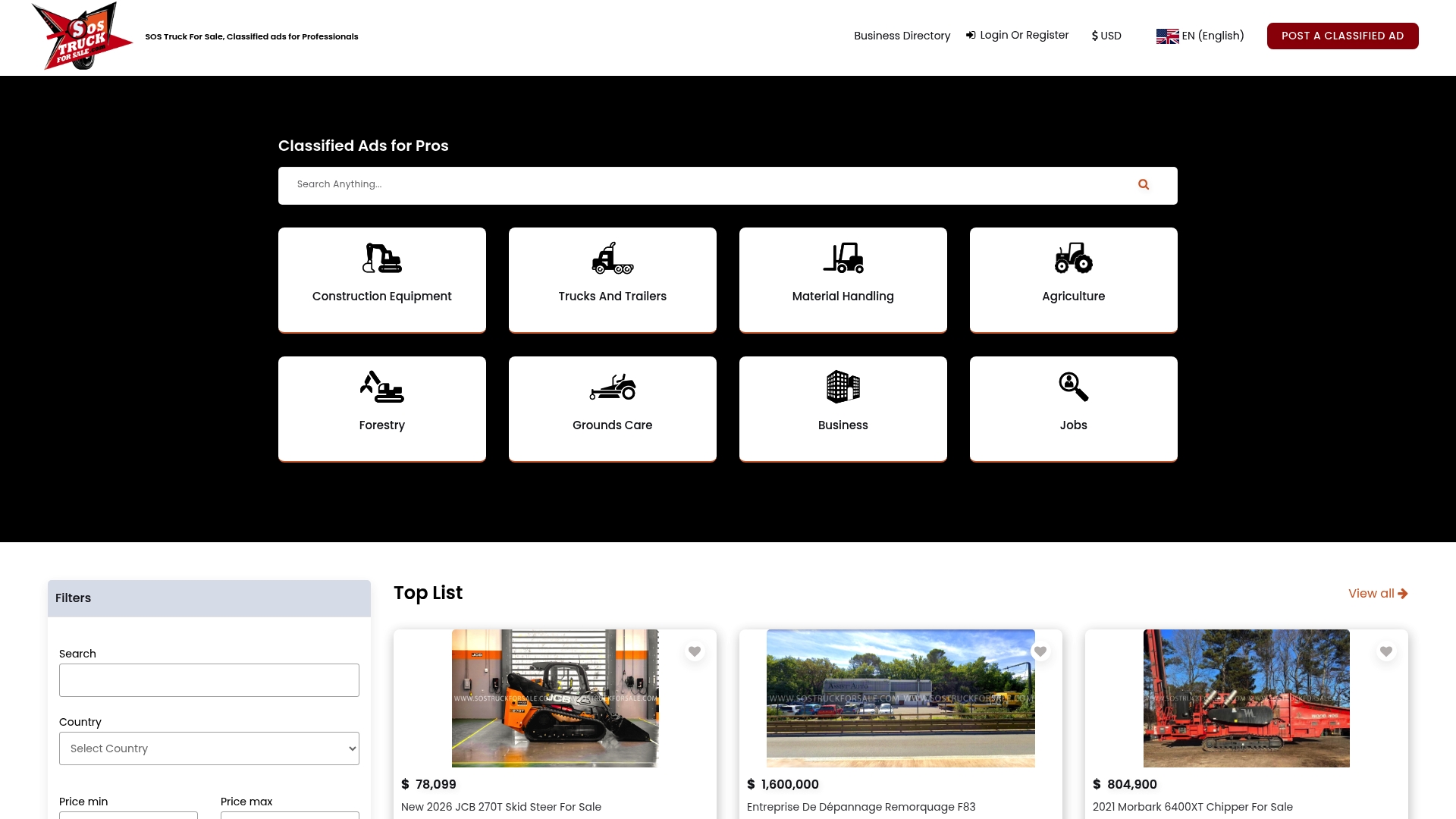
Once you've pulled your title, gathered your maintenance records, and shot your photo and video set using the checklist above, listing takes minutes. Sostruckforsale lets you post specs, photos, and pricing directly, alongside a dealer directory that puts your truck in front of buyers who already know what they're shopping for. There's no long-term commitment and no waiting on a broker to return your call. Head to Sostruckforsale to build your listing and get your truck in front of buyers who are ready to move today.
Sources
- Replace a lost vehicle title or registration — Washington State Department of Licensing
- Easiest Way To Sell A Truck — The Trucker's Report forum
- Sell Your Semi Truck — MachineryBarn