

A bump renews or promotes a heavy-equipment listing so it jumps back to the top of marketplace search results, giving it an immediate visibility lift. That lift only converts into buyer inquiries if the listing itself is sale-ready, meaning complete specs, clear pricing, and strong photos. An experienced author built this workflow from what actually moves qualified leads, not platform theory.
TL;DR:
- Waiting 7 to 21 days after listing or price updates is optimal to reset visibility without wasting promotion budget on already buried listings.
- Bumping most effectively works when combined with complete specs, high-quality photos, and clear pricing, which significantly improves ranking and inquiry rates.
- Prioritize bumping high-margin or seasonal equipment with sale-ready details rather than small, incomplete listings or repeated bumps on stale pages.
- Using bulk or recurring promotion packages benefits dealers managing large inventories or multiple units, especially when timed with inventory cycles.
- Tracking views, inquiries, and conversion rates within 24 to 14 days post-bump helps measure the lift's effectiveness and guide future promotion strategies.
Table of Contents
- How Do You Bump a Heavy-Equipment Listing?
- When Should You Bump a Listing?
- What Should You Fix Before You Bump?
- How Do You Measure Whether a Bump Worked?
- Dealer-Tested Bump Rules from Dave's Playbook
- The Overlooked Truth About Bumping Listings
- Bump and Promote Listings Through SOSTruckForSale
- Sources
- FAQ
How Do You Bump a Heavy-Equipment Listing?
Bumping works the same way across most equipment marketplaces, even though the button names differ. A bump updates a listing's timestamp to the moment you trigger it, so it resurfaces near the top when buyers sort by "recent" or "featured." Here's the sequence dealers use most often.
- Pick the listing. Prioritize units that are aging on the lot, carry higher margins, or fit a seasonal push, like skid steers ahead of spring construction bids.
- Open the listing or dealer dashboard. Most portals put the promotion control directly on the listing card or inside a business account's bulk management screen.
- Tap Promote, Boost, or Bump. The wording varies by platform, but the function is identical: refresh the listing and push it into premium placement.
- Choose the bump type. A single bump refreshes one listing once. A recurring bump repeats automatically on a schedule. A bulk package applies promotion credits across an entire inventory batch, which larger seller portals now build directly into business dashboards.
- Set the duration and confirm payment. Some platforms bill per bump, others draw from a prepaid promotion credit balance tied to a dealer plan.
- Verify it worked. Check the updated listing timestamp, look for a bump or "featured" icon, and confirm the change reflects in your listing insights dashboard within a few hours.
Dealers managing high inventory turnover generally get more value from bulk or recurring packages, since they're refreshing dozens of units on a predictable cycle. A private seller moving a single excavator is usually better off saving that spend for one well-timed, high-value bump rather than spreading it thin.
When Should You Bump a Listing?
Timing decides whether a bump earns its cost back. Bump too early and you're spending money on a listing that hadn't lost visibility yet. Bump too late and the listing has already been buried under weeks of fresher inventory with no inquiries to show for it.
- Refresh listings once they've drifted past the typical attention window for their category, generally somewhere in the 7 to 21 day range depending on how competitive that equipment segment is.
- Match bumps to buyer traffic patterns. Fleet buyers and dealers often browse early in the work week, while private buyers tend to shop evenings and weekends.
- Only bump listings that are actually sale-ready. A bump on an incomplete listing just accelerates the number of buyers who see a weak page and move on.
- Reserve bulk packages for dealers refreshing many units on a schedule, and save single bumps for one high-value asset, like a crane or a specialty trailer, where a paid push at the right moment matters more than routine cycling.
Several platforms also cap how often you can promote the same listing. Mercari's promotion rules, for example, limit repeat boosts to roughly once every 24 to 72 hours, and many equipment marketplaces follow a similar logic to prevent one seller from dominating results.
Pro Tip: Bump right after a price adjustment, not before one. Buyers who see a fresh listing with an already-attractive price convert faster than buyers who see the same price they scrolled past last week.
What Should You Fix Before You Bump?
A bump amplifies whatever is already on the page. If the listing is thin, you're just paying to show more people a weak pitch. Listings with complete specs, strong photos, and clear pricing consistently rank and convert better than sparse ones, so treat this checklist as mandatory, not optional, before you spend on promotion.
- Photos: Cover the engine bay, cab interior, controls, undercarriage, attachments, and any visible serial plates. A large number of photos is a realistic target for anything priced above entry-level.
- Spec sheet: List hours, serial number, attachment compatibility, and recent maintenance history. Missing hours is one of the fastest ways to lose a serious buyer.
- Pricing clarity: Post a real number or a tight range built from auction comps, not "call for price." Hidden pricing tends to generate more low-intent inquiries instead of faster sales.
- Category and keywords: Confirm the listing sits in the right subcategory with make, model, and configuration terms buyers actually search.
- Trust signals: A complete dealer profile, verified contact details, and available documentation all reduce buyer hesitation before they ever call.
- A clear next step: End the listing with a direct call to action, like "Call to schedule an inspection," rather than leaving buyers to guess what happens next.
Treat the listing itself as a conversion page. Leading with condition, hours, price, and location up front cuts the friction that keeps buyers from reaching out at all.
How Do You Measure Whether a Bump Worked?
Pull baseline numbers before you bump, then compare against a short window and a longer one. Views and inquiries in the first 24 to 72 hours tell you whether the visibility lift happened at all. A 7 to 14 day trailing window tells you whether that lift held or whether the listing just faded back to its previous pace.
- Views and unique visitors, compared to the same listing's pre-bump average
- Inquiries and conversion rate, calculated as inquiries divided by views
- Time to first inquiry after the bump goes live
- Cost per qualified lead, weighed against what a lead normally costs you through other channels
Industry reporting on enhanced ad placements shows the lift from paid promotion can vary widely, sometimes several times higher impressions and leads than a standard listing gets, depending on the product and placement type. Use that as a directional benchmark, not a guarantee, and pull your own numbers from the portal's reporting tools.
| Metric | Baseline (pre-bump) | Post-bump (24–72 hrs) | Post-bump (7–14 days) |
|---|---|---|---|
| Views | Track and record | Compare against baseline | Compare against baseline |
| Inquiries | Track and record | Compare against baseline | Compare against baseline |
| Conversion rate | Inquiries ÷ views | Inquiries ÷ views | Inquiries ÷ views |
Only repeat a bump on the same listing after you've changed something, like the price, photos, or spec detail. Bumping an unsold, unchanged listing over and over usually just burns budget against buyer fatigue.
Dealer-Tested Bump Rules from Dave's Playbook
The dealers who get the most out of promotion pair every bump with price clarity and a full photo set, never fewer than 20 images on anything above entry-level pricing. That combination is what turns a visibility spike into an actual phone call.
The most common mistake is bumping a listing that's missing hours, serial numbers, or a real price. It buys attention the page can't convert. The second mistake is bumping the same stale listing repeatedly with nothing changed. Buyers who've already scrolled past it once tend to scroll past it again.
Track promotion spend against inventory turnover, not just against inquiries. A bump that generates ten calls but no sale is a weaker signal than one that generates four calls and moves the unit.

The Overlooked Truth About Bumping Listings
Most advice on this topic treats bumping like a growth hack, something you do more of to get more results. That's backwards. A bump is a multiplier, and multiplying a weak listing just produces a faster failure.

The conventional wisdom undersells preparation and oversells frequency. Sellers who bump aggressively but skip the pricing and spec work usually see a short spike in views and nothing in inquiries, then conclude bumping doesn't work. It worked exactly as designed. It showed more buyers a page that wasn't ready to convert them.
If you take one thing from this, prioritize the pre-bump checklist over the bump itself. A complete, honestly priced listing with strong photos will outperform a bare-bones one every time, bumped or not. Spend the promotion dollars only after the page has earned them.
— Dave
Bump and Promote Listings Through SOSTruckForSale
Certain equipment marketplaces give dealers and private sellers a direct path to promotion instead of guessing which marketplace button actually moves a listing back to the top. Some platforms support listing promotions, dealer dashboards, and bulk tools built for sellers moving multiple units at once, including equipment in various categories like construction, trucks, material handling, agriculture, forestry, and grounds care.
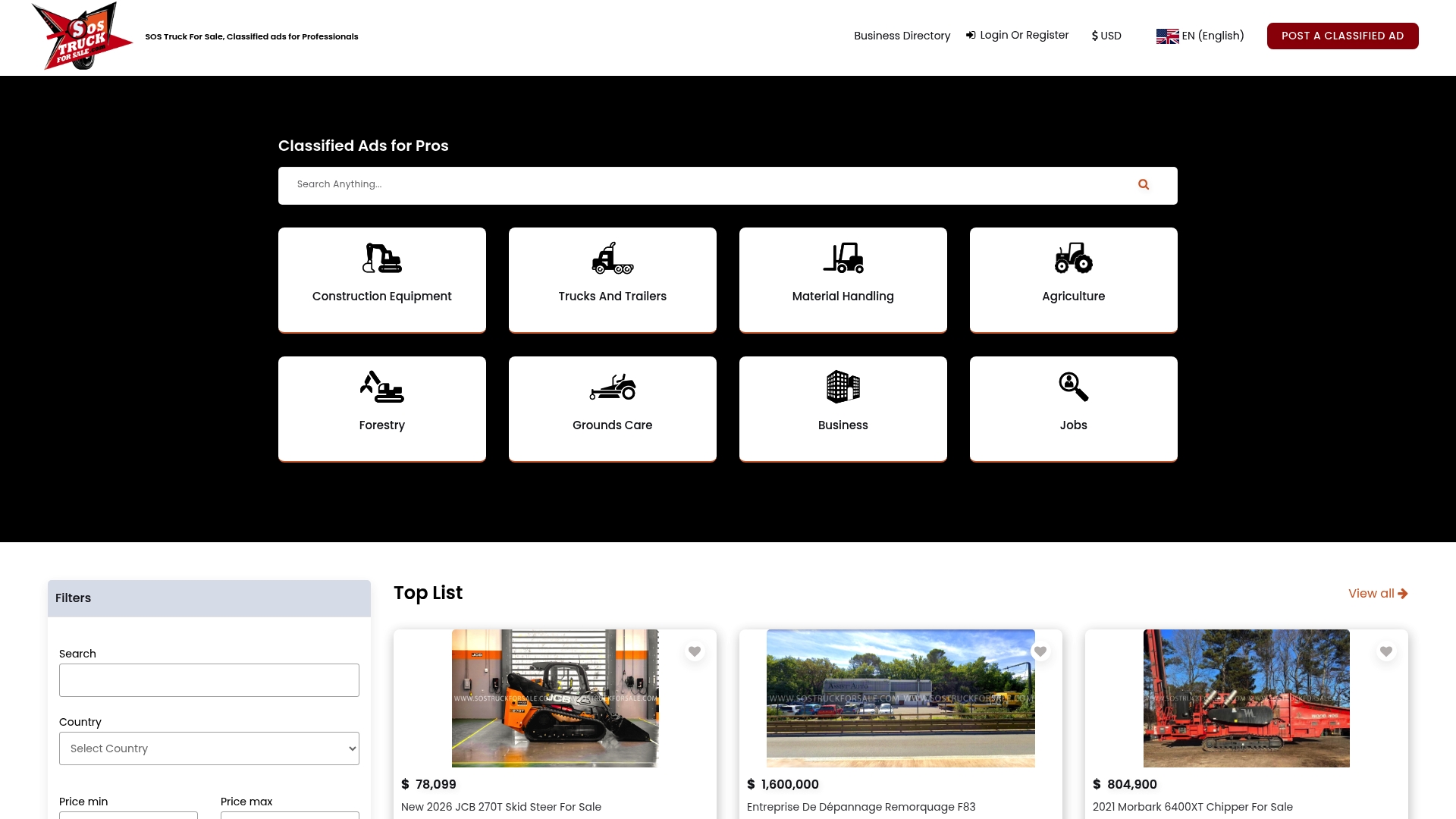
Getting started generally involves creating a listing, accessing your dealer dashboard, and purchasing promotion credits or package deals, depending on the platform. Dealers running higher inventory volumes should also set up a dealer profile, since a verified profile tends to lift inquiry rates before a single bump is even purchased. For platform-level guidance on structuring listings that convert once promoted, the Dealer Playbook covers the details this article only summarizes. Head to SOSTruckForSale to post your first listing or check your dealer dashboard for available promotion packages.
FAQ
What Does Bumping a Listing Actually Do?
Bumping renews a listing's timestamp so it moves back toward the top of search results, giving it a short-term visibility lift. It behaves like any other listing again once newer posts start stacking above it, according to how most marketplace sort algorithms work.
How Often Should I Bump the Same Listing?
Most sellers see the best return bumping every 7 to 21 days, depending on how competitive that equipment category is, and only after making some change to the listing. Many equipment marketplaces enforce cooldown windows between promotions.
Does SOSTruckForSale Offer Bulk Promotion for Dealers?
Certain platforms support bulk promotion tools through dealer dashboards for sellers managing multiple listings at once. Pricing for promotion packages is available directly on the SOSTruckForSale site.
Is It Worth Bumping an Incomplete Listing?
No. A bump only amplifies traffic to a page that still has to convert that traffic, and listings missing photos, specs, or pricing convert poorly regardless of how many views they get. Complete the listing first, then bump.
How Do I Know if a Bump Paid Off?
Compare views and inquiries from before the bump against the 24 to 72 hours immediately after, then check a 7 to 14 day window to see if the lift held. Calculate cost per qualified lead and weigh it against what leads normally cost through your other channels.