
The fastest reliable way to sell a used excavator is to prepare it, list it on a specialist heavy-equipment marketplace such as Sostruckforsale (or use a broker or auction if you want a hands-off sale), and insist on verified escrow or bank-confirmed payment. Handle your title, hour meter records, and service history before you write a single line of listing copy. Every delay after that point costs you buyers.
TL;DR:
- Using a specialized marketplace like Sostruckforsale offers better control over pricing and listing while reaching buyers actively searching for specific models and hours.
- Proper machine preparation, including cleaning and inspecting key systems, can significantly increase buyer interest and quicken the sale process.
- Listing with comprehensive photos, honest condition descriptions, and complete documentation reduces time-wasting inquiries and builds buyer trust.
- Pricing should be based on recent sold prices, with adjustments made for hours, attachments, and repair needs rather than age alone, to ensure competitiveness.
- Secure payments through verified escrow, bank transfer, or cashier's check to avoid scams, and complete title transfer and shipment arrangements carefully to protect both parties.
Table of Contents
- What to Do Before You Sell an Excavator Online
- How Do You Photograph and Describe an Excavator for Sale?
- How Do You Set a Competitive Price for a Used Excavator?
- Marketplace, Broker, Auction, or Dealer Trade-In: Which Should You Choose?
- How Do You Avoid Getting Scammed When Selling an Excavator Online?
- How Do You Finalize the Sale, Title Transfer, and Shipping?
- Do You Owe Taxes When You Sell an Excavator?
- Why This Checklist Reflects Real Marketplace Experience
- Price, Speed, or Effort: Which Should Drive Your Decision?
- Ready to List Your Excavator on Sostruckforsale?
- Sources
- FAQ
What to Do Before You Sell an Excavator Online
Buyers judge condition in the first ten seconds of a listing, so cleaning and staging matter as much as the mechanics underneath. Pressure wash the undercarriage, cab, and boom before shooting any photos. Dirt and mud hide cracks, welds, and leaks that serious buyers look for, and a clean machine photographs like a well-maintained one even when it has real hours on it.
Run a mechanical quick check and note what you find, good or bad:
- Start the engine cold and note smoke, hesitation, or unusual noise
- Check for hydraulic, engine, or coolant leaks around hoses and fittings
- Inspect undercarriage wear: track tension, sprockets, rollers, and idlers
- Test bucket, boom, and swing function through a full range of motion
- Confirm all gauges and safety lights work correctly
Gather your paperwork now, not after a buyer asks for it. You need service records, hour meter photos, the serial or VIN plate, a clear title or bill of sale, and a list of attachments included in the sale. Professional buyers routinely walk away from deals when export and ownership documentation isn't ready, so treat this step as non-negotiable rather than optional homework.
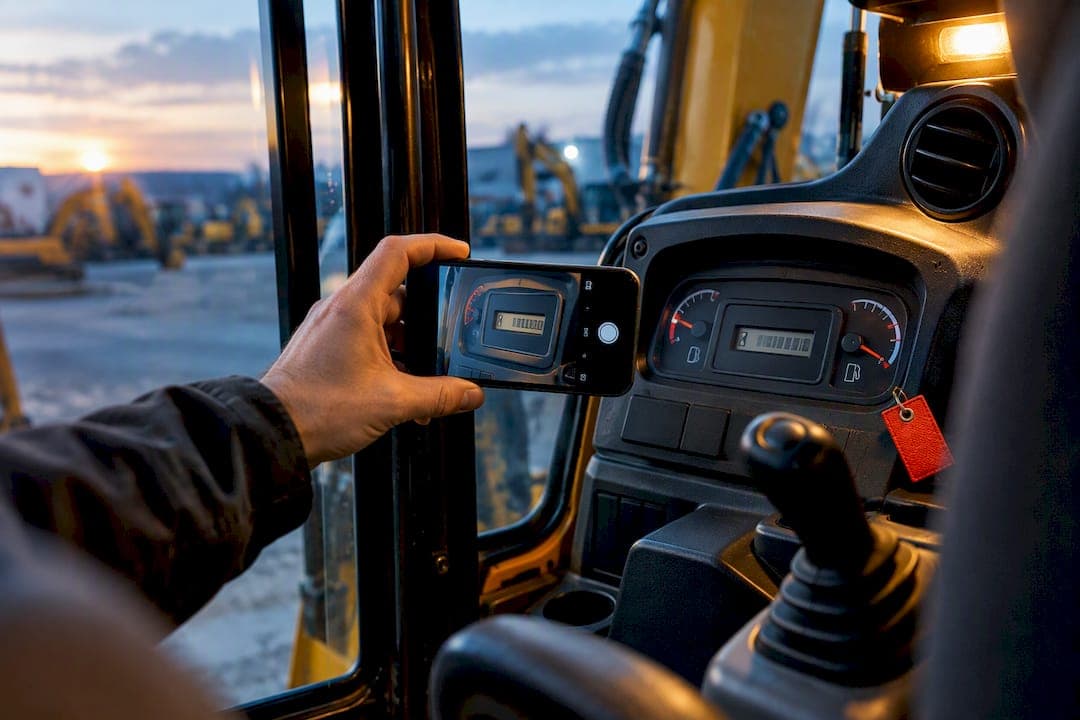
Pro Tip: Photograph your hour meter and serial plate the same day you start cleaning the machine. Buyers ask for these first, and having them ready before you list saves you a week of back-and-forth emails.
How Do You Photograph and Describe an Excavator for Sale?
Listings with complete photo sets and honest specs get more serious inquiries and fewer time-wasting questions. Follow this shot list for every excavator you list:
- Four full exterior angles (front, rear, both sides) in daylight
- Close-ups of any wear, dents, welds, or rust spots
- Serial plate, hour meter, and engine compartment
- Cab interior, including seat and control condition
- Each attachment separately, with model numbers visible
A short video walkthrough closes the gap a photo gallery can't. Start the engine cold on camera, pan across the undercarriage, and cycle the boom and bucket through a full range of motion. Keep it under three minutes and narrate what you're showing.
Your listing copy needs the model, year, serial number, hour meter reading, and a plain statement of condition, including flaws. Buyers searching an online excavator marketplace type specific model numbers and hour ranges, so include both prominently. Answer the questions every buyer asks before they ask them: recent repairs, undercarriage percentage remaining, and why you're selling.
How Do You Set a Competitive Price for a Used Excavator?
Start with recent sold prices, not asking prices, since asking prices tell you what sellers hope for and sold prices tell you what buyers actually pay. Auction results and marketplace sold listings both give you real transaction data, and reading auction comps correctly means adjusting for hours, attachments, and repair needs rather than comparing by age alone.
A few adjustment rules that hold up across most excavator classes:
- Deduct for hour buckets above the class average, not just raw hours
- Subtract the full estimated repair cost for undercarriage or hydraulic work needed soon
- Add value for attachments included, especially buckets, thumbs, or quick couplers
- Price mini excavators against published dealer ranges for that size class, since they trade in a tighter band than larger machines
If your goal is maximum price, list slightly above your comps and accept offers over several weeks. If you need cash fast, price at or just under recent sold comps and consider a best-offer field to draw in buyers who might otherwise scroll past a fixed number.
Marketplace, Broker, Auction, or Dealer Trade-In: Which Should You Choose?
Each channel trades speed for control in a different way, and OEM guidance on selling used equipment breaks the tradeoffs down clearly. A specialist marketplace listing gives you the most control over price and timing, plus searchable fields that put your machine in front of buyers actively shopping by model and hour range. A broker or consignment arrangement removes most of the work but takes a commission and hands over pricing control. Auctions move fast, often within weeks, but final prices swing with turnout on sale day. Dealer trade-ins are the most convenient option and the lowest payout, useful mainly when you're buying a replacement machine anyway.
Before committing to a channel, ask each one the same three questions:
- What are the total fees, including any success commission or listing charge?
- What's the realistic timeline from listing to closed sale?
- Are promoted placement or featured listing options available?
For most private sellers and small fleets, a marketplace listing on a specialized platform can offer a good balance of reach and control without giving up a large cut of the sale price.
How Do You Avoid Getting Scammed When Selling an Excavator Online?
Insist on one of three payment methods and nothing else: a verified escrow service built for equipment sales, a bank-to-bank wire your own bank confirms as cleared, or a cashier's check you verify directly with the issuing bank before releasing the machine. Never release title or equipment against a check that hasn't cleared, no matter how official it looks.
Watch for these red flags:
- A buyer who overpays and asks you to refund the difference
- Pressure to use an escrow site you didn't choose or verify independently
- A buyer who avoids phone calls or video calls entirely
- Contact info that doesn't match a business's official listing or website
The FTC has documented a rise in fake-check schemes targeting online equipment and vehicle sellers, and the pattern repeats: a check clears temporarily, funds get wired out, then the bank reverses the deposit weeks later, leaving the seller liable. Scammers also impersonate legitimate equipment dealers, so verify a buyer's business through independent search, not just the contact details they send you. For high-value machines, insist on an in-person inspection or route the transaction through a broker before you ship anything.
How Do You Finalize the Sale, Title Transfer, and Shipping?
Closing the deal correctly protects both sides and gets your machine off your books cleanly.
- Write a bill of sale listing the price, serial number, hour meter reading, and any attachments included, with payment milestones spelled out before signing
- Complete title transfer using a full documentation packet, including the signed title, lien release if applicable, and maintenance log, which speeds registration for the buyer
- Get at least two carrier quotes and confirm proof of insurance that covers loading and transit damage before you release the machine to a hauler
Coordinate loading time directly with the buyer or carrier so someone is on-site to answer questions and confirm the machine loads without incident.
Do You Owe Taxes When You Sell an Excavator?
If you used the excavator in a business, the sale is typically reported on IRS Form 4797, not as a simple capital gain. Depreciation you claimed while you owned the machine may trigger depreciation recapture, taxed as ordinary income rather than at capital gains rates.
Keep your original purchase price, any capital improvements, and your full depreciation schedule on hand. These figures determine your adjusted basis and, ultimately, your taxable gain or loss on the sale. The Form 4797 instructions walk through the calculation, but the specifics vary by depreciation method and business structure. Talk to a CPA before you file, especially if the machine was fully or partially depreciated, since recapture rules and state tax treatment differ enough that a generic online calculation can leave you underpaying or overpaying.

Why This Checklist Reflects Real Marketplace Experience
There are listing marketplaces built specifically for commercial and industrial equipment sales, including excavators, cranes, and construction machinery. The checklists in this guide draw directly from the platform's own seller resources, including detailed posts on transferring ownership paperwork and pricing with auction comps, both written to walk sellers through the exact steps professional buyers expect to see handled correctly.
Price, Speed, or Effort: Which Should Drive Your Decision?
Choose a marketplace listing when you have time to manage inquiries yourself and want top dollar. Choose a broker or auction when speed matters more than squeezing out the last few thousand dollars. Photos and documentation pay off no matter which route you pick. If you're unsure, list on a marketplace first and switch to a broker only if it stalls.
— Dave
Ready to List Your Excavator on Sostruckforsale?
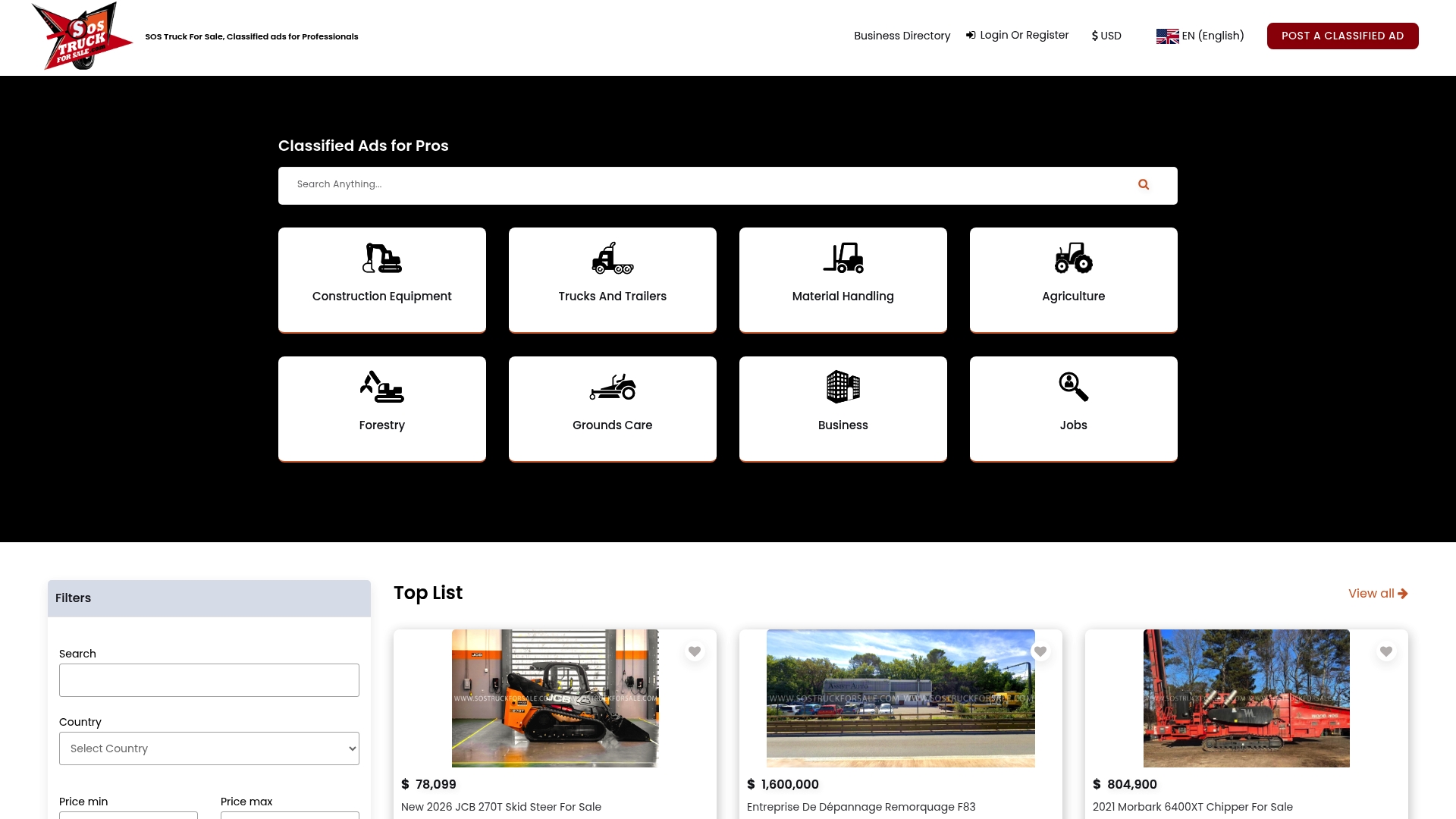
Some platforms give sellers a direct alternative to broker commissions and auction uncertainty by allowing them to set their own price, control their own timeline, and keep the full sale amount minus a listing fee. The platform includes structured fields for make, model, year, hours, and attachments, along with photo galleries and optional promoted placement for sellers who want faster visibility among buyers actively searching for equipment like construction equipment, material handling machinery, or agricultural gear.
Before you post, run through the prep and documentation checklist above. Have your title, service records, and photo set ready, since a complete listing draws serious inquiries within days rather than weeks. If you have equipment financing questions before a buyer commits, resources like J&M SEPTIC's equipment financing page outline how financing conversations typically work for larger purchases. When you're ready, create your listing on Sostruckforsale and get your excavator in front of buyers who are already searching by model and hour range.
This article is general information, not a substitute for advice from a qualified financial advisor. Consult a qualified financial professional about your own circumstances before acting on anything here.
Sources
- Instructions for Form 4797
- Fake check scam targets online car sellers
- Mistakes to avoid when selling heavy machinery
FAQ
Where Is the Best Place to Sell Equipment Online?
A specialist heavy-equipment marketplace like Sostruckforsale typically outperforms general classified sites because listings reach buyers already searching by model, hours, and category. Brokers and auctions remain solid alternatives when you want a hands-off sale or need cash quickly.
Where Can I Sell Industrial Equipment for Cash?
Auctions and dealer trade-ins produce the fastest cash, though usually at a lower price than a marketplace listing. If speed matters most, ask each auction house about payout timing before you consign the machine.
How Do I Sell Used Machinery Online?
Clean and inspect the machine, gather your title and service records, shoot a full photo and video set, then list it on a specialist marketplace such as Sostruckforsale with complete specs and honest condition notes. Insist on verified escrow or bank-confirmed payment before releasing the title.
What Is My Excavator Worth?
Value depends on hour meter reading, attachments, undercarriage condition, and recent sold prices for the same model, not just age. Pull recent auction and marketplace comps and adjust them for hours and repair needs rather than comparing listings by year alone.