
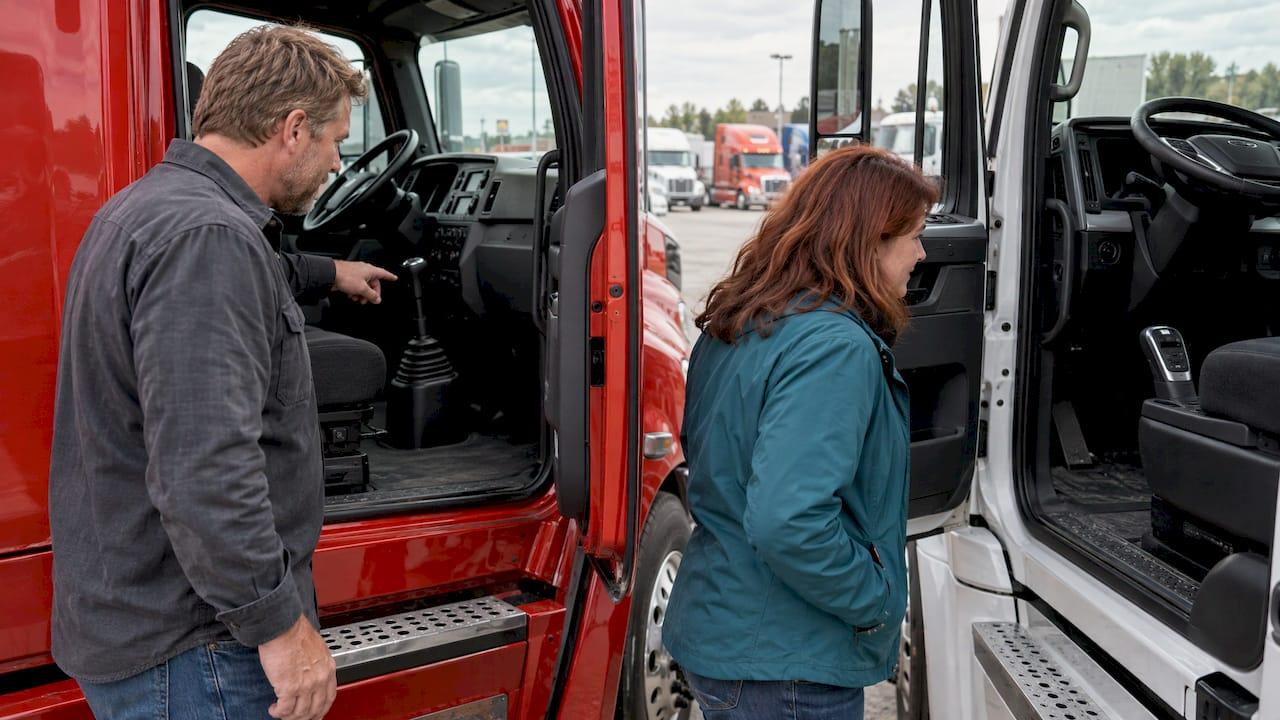
For a dealer, the transmission decides who buys the truck, not just how it shifts. Automated manuals and full automatics now dominate new Class 8 orders, they widen the pool of drivers a fleet can hire, and they save a small but measurable amount of fuel. Manuals still sell, but to a narrower buyer who needs to be told clearly what he is looking at. List every truck with the exact transmission type, make, model and gear count, and you shorten the buyer's search and your time on the lot.
This guide covers how the transmissions differ, what the cost and resale numbers look like, and how to present transmission details in a listing.
TL;DR
- Three types matter: the manual, the automated manual (AMT) and the full automatic with a torque converter. Buyers treat them as three different products.
- Industry research puts the AMT fuel gain at 1% to 3% on average, with a $3,000 to $5,000 higher purchase price and lower resale values than manuals.
- Automatics widen a fleet's driver pool, which is often the real reason fleets buy them.
- Full automatics fit stop-and-go vocational work. AMTs fit line haul. Manuals fit buyers who value simplicity and the lowest price.
- State the transmission in the title and description of every listing. It is the first spec a buyer screens on.
Table of Contents
- How the three transmissions differ
- What the numbers say: fuel, price and maintenance
- Why fleets chose automatics: the driver pool
- Which transmission fits which truck
- Presenting transmission details in a listing
- Answering the objections buyers raise
- Our perspective
- List your trucks where commercial buyers search
- FAQ
- Sources
How the three transmissions differ
In a passenger car, the choice is a manual or an automatic. In a heavy truck there are three.
Manual. The driver presses the clutch pedal, moves the shift lever and releases the clutch. Toyota's explanation of transmission types describes the same sequence for any manual: clutch in, gear selected, clutch out. In a semi that means a 10-, 13- or 18-speed box and double-clutching or clutchless shifting skills that take time to learn.
Automated manual (AMT). Mechanically it is a manual gearbox with a clutch, but a computer operates the clutch and selects the gears. There is no clutch pedal. This is what most people mean today by an "automatic semi."
Full automatic. It uses a torque converter, a fluid coupling that passes engine power to the gears through transmission oil. Live Science's gearbox overview explains that computers decide when to shift, which makes shifts smooth. NACFE, the Nth Annual Council for Fuel Efficiency's research arm for trucking, notes that these units shift under full power and are most valuable in city driving, where a lot of shifting is required.

In cars, the shift to automatics is nearly complete: Toyota reports that more than 90% of American drivers now use automatics. Trucking followed later, but it has followed.
What the numbers say: fuel, price and maintenance
Fuel economy
On paper, a skilled driver in a manual can match a computer. In practice, most drivers do not hold the optimum gear all day. The ICCT's working paper on transmissions notes that manuals have low internal losses, yet on official test cycles advanced automatics usually give better fuel economy because drivers may not pick the best gear.
For trucks, NACFE's Confidence Report on transmissions finds an average 1% to 3% fuel economy improvement from automated manuals. At $0.65 per mile in fuel cost and 120,000 miles a year, a 3% gain is worth about $2,300 per truck per year. The report also says the best manual drivers may already match what most drivers get from an electronic system, but the systems reduce the spread between drivers.
That spread is large. FleetOwner reports 30% driver-to-driver fuel economy variability, and cites a 2015 Frost & Sullivan study that found fuel gains of up to 8% for AMTs and 3% to 5% for full automatics. Gains depend on duty cycle, driver training and how the truck is specified, so treat these as ranges, not promises.
Purchase price and resale
NACFE lists a $3,000 to $5,000 higher initial cost for an AMT and a small expected increase in maintenance cost because of more moving parts and software. It also reports resale values currently $1,000 to $3,000 lower than for comparable manuals. The same Frost & Sullivan study, as reported by FleetOwner, put the premium at $1,000 to $5,000 for an AMT and $6,000 to $10,000 for a full automatic.
That resale note deserves a dealer's attention. The discount reflects how fleets valued the units when those figures were gathered. Today the market has moved toward automatics, and a used truck with a well-documented, well-maintained AMT draws a different buyer pool than a manual does.
Maintenance
The cost sits in different places. A manual has a clutch that wears, and driver technique drives how fast. An AMT automates the same clutch, and consistent engagement tends to be gentler on it. A full automatic has no clutch wear to speak of but has a torque converter and fluid to service. NACFE says careful specification of engine, transmission, axle, tires and road speed is what delivers the savings, so a mismatched spec can erase them.
For a fleet manager costing out a purchase, the full picture is acquisition, maintenance, repair and resale together. A work truck cost comparison framework built around those four categories applies the same way to a transmission decision, and it is the lens your buyers will use.
Why fleets chose automatics: the driver pool
Fuel is the argument that fits on a spreadsheet. Hiring is the argument that fills seats. Yahoo Autos reported in August 2026 that the move to automatics has been driven by ease of use, simpler driver training and certification, more reliable modern automatics and better fuel economy. NACFE lists an enlarged driver pool, less fatigue and lower driver-to-driver variability among the AMT's advantages.
The licensing rules sharpen this. Under 49 CFR 383.95, a driver who takes the commercial driver's license (CDL) skills test in an automatic or automated truck receives an "E" restriction, which bars operating a manual commercial vehicle until the driver retakes the test in a manual. A fleet that buys manuals can only staff them from drivers who tested in a manual. A fleet that buys automatics can staff them from either group.
For your listings this means two things. First, an automatic or AMT truck appeals to the owner-operator or fleet that wants to hire widely. Second, a manual truck appeals to a buyer with experienced manual drivers who wants to save on the purchase price. Both are real buyers. They just search differently.
FleetOwner's John Hitch describes the modern truck automatic as less a component than a co-pilot: it uses navigation, load data and preset fleet standards to keep the driver comfortable and focused, reduce wear and maximize fuel economy. That framing is how many buyers now think about it, and it is worth reflecting in descriptions of newer units.

Which transmission fits which truck
Match the type to the work and the listing nearly writes itself.
| Application | Typical fit | What to put in the listing |
|---|---|---|
| Long-haul tractor | AMT | Make and model of transmission, gear count, engine and rear axle ratio |
| Regional or local delivery | AMT or full automatic | Transmission model, mileage, service records |
| Dump, mixer, refuse, plow (stop-and-go) | Full automatic | Transmission model, PTO provisions, fluid service history |
| Heavy haul, specialty, off-road | Manual or AMT with high-torque ratings | Torque rating, gear count, clutch condition |
| Budget or owner-operator buyer with manual experience | Manual | Clutch condition, mileage on clutch, transmission rebuild history |
NACFE says full automatics are most valuable where there is a lot of shifting, which is why they appear so often in vocational work. If you stock dump trucks, mixers or other vocational units, our guide to what a vocational truck is and how it is used is a useful reference to share with buyers who are new to the category. For the mechanical background on where the transmission sits in the driveline, see the role of the transmission in semi trucks.
Presenting transmission details in a listing
Buyers filter on transmission before they call. A listing that makes them dig for it loses to one that does not. A practical standard for each truck:
- Put the type in the title. "2021 Freightliner Cascadia, Detroit DT12 automated manual" tells a buyer more than "2021 Freightliner Cascadia."
- Name the transmission make, model and number of speeds in the description, plus the engine and rear axle ratio. NACFE stresses that the transmission has to be specified together with the engine, axle and tires, and your buyer knows it.
- State service history. For a manual, clutch replacement or rebuild date. For an AMT or automatic, fluid change intervals and any software updates.
- Explain the CDL angle where it helps. A line such as "automated transmission, can be driven by drivers who tested in an automatic" speaks directly to a fleet struggling to hire.
- Be exact about what you do not know. If the transmission has not been inspected, say that the seller has not verified it. Accurate listings produce fewer stalled deals.
- Show the shifter and dash. A clear photo of the cab interior shows at a glance whether the truck has a clutch pedal and what shift controls it uses.
Transmission type also affects price. Because NACFE finds resale values for automated units lower than for manuals in its comparison, price your units against others of the same type, not the whole class. Mixing them in a comparison leaves money on the table for one kind and overprices the other.
For more on how to price and present units online, our guide to commercial vehicle classifieds covers the mistakes that cost fleets and dealers the most. If you also move dump trucks, selling a dump truck fast covers the chassis and hydraulics details buyers ask about.
Answering the objections buyers raise
"Automatics cost more to fix." The fair answer is that they have more electronics and software, which NACFE acknowledges as a small expected increase in maintenance cost. A documented service history and a transmission that has been inspected answer the concern better than any claim.
"I can shift better than a computer." Some drivers can. NACFE agrees the best manual drivers may match an electronic system. The point is that the fleet-wide average improves when the computer does the shifting, and that is what a fleet buying ten trucks cares about.
"The manual is cheaper." On purchase price, yes. Total cost of ownership is the fuller comparison, and the fuel and hiring effects work in the automatic's favor. A manual is still a sound purchase for a buyer who has manual-qualified drivers and a short payback horizon.
"Will I be able to sell it later?" The market has moved toward automatics, and FleetOwner notes that the move came faster than the 2015 study predicted. A buyer who expects to resell in a few years is looking at a market that increasingly asks for automated transmissions.
Our perspective
We built this marketplace for people who sell commercial and industrial equipment for a living, and the transmission question is a good example of why detail matters on a listing. A buyer comparing two similar tractors will pick the one that tells him what is in the driveline, and a seller who writes it down once saves answering the same call ten times.
Our platform gives dealers a dedicated classified environment for semi trucks, trailers and other commercial equipment, with dealer registration and a business directory so your inventory sits where industry buyers already look. Buyers browse by category, subcategory, price and country, then read the description you wrote. Make that description complete.
Whether you stock manuals, AMTs or full automatics, the approach is the same: name the type, list the specs, document the service. Buyers reward that clarity.
Dave
List your trucks where commercial buyers search
Sostruckforsale is an online marketplace for commercial vehicles and industrial heavy equipment, including semi trucks, trailers, construction equipment, material handling machinery, forestry, grounds care and agricultural machinery. Dealers and private sellers post classified ads, and dealers can register in the business directory. Buyers browse by category, subcategory, price and country.
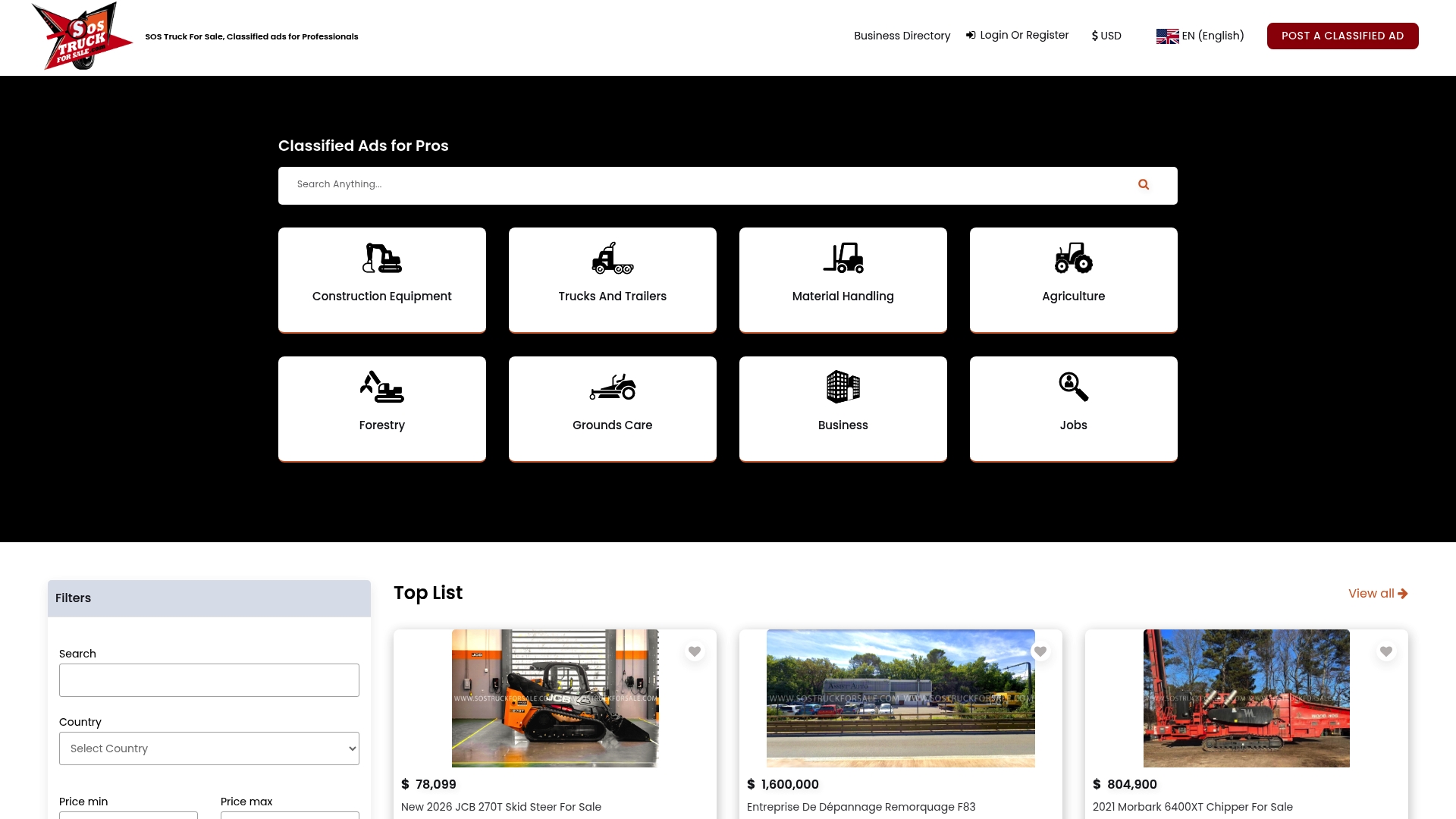
If you have trucks to move, post your listings on Sostruckforsale and use the transmission checklist above to make each one easy to evaluate.
FAQ
Are most semi trucks automatic or manual now?
Automated manuals and automatics have taken most of the new-truck market. Yahoo Autos reported in 2026 that ease of use, simpler driver certification, better reliability and fuel economy drove the change. Manuals remain on the used market and with buyers who have manual-qualified drivers.
How much more does an automatic semi cost than a manual?
NACFE puts the AMT premium at $3,000 to $5,000 in purchase price. A 2015 Frost & Sullivan study reported by FleetOwner found $1,000 to $5,000 for AMTs and $6,000 to $10,000 for full automatics. Actual premiums vary by model and year.
Do automatic semis save fuel?
NACFE's Confidence Report finds an average improvement of 1% to 3% from automated manuals, worth about $2,300 per truck per year at 120,000 miles and $0.65 per mile in fuel cost. Results depend on duty cycle, driver training and how the truck is specified.
Can a driver who tested in an automatic drive a manual truck?
Not without retaking the test. Under 49 CFR 383.95, a CDL skills test taken in an automatic or automated truck results in an "E" restriction on manual commercial vehicles. A test taken in a manual carries no such restriction. Drivers should confirm their own status with their state licensing agency.
Which transmission is best for a dump truck?
Stop-and-go vocational work is where NACFE says full automatics add the most value, since they handle frequent shifting under full power. For the buyer, the choice also depends on the body, the PTO setup and the drivers available.
Sources
- Types of Transmissions, Toyota
- Car gearboxes: How manual and automatic gears work, Live Science
- Transmissions, ICCT working paper
- Automatic Transmissions, NACFE
- Trucking Efficiency Transmissions Confidence Report, NACFE
- Automatic efficiency: Why fleets are shifting from manual transmissions, FleetOwner
- Are Most Semi-Trucks Automatic Or Manual?, Yahoo Autos