
For most fleet buyers, Sostruckforsale is the strongest starting point among commercial vehicle classifieds because it concentrates trucks and heavy equipment in one place instead of burying them under passenger cars. Specialization means dealer-grade listings, VIN disclosure, and buyer-facing best practices built for this category. The exception: if you're chasing rock-bottom price over documentation, or you need a factory warranty transferred cleanly, an auction or a franchised dealer network may serve you better.
TL;DR:
- Commercial vehicle marketplaces like SOSTruckForSale.com focus on dealer-grade listings with VIN transparency, making it easier to verify truck history before buying.
- Listings must include VIN, odometer, detailed specs, service history, high-quality photos, clear pricing, and seller verification to be considered trustworthy.
- Budget your total costs to include inspection, transport, registration, and escrow fees, and expect delivery times to range from one to three weeks depending on logistics.
- Conduct a disciplined search by locking in your specifications, requesting detailed documentation, arranging inspections, and planning transport early in the process.
- Rely on specialized platforms to reduce risks, avoid common mistakes like skipping VIN checks or ignoring transport costs, and use saved searches and alerts for efficient buying.
Table of Contents
- Best Commercial Vehicle Classifieds vs. Dealer Directories, Auctions, and Broker Networks
- What Must Appear on a Listing Before You Trust It
- How Much Should You Budget, and How Long Will It Take?
- The Step-by-Step Flow From Search to Delivery
- Why a Specialized Marketplace Lowers Buyer Risk
- Three Mistakes Fleet Buyers Keep Making
- Start Your Search on SOSTruckForSale.com
- Keep Reading Before You Buy
Best Commercial Vehicle Classifieds vs. Dealer Directories, Auctions, and Broker Networks
Not every classified platform solves the same problem, and picking the wrong category costs fleet buyers time they didn't budget for. A marketplace aggregates listings from dealers and private sellers under shared search filters, which is where most buyers start. A dealer directory lists businesses rather than individual units, useful when you want an ongoing supplier relationship rather than a one-off purchase. An auction clears inventory fast, often below retail, but usually with fewer guarantees on condition. A broker network puts a person between you and the seller, trading a fee for negotiation help and paperwork handling.
Match the category to your goal:
- Buying one specific truck with full history: a specialized marketplace like SOSTruckForSale.com.
- Building a repeat supply relationship: a dealer directory.
- Chasing salvage pricing or liquidating a fleet fast: an auction.
- Buying out of your usual region or unfamiliar equipment class: a broker network.
Each choice changes your timeline. Auction wins can close in days but often demand payment before a full inspection. Marketplace purchases usually allow more time for VIN verification, service record review, and third-party inspection before money changes hands.
What Must Appear on a Listing Before You Trust It

Treat every listing as a claim to verify, not a fact to accept. A trustworthy commercial vehicle listing gives you enough to make a decision without a phone call, and a thin listing is itself a warning sign.
Run new listings through this order:
- VIN and title status. No VIN, no deal. A visible VIN lets you pull a history report before you waste a day on a truck with a lien or a salvage title.
- Odometer and hour meter readings, cross-checked against service records rather than taken on faith.
- Full spec sheet, including engine, transmission, axle configuration, GVWR, and any PTO or hydraulic add-ons relevant to your operation.
- Service and maintenance history, ideally with dated receipts, not a verbal summary.
- Multiple high-resolution photos covering the cab, frame rails, tires, undercarriage, and interior wear points, not just a flattering exterior shot.
- Clear price with fees disclosed, including any documentation or transport charges baked in.
- Seller verification, such as a registered business name, a dealer badge, working contact details, and a visible history of past listings rather than a single account created last week.
Watch for the same red flags every time: no VIN, stock photos that don't match the stated year or mileage, specs that shift between the listing and the phone call, and units that keep reappearing on the market every few weeks. That relist pattern usually means either the price is wrong or something failed inspection, and it's worth reading up on how relisted trucks behave in the market before you make an offer.
Pro Tip: Save every listing's original photos and spec text the day you find it. Sellers sometimes edit details after buyer interest picks up, and having the original version protects you if the story changes.
How Much Should You Budget, and How Long Will It Take?

Classified pricing generally sits between auction clearing prices and full dealer retail, because sellers are pricing against both alternatives at once. A private-party or independent-dealer listing tends to run below a franchised dealer's sticker but above what the same unit would fetch under auction pressure, where sellers accept less for a fast, guaranteed sale.
Budget beyond the sticker price for:
- Third-party inspection, typically arranged before final payment
- Transport or hauling to your location
- Title transfer and registration fees, which vary by state
- Escrow or secured payment service fees if you're not paying by wire directly
Buyers who skip a pre-purchase inspection tend to absorb larger surprise repair costs later, which is why dealer best-practice guidance leans so heavily on documentation and inspection access as trust signals rather than optional extras.
Expect one to three weeks from first contact to delivery on a typical marketplace purchase, longer if financing or interstate transport scheduling is involved. The most common delay isn't the seller. It's buyers who wait too long to schedule inspection and lose their negotiating position.
The Step-by-Step Flow From Search to Delivery
A disciplined process protects you more than any single checklist item, because most bad purchases fail from a skipped step, not a hidden defect nobody could have caught.
- Search with your real spec set locked in first. Filter by GVWR, axle count, engine family, and mileage range before you start browsing photos, or you'll fall for units that don't actually fit your operation.
- Contact the seller with a short, specific request: the title (clean or lien status), VIN history report, and full service records. A seller who stalls on any of these is telling you something.
- Arrange inspection. In-person works if the truck is local. For anything out of state, hire a third-party mobile inspector to check compression, frame condition, and fluid analysis before you commit funds. If the inspection turns up issues, use the findings to renegotiate price or walk away. Don't treat a failed inspection as a reason to skip future ones.
- Lock in payment method before you're emotionally attached to the truck. Wire transfer through a verified account or an escrow service designed for vehicle purchases beats cash or informal payment apps for anything over a few thousand dollars.
- Plan transport in parallel with negotiation, not after the deal closes. Get a hauling quote early so the delivered cost, not just the purchase price, is what you're comparing across listings.
Why a Specialized Marketplace Lowers Buyer Risk
SOSTruckForSale.com exists specifically for commercial and industrial heavy equipment, not as a side category on a general auto site. That focus matters more than it sounds: generalist platforms surface commercial listings occasionally, but they weren't built around VIN disclosure standards, dealer verification, or fleet-specific search filters the way a dedicated marketplace is.
The publisher's own dealer-facing content backs this up directly:
- The 'Commercial Truck Dealer Best Practices for 2026' guide sets listing standards dealers are pushed to follow, including service history and VIN transparency.
- Guidance on why listing quality matters shows that more photos and fuller specs measurably reduce buyer uncertainty compared with thin generalist listings.
- The dealer inventory setup guide gives sellers analytics tools that help flag stale or repeatedly relisted units before they clutter search results.
For buyers, that translates into fewer dead ends: better documentation on the listings you find, and dealers who've been coached toward the same disclosure standards you're using to vet them.
Three Mistakes Fleet Buyers Keep Making
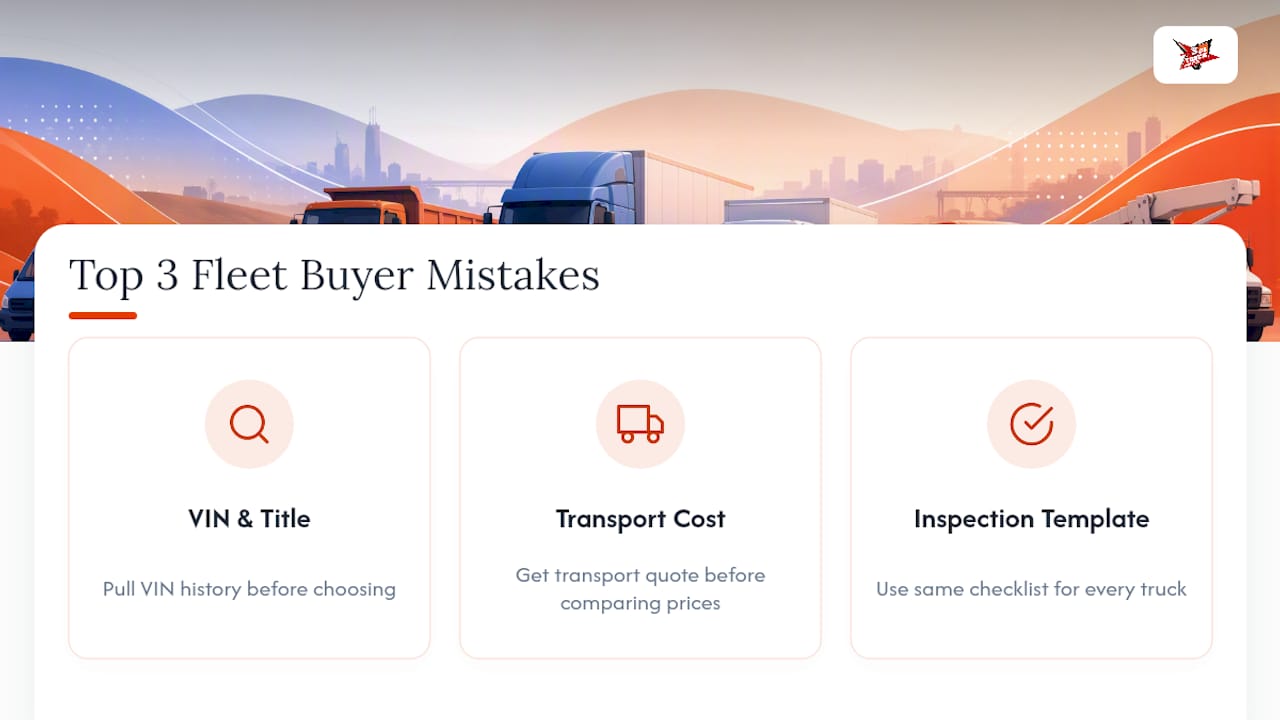
Skipping the VIN and title check is the mistake I see cost buyers the most money, usually because the truck "looked fine" in photos and the paperwork got treated as a formality instead of the actual purchase decision. Second: buyers price-compare listings without folding in transport cost, then discover the "cheaper" truck three states away wasn't cheaper at all once hauling was added. Third: skipping a written inspection template and relying on a walk-around, which misses frame and drivetrain issues a checklist would have caught.
The fixes are simple. Pull the VIN history before you fall in love with a listing. Get a transport quote before you compare final numbers, not after. And use the same inspection template on every truck you look at, so you're comparing apples to apples instead of trusting memory.
— Dave
Start Your Search on SOSTruckForSale.com
SOSTruckForSale.com is built around focused categories, so you're filtering semi trucks, trailers, and heavy equipment instead of digging through unrelated inventory. The dealer directory lets you find sellers with a track record rather than a single anonymous post, and saved search alerts notify you the moment a matching spec hits the market.
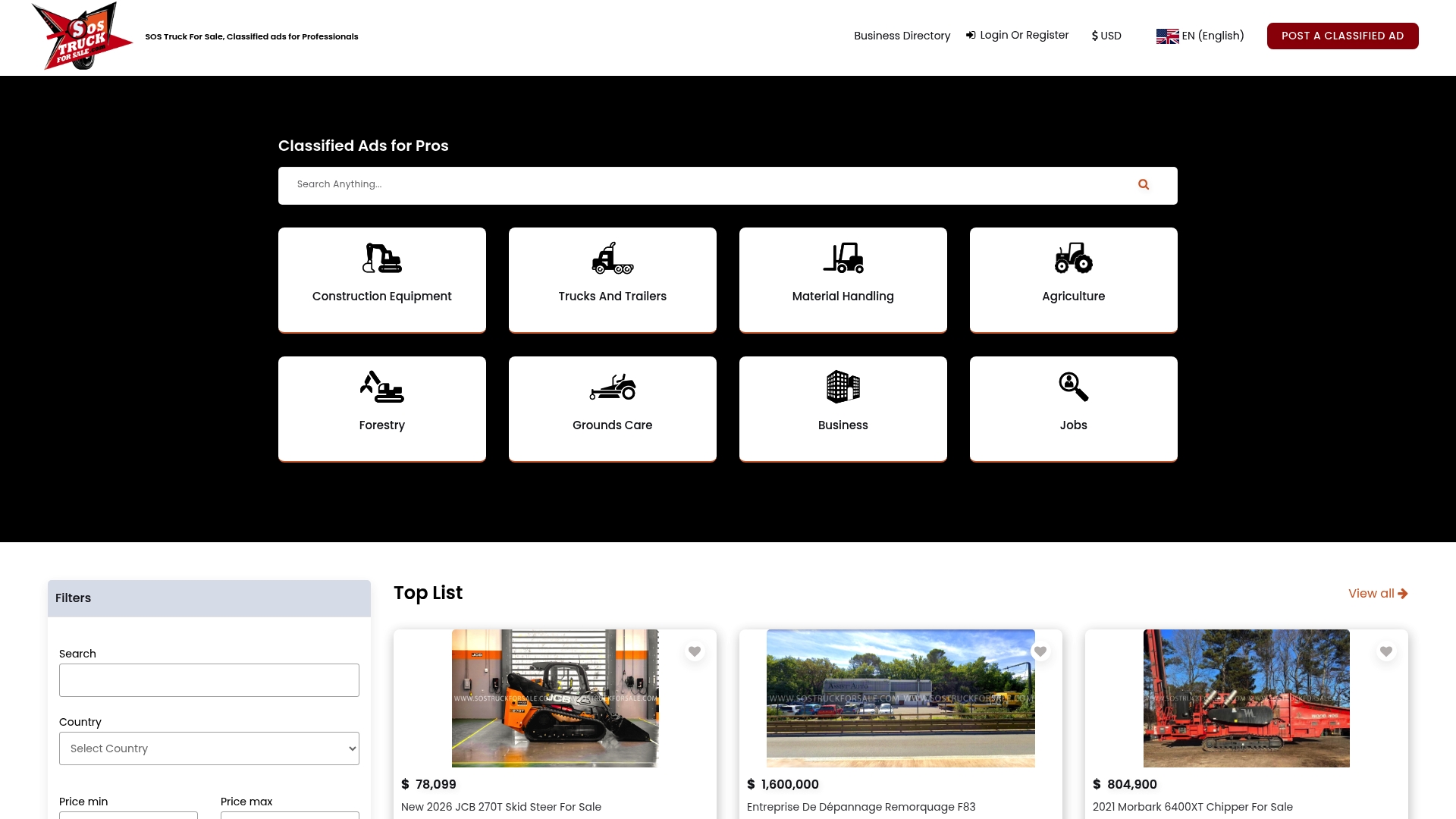
Getting started takes three moves: run a search using your real spec requirements, set up a saved alert so new matching listings reach you automatically, and contact dealers directly through their listed profiles once you find a fit. If you're ready to see what's currently listed, browse commercial vehicles for sale and start narrowing your options today.
Keep Reading Before You Buy
A few more resources worth a look before you commit: the truck auction breakdown explains when bidding beats browsing classifieds, the box truck configuration guide helps narrow specs before you search, and the heavy haul truck examples guide is useful if your fleet needs are outside standard configurations.