

For selection and price discovery, marketplaces win. For factory specs and warranty certainty, go straight to a manufacturer or dealer portal. For a short-term capacity gap, a leasing or rental platform beats buying outright. Start with a marketplace like Sostruckforsale to compare listings, then verify any serious contender against the manufacturer's own spec sheet before you commit.
TL;DR:
- Marketplace listings for used reefer trailers are fast-moving and variable in quality, making quick decisions essential.
- Factory portals provide detailed specifications, warranties, and support networks, ideal for new or certified trailers.
- Short-term leasing or renting is best for seasonal capacity gaps, while long-term fleet planning favors factory-built units for total cost efficiency.
- Evaluating listings requires checking insulation type, telematics, refrigeration hours, structural materials, and support, with caution towards vague or incomplete information.
- Actual ownership costs depend more on fuel, maintenance, downtime, and insurance than on the listed purchase price, requiring a comprehensive total cost analysis.
Table of Contents
- Best Reefer Trailer Sites by Buyer Situation
- How Do You Evaluate a Reefer Trailer Listing?
- What Do Reefer Trailers Actually Cost to Run?
- What Sizes and Capacities Should You Expect?
- Which Sites Update Listings Most Often?
- How Do Financing Options Differ Across Platforms?
- How Should You Weigh Reviews and Seller Reputation?
- Why SOSTruckForSale Is the Right Place to Start
- Ready to Search Listings on Sostruckforsale?
- Sources
Best Reefer Trailer Sites by Buyer Situation
Every reefer trailer site on the internet falls into one of three categories, and each one solves a different problem.
Marketplaces give you breadth. You can filter used inventory by year, refrigeration unit brand, and price across dozens of sellers in one search. The tradeoff is inspection variability. A marketplace listing is only as good as the photos, the seller's honesty, and whatever documentation you demand before wiring money. Reefer trailer sales online move fast, and the best deals rarely stay listed more than a few days.
Manufacturer and dealer portals solve the opposite problem. When you buy new or through a factory-authorized dealer, you get certified specs, a warranty, and a service network you can actually call when something breaks. Utility Trailer's site showcases the 3000R, which uses foam-in-place 360 degree insulation and a Barrier Door design credited for strong thermal efficiency and fewer rejected loads. Stoughton Trailers' portal features the PureBlue line, which underwent third-party benchmark testing. Great Dane's site details the Everest platform, built around composite wall components and factory telematics for temperature and location tracking. These aren't competitor comparisons so much as a map of what "new" actually looks like when you're evaluating factory specs.
Leasing and rental platforms exist for a different job entirely: covering seasonal demand spikes or bridging a gap while a factory order is in production. Industry coverage on fleet strategy notes that rental and lease programs suit short-term capacity needs, while manufacturers and long-term leases fit steady cold-chain contracts where predictable specs matter more than flexibility.
Here's the quick sort:
- Need a used trailer fast, at the best price? Start with a marketplace.
- Need warranty backing and a documented service network? Go to the manufacturer or an authorized dealer.
- Need extra capacity for eight weeks during produce season? Lease it.
- Building a long-term fleet strategy around one route or contract? Factory build almost always beats stock inventory on total lifecycle cost.
How Do You Evaluate a Reefer Trailer Listing?
Every listing, whether it's a stock unit on a dealer site or a ten-year-old trailer on a marketplace, should survive the same five-point check.
- Insulation method. Foam-in-place construction seals better and resists moisture intrusion longer than composite panel or fiberglass builds. Ask which method the trailer uses and whether the door seals were replaced recently.
- Telematics and temperature monitoring. A trailer with factory-installed telematics, like the systems Great Dane builds into its Everest line, gives you a data trail instead of a seller's word.
- Refrigeration unit brand and runtime hours. TRU hours matter as much as trailer mileage. A unit with 20,000 hours is a different purchase than one with 6,000, even at the same asking price.
- Structural materials. Wood-free composite floors and walls resist rot and reduce weight, which matters for payload-sensitive routes.
- Warranty and dealer support. A vague "as-is" warranty on a three-year-old trailer is a red flag, not a bargain.
Before you send a deposit, request the maintenance log, the TRU runtime hours, and an independent inspection report if one exists. Ask for the VIN or serial number and run it yourself. If a seller won't provide a VIN, won't discuss TRU hours, or offers photos that look edited or inconsistent with the stated year, walk away. Those are the classic warning signs of a listing built to hide a problem.
Trust signals work the other way. Listings that reference third-party testing protocols, like A2LA-certified labs or TTMA RP38 benchmarks, or that come from a factory-authorized dealer, carry more weight than a private seller's description alone.
Pro Tip: Call the refrigeration unit's service network directly and ask if they have a record of the unit's serial number. Most TRU manufacturers can confirm service history even if the seller can't produce paperwork.
What Do Reefer Trailers Actually Cost to Run?
The sticker price on any reefer trailer sales listing tells you almost nothing about what you'll actually spend over five years. Purchase price is the smallest lever in most cases. Verify the lease terms carefully if you're going that route. Some platforms bundle maintenance into a lease rate, others don't, and that difference can swing your monthly cost by hundreds of dollars.
The real cost drivers are:
- TRU fuel or electric consumption, which varies by unit brand and duty cycle
- Scheduled maintenance intervals, especially for units past 10,000 running hours
- Expected downtime during repairs, which hits harder for single-trailer operators than large fleets
- Insurance premiums, which often track the trailer's age and safety features
- Permits and registration, which vary by state and trailer configuration
Telematics changes this equation directly. A trailer that alerts you to a failing compressor before it strands a load full of perishables saves far more than the telematics package costs. Warranty coverage does similar work by capping your exposure to the first few years of ownership, when major failures are least likely but most expensive.
Industry reporting on fleet fuel strategy notes that TRU fuel consumption is one of the biggest variable costs fleets track, which is why runtime hours belong on every checklist right next to trailer mileage. Before you compare two listings on price alone, run both through a rough total cost of ownership calculation that includes fuel, maintenance, and expected downtime.
What Sizes and Capacities Should You Expect?
Reefer trailer sites typically list units in a narrow range of standard lengths, and knowing where your freight fits saves you from browsing hundreds of irrelevant listings. The most common configurations run 28 feet for pup trailers used in local or multi-stop delivery, up to 53 feet for standard over-the-road cold chain freight. A 53-foot reefer typically hauls a substantial payload, with variations depending on axle configuration and refrigeration unit weight.
Multi-temp trailers, which use internal bulkheads to run two or three temperature zones in one trailer, show up frequently on manufacturer portals and less often on general marketplaces because they're a specialized build. If your loads mix frozen and chilled product on the same run, filter specifically for multi-temp capability rather than assuming a standard single-zone trailer can be retrofitted.
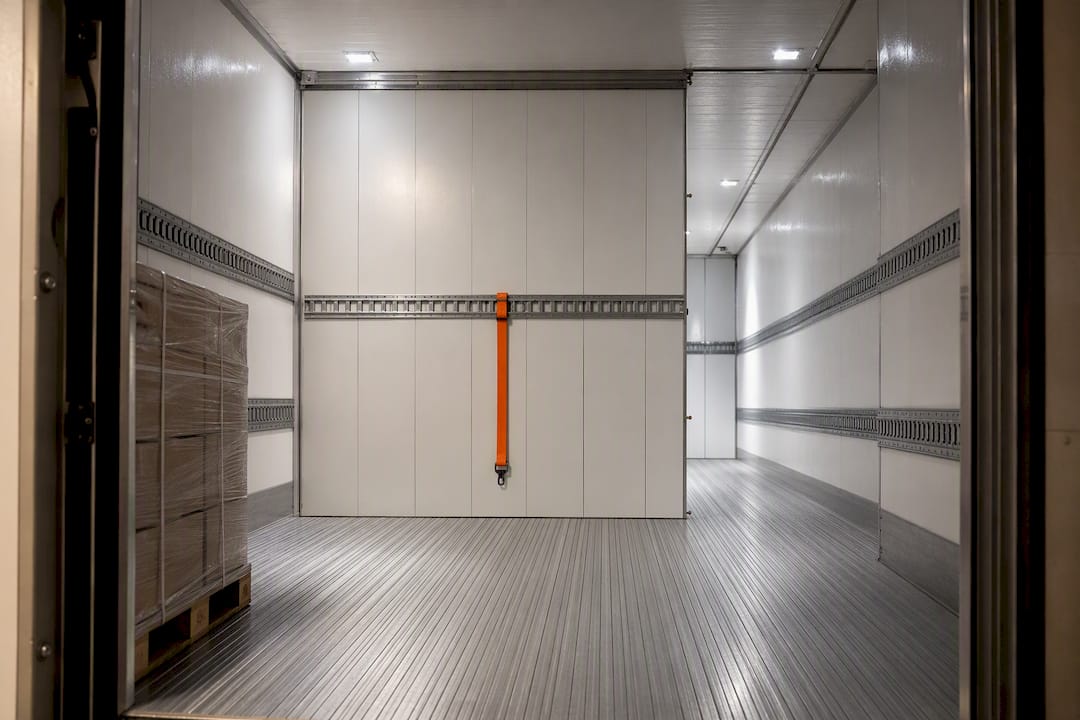
Height and interior cube also matter more than most first-time buyers expect. A trailer with a lower interior height fits more dock configurations but sacrifices pallet stacking room. Before you filter by price, filter by length and configuration first. A cheap 53-foot single-temp trailer does you no good if your contract requires dual-zone capacity.
Which Sites Update Listings Most Often?
Marketplaces tend to update fastest because listing volume is their whole business model. New and expired listings turn over daily, which matters if you're watching for a specific configuration to hit the market. The tradeoff is that user experience varies widely. Some marketplaces offer detailed filters for TRU brand, insulation type, and year; others give you little more than price and a photo gallery.
Manufacturer and dealer portals update on a slower, more predictable cycle tied to production runs and stock availability. That's not a weakness. If you're shopping new, you're less concerned with catching a listing the moment it posts and more concerned with confirming exact specs, which these portals present in far more technical detail than a typical classified ad.
Leasing platforms sit in between. Fleet availability shifts with seasonal demand, so a rental site's inventory can look completely different in June than it does in January. The practical takeaway: if you need the newest inventory the moment it appears, check marketplaces daily. If you're comparing factory specs before a long-term decision, dealer portals reward patience over speed, since the details you need are usually already documented in full.
How Do Financing Options Differ Across Platforms?
Financing terms vary more by platform type than most buyers expect. Marketplaces generally connect buyers to third-party lenders rather than financing directly, which means terms depend on your credit profile and the lender's own underwriting rather than anything the site controls. Manufacturer and dealer portals more often offer in-house or captive financing tied to the specific trailer you're buying, sometimes with promotional rates on new stock units to move inventory.
Leasing platforms operate differently again. Instead of a loan, you're negotiating a lease rate that may or may not include maintenance, and terms can range from a few months to multi-year agreements depending on whether you're covering a seasonal spike or building a semi-permanent fleet addition.
Before comparing rates across sites, get clear on what each number actually includes. A lease rate that bundles maintenance looks more expensive line-by-line than a bare purchase loan, but it may cost less once you factor in the maintenance you'd otherwise pay separately. Reviewing commercial financing structures before you shop helps you compare apples to apples instead of getting swayed by whichever number looks smallest on the page.
How Should You Weigh Reviews and Seller Reputation?
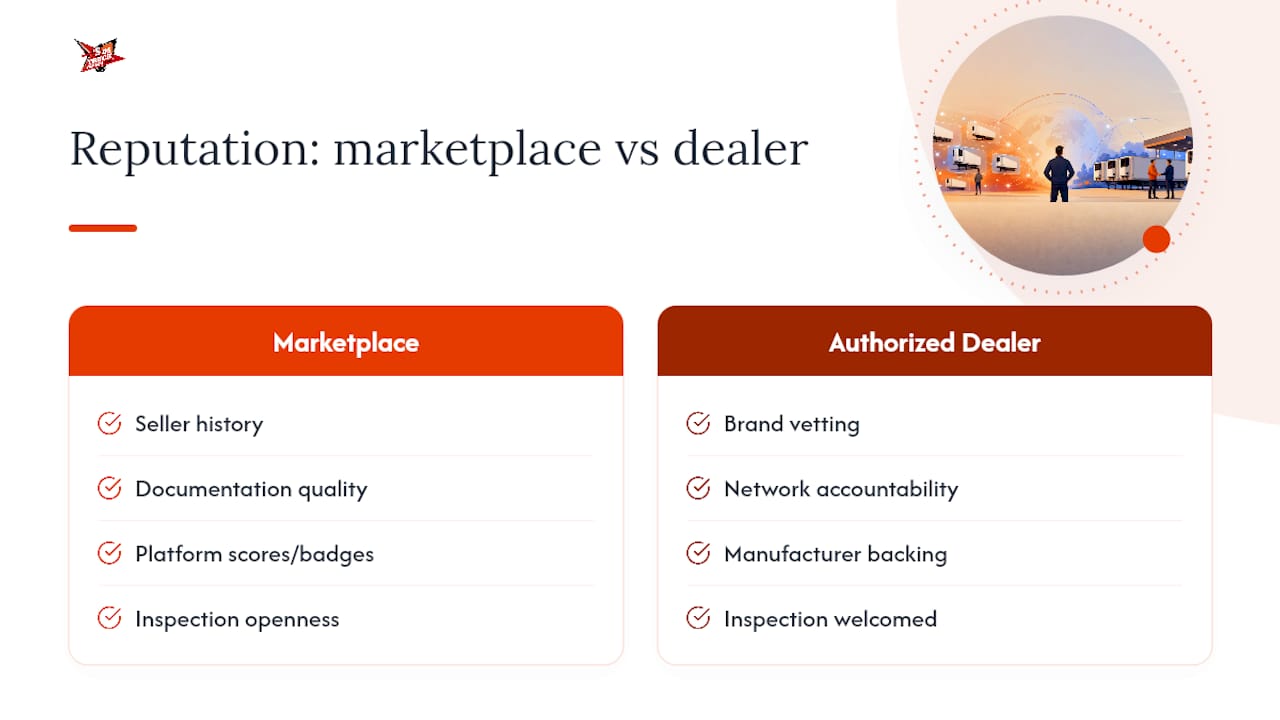
Reputation signals differ sharply between marketplace sellers and factory-authorized dealers, and treating them the same way is a mistake. On a marketplace, you're evaluating an individual seller or a small dealer, so look for a track record: how long they've been listing, whether they respond to questions with real documentation, and whether other listings from the same account show consistent, verifiable details.
Factory-authorized dealers carry a different kind of reputation weight because their standing is tied to the manufacturer's network, not just their own history. A dealer authorized to sell Utility, Great Dane, or Stoughton products has already cleared a vetting bar the manufacturer sets, which is a layer of accountability an anonymous marketplace listing simply doesn't have.
Reputation scoring across sites is inconsistent at best. Some platforms show verified badges or transaction counts; others show nothing beyond a contact form. Treat any star rating as a starting point, not a verdict, and weigh it against the harder evidence: maintenance logs, VIN verification, and whether the seller welcomes an independent inspection or resists one. A seller who pushes back on basic verification requests is telling you something a five-star rating never will.
Why SOSTruckForSale Is the Right Place to Start
A good starting point for reefer buyers is a platform that combines a searchable classified marketplace and a dealer directory, both filterable by refrigerated category, price, and location. That combination lets you compare a used marketplace listing against a factory-authorized dealer's inventory without bouncing between five different sites.
Some blog posts walk through the practical side of this process step by step, including how to read a commercial classified listing without getting burned and what documentation actually matters when a seller hands you a maintenance folder.
Users should apply filters for refrigerated category, year range, and location first, then narrow by price once they've built a shortlist. Before contacting any seller, use the checklist from earlier in this guide to request TRU runtime hours and maintenance history through the listing's contact form.
— Dave
Ready to Search Listings on Sostruckforsale?
This type of platform gets you straight to real inventory instead of another round of cold calls to dealers who may not even have what you need in stock. Search the refrigerated trailer category, apply filters for year, TRU hours, and telematics availability, then narrow to listings that include maintenance documentation up front.
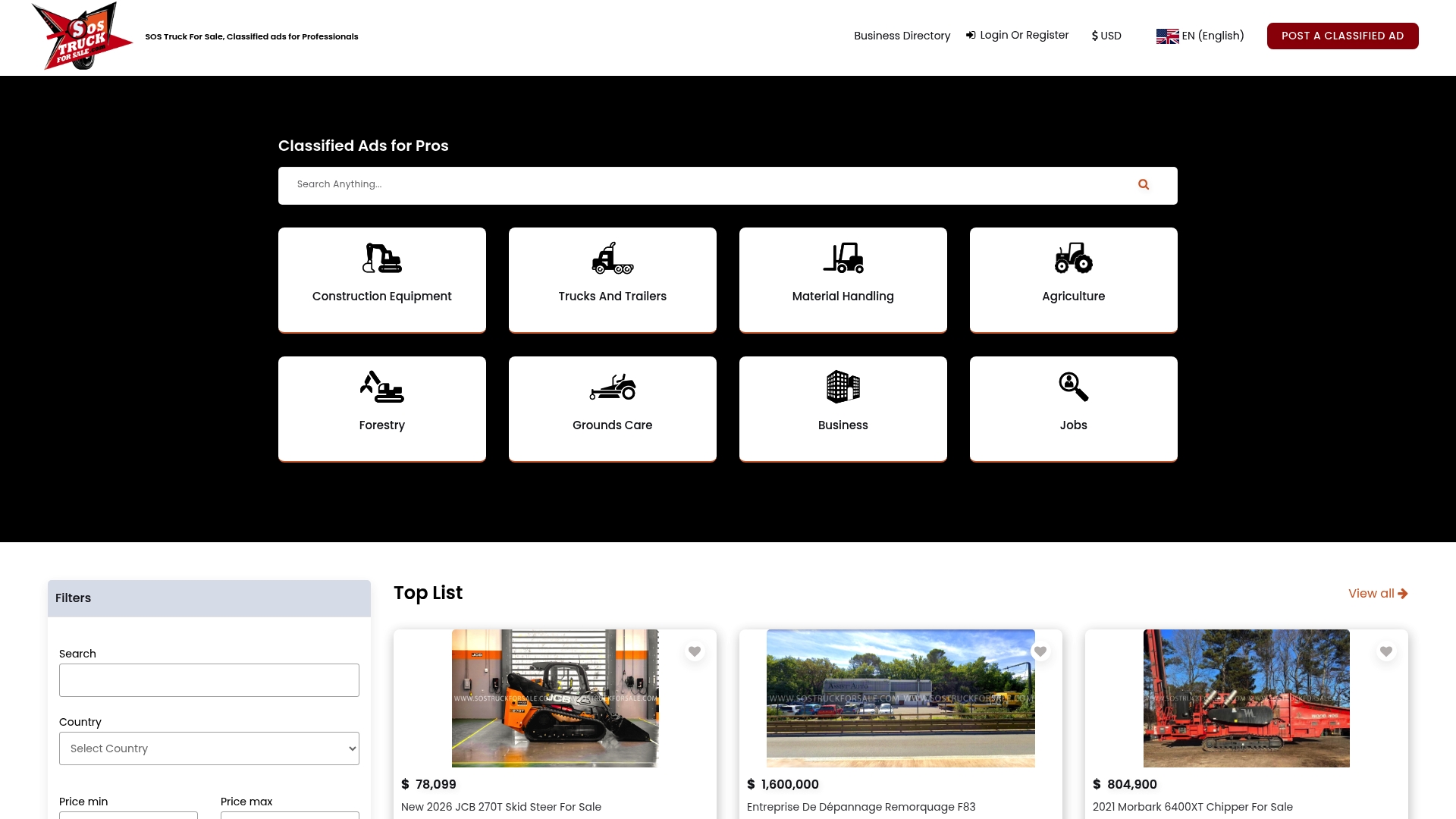
Once you've built a shortlist, contact each seller directly through the listing to request the maintenance log and VIN before you schedule an inspection. Whether you're comparing a used 3000R against a factory Everest build or weighing a short-term lease against outright purchase, start your search on Sostruckforsale and work the checklist from there.
Sources
- Refrigerated Trailer, Reefers, Multi-Temp Trailers - Utility Trailer
- Refrigerated Trailer | PureBlue Reefer Trailer
- Refrigerated Truckload Trailers | Great Dane
- Tricks of the trailer: how XTRA Lease saves on fuel (FleetOwner)