

Yes, if a buyer pays more than $10,000 in cash, or in related payments that add up to more than $10,000, a dealer must file Form 8300 within a short filing period specified by the IRS. "Cash" can include certain negotiable instruments like cashier's checks and money orders in some retail sales. For truck and heavy-equipment dealers, this applies directly to vehicle purchases, trade-in balances, and related add-on payments.
TL;DR:
- Dealers must combine same buyer payments made within 24 hours and connected installments across 12 months once they recognize the link.
- Buyer notice is due by the following January 31; the filing deadline is 15 days after the payment that takes the total above $10,000.
- Currency counts; cashier’s checks, money orders, and bank drafts up to $10,000 qualify only in designated transactions, while personal checks and wires generally do not.
- FinCEN’s online filing system provides immediate receipt confirmation, and dealers must retain filed forms and supporting records for five years.
Table of Contents
- Who Must File: Dealers and the "Trade or Business" Rule
- What Counts as Cash for Form 8300 Purposes
- Related Transactions: The 24-Hour Rule and 12-Month Aggregation
- How to File Form 8300: E-File, Paper, and Batch Options
- What to Include on Form 8300 and What Records to Keep
- Dealer Scenarios: Real Truck and Equipment Sale Examples
- Penalties and Recordkeeping Best Practices for Dealers
- Dealer Compliance Checklist: Step-by-Step Actions
- Treating Form 8300 Compliance as Operational Hygiene
- Sostruckforsale: Resources for Documenting Large Truck Sales
- FAQ
- Sources
Who Must File: Dealers and the "Trade or Business" Rule
Form 8300 applies to any "person" engaged in a trade or business who receives qualifying cash during the course of that business. A truck dealership, an equipment seller, or a sole proprietor selling heavy machinery all meet this definition under the IRS reference guide.
Branch locations matter here. Each branch that receives cash generally files its own Form 8300, unless a central office can reliably connect payments made by the same buyer across locations.
- Motor-vehicle and heavy-equipment dealers are named filer categories under federal reporting rules.
- A dealership with multiple lots should assign filing responsibility per location unless records are centralized.
- Sole proprietors and corporate dealer groups file under the same threshold rules.
What Counts as Cash for Form 8300 Purposes
"Cash" on Form 8300 isn't limited to currency in a drawer. It includes U.S. and foreign coin and paper money, and in designated reporting transactions, it also covers cashier's checks, money orders, bank drafts, and traveler's checks with a face value of $10,000 or less.
- Currency (U.S. or foreign) always counts as cash.
- Cashier's checks, money orders, and bank drafts of $10,000 or less count as cash in designated transactions.
- Personal checks and wire transfers generally do not count as cash for Form 8300 purposes.
A cashier's check over $10,000 is typically excluded from Form 8300 cash reporting because the issuing bank already files a Currency Transaction Report on that instrument. When a buyer pays with a qualifying negotiable instrument, capture the issuer name and serial number at the point of sale, since this information is required on the form itself.
Related Transactions: The 24-Hour Rule and 12-Month Aggregation
A single cash payment doesn't need to hit $10,000 by itself to trigger a filing. The IRS reference guide requires dealers to aggregate related transactions, and two rules govern how that works.
- Payments from the same buyer within a 24-hour window are automatically treated as one transaction, so a $6,000 down payment and a $5,000 accessory purchase made the same afternoon must be combined and reported.
- Payments connected by the seller's knowledge, even when they stretch across many months, such as installment payments tied to a single truck sale, must be aggregated over a 12-month period once the seller recognizes the connection.
- The 15-day filing clock starts on the date of the payment that pushes the cumulative total over $10,000, not on the date of the first payment.
How to File Form 8300: E-File, Paper, and Batch Options
Dealers file Form 8300 through FinCEN's BSA E-Filing system, which FinCEN has promoted as the primary filing route for both speed and confirmation of receipt. Registering as a filer takes a short setup process through the BSA E-Filing portal, and once registered, a dealer can submit forms directly online.
- E-filing provides an immediate confirmation that the IRS and FinCEN received the form, which matters if filing timing is ever questioned.
- Paper filing remains available as a fallback, with the completed Form 8300 PDF mailed to the address listed in the form instructions.
- High-volume filers, such as dealer groups processing many large cash transactions, can use XML batch submission rather than filing one form at a time.
Even where paper filing is technically allowed, e-filing is worth adopting as standard practice. It cuts down on lost paperwork and gives a dealership a dated digital record that supports its own compliance file.
What to Include on Form 8300 and What Records to Keep
The form itself is organized into four parts, and the official instructions spell out exactly what belongs in each.
- Part I covers the identity of the individual paying, including name, address, and taxpayer identification number or date of birth.
- Part II covers the identity of the person on whose behalf the transaction was conducted, if different from the payer.
- Part III and Part IV cover the transaction itself: date cash was received, total amount, method of payment, and a description of the goods or services involved.
- Serial numbers and issuer names are required for any negotiable instruments used, and the comments field should flag anything unusual, like multiple payers on one transaction.
Retain copies of every filed Form 8300, along with supporting identification records, for five years. Saved e-file confirmations serve as a clean, dated backup to the paper trail.
Dealer Scenarios: Real Truck and Equipment Sale Examples
Seeing the rules applied to actual dealer transactions makes the thresholds easier to apply at the counter.
- A buyer pays $12,000 in cash for a used semi truck in one transaction: this is a straightforward single-payment filing, due within 15 days.
- A buyer pays $7,000 cash in the morning and returns that evening with another $4,500 cash for accessories: the 24-hour rule combines these into one $11,500 reportable transaction.
- A buyer finances most of a heavy-duty truck purchase but makes $3,000 monthly cash installment payments that total more than $10,000 across several months: these aggregate under the 12-month rule once the connection is recognized.
- Heavy construction equipment sold to a business entity follows the same cash-reporting rules as a consumer vehicle sale, since Form 8300 applies by transaction type and payment method, not by whether the buyer is an individual or a company.
Penalties and Recordkeeping Best Practices for Dealers
Noncompliance carries real financial exposure. The IRS reference guide notes that as of 2026, ordinary per-failure penalties run around $310, with annual caps that can reach into the millions for dealers with repeated violations, and intentional disregard carries steeper penalties calculated per failure or as a percentage of the cash involved.
Filing a Form 8300 is a routine compliance step, not an audit trigger on its own. The IRS newsroom frames the form as a tool that helps law enforcement trace financial activity, and motor-vehicle dealers are named as typical, expected filers.
- Verify buyer identification with a government-issued ID before completing any cash sale over the threshold.
- Train sales staff to recognize when related payments need to be combined.
- Keep a standard customer notification letter template ready for the January 31 deadline.
- Save every e-file confirmation alongside the underlying sale paperwork.
Pro Tip: Build a one-page cash-sale checklist into your point-of-sale process so filing deadlines never depend on one person's memory.
Dealer Compliance Checklist: Step-by-Step Actions
When a cash payment crosses the reporting line, a clear sequence keeps the paperwork accurate and on time.
- Verify the payer's identity with a government-issued ID and record their name, address, and taxpayer ID or date of birth.
- Confirm whether the payment qualifies as cash under Form 8300 rules and check whether any other payments from the same buyer are related.
- Add up related payments to see if the 24-hour or 12-month aggregation rules push the total above $10,000.
- Once the threshold is crossed, the 15-day filing window opens; prepare the form with accurate transaction details.
- File electronically through FinCEN's BSA E-Filing system when possible, then send the required written notification to the buyer by January 31 of the following year.
- Retain the filed form, confirmation, and supporting records for five years.
Pro Tip: Keep a dated log of every large cash sale in a shared file so your dealership can show a consistent paper trail if a filing is ever reviewed.
Treating Form 8300 Compliance as Operational Hygiene
Form 8300 filing isn't a sign of suspicion about a buyer. It's routine paperwork, the same as a title transfer or a bill of sale, and dealers who build it into their sales process avoid scrambling at deadline time. Our team covers related dealer workflow topics on our blog for anyone building out templates.
— Dave
Sostruckforsale: Resources for Documenting Large Truck Sales
We built Sostruckforsale as a marketplace where dealers list trucks, trailers, and heavy equipment without the overhead of running a private sales platform. Listings reach buyers actively searching by category, price, and location.
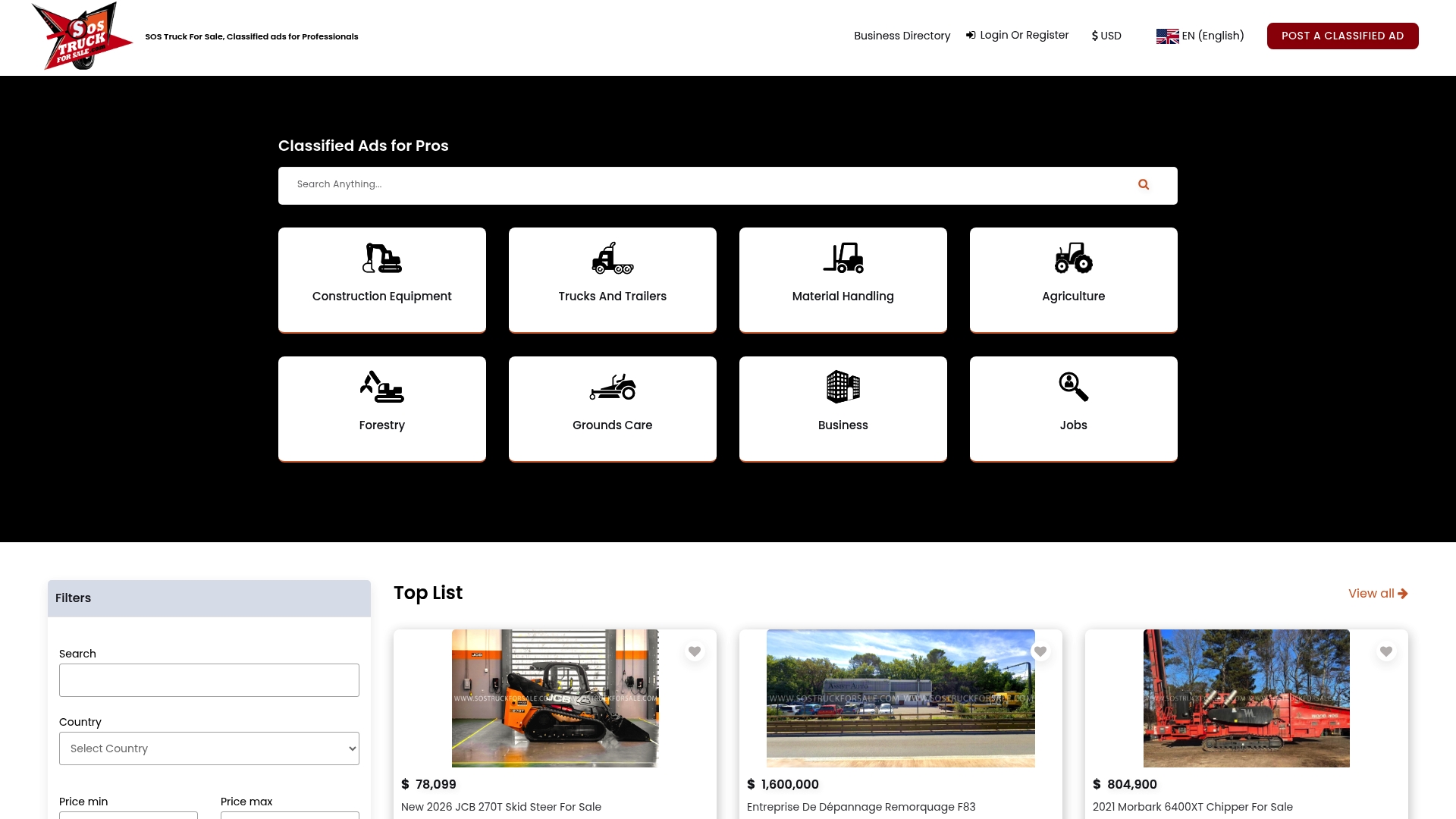
Beyond listings, our blog covers practical dealer workflow topics, including dealer best practices, title transfer paperwork, and payment method options for large transactions. These resources support your process, though they don't replace advice from your own tax or legal counsel. Browse current listings and list your next truck or piece of equipment on Sostruckforsale today.
FAQ
What transactions require Form 8300?
Any trade or business that receives more than $10,000 in cash in a single transaction, or in related transactions, must file Form 8300. This covers truck and equipment sales, installment payments that aggregate over the threshold, and qualifying negotiable instruments in designated transactions.
Do truck and equipment dealers have to report cash transactions to the IRS?
Yes, truck and heavy-equipment dealers are specifically named as typical filers under IRS guidance. Any cash payment over $10,000 received in the course of a sale must be reported within 15 days.
Is Form 8300 required only above $10,000, such as $10,001?
Form 8300 applies when cash received exceeds $10,000, meaning any amount over that figure triggers the filing requirement. A payment of exactly $10,000 does not meet the threshold under the IRS reference guide.
Will filing a Form 8300 get a dealer audited?
Filing a Form 8300 is a routine reporting obligation, not an audit trigger by itself. The IRS newsroom describes the form as a tool for tracing financial activity broadly, and dealers who file accurately and on time are simply meeting a standard compliance requirement.